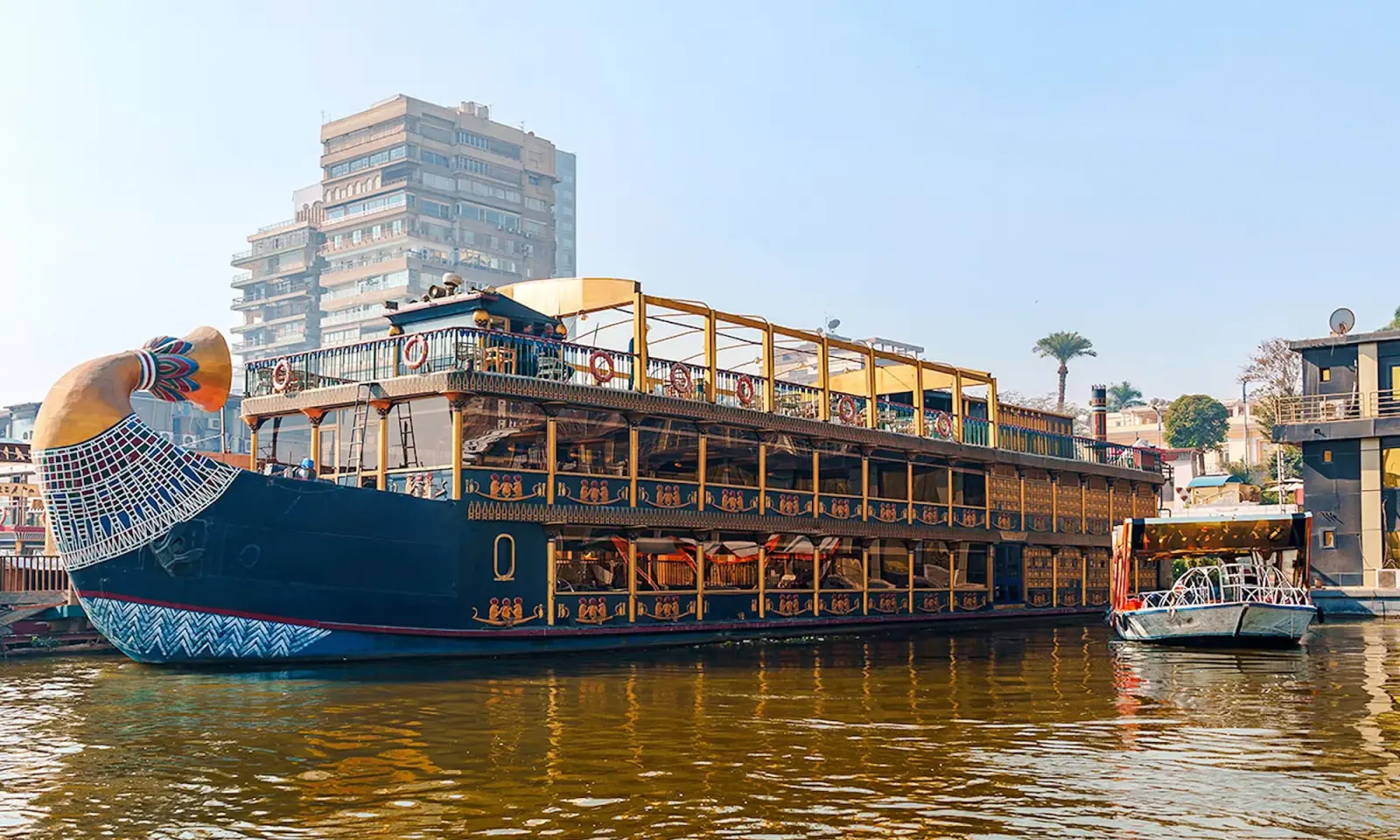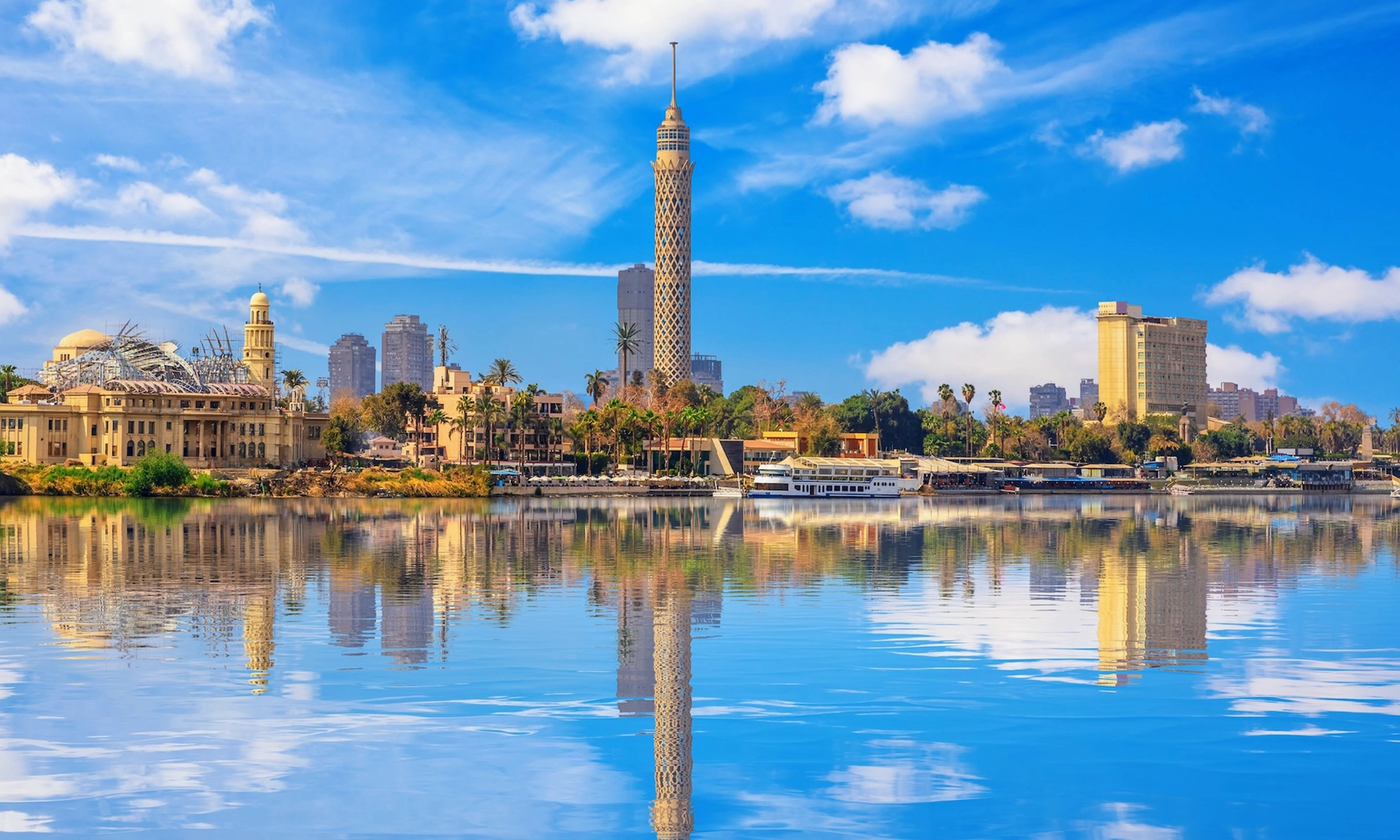
The river rises. Brown water spreads across the fields until villages stand like islands. Weeks later, the water drains away and dark, damp earth emerges. Green shoots cover the valley, then the fields turn gold, and the sickles come out.
For the people of ancient Egypt, this cycle did more than feed the country. It helped define the year itself. The ancient Egyptian calendar gave that rhythm a fixed shape: 365 days, made up of 12 months of 30 days, grouped into three seasons named after what the Nile was doing to the land, with five additional days at the end.
The bright star Sirius also played a part, marking the season of renewal. Yet the official calendar had a flaw. Without a leap day, it slowly drifted through the natural seasons.
How Did the Ancient Egyptian Calendar Work?
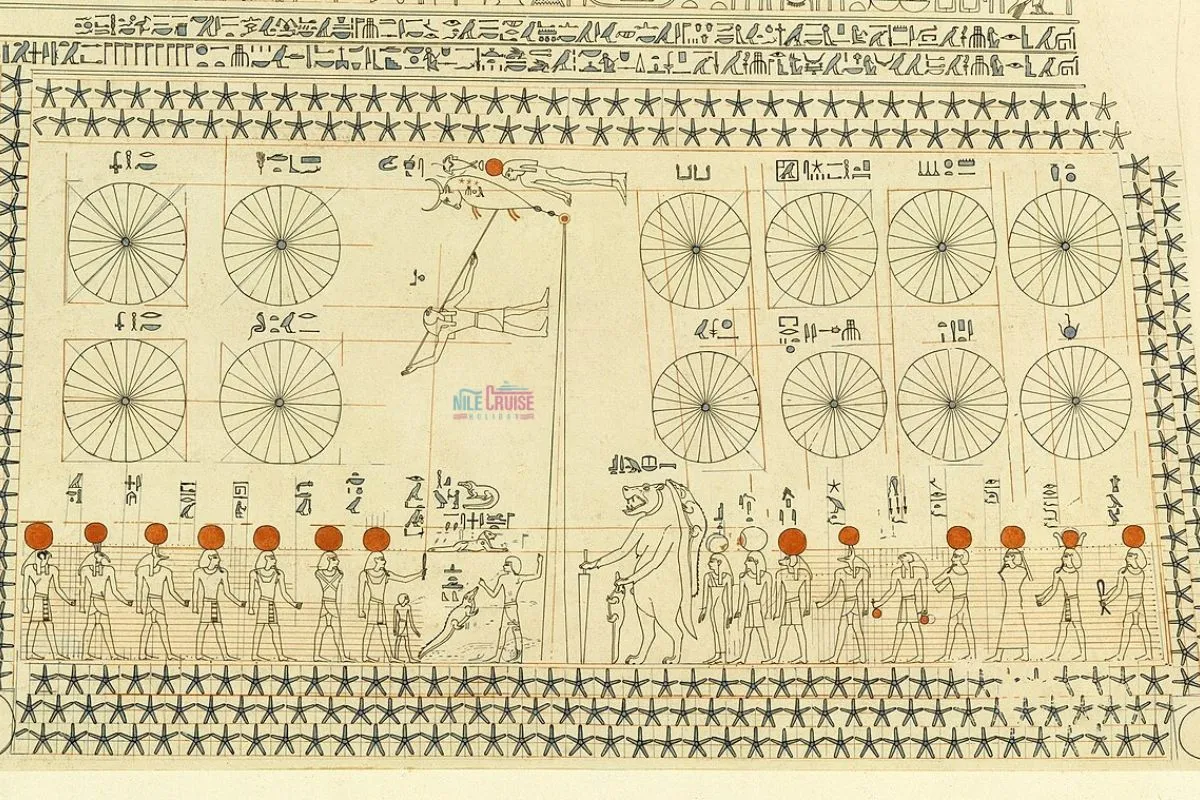
The Egyptian civil calendar, the one used for official dates and records, was built from simple, repeating units. The year contained 365 days. It had 12 regular months, and every month had exactly 30 days. Those months were grouped into three seasons of four months each.
Twelve months of 30 days produce 360 days. Five additional days completed the year.
| Feature | Ancient Egyptian Civil Calendar |
|---|---|
| Year | 365 days |
| Seasons | 3 |
| Months | 12 |
| Months per season | 4 |
| Days per month | 30 |
| Regular days | 360 |
| Additional days | 5 |
| Original leap day | None |
| Main seasons | Akhet, Peret, Shemu |
The five additional days sat outside the twelve months and belonged to no season. Egyptologists call them the epagomenal days, a Greek-based term that simply means "added" days. They were not a thirteenth month, but a bridge between one year and the next.
Each 30-day month was also split into three ten-day periods, which made the system easy to use for administration, work rotas, and temple duties.
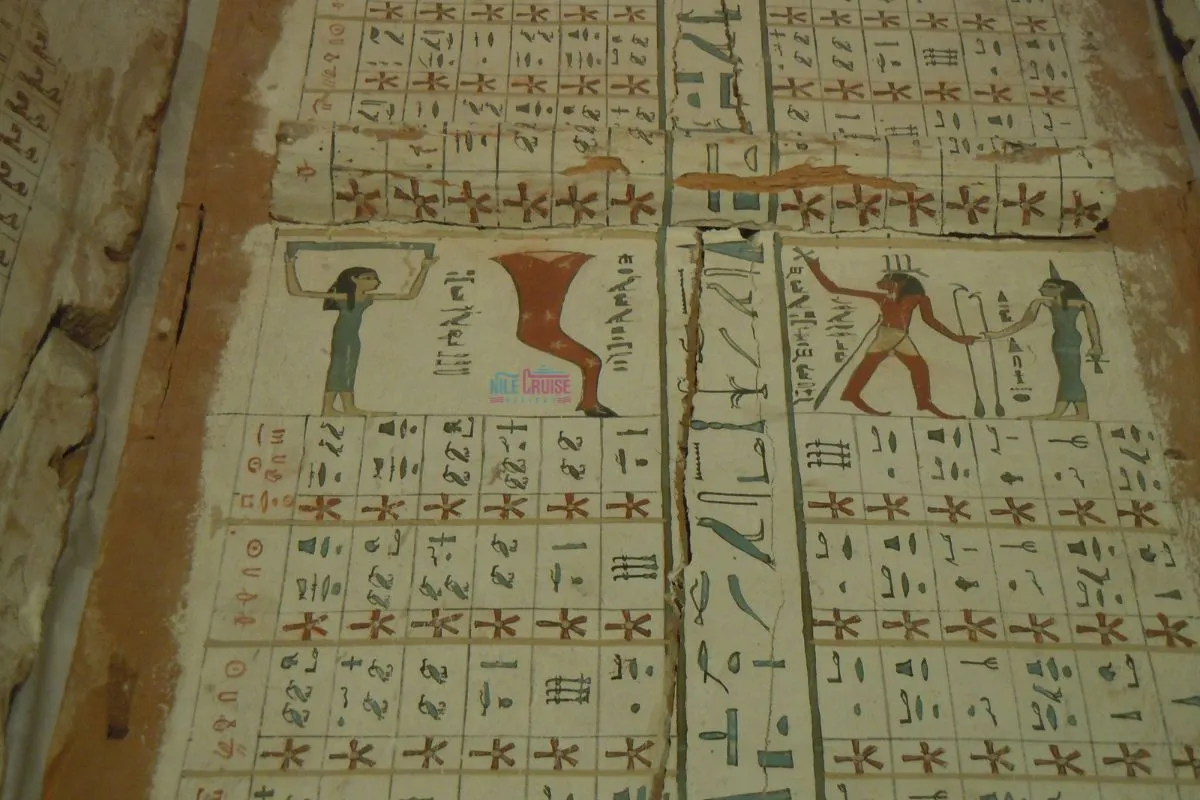
The civil calendar appears to have been in use by the Old Kingdom, but its exact origin remains debated. Egyptians also used lunar calendars, especially for fixing some religious festivals, and practices changed over more than 3,000 years. The civil year described here is the backbone, not the whole story.
How Did the Nile Divide the Egyptian Year Into Three Seasons?
Egypt receives very little rain. Almost all of its farmland depended on the Nile's yearly rise, which carried water and silt from the Ethiopian Highlands after the summer rains there. The agricultural year was commonly understood through three seasons that followed what the river did to the fields.
Akhet, the Season of Inundation
Akhet is usually translated as inundation or flood season. As the Nile rose, water spread across large parts of the floodplain, soaking the soil and leaving a fresh layer of dark silt. Egyptians called their land Kemet, the Black Land, after that fertile earth.
While fields lay under or near floodwater, ordinary farming slowed. In many periods, labor could then be directed to state or temple work.
The flood was never identical from year to year. Its arrival and height varied. A low Nile could mean poor harvests and hunger, while an unusually high one could sweep away dykes and homes.
Peret, the Season of Emergence
As the water drew back, the land reappeared. Peret is often translated as emergence, coming forth or the growing season, and all three capture part of its meaning. The name fits what farmers actually saw: fields rising out of the water, damp and newly enriched.
This was the time to re-mark field boundaries, break the soil and sow wheat, barley, flax and vegetables. Through the cooler months, crops grew green across the valley.
Shemu, the Season of Harvest
Shemu was harvest time. Crops ripened, grain was cut with sickles, carried to threshing floors, winnowed in the wind and stored in granaries. The Nile was generally at its lowest, and the agricultural cycle moved toward completion before the next inundation arrived.
The grain gathered in Shemu supplied the bread and beer at the heart of ancient Egyptian food, and harvest assessments helped officials judge what the land could provide for granaries and taxes.
| Season | General Meaning | Nile and Agricultural Context |
|---|---|---|
| Akhet | Inundation | Nile rises, and fields are affected by floodwater |
| Peret | Emergence or growth | Waters retreat, and crops are planted and grow |
| Shemu | Harvest | Crops mature and are harvested |
These seasons are best understood as an ideal pattern. They describe the farming year, not fixed blocks of the modern calendar.
Why Did the Ancient Egyptian Calendar Have 365 Days?
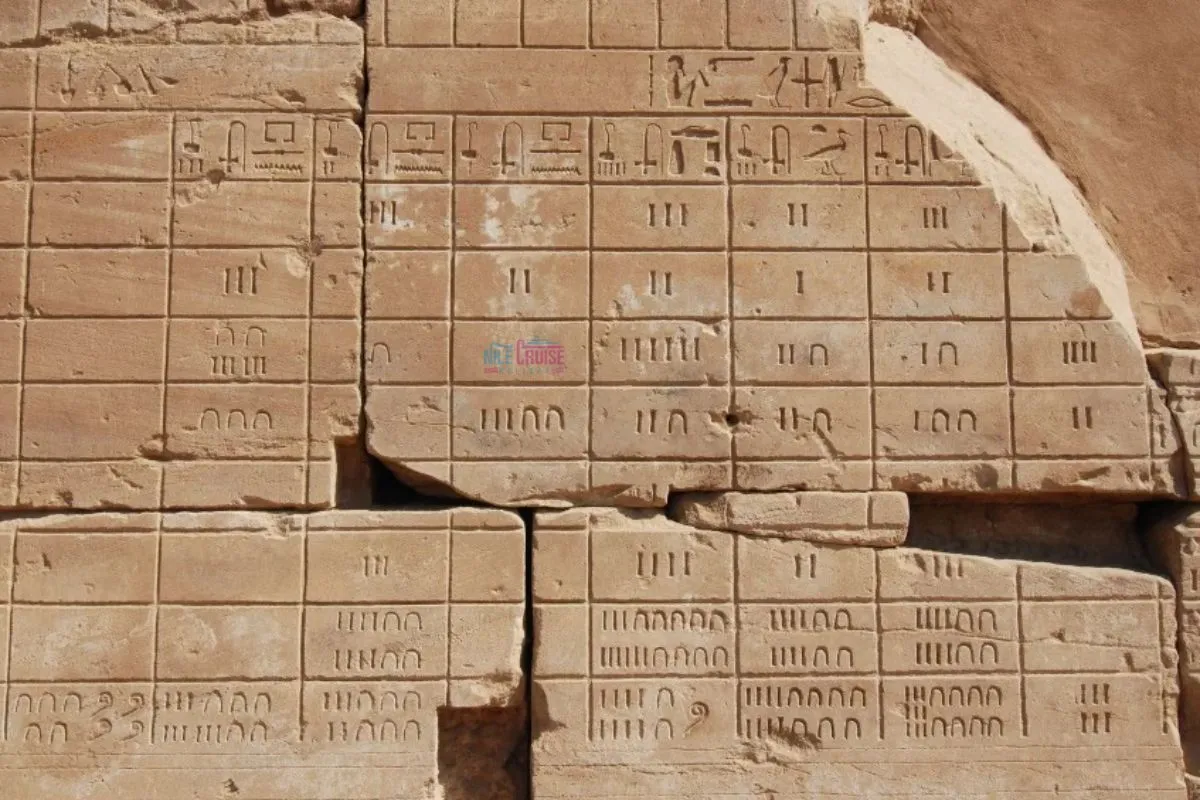
The arithmetic is simple. Twelve months of 30 days give 360 days. Adding five epagomenal days brings the total to 365, close to the length of the solar year.
That number made the civil calendar practical. Every month was the same length, so scribes could calculate durations, rations, and work schedules without adjusting for a changing moon.
In Egyptian religious tradition, the five additional days were associated with the births of five major deities: Osiris, Horus, Seth, Isis and Nephthys, one on each day. A much later version recorded by the Greek writer Plutarch tells how the god Thoth won extra light from the moon so the sky goddess Nut could give birth outside the regular year.
It is important to keep two ideas separate. The calendar's structure was a practical way of fitting months to the year. The mythology is a religious explanation that became attached to the extra days, not evidence of how the calendar was first designed.
What Did Sirius Have to Do With the Nile and New Year?
Sirius, the brightest star in the night sky, was known to Egyptians as Sopdet. Egyptologists often use its Greek form, Sothis.
For part of each year, Sirius cannot be seen because it rises and sets close to the sun and is lost in its glare. Its heliacal rising is the first morning it becomes visible again, low in the east shortly before sunrise. In ancient Egypt, that reappearance came in summer, roughly in the same season that the Nile usually began to rise.
That seasonal overlap gave Sopdet great importance. The rising of Sirius became an important seasonal and calendrical marker, closely associated with the Nile's inundation and renewal, but scholars debate exactly how much it contributed to the original creation of the civil calendar.
The star did not cause the flood, and it did not predict the river's exact timing or height. The two roughly coincided seasonally, offering two signs that a new cycle had begun.
Wepet Renpet
The Egyptian New Year was called Wepet Renpet, meaning "Opening of the Year." It referred to the first day of the first month of Akhet, the start of the civil year.
In the ideal version of the calendar, that opening would match the heliacal rising of Sirius and the start of the flood season. In practice, the civil calendar moved against the solar year, so Wepet Renpet cannot be given one permanent modern date.
What Can Travelers Still See of the Egyptian Calendar Today?
Travelers will not find a modern-style wall calendar carved on every temple. What survives is evidence connected with the calendar: festival records, ritual dates, agricultural scenes, Nile imagery and the structures used to watch the river. No single site shows all of it.
Kom Ombo
At Kom Ombo Temple, a carved calendar on one of the temple walls lists dates connected with festivals and offerings. The site also has a nilometer well.
Edfu
Edfu Temple preserves extensive ritual and festival texts. Among them are accounts of the Festival of the Beautiful Meeting, when the image of Hathor traveled from Dendera to visit Horus at Edfu, a celebration set by the temple's festival calendar.
Karnak
At Karnak Temple, the great temple of Amun at Thebes, festival cycles shaped the ritual year. In the New Kingdom, the Opet Festival took place during the inundation season, when divine images traveled between Karnak and Luxor Temple.
Agricultural Scenes
Painted chapels in the Tombs of the Nobles on Luxor's West Bank show plowing, sowing, reaping and winnowing in vivid everyday detail. Figures of the Nile god Hapy, carrying offerings of produce, appear on some temple walls, part of the visual language explored in our guide to Egyptian symbols and meanings.
Nilometers
Nilometers were stepped stairways or wells used to observe and record Nile water levels. They measured the river, not the calendar, but their readings helped officials judge the coming harvest. One of the best known survives on Elephantine Island in Aswan. Our guide to the best temples to see on a Nile cruise shows how many of these sites fall along the route.
The Modern Nile Is Different
The Nile today does not flood Egypt's farmland the way it did in antiquity. The Aswan dams, above all the Aswan High Dam completed in 1970, ended the natural annual inundation downstream. A Nile cruise today travels through the same river corridor whose seasonal rhythms once helped organize Egyptian agriculture and concepts of time, even though the modern river no longer follows that pattern.
That is where interpretation matters. A knowledgeable Egyptologist can connect a temple festival inscription, an agricultural relief or the landscape outside the cruise ship window with the ancient calendar system that once organized life along the Nile. On a Luxor and Aswan Nile cruise, Nile Cruise Holiday coordinates the ship, private Egyptologist guides, temple visits, transfers and sightseeing so each stop builds on the last.
Travelers who want their Nile cruise, Egyptologist-led sightseeing and temple visits coordinated as one journey can shape them into a tailor-made Egypt trip.