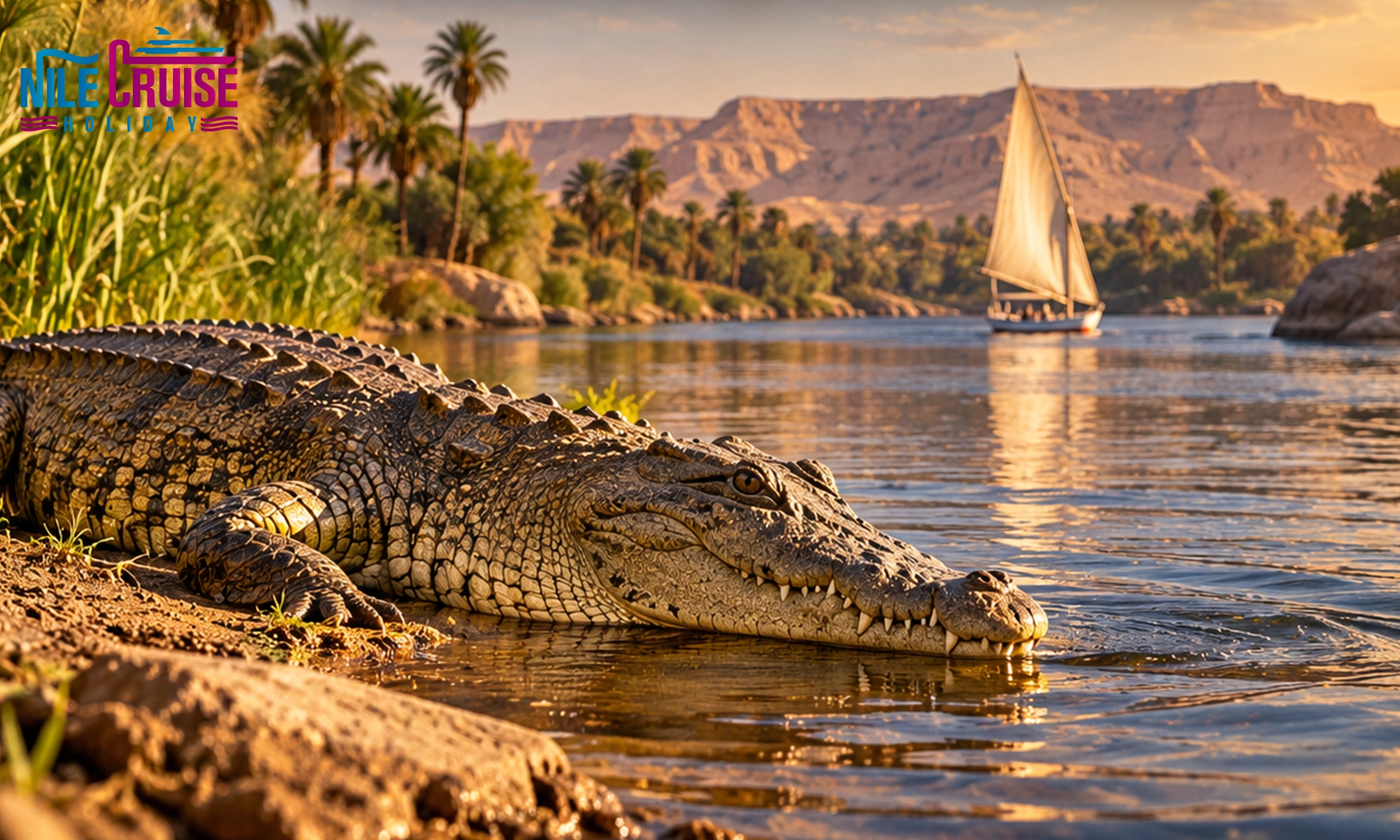
There are still crocodiles in Egypt, but not where most visitors expect. Wild Nile crocodiles now live almost entirely in Lake Nasser, the vast reservoir south of the Aswan High Dam. On the classic Nile cruise route between Luxor and Aswan, and in Cairo, there is no breeding population, so you are very unlikely to see one. Yet crocodiles were once common along the whole Egyptian Nile, and they shaped one of ancient Egypt's most powerful gods, Sobek.
For thousands of years, the crocodile was the most feared and most revered creature of the river, a living symbol of the Nile's power. This guide explains where crocodiles live in Egypt today and why they disappeared from most of the river. It covers their role in ancient religion, including a surprising discovery about which species the Egyptians mummified. It also explains what the crocodile question means for your safety on a Nile cruise and where you can see crocodiles, alive or mummified.
Are There Crocodiles in the Nile in Egypt Today?
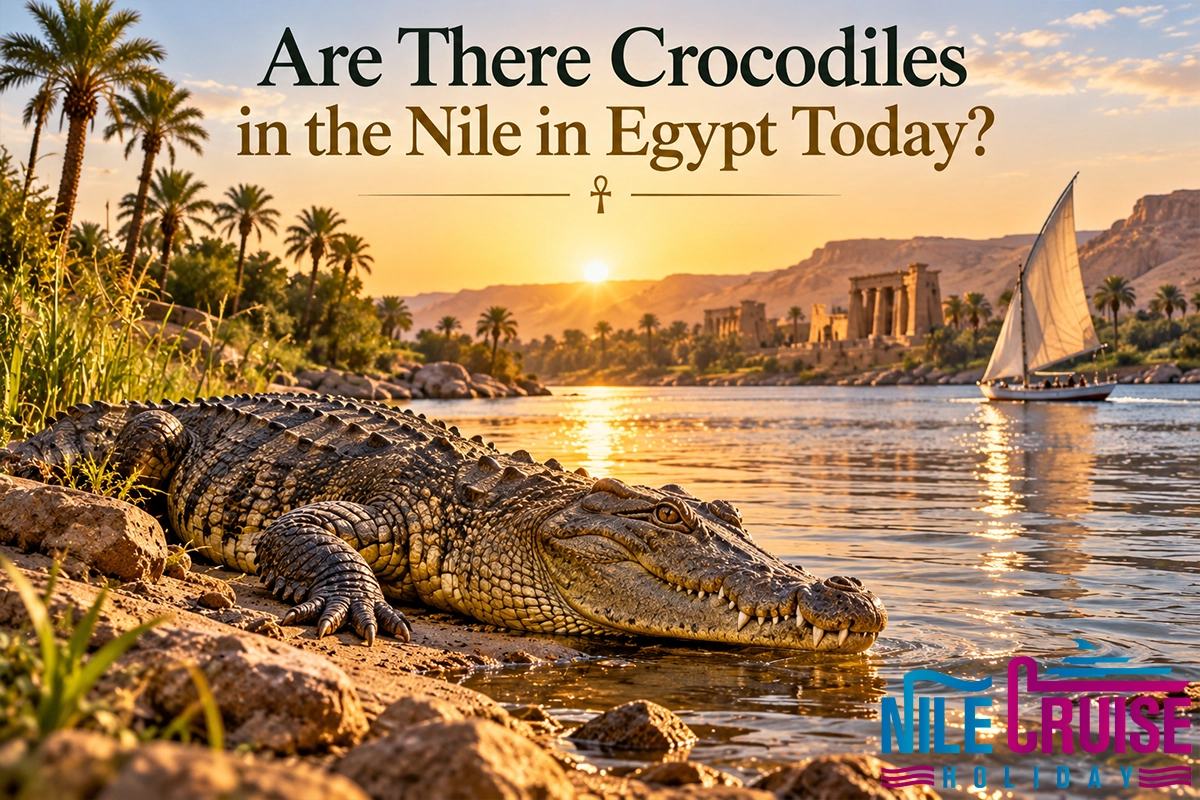
The answer depends on which part of the Nile you mean.
The Short Answer
North of the Aswan High Dam, along the stretch where almost all Nile cruises sail, crocodiles are effectively gone. South of the dam, on Lake Nasser, a healthy wild population survives. The dam acts as a barrier, so crocodiles from the lake cannot easily move north.
Nile Crocodile Quick Facts
| Fact | Detail |
|---|---|
| Species | Nile crocodile (Crocodylus niloticus) |
| Where in Egypt | Mainly Lake Nasser, south of the Aswan High Dam |
| Typical adult length | About 4 to 5 m, with large males reaching 6 m |
| Diet | Fish, birds, and animals at the water's edge |
| Hunting style | Ambush from the water |
| On the Luxor to Aswan cruise route | No breeding population |
Where Crocodiles Live in Egypt Today
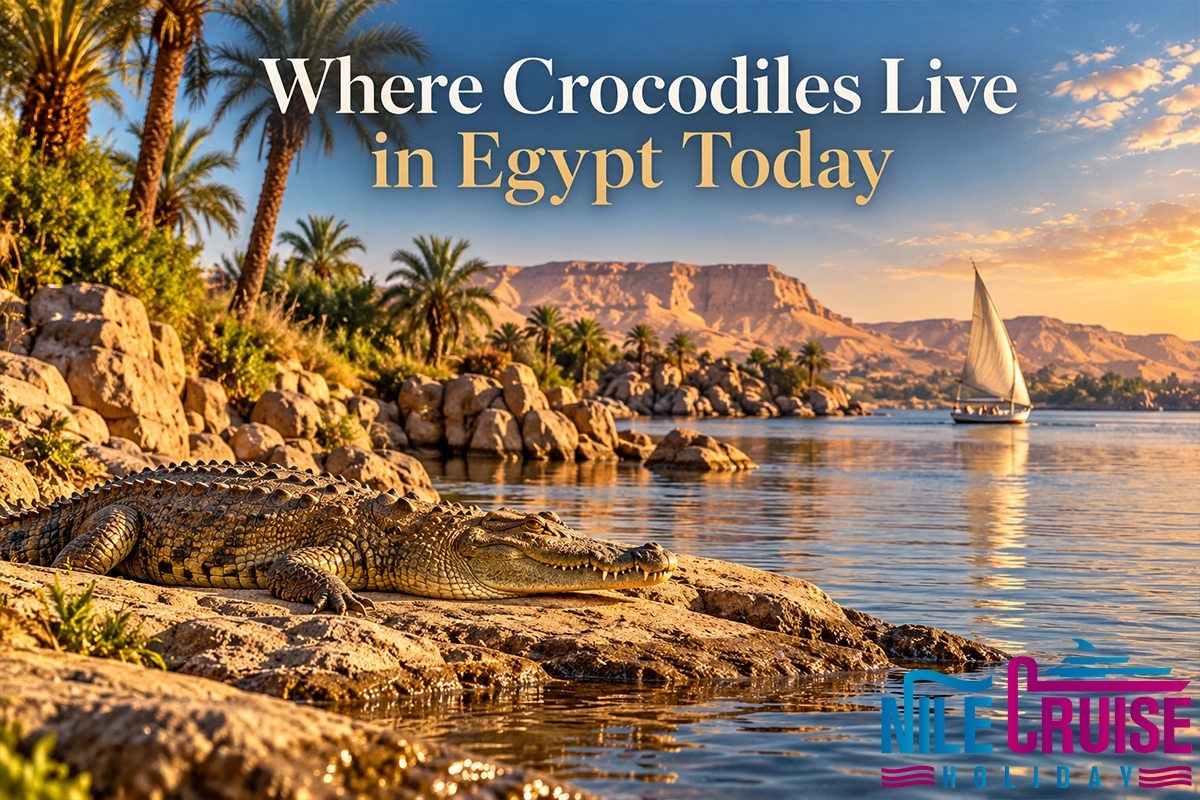
Lake Nasser is now the crocodile's stronghold in Egypt, and one of the reasons a cruise there feels so wild.
Lake Nasser
Created when the High Dam was completed in 1970, Lake Nasser stretches about 500 km south into Sudan, where it is called Lake Nubia. Its long, empty shoreline, warm water, and abundant fish make ideal crocodile habitat. Crocodiles bask on sandbanks and rocky shores, especially in the cooler months, and local fishermen see them regularly. Estimates of their numbers vary widely, so treat any single figure with caution.
Along the Lake Nasser Cruise Route
Lake Nasser Nile cruises between Aswan and Abu Simbel are the best chance of spotting a wild crocodile in Egypt. Guests sometimes see them basking near the shore or slipping into the water as the ship passes, though sightings are never guaranteed. The same cruises stop at Kalabsha Temple and Wadi es-Sebua, as on the 5 days Lake Nasser cruise from Aswan to Abu Simbel. Our guide to Lake Nasser cruise vs Nile cruise explains how this route differs from the classic one.
Rare Sightings North of the Dam
Occasionally, a crocodile is reported in the river below the dam, most likely carried through or released from captivity. These sightings make local news precisely because they are so rare. For travelers on the Luxor to Aswan route, they are not a realistic concern.
Why Crocodiles Disappeared From Most of the Egyptian Nile
Crocodiles once lived along the entire Egyptian Nile, all the way to the Delta. Their decline took centuries.
An Ancient Range From Aswan to the Delta
Ancient texts, tomb paintings, and Greek writers all describe crocodiles throughout Egypt. The historian Herodotus, who visited in the 5th century BC, wrote that some Egyptians kept tame crocodiles adorned with earrings and bracelets, while others hunted and ate them.
Hunting and a Crowded River
As Egypt's population grew and farming spread along the riverbanks, crocodiles lost their space. They were also hunted for their skins and because they threatened people and livestock. By the early 20th century, crocodiles had largely vanished from the Nile north of Aswan.
The Aswan High Dam
The completion of the Aswan High Dam in 1970 sealed the division. It ended the annual flood and created Lake Nasser, which became the crocodiles' main refuge. The dam itself is a barrier that crocodiles cannot cross, so the two stretches of river now have very different wildlife.
Crocodiles in Ancient Egypt: Sobek and the Sacred Mummies
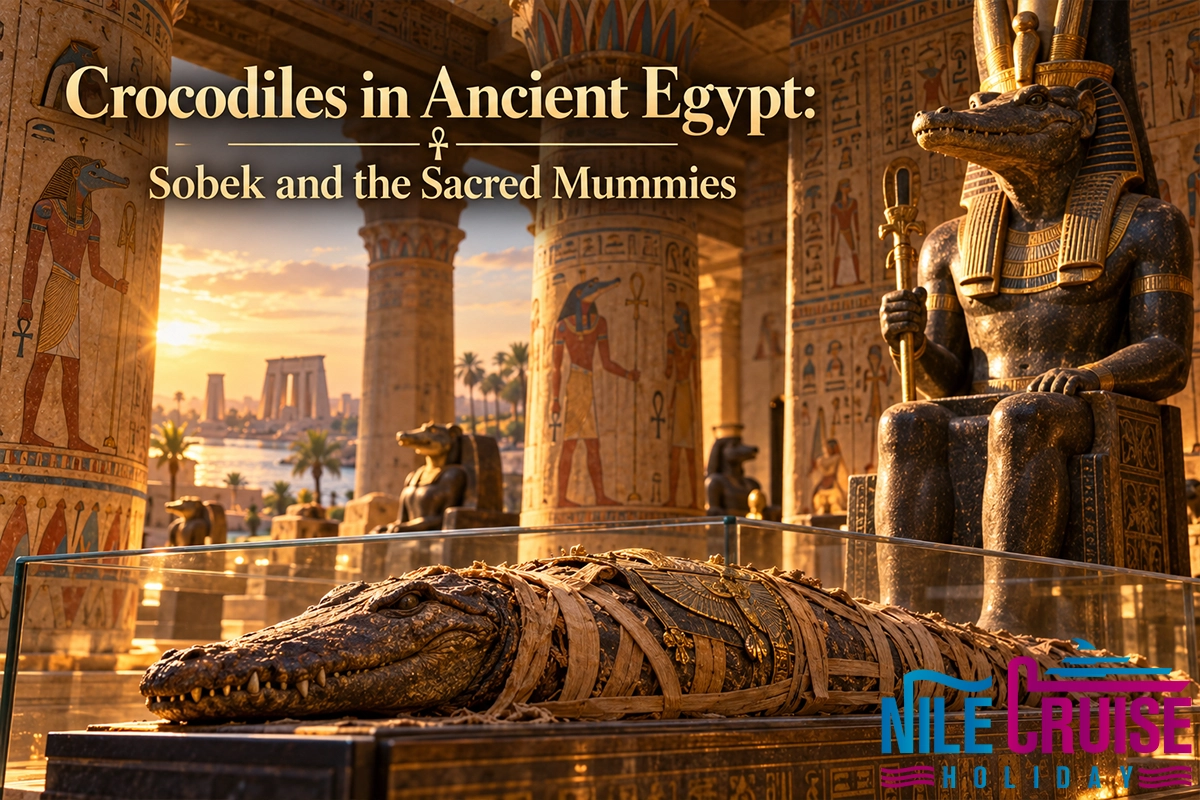
To the ancient Egyptians, the crocodile was both a danger and a god.
Sobek, the Crocodile God
Sobek was shown as a crocodile or as a man with a crocodile's head. He represented the power and fertility of the Nile, as well as the protection of the pharaoh. He was worshipped from the Old Kingdom, more than 4,000 years ago, until the Roman period. Some kings even took his name, such as the 12th Dynasty female pharaoh Sobekneferu.
Kom Ombo: The Temple of Sobek
The best place to meet Sobek today is Kom Ombo Temple, a regular stop on Nile cruises. It is a rare double temple, with one half dedicated to Sobek and the other to the falcon god Haroeris, or Horus the Elder. Next to the temple, the Crocodile Museum displays mummified crocodiles, crocodile eggs, and statues of Sobek. North of Kom Ombo, Edfu Temple honors Horus, the falcon god who shares Kom Ombo with Sobek. Our list of the best stops on a Nile river cruise includes it.
Fayoum and Crocodilopolis
The other great center of Sobek's worship was the Fayoum oasis, southwest of Cairo. The Greeks called its main city Crocodilopolis, and its temple kept a sacred crocodile fed and decorated with jewelry. Thousands of crocodile mummies have been found across Egypt as offerings to Sobek.
A Surprise in the Mummies
In 1807, the French naturalist Étienne Geoffroy Saint-Hilaire noticed that many mummified crocodiles had different skulls from Nile crocodiles, and he named them Crocodylus suchus. Other scientists dismissed them as young Nile crocodiles. In the 21st century, DNA studies of crocodile mummies proved Saint-Hilaire right. C. suchus is a separate, smaller, and calmer species, which made it easier to keep in temples and mummify. It is rare in the Nile today, and both species may have inspired Sobek. Read more about Egyptian mummification.
Is It Safe? Crocodiles and Your Nile Cruise
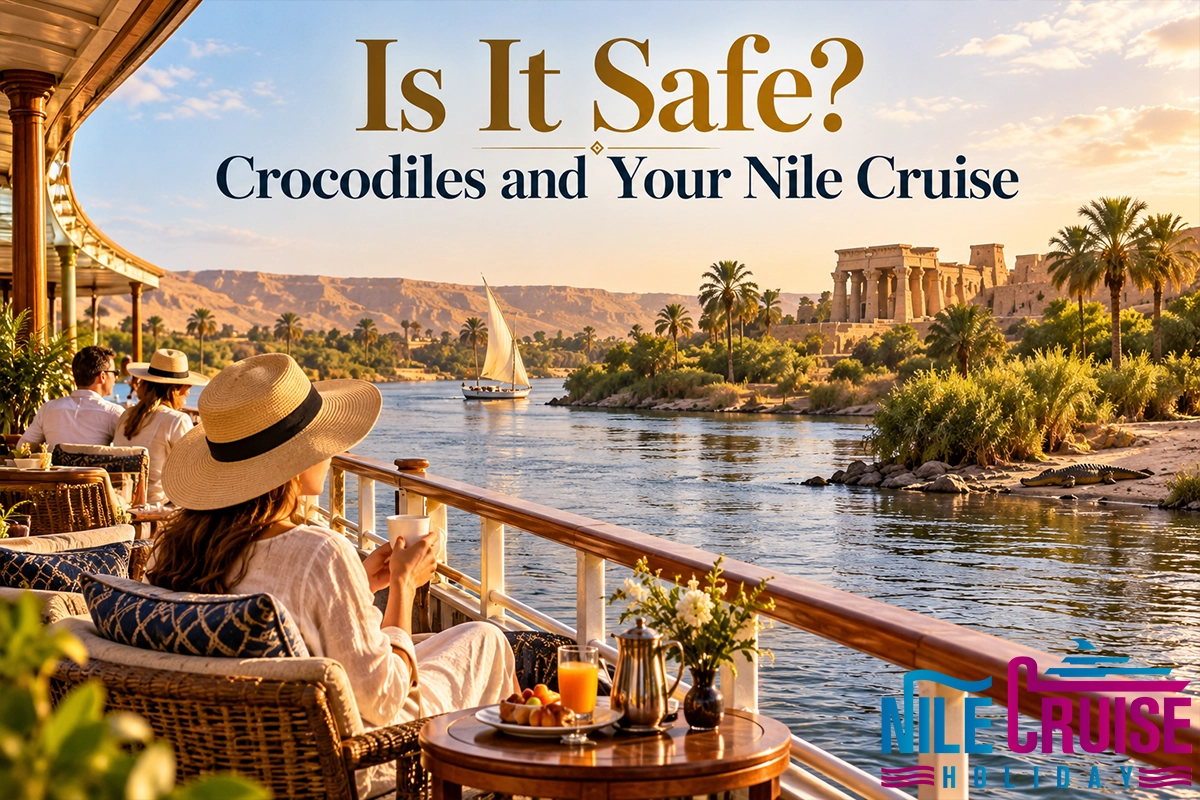
For almost all travelers, crocodiles are not a safety concern. Here is what you need to know.
On the Luxor to Aswan Route
On a standard Luxor to Aswan Nile cruise, there are no wild crocodiles to worry about. Felucca rides, sun decks, and riverside walks are all crocodile-free. The real risks on this route are heat, sun, and uneven ground at the temples. Read our guide on how safe a cruise on the Nile is.
On Lake Nasser
On Lake Nasser, crocodiles are real, so follow your crew's instructions. Do not swim in the lake, sit at the water's edge, or wander along the shore alone, especially at dawn and dusk. Cruise ships are completely safe, and transfers by small boat to the temples are managed by experienced crews.
Should You Swim in the Nile?
Swimming in the Nile is not recommended anywhere in Egypt, and crocodiles are only part of the reason. Strong currents, boat traffic, and parasites such as schistosomiasis (bilharzia) are bigger risks on most of the river. Swim in your ship's pool instead. Our health guide for Egypt covers water safety in more detail.
Where to See Crocodiles and Other Nile Wildlife
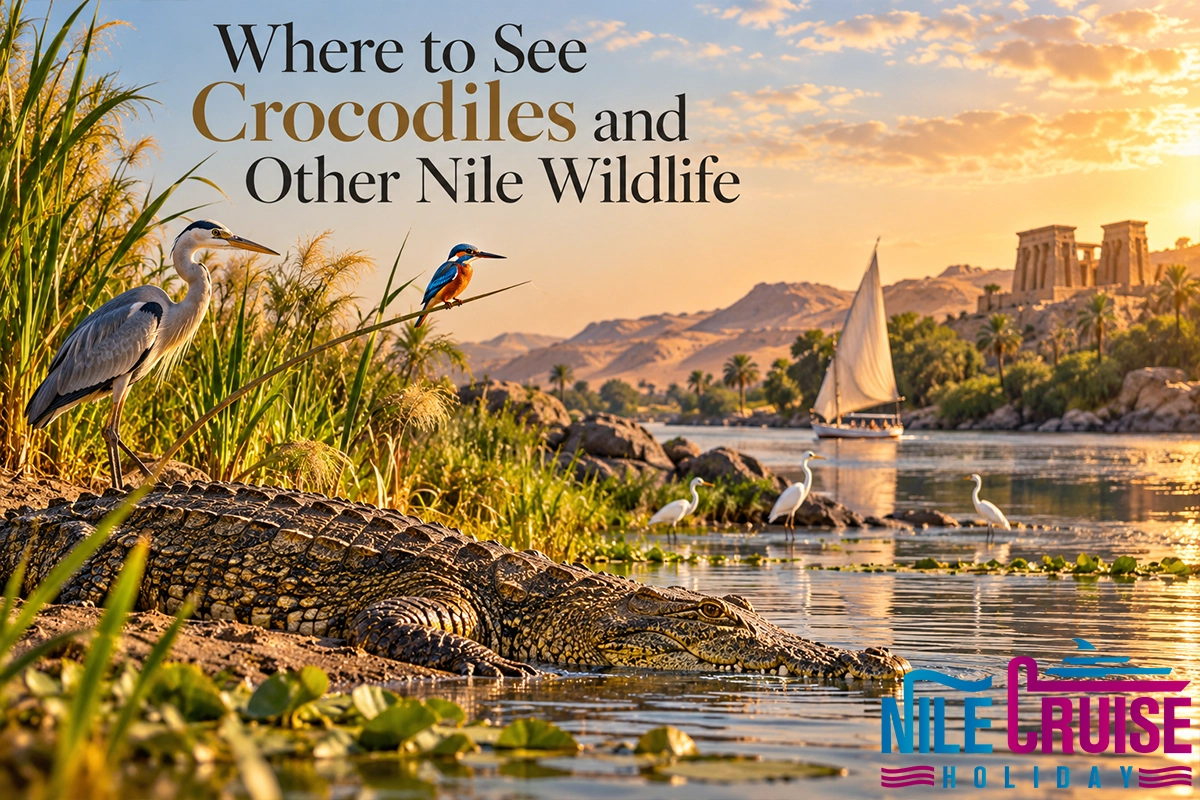
There are three main ways to see crocodiles in Egypt, plus plenty of other wildlife along the river.
The Kom Ombo Crocodile Museum
For most travelers, this is the most reliable place to see crocodiles, even if they are 2,000 years old. The museum sits beside the temple and is included in most cruise programs.
Nubian Villages Near Aswan
Some Nubian villages on the west bank of Aswan keep young crocodiles in tanks as a tourist attraction, a custom linked to old Nubian beliefs that crocodiles bring protection. Visitors can sometimes hold one, but think carefully about animal welfare before you do. The Nubian Museum in Aswan explains Nubian traditions in more depth. Our guide to whether the Nubian village in Aswan is worth visiting explains what to expect.
Wild Crocodiles on Lake Nasser
For a wild sighting, a Lake Nasser cruise is your best chance. Ships such as the MS Nubian Sea, Movenpick MS Prince Abbas, and Steigenberger Omar El Khayam sail past the shores where they live. Bring binoculars and keep watch from the sun deck, especially in the mornings.
Other Wildlife on the Nile
The Nile is rich in birdlife, including herons, egrets, kingfishers, and ibis, and Lake Nasser attracts pelicans and other migrating birds in winter. Fish such as tilapia and Nile perch support local fishermen. Hippos, once common in Egypt, now live only much further south. A sunset felucca ride in Aswan and the Aswan Botanical Garden are great places for birdwatching. See our guide to things to do in Aswan.
Enjoy the Majesty of A Nile Cruise in Upper Egypt With Us
Crocodiles still live in Egypt, but today they are found almost entirely on Lake Nasser, south of the Aswan High Dam. On the classic cruise between Luxor and Aswan, there are none to worry about, though you can meet their mummified ancestors at Kom Ombo. For a chance to see a wild crocodile, join a Lake Nasser cruise and keep your binoculars ready.
Long after the floods have gone, the crocodile still glides through the story of the Nile, from Sobek's temple walls to the quiet shores of Lake Nasser. To plan your journey, explore our Nile river cruises or contact us.