The Birqash Camel Market (also spelled Birqash or Berqash) is Egypt's largest working camel market, held on a dusty desert plain northwest of Cairo. Every Friday at dawn, hundreds of camels, many of them brought from Sudan along the ancient Forty Days Road, are auctioned to farmers, traders and butchers in a swirl of shouting, dust and bargaining. It is one of the last places where the old caravan trade of Africa still meets the modern world.
It is also a raw and sometimes upsetting place. This guide helps you decide whether the Birqash Camel Market is worth visiting. It covers its history, where the camels come from, what you will see, camel prices, the hard truth about animal welfare, how to get there, timing and fees, practical tips, and gentler alternatives for meeting camels on an Egypt trip.
Birqash Camel Market Facts and Details
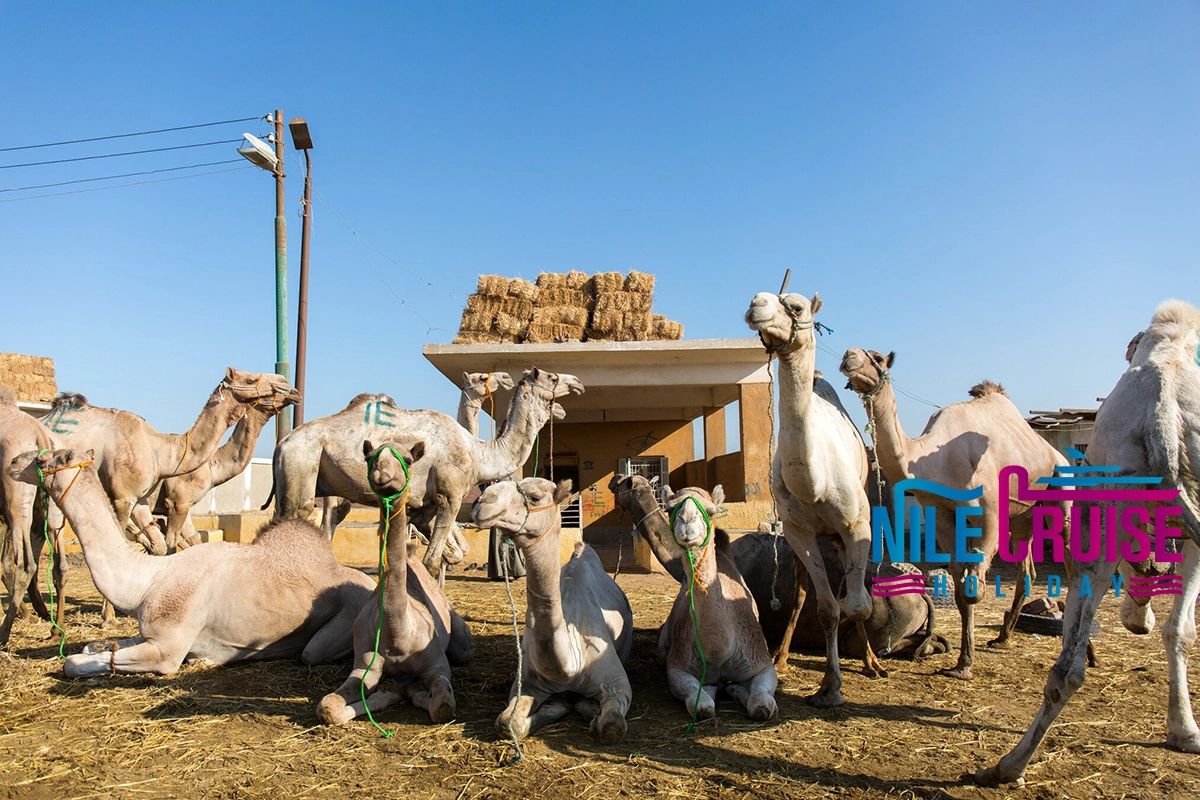
Where Is the Birqash Camel Market?
The market lies near the village of Birqash, in the Manshiyet el-Qanater district of Giza Governorate, on the edge of the Western Desert northwest of Cairo. Sources put it between 35 and 60 kilometres from the city, depending on where you start, and the drive usually takes 1 to 1.5 hours from central Cairo or Giza.
Quick Facts
| Detail | Information |
|---|---|
| Location | Birqash village, Giza Governorate, northwest of Cairo |
| Main market day | Friday |
| Best time | About 6am to 8:30am |
| Moved here | 1995, from Imbaba in Cairo |
| Camels from | Sudan, Egypt and the Horn of Africa |
| Camel prices | Roughly EGP 750 to EGP 6,000 or more, per older reports |
| Best for | Photographers and travelers seeking local culture |
| Not suited to | Young children and sensitive travelers |
From Imbaba to Birqash
For centuries, Cairo's great camel market was held in Imbaba, on the west bank of the Nile, and in the 1980s it was described as the largest camel market in Africa. Photographs of it date back to the 1880s. As Cairo grew and land became valuable, the market was pushed out, and in 1995 it settled at Birqash. An earlier market had once stood near Al-Azhar in Islamic Cairo, so the trade has moved steadily away from the city centre over time.
The Forty Days Road: Where the Camels Come From
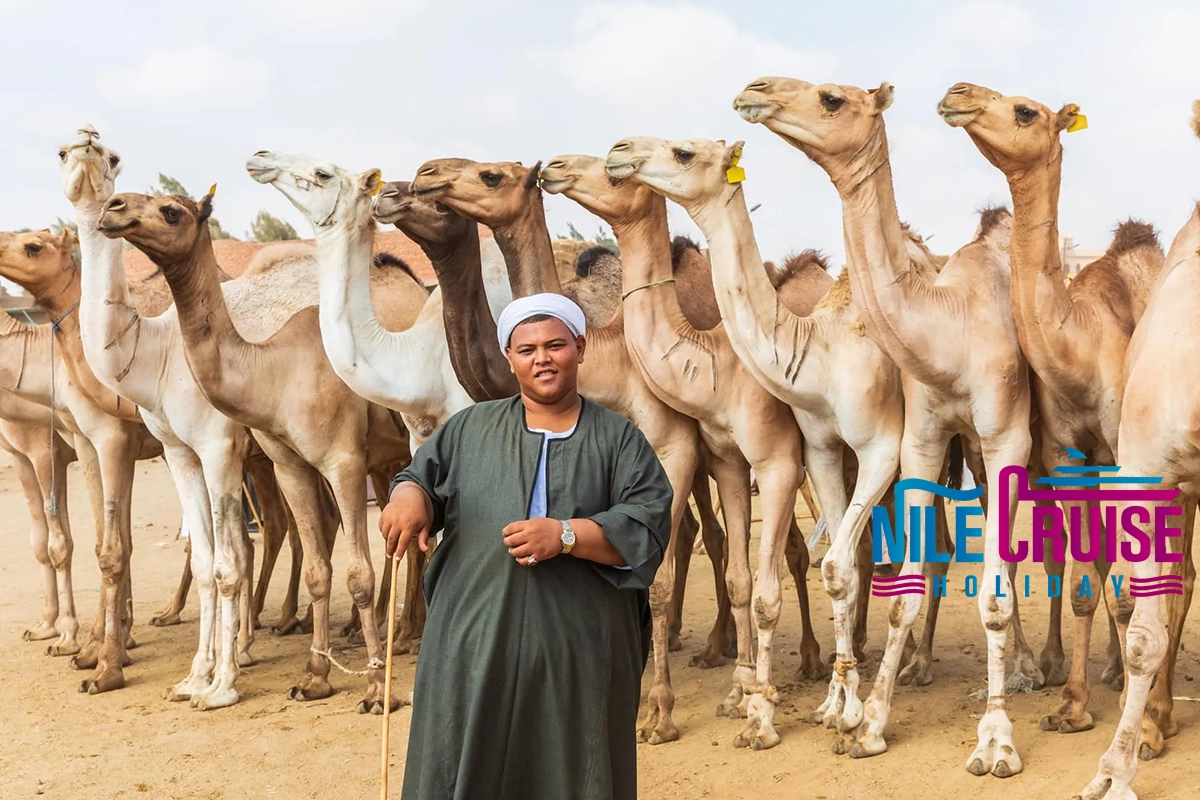
Darb al-Arba'in
Most camels at Birqash begin their journey in Sudan, around Omdurman, Kassala and El Fasher. They follow the route of the Darb al-Arba'in, the "Forty Days Road", an ancient caravan trail through the desert into southern Egypt. In earlier centuries, the historian Ibn Khaldun described thousands of caravans using routes like it to carry goods between Africa and Egypt.
From Caravans to Trucks
Today the journey is far faster. Herders bring the camels into southern Egypt, where many are sold first at the camel market of Daraw, near Kom Ombo Temple north of Aswan. From there, they are loaded onto trucks for the final 900 kilometres or so to Birqash, a trip of a few days rather than forty. Some camels also arrive from Somalia, Ethiopia and other parts of the Horn of Africa.
What Happens to the Camels
Buyers come for different reasons. Some camels are bought for farm work or breeding, some are exported onward, and many are sold for meat, which is widely eaten in Egypt. That is the reality of a livestock market, and it shapes everything you will see.
What to Expect at the Birqash Camel Market
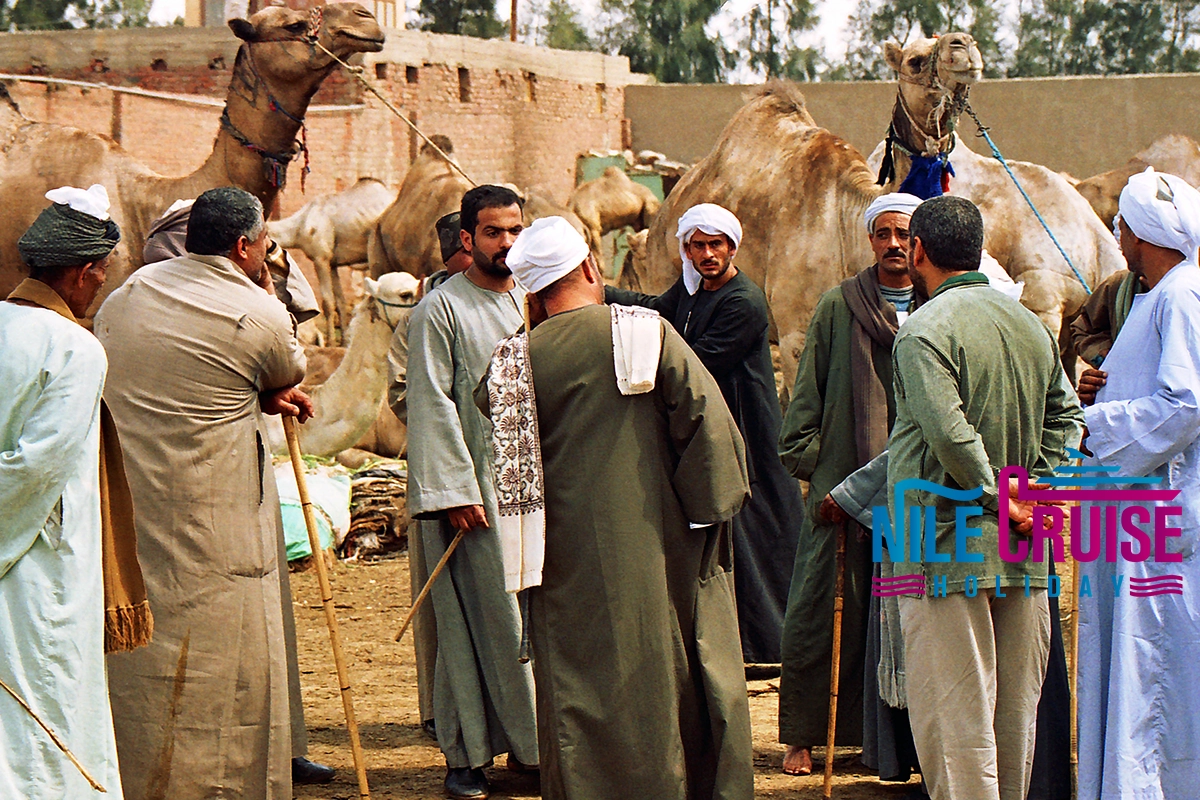
Arriving at Dawn
The market is at its liveliest just after sunrise, and most serious trading is over by about 10am, although some sources say it continues into early afternoon. Arrive early to see the trucks unloading, the herds being sorted and the first big auctions.
Auctions and Bargaining
Camels are grouped by owner and sold by auction or haggling, with traders shouting bids and slapping hands to seal deals. Prices depend on supply and demand on the day, as well as each animal's size, health and coat. Watching a sale between experienced dealers, many of whom have spent their lives on the road, is one of the most interesting parts of the visit.
Camel Prices
Reported prices range widely. Smaller camels have sold for around EGP 750, larger ones for EGP 6,000 or more, and the best animals for much higher sums, although these figures are not recent and inflation has pushed prices up. Buyers look for a shiny coat, a long wide neck, a large hump and strong legs, and solid colours, especially rare white or black camels, are prized. Deals are paid in cash or sometimes traded for goats, sheep or horses.
Traders and Other Livestock
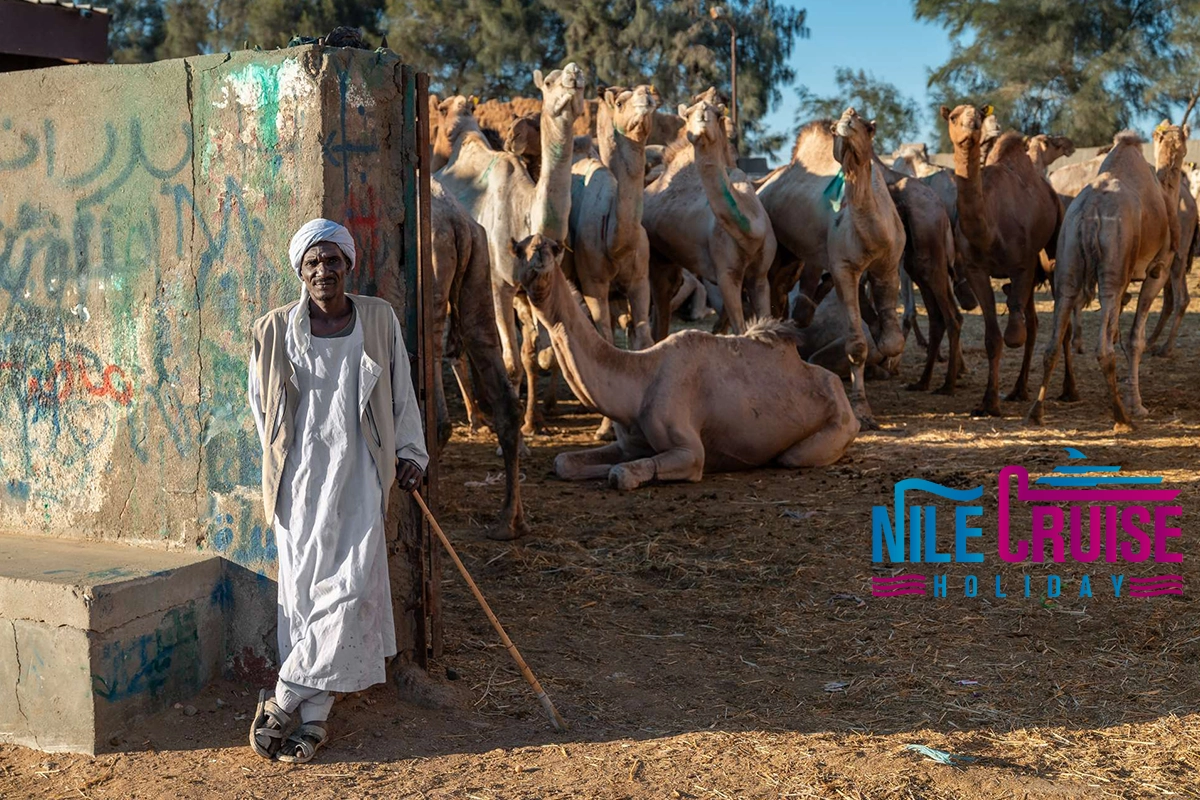
Traders and herders come from Upper Egypt, the Nile Delta, Sudan and beyond, many in long galabeyas and turbans. Alongside the camels, you may see horses, goats and sheep for sale, and small stalls selling tea, food, ropes, saddles and whips.
The Hard Side: Animal Welfare at Birqash
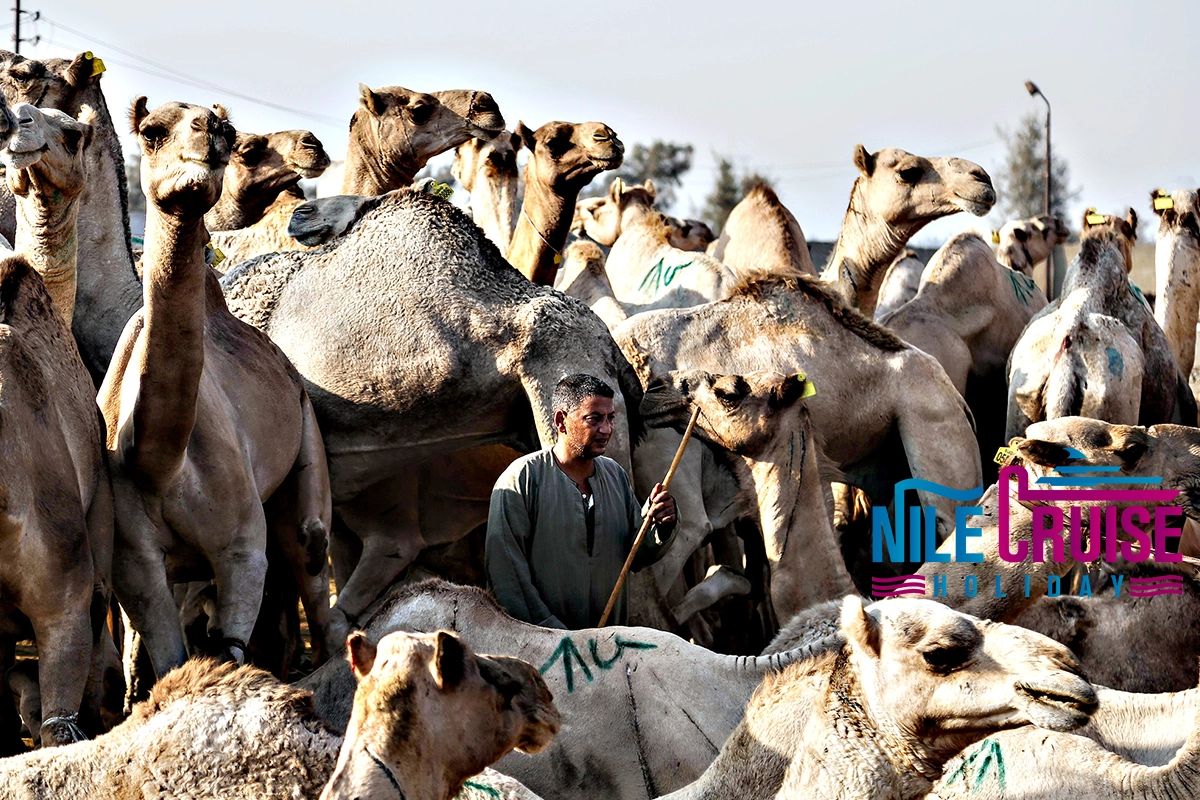
What You May See
Birqash is a working market, not a show, and animal welfare standards are very different from what many visitors expect. Camels are often hobbled on one leg to stop them running away, and herders use sticks to drive and control them. Some animals arrive weak or injured after their journey, and those too sick to sell may be slaughtered on site. One recent visitor left after just 30 minutes, describing the experience as a culture shock.
Who Should Skip It
The market is not suitable for young children, travelers who are upset by animal suffering, or anyone expecting a tourist attraction. If you are unsure, read honest reviews before you go, and remember you can leave at any time.
How to Visit the Birqash Camel Market
Getting There
There is no convenient public transport, so most visitors go by private car or taxi. The easiest option is a guided half-day tour with hotel pickup, which avoids the confusing final roads and gives you someone who can explain the trading. If you hire a taxi, agree on a return price and a waiting time before you leave.
Market Days and Hours
Friday is the main market day, and the best hours are roughly 6am to 8:30am. Some sources mention smaller trading on other days, especially Sunday, but Friday is the one to plan around.
Entry Fees
Foreign visitors usually pay a small entrance fee at the gate, and a separate camera charge has been reported in the past. Amounts change, so carry small Egyptian pound notes for fees and tips, and see our tipping guide for typical amounts. If you book a tour, ask whether fees are included.
Why a Guide Helps
A local guide or driver can negotiate fees, explain the auctions, translate conversations with traders and help you stay out of the way of nervous animals. It also makes it easier to ask permission for photographs.
What to Wear and Bring
- Dress modestly, covering shoulders and knees. The market is almost entirely male, and conservative clothing reduces unwanted attention for women.
- Wear closed, sturdy shoes, as the ground is covered in dust and dung.
- Bring water, a hat, sunscreen and a scarf for the dust.
- Keep valuables secure and watch for pickpockets in crowded areas.
Staying Safe Around Camels
Camels can bolt suddenly, so stay alert, keep a safe distance from groups being moved, and never stand directly behind an animal. Follow your guide's lead about where to stand.
Photography Etiquette
Birqash is a famous spot for photographers, with dramatic light at dawn and striking faces among the traders. Always ask before photographing people, accept a refusal politely and avoid photographing distressed animals for social media.
Is the Birqash Camel Market Worth Visiting?
It depends on what kind of traveler you are. For photographers and travelers who want to see a raw, living tradition far from tourist sites, Birqash can be one of the most memorable mornings in Egypt. For anyone sensitive to animal welfare, it is better skipped.
Who Will Find It Worthwhile
- Photographers who want authentic scenes at sunrise.
- Travelers interested in trade, nomadic culture and the history of the caravan routes.
- Repeat visitors who have already seen the main Cairo sights.
Gentler Ways to Meet Camels in Egypt
You can enjoy camels without visiting a livestock market. A short ride at the Giza Pyramids is the classic photo, best booked through a guide at an agreed price, and our guide to things to do in Giza covers the area. Camels are also used for rides around Saqqara, on Luxor's West Bank, covered in our guide to the Luxor East Bank vs West Bank, and to the Nubian Village in Aswan, where they are well cared for by their owners. Our guide to things to do in Aswan has more ideas.
Fitting Birqash Into a Cairo and Nile Cruise Trip
Because the market is a Friday morning event, plan it into a Cairo stay before or after your cruise, then spend the rest of the day at the Grand Egyptian Museum or Khan el-Khalili, or end it with a felucca ride in Cairo. Our guide to all Cairo attractions helps you plan the day. Our 8-day Cairo and Nile cruise package, wider Cairo and Nile cruise tours and Nile cruises from Cairo include time in the capital, and our guide to what to do in Egypt has more ideas. For a calmer local market, try the Aswan market on your cruise.
Discover the Unique Culture of Cairo's Camel Traders With Our Grand Day Trips
The Birqash Camel Market is not a pretty postcard of Egypt. It is a loud, dusty and sometimes hard place, where the last echoes of the great Saharan caravans meet the trucks and phones of today. For photographers and curious travelers ready for its realities, a Friday dawn at Birqash offers a glimpse of a world few visitors see; for others, a camel ride beneath the pyramids will capture the timeless spirit of the desert far more gently. To plan Cairo, its markets and a Nile cruise together, browse our Egypt tour packages with a Nile cruise or ask our team for a tailor-made itinerary.