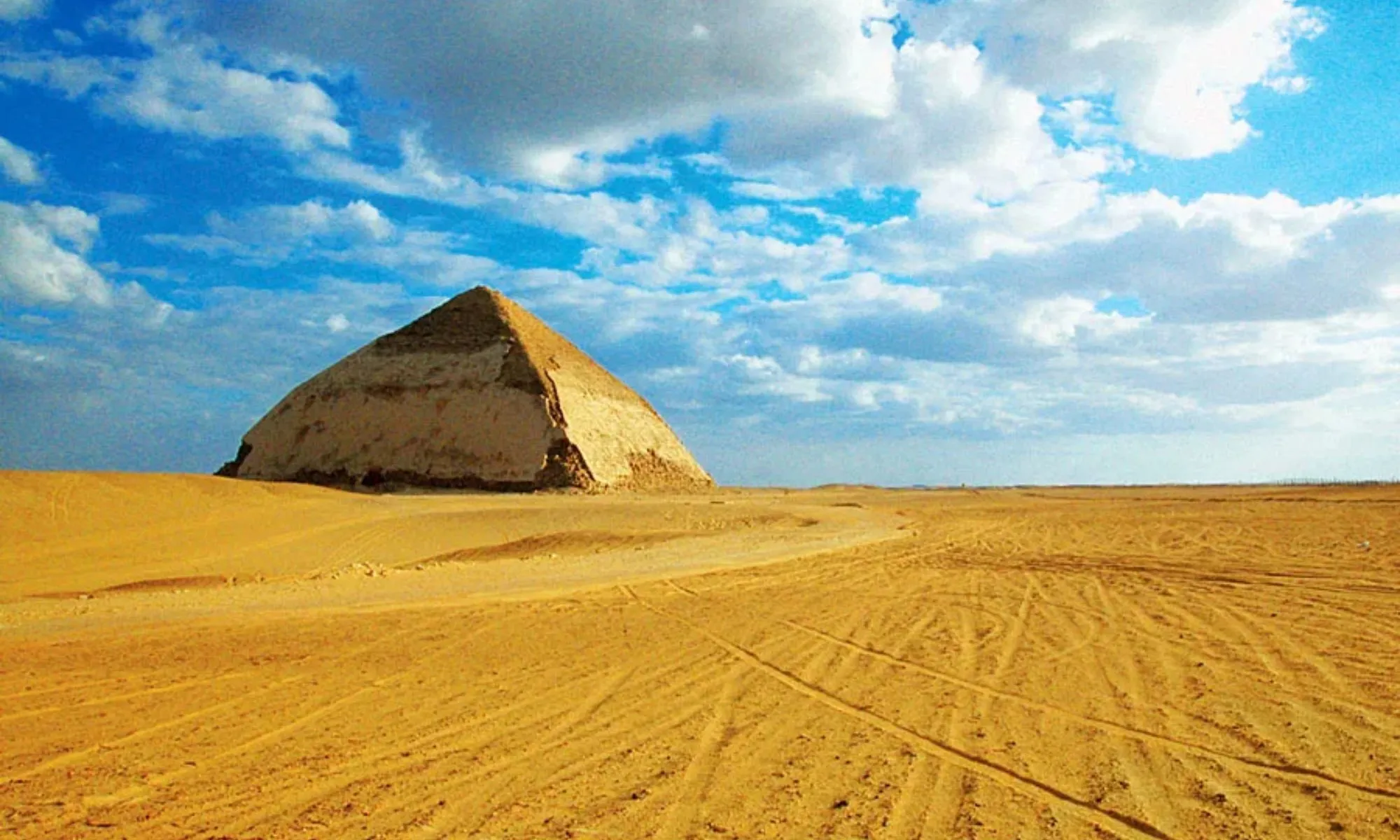
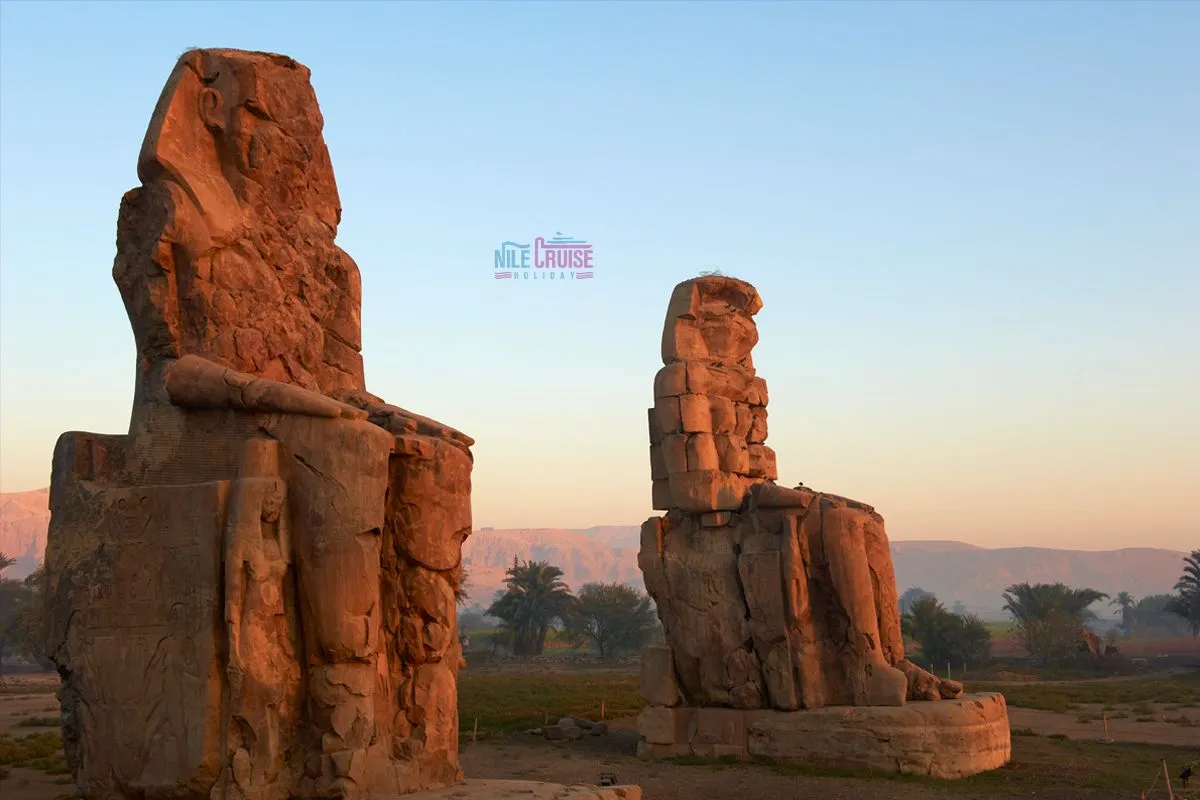
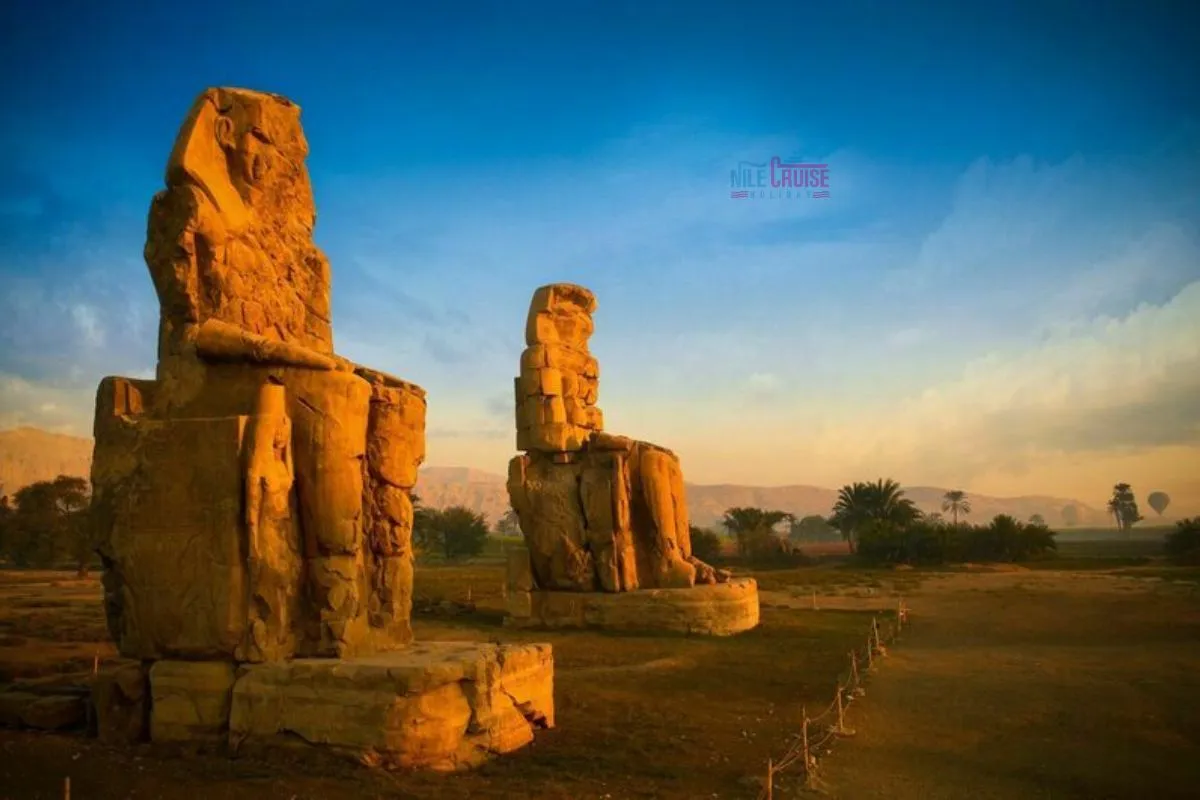
Two battered giants sit beside the road on Luxor's West Bank. Their faces are worn away, their bodies cracked, and sugarcane fields brush against their feet. Most visitors stop for a quick photo, climb back into the minibus, and drive on toward the tombs.
Few realize what they have just passed. Around 2,000 years ago, one of these statues used to make a sound at dawn. Travelers crossed the Mediterranean to hear it. Roman governors carved poems into its legs. An emperor and empress waited in the cold morning air for it to speak.
The Colossi of Memnon are among the most famous statues of the ancient world, and also among the most misunderstood. They do not show Memnon at all. They show Amenhotep III, one of the richest pharaohs Egypt ever had, and they once guarded the largest temple ever built at Thebes. This is the story of how a Greek legend, an earthquake and a Roman repair turned two royal portraits into the singing colossi of Memnon, and how archaeologists are now bringing the lost temple behind them back into the light.
The True Pharaoh Behind the Giants
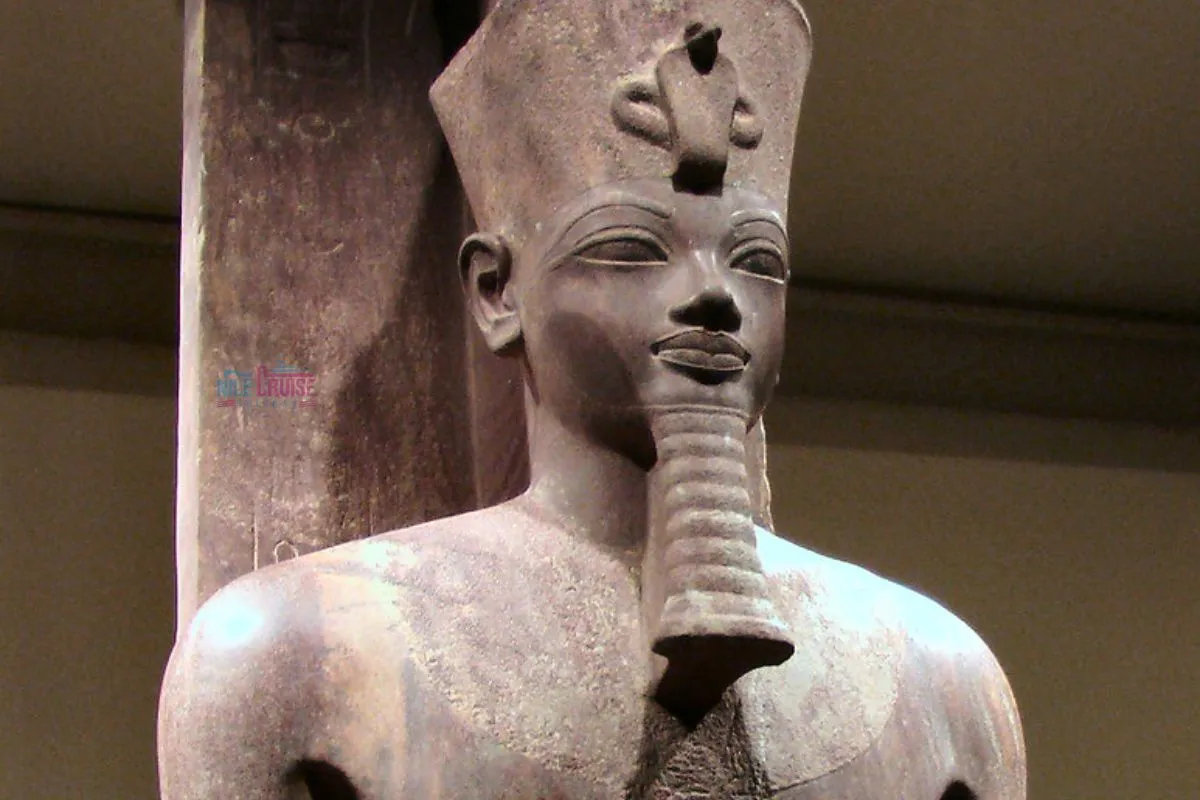
Amenhotep III
Amenhotep III ruled Egypt for nearly four decades in the fourteenth century BCE, at a time of peace and enormous wealth. Gold flowed in from Nubia, foreign kings wrote begging for gifts, and the pharaoh poured his riches into building on a scale few rulers ever matched. Much of Luxor Temple and the original Avenue of Sphinxes began under his reign. His son would become the revolutionary pharaoh Akhenaten.
So who built the Colossi of Memnon? Amenhotep III did, and they are portraits of him. Each statue shows the king seated, hands resting on his knees, gazing east toward the river and the rising sun. With their platforms, they stand about 18 meters high, and early estimates of their original height with crowns run closer to 21 meters. Each weighs roughly 700 tons.
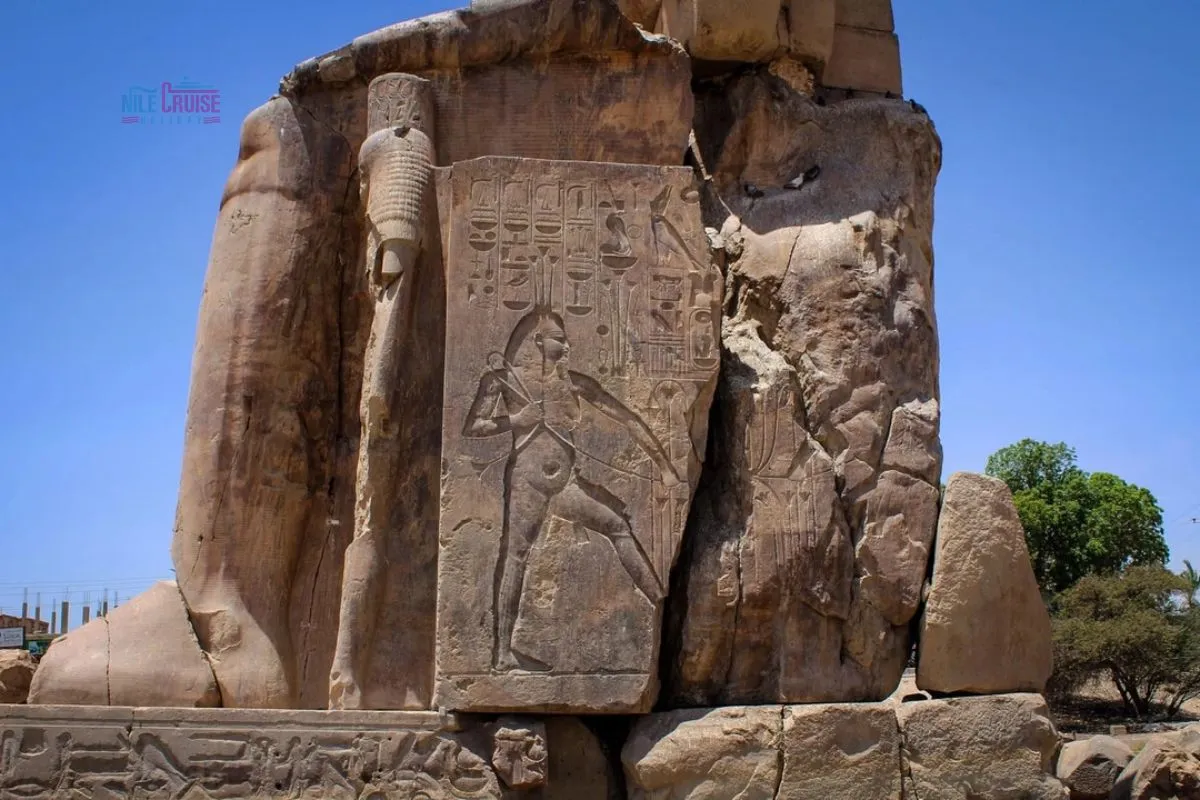
The stone itself tells a story. These are blocks of quartzite sandstone, quarried near modern Cairo and hauled hundreds of kilometers south. Beside the king's legs stand smaller figures of his mother Mutemwiya and his great royal wife Queen Tiye, a woman of unusual influence whose image appears beside her husband again and again.
Why They Were Built
The statues were never meant to stand alone. They were the front door.
Behind them stretched Amenhotep III's Temple of Millions of Years, the vast complex where his memory was to be honored long after his death. It covered an estimated 35 to 38 hectares, roughly 86 to 95 acres depending on how the boundaries are measured. That made it larger than the later temples of Hatshepsut or Ramses II. Pylons, courtyards, and forests of columns ran back from the river, filled with hundreds of statues. The two colossi simply marked the entrance.
The Dawn Song and the Singing Colossi of Memnon
The Earthquake
For more than a thousand years, the colossi were silent. Then, around 27 BCE, the ground beneath Thebes shook violently. The earthquake shattered the northern statue from the waist up and left deep cracks through its lower half.
What happened next became one of the great puzzles of the ancient world. Soon after the quake, visitors began reporting that the broken statue made a sound shortly after sunrise. It was not loud, and it did not happen every day. But when it came, it seemed to answer the light.
Word spread quickly through the Roman Empire, which had only recently taken control of Egypt. A cracked statue that seemed to greet the dawn was exactly the kind of marvel educated Roman travelers loved.
What Did It Sound Like
The witnesses disagree, which makes the mystery more interesting. The Greek geographer Strabo, who visited around 20 BCE, heard what he described as something like a light blow. He was honest enough to admit he could not tell whether it came from the stone or from someone standing nearby.
Later, the travel writer Pausanias compared the colossi of Memnon's sound to the snapping of a lyre or harp string. Other visitors spoke of struck brass or a soft whistle.
Modern researchers offer a natural explanation. As the morning sun warmed the cold, porous stone, moisture trapped overnight in the cracks would evaporate, and the rock would expand slightly. That combination may have produced a faint ringing or cracking sound. Some historians have also wondered whether human tricks played a part, but no evidence settles the question.
Why Memnon
The Greek Hero
Greek visitors had their own explanation, and it came from Homer's world. They connected the statue with Memnon, a legendary king of Ethiopia who fought for Troy and was killed by Achilles. Memnon was the son of Eos, goddess of the dawn.
To them, the story was perfect. Each morning Eos returned to the sky, and her son called out to greet her. The dew that gathered on the stone at sunrise was said to be her tears. The statue had nothing to do with Troy, of course, but the name stuck so firmly that it has outlasted the true identity of the king for two thousand years.
The name may have stuck for another reason too: Amenhotep III’s throne name, Nebmaatra, was rendered by some ancient writers in forms such as Nimmaria or Mimmaria, close enough to "Memnon" to reinforce the Greek identification.
Ancient Celebrity
The singing colossi of Memnon became one of the most visited sights of the Roman world. Travelers marked their visits by carving inscriptions into the legs and base of the northern statue. More than 100 of them survive, in Greek and Latin, dated from roughly the first to the third century CE. Some are short notes recording a name and a date. Others are full poems.
The most famous visitors arrived in November 130 CE. Emperor Hadrian and Empress Sabina came to hear the sound. Balbilla left four Greek poems recording visits between November 19 and 21, 130 CE. Her verses describe Sabina hearing Memnon around the first hour of daylight and Hadrian hearing the statue answer repeatedly, on one occasion, three times, turning a strange acoustic event into an officially recorded imperial encounter.
Silencing the Stones
The Roman Repair
By the end of the second century CE, the northern colossus was still a ruin from the waist up. Tradition credits Emperor Septimius Severus with restoring it around 199 CE. He visited Egypt and, according to some accounts, never heard the statue sing, which may have inspired the repair.
Roman builders stacked five tiers of sandstone blocks onto the broken body to rebuild the chest, shoulders and head. The result was rougher than the original quartzite, and the joins are still easy to see today. The intention seems to have been respectful. A famous statue would be made whole again.
Why the Song Stopped
It worked too well. The last reliable report of the sound dates to around 196 CE, close to the time of the repair. After that, the statue fell silent and never reliably sang again.
The most likely explanation is the repair itself. The new upper tiers added weight, closed the open cracks, and changed how the stone heated and cooled at dawn. Whatever physical process had produced the sound no longer worked.
The irony is hard to miss. An emperor tried to honor the most famous statue in Egypt, and in doing so silenced it forever. Visitors who stand in front of the colossi today can still see the line where the singing stopped, marked by the change from ancient quartzite to Roman sandstone.
The Lost Temple Rises
What Happened to the Temple
The colossi survived. The temple behind them did not.
An earthquake around 1200 BCE, within two centuries of its construction, seems to have toppled much of the complex. Amenhotep III had built close to the river, and the annual Nile flood seeped into the foundations year after year. Later kings then treated the ruins as a quarry. Blocks and statues were carried away for new projects, including the temple of Ramses II at the Ramesseum. Over three thousand years, the greatest temple in Thebes faded into a field of broken stone and sugarcane.
What Archaeologists Found
Since the late 1990s, a conservation project led by the Armenian archaeologist Hourig Sourouzian has been working through that field. The team has drained groundwater, lifted fallen statues from the mud and mapped the plan of the original temple.
The results are remarkable. Excavators have traced three pylons, each once fronted by colossal statues, and a great columned court. Dozens of granite statues of the lion-headed goddess Sekhmet have emerged from the soil. Deeper in the field, the team has reassembled and re-erected colossal statues of Amenhotep III, including figures standing around 13 to 14 meters, roughly 45 feet tall. Hundreds of statues and fragments have been recovered.
For the first time in millennia, the Colossi of Memnon are beginning to look like what they were meant to be: the entrance to something far bigger. It already ranks among the best temples to see on a Nile River cruise for anyone curious about archaeology in progress.
See More Than Two Statues
Read the Evidence
The difference between a five-minute photo stop and a real visit is knowing where to look. A private Egyptologist from Nile Cruise Holiday can point out the Roman repair line on the northern statue, the stacked sandstone tiers and the worn Greek and Latin inscriptions on the legs, including traces of the verses left after Hadrian's visit.
Up close, the small figures of Queen Tiye and Mutemwiya appear beside the king's legs. On the sides of the thrones, carved Nile gods bind together the plants of Upper and Lower Egypt. When the excavation area is visible, a guide can explain what has been found behind the statues and what still lies beneath the fields.
Many travelers see the colossi early, on the way to the Valley of the Kings, and the cool dawn air brings the old legend to life. The visit fits naturally into a 5-day Luxor to Aswan itinerary, and a felucca ride in Luxor later the same day offers a gentle view of the West Bank from the water.
Visit Colossi of Memnon with NCH
For opening times, transport and tickets, the Colossi of Memnon travel guide covers every practical detail. This story is about what the guide brings to life on-site. NCH arranges private drivers who stop where the history matters, coordinates timings around the crowds, and keeps a strict zero-commission shopping policy so the day stays focused on the monuments.
Travelers can decide whether to see the East Bank or West Bank first, then add other things to do in Luxor. The colossi appear on most Nile cruises from Luxor and Aswan, as well as the 7-day Cairo and Nile cruise package and the 8-day Cairo and Nile cruise package. A luxury Nile cruise adds comfort between excursions, while NCH's tailor-made West Bank itineraries let travelers linger at the colossi and the excavation for as long as the story holds them.