
Egypt has some of the strictest drone rules in the world. Under a law passed in December 2017, importing, owning, or flying a drone without prior permission from the Ministry of Defence is a criminal offense. Breaking it can bring a fine of EGP 5,000 to 50,000 and up to seven years in prison. In practice, tourists almost never receive permission, there is no exception for small drones, and drones found at the airport are usually held by customs.
Seen from above, the Nile is a green ribbon through the gold of the desert, but in Egypt that view belongs to balloons, not drones.
This guide explains what the law says and who can grant permission. It covers what happens to a drone at the airport, the penalties you could face, and the related photography rules at Egypt's monuments. It ends with legal ways to capture aerial views on your trip, from a balloon over Luxor to the sun deck of a Nile cruise.
Are Drones Legal in Egypt?
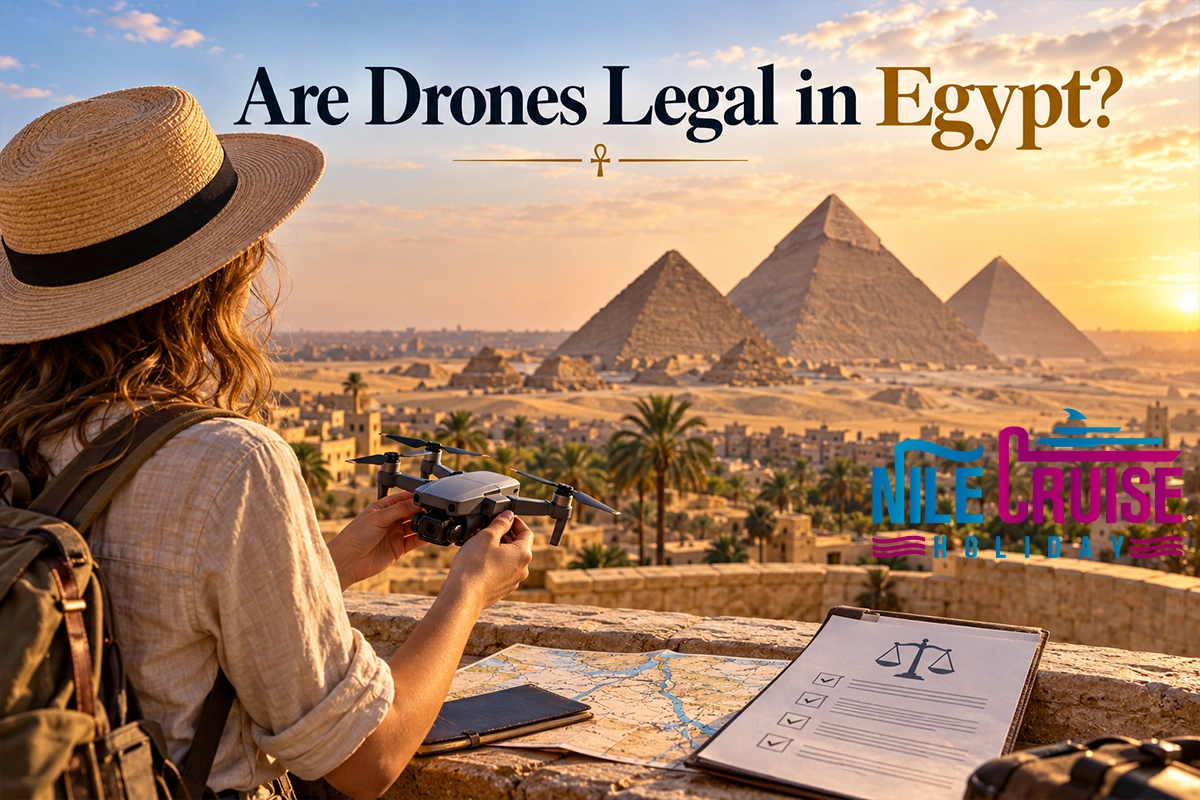
For tourists, the short answer is no. Drones are not banned outright, but the permission you need is almost impossible for a visitor to obtain.
What the Law Says
Egypt's parliament approved a drone law in December 2017, often cited as Law No. 216 of 2017. It makes the Ministry of Defence the only authority that can license drones. Without its permission, it is illegal to import, make, assemble, trade, possess, or use one. The UK Foreign Office gives the same advice: do not import, use, or produce drones in Egypt unless the Ministry of Defence has given permission beforehand.
Who Grants Permission
Only the Ministry of Defence can authorize a drone, usually together with the Egyptian Civil Aviation Authority (ECAA). Hotels, tour companies, guides, and Nile cruise operators cannot grant permission. Be wary of anyone who says otherwise.
No Exception for Small Drones
Many countries exempt drones under 250 g, but Egypt does not. A DJI Mini or any other small drone is treated the same as a professional machine. Toy drones with cameras can also attract attention at customs.
Why the Rules Are So Strict
Egypt treats drones as a security matter, not a hobby. Many famous sites lie close to military areas, airports, dams, and government buildings. The authorities also want to protect monuments and visitor privacy. The law reflects these concerns, with its harshest penalties reserved for drones used in crimes.
Drone Permits in Egypt: Can Tourists Get One?
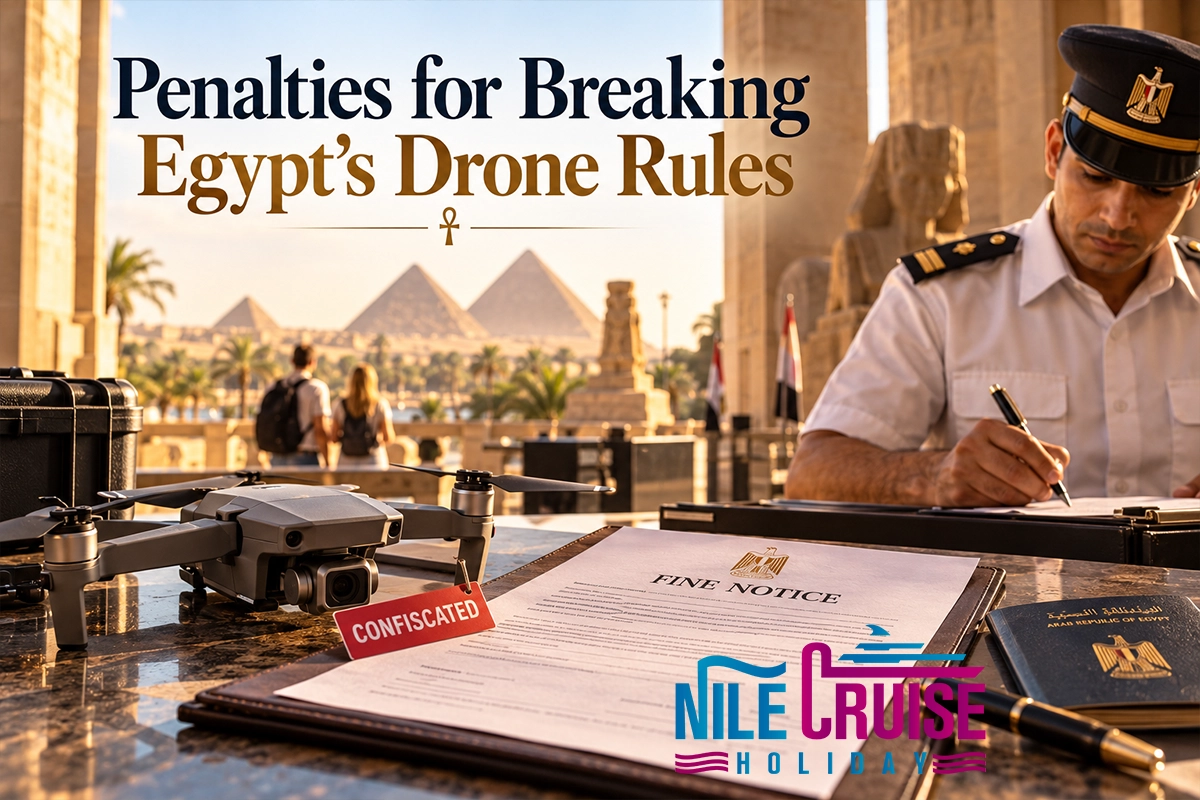
Permits exist, but they are designed for professional productions, not holiday videos.
The Reality for Tourists
Applications from recreational flyers are very rarely approved. Several guides describe the chance of success as close to zero, and some say permits are simply not issued to tourists. If you are traveling for pleasure, plan on leaving your drone at home.
The Process for Film Crews and Commercial Projects
Professional productions usually apply through a local production company or fixer. Applications typically include the drone's make, model, and serial number, detailed flight plans with locations, altitudes, and times, liability insurance, and a local licensed operator. Approval involves the Ministry of Defence and the ECAA, often takes two to three months, and may require a security escort on the day. Filming at archaeological sites also needs separate permission from the Ministry of Tourism and Antiquities.
No-Fly Zones Even With a Permit
Even approved operators must avoid airports, military zones, government buildings, and crowds. Flying over or near the Giza Pyramids, Abu Simbel, the Aswan High Dam, and other major sites is tightly controlled and needs specific security clearance.
Bringing a Drone Into Egypt: Airport and Customs
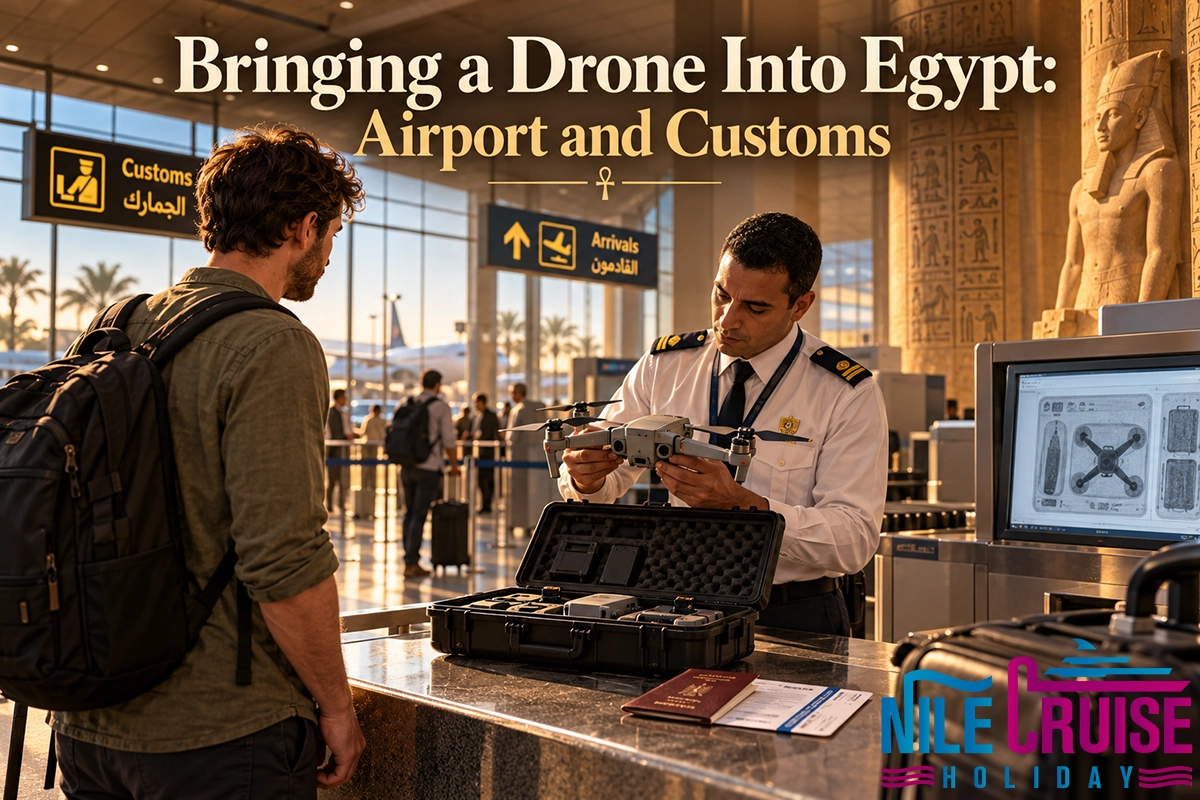
Most problems happen at the airport, before you ever think about flying.
How Drones Are Detected
All luggage is X-rayed on arrival at Cairo, Luxor, Aswan, Hurghada, and Sharm el-Sheikh airports. Officers look for drone bodies, controllers, propellers, and spare batteries in both checked and carry-on bags. Hiding a drone in your luggage is not a safe strategy. Customs checks happen alongside passport control, so read our guide on whether you need a visa for Egypt to know what to expect on arrival.
What Happens If Customs Finds a Drone
Without a Ministry of Defence permit, customs will usually hold your drone. In many cases, travelers receive a receipt and can collect the drone when they leave Egypt from the same airport, sometimes after paying a storage fee. However, this is not guaranteed. Some travelers report drones that were confiscated permanently, long delays, or questioning. Enforcement also varies from one officer to the next, so a friend's good experience is no guarantee of yours.
If You Arrive With a Drone Anyway
Declare it at customs rather than trying to hide it. Ask for a written receipt, keep it safe, and plan to fly home from the same airport. Remember that domestic flights, such as Cairo to Luxor, mean you may leave from a different airport than you arrived at, which can make collecting the drone impossible.
Drones and Nile Cruises
Flying a drone from the deck of a Nile cruise ship is not allowed. Cruises pass bridges, locks, dams, and towns where flying would break the law. If your drone made it into the country, leave it packed for the whole cruise. Our guide to how safe a cruise on the Nile is explains the wider security rules on board and ashore.
Penalties for Breaking Egypt's Drone Rules
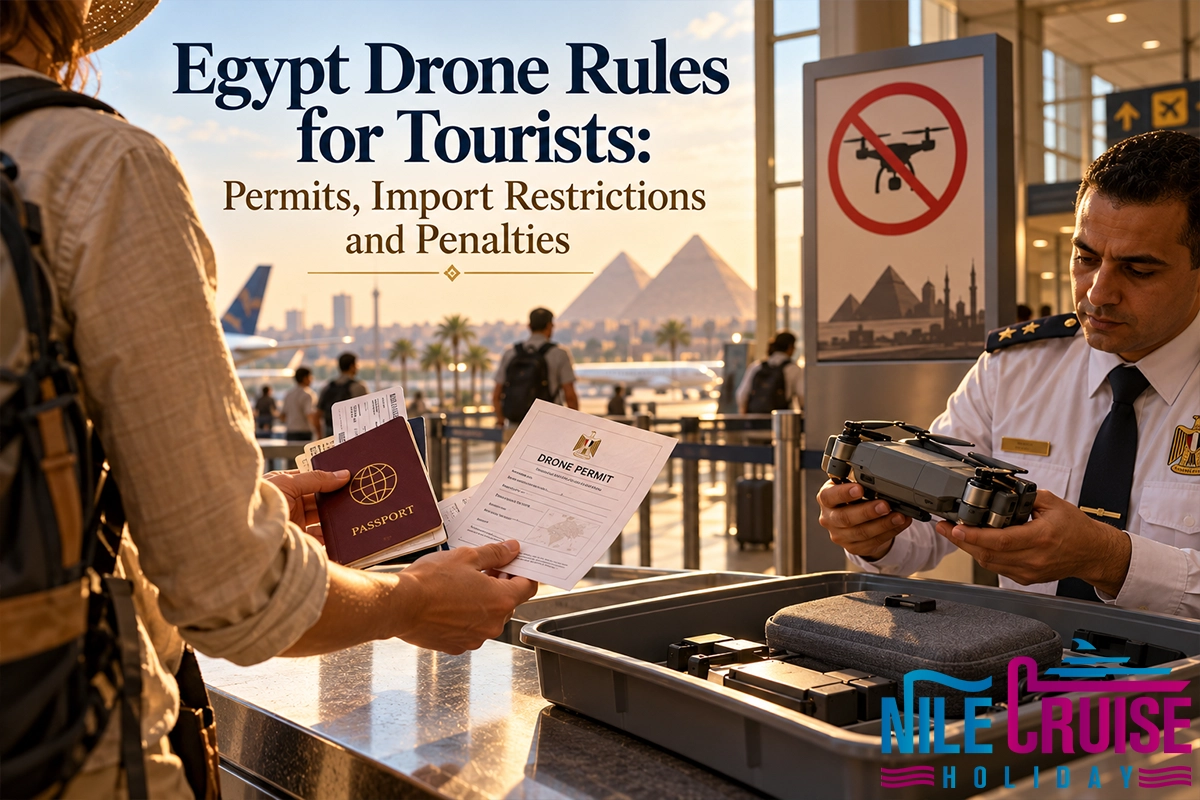
The penalties are serious, and the authorities do enforce them.
Fines and Prison Sentences
| Offense | Possible penalty |
|---|---|
| Importing, possessing, or using a drone without permission | 1 to 7 years in prison, a fine of EGP 5,000 to 50,000, or both |
| Repeat offenses | Up to the maximum penalty |
| Using a drone in a terror crime | Life imprisonment, or the death penalty if someone dies |
| Any offense | Confiscation of the drone and equipment |
Cases involving drones can be heard by military courts.
What Usually Happens to Tourists
In most tourist cases, the outcome is confiscation at the airport, sometimes with a fine. Flying a drone near a monument or security site can lead to arrest, questioning, and the loss of your phone and camera as well as the drone. Travel insurance is unlikely to cover equipment seized by the authorities. Read our guide to travel insurance for Egypt for what is covered.
Photographing Military Sites
It is illegal to photograph military property in Egypt, with or without a drone, and this includes the Suez Canal. Avoid photographing checkpoints, police stations, bridges, airports, and government buildings. Our guide to Egypt scams and how to avoid them covers other common mistakes visitors make.
Photography Rules at Egypt's Monuments
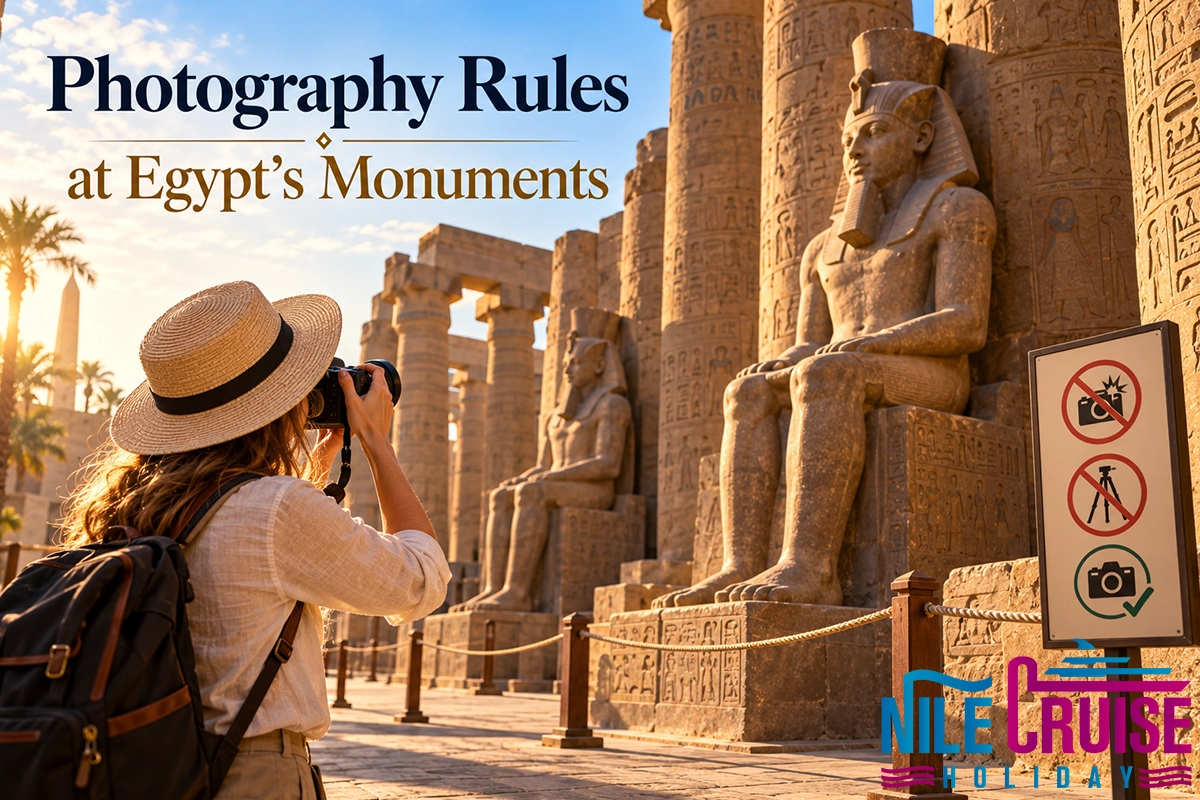
Drone rules are part of a wider set of photography rules that every visitor should know.
Cameras and Phones at the Sites
Personal photography with phones and cameras is allowed at most open-air sites, including Karnak Temple, Luxor Temple, Philae Temple, and the Giza Plateau. Flash is banned inside temples and tombs to protect the paintings.
Tombs and Museums
Phone photography without flash is allowed in most tombs in the Valley of the Kings, but not in Tutankhamun's tomb. The Grand Egyptian Museum allows personal photography in most galleries. Rules change often, so check at each ticket office.
Tripods and Professional Equipment
Tripods, professional lighting, and commercial filming usually need an extra ticket or a permit from the Ministry of Tourism and Antiquities. Gimbals are generally fine for personal use, but large rigs can attract attention.
Photographing People
Always ask before photographing local people, especially women, and respect a refusal. Some people may ask for a small tip in return.
Legal Ways to Get Aerial Views in Egypt

You do not need a drone to capture Egypt from above. Several legal options give you stunning high views.
A Hot Air Balloon Over Luxor
A sunrise Luxor hot air balloon ride is the best legal alternative to a drone. You float over the West Bank, the Temple of Hatshepsut, and the Nile, with photographs you could never take from the ground. Balloons are licensed and closely regulated. See our guide to things to do in Luxor for more ideas.
High Viewpoints
In Cairo, the Cairo Tower rises 187 m above the Nile, with views across the city to the Pyramids on clear days. The Saladin Citadel also has a panoramic terrace. In Aswan, the hillside tombs on the West Bank look down on the river and islands.
From the Water
A Nile cruise sun deck gives raised, gliding views of the riverbanks, and a sunset felucca ride in Aswan puts you right among the granite islands. On Lake Nasser Nile cruises, the open lake and desert make for wide, empty landscapes.
Camera Gear That Works Without a Drone
A wide-angle lens captures temple courts, a telephoto lens brings distant monuments closer, and a gimbal gives smooth walking video. Window seats on domestic flights over the Nile valley can also produce striking aerial photographs. Our guide on what to pack for a Nile cruise covers the rest of your kit.
Explore Egypt with Ease With Our Magical Egypt Tours
Egypt's drone rules are simple: without prior permission from the Ministry of Defence, you cannot import, own, or fly a drone, whatever its size. Tourists are almost never approved, airport customs will usually hold your drone, and penalties include heavy fines and prison. Leave your drone at home and capture Egypt from a balloon, a viewpoint, or the deck of your cruise instead.
From the sky above Luxor at dawn to the quiet deck of a ship on the Nile, Egypt still offers views that need no propellers at all. To plan a trip full of unforgettable views, explore our Nile river cruises or contact us.