
In the morning, the pool deck is all sunscreen, iced drinks, and swimsuits. By midday, you are walking between the columns of Edfu Temple with your guide. That evening, a spice seller in Aswan pours tea while you browse, and the next day a boat carries you to a Nubian village where a family opens its courtyard to visitors. Four settings in two days, each asking something slightly different of you.
That is the real shape of Egypt travel etiquette on a Nile cruise. Nobody expects a visitor to know every local custom, and most mistakes are easy to avoid once you notice where you are. Behavior that feels normal on a ship or at a resort may not fit a village lane or a mosque, and that is fine. Your guide and the setting itself will tell you most of what you need.
What Should Tourists Know About Etiquette in Egypt?
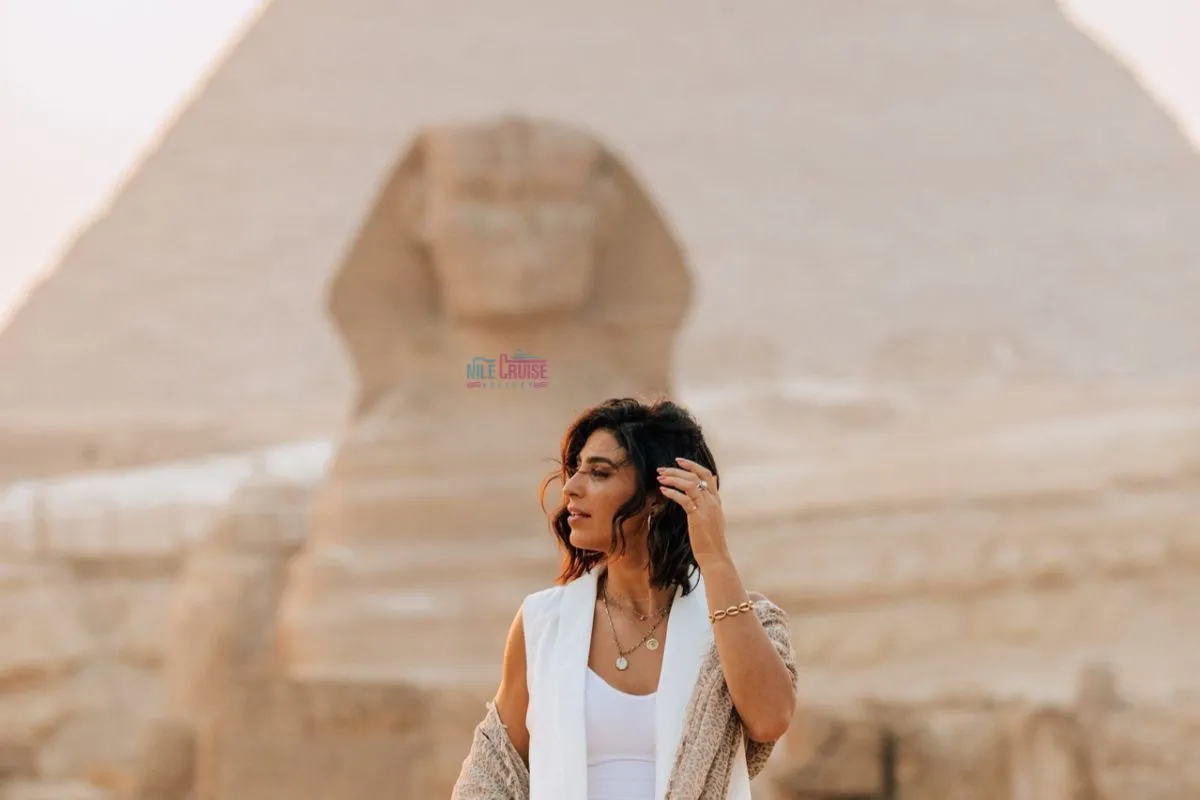
Egyptian etiquette is not one fixed rulebook. Behavior varies by place, context, generation, and personal preference. Religious settings call for more care, tourism-focused places are usually more relaxed, and urban and rural life differ, too. What works in a Luxor hotel lobby may feel out of place on a farm track a few kilometers away.
The setting matters more than memorizing dozens of rules. A traveler who reads the room, asks when unsure, and responds warmly will get along well almost everywhere.
| Situation | Best Approach |
|---|---|
| Ancient temples | Respect for barriers, staff instructions, and the monument itself |
| Markets | Relaxed browsing, polite bargaining where it is the norm, a friendly "no" when not interested |
| Villages | Awareness that homes are private, with your guide setting the pace |
| Mosques | Modest dress, shoes removed when instructed, quiet during prayer |
| Photography | Freedom with monuments, permission first with people |
| Hospitality | Warm acceptance or a gracious decline, with no fixed script |
| Tipping | A thank you for genuine services, not for every conversation |
How Should Cruise Guests Behave at Egyptian Temples?
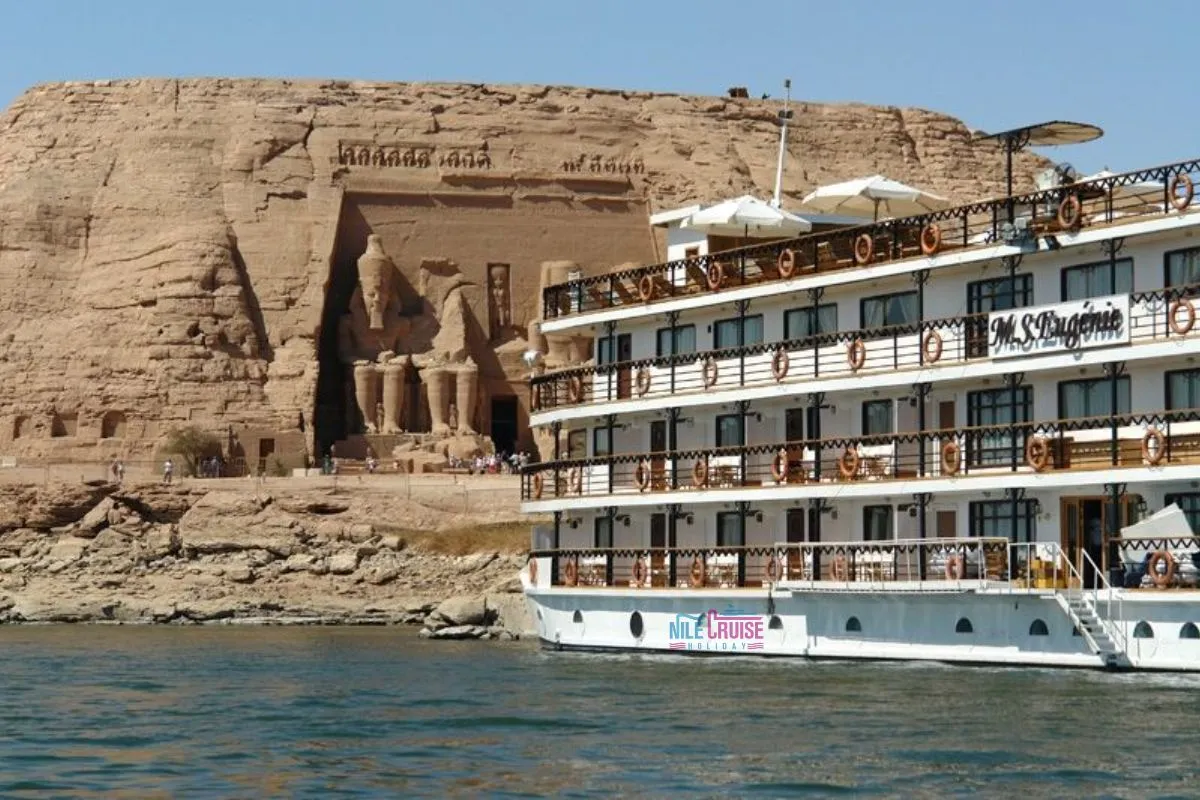
Temple visits are the backbone of most cruise itineraries, and the etiquette here is mostly about protecting the stone. A Luxor and Aswan Nile cruise typically moves between stops like Karnak, Luxor Temple, Kom Ombo, and Philae, so the same habits travel with you from site to site.
Respect the Monument
These walls have survived thousands of years of sun and visitors. Barriers often protect painted reliefs or fragile floors, and climbing on blocks or running fingers along hieroglyphs causes slow damage, even when it seems harmless.
At Edfu Temple, for example, the walls still carry detailed reliefs of the god Horus. A guide will usually stop in the courtyard, point out the scenes and explain which areas are open. Touching as little as possible and following site staff is all the monument asks.
Photography Rules Are Not the Same Everywhere
Under current antiquities policy, personal photography is permitted at many archaeological sites and museums in Egypt. That does not mean every rule is identical. Some tombs and chambers restrict flash, some areas may have their own conditions, and professional or commercial photography can require separate permission.
The rules posted at the individual site, together with the advice of your Egyptologist or site staff, are the ones that count on the day. Photographing monuments is not the same thing as photographing people, a point the photography section below returns to.
Temple Dress Is About Context, Not a Universal Entry Code
Ancient temples are archaeological sites, not mosques, and there is no single dress code for entering them. Modest, comfortable, and sun-protective clothing still makes sense, since it shields your skin outdoors and fits the next stop, which might be a market or a village. Our guide on what to pack for a Nile cruise covers layers that work across all these settings.
What Is Good Etiquette in Egyptian Markets?
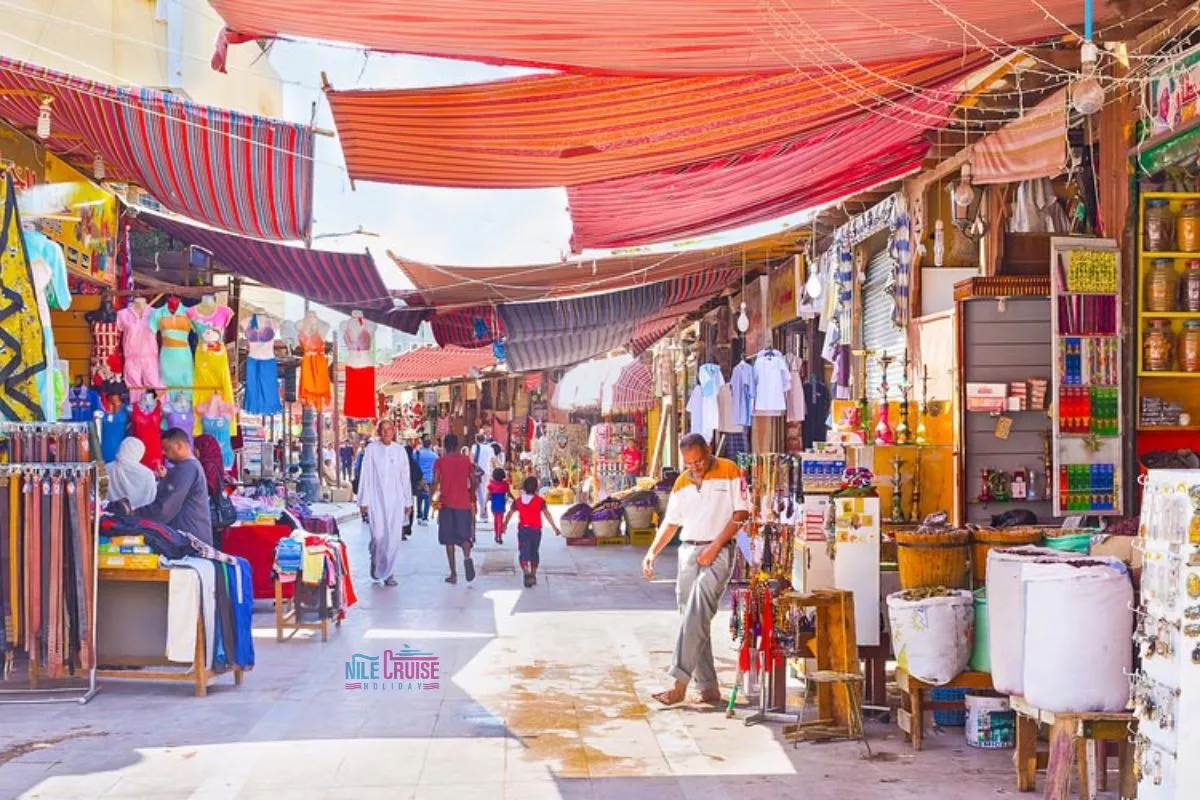
An Aswan souq at dusk is all color and noise, with mounds of hibiscus and cumin beside scarves and brass lamps. Market etiquette here is less about rules and more about tone.
Bargaining Without Turning It Into a Fight
Bargaining is common in souqs and many souvenir stalls, but it is not universal. Fixed-price shops, pharmacies, and restaurants do not expect it.
Where bargaining is the norm, it works best as a friendly conversation, started only when you are genuinely interested. Once a price is agreed, honoring it matters. There is no magic formula such as offering one third of the first price. A fair price is one both sides are happy with.
Tea, Conversation and Browsing
In some shops, a seller may offer tea while you look around. It is often simple hospitality, and accepting a glass does not oblige you to buy anything.
Enthusiastic selling is part of market life, not a trick. Persistent selling and real scams are separate subjects. For those, our guide to common Egypt scams explains what to watch for without treating every shopkeeper as a suspect.
How to Say No Politely
A short "La, shukran" (No, thank you) works well in most markets. Arabic is not required, and a smile with a plain "no, thank you" in English is understood almost everywhere tourists go. Staying calm and keeping it short is usually enough.
How Should Travelers Behave in Nubian and Nile Villages?
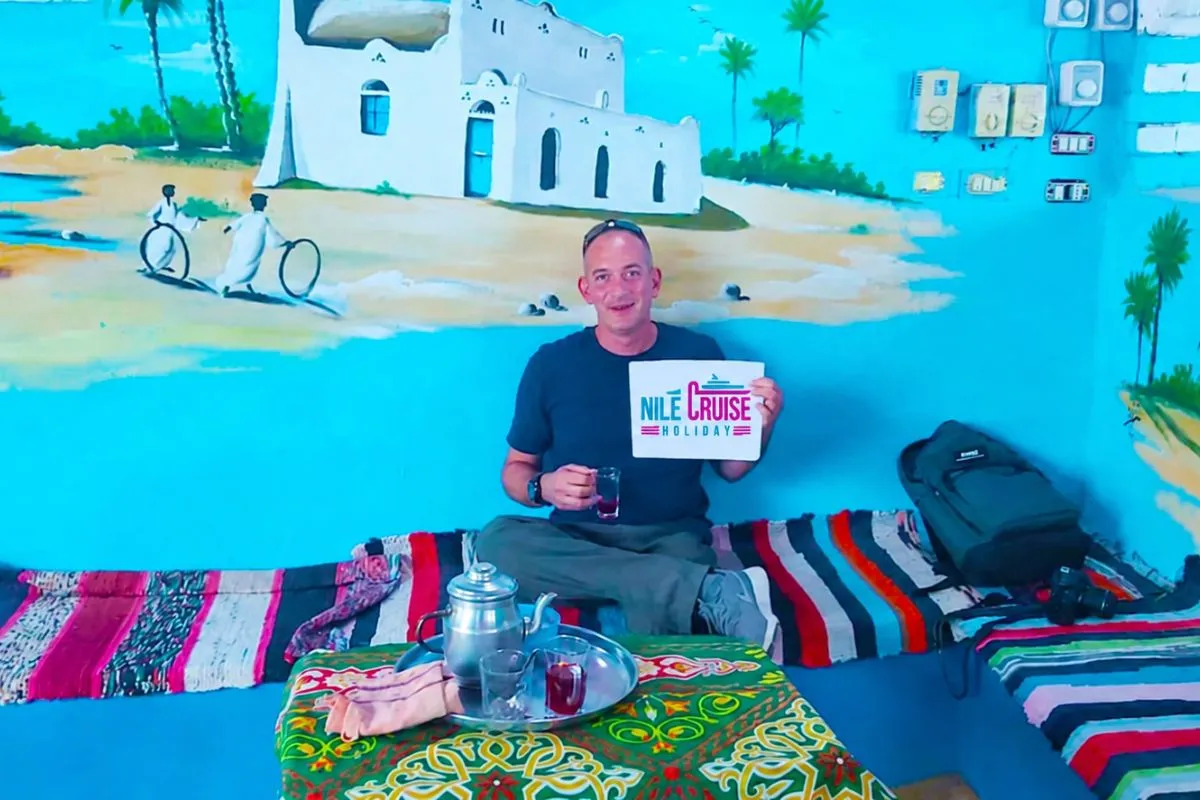
For many cruise guests, a visit to a Nubian Village in Aswan becomes a highlight. Painted houses in blue, yellow, and pink rise above the shore, and this is where etiquette matters most, because people actually live here.
A Village Is a Community, Not a Photo Set
The bright walls and courtyards are part of private homes. Wide shots of a street or the river are generally fine, but close-up photos of people call for a question first.
Children deserve particular care. They may be curious and friendly, but they are not photo subjects for strangers. Your guide knows which homes welcome visitors and which spaces are private. Nubian communities are modern and connected, with a living culture rather than a museum display.
Buying Locally Without Feeling Obligated
Village visits often include handicrafts, spices, textiles, souvenirs, or local drinks for sale. Buying something you like supports local families directly. Still, a visit is not a shopping obligation, and looking, asking how something is made, and thanking the seller is perfectly acceptable.
Hospitality and Invitations
On an invited home visit, a host may offer tea, cold hibiscus, a small plate of food, or simply conversation in a shaded courtyard. Accepting politely or declining warmly are both fine.
A simple rule of thumb helps here. The tone of the interaction is a better guide than assuming every gesture carries a strict obligation.
What Should Travelers Know About Mosques and Religious Places?
Mosques are functioning places of prayer, and they ask for a little more care than temples. Covered shoulders and legs are expected. Women may be asked to cover their hair in some mosques, so a light scarf in your daybag is useful. Shoes come off when staff or signs indicate, usually at the entrance to the prayer hall.
During prayer, visitors should stay quiet, avoid walking in front of people praying, and follow staff instructions. In Islamic Cairo, these small gestures make visits relaxed for everyone.
Ancient temples, by contrast, are not functioning religious buildings, so the mosque customs above do not apply there. If your trip falls during Ramadan, our guide to Egypt during Ramadan explains what to expect.
Photography, Tipping and Personal Space in Egypt
Ask Before Photographing People
A gesture toward your camera and a smile usually works as a question. Residents, shopkeepers, workers, and families can say no, and many will happily say yes. With children, a parent's permission matters.
Wide scenes of a busy market or a riverbank are different from close-up portraits. A spice seller arranging a display in Aswan may love to pose, but asking first turns a snapshot into a small conversation. Military installations or personnel, security checkpoints and restricted infrastructure such as bridges or dams are best left out of your frame altogether, calmly and without fuss.
When Does Baksheesh Become Etiquette?
Baksheesh, or tipping, is a familiar part of travel in Egypt, and it works best as a thank you for genuine service. Guides, drivers, cruise staff, and porters who help you are the clearest examples. On a cruise, your guide or cruise manager can explain how gratuities usually work onboard.
Not every friendly conversation is a request for money, though. Our guide to tipping in Egypt covers the practical side, and the overview of money in Egypt explains why small notes are handy to carry.
Public Affection and Personal Boundaries
Many public settings in Egypt are more conservative than resorts and cruise ships, where the mood is relaxed. Holding hands is generally unremarkable, while more intimate displays in streets, markets, or villages tend to draw attention. A little restraint in public spaces avoids awkward moments, and noticing how locals behave around you is the easiest guide.
What Changes When You Travel With a Nile Cruise Guide?
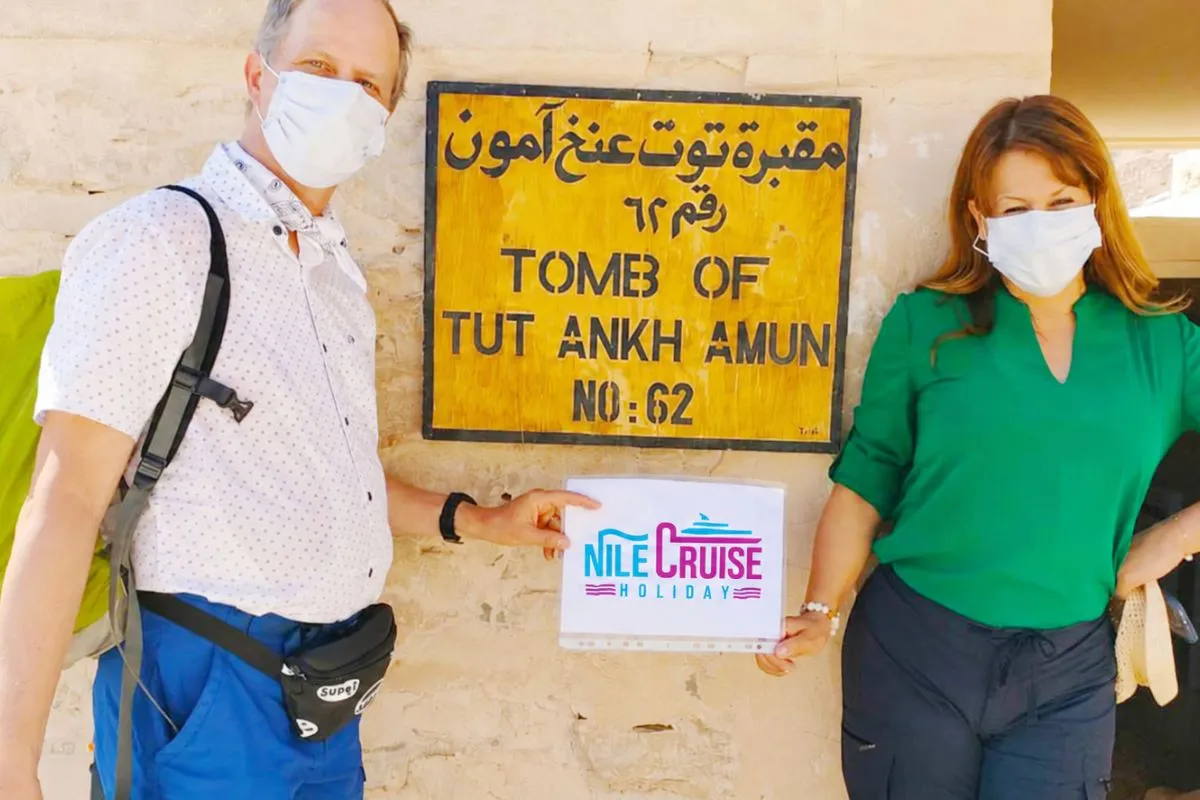
A good Egyptologist guide also helps with the small decisions of daily etiquette:
- Where photography is fine and where to ask first
- Whether bargaining fits a particular shop
- Which spaces in a village are private and which are public
- When to remove shoes and what to wear for a mosque visit
- How tipping usually works for different services
- How to tell hospitality from a sales pitch
- How to behave around religious spaces, prayer times or local events
On guided Cairo and Nile cruise tours, this support carries from the city to the river. Nile Cruise Holiday coordinates the cruise, private guides, sightseeing, drivers and transfers as one connected journey, so cultural context travels with you from stop to stop. Our shopping stops carry no commission pressure.
For travelers who want a slower pace or more village time, a tailor-made Egypt trip can be shaped around those interests.
Egypt Etiquette Do's and Don'ts at a Glance
| Do | Don't |
|---|---|
| Permission before photographing people | Residents treated as photo props |
| Barriers and staff instructions respected | Touching, scratching, or climbing on monuments |
| Polite bargaining where it is the norm | Haggling in fixed-price shops and restaurants |
| Clothing suited to each setting | Resort clothing assumed to fit everywhere |
| "Shukran" and "La, shukran" in your vocabulary | Aggression or raised voices with sellers |
| Mosque customs followed | Interruptions during prayer |
| Tips for genuine service | Every interaction assumed to need money |
| Your guide's advice in mind | Identical customs assumed everywhere |