Booking two premium cruises is easy. Making them feel like one seamless luxury journey is much harder.
Travelers planning luxury Nile and Lake Nasser cruises quickly discover that the two fleets are not mirror images. They differ in vessel size, cabin standards, suite availability, service style, onboard atmosphere, and sailing calendars. Because the Aswan High Dam separates the two waterways, the trip always involves two different ships and a change of vessel around Aswan. The full logistics are covered in our guide to Lake Nasser cruise vs Nile cruise.
This article starts where that one ends. The decision to sail both is already made. The question now is how to choose two vessels whose cabins, service, and schedules belong together, so the second ship feels like the next chapter rather than a different holiday.
Match the Luxury Level Across Both Cruises

Two ships can both carry a five-star or luxury label and still deliver very different experiences. The label is a starting point, not a guarantee. The types of Nile river cruises vary widely even within the same category.
The factors that matter more than the label are concrete: cabin size, the ratio of suites to standard cabins, ship capacity, the style and quality of dining, the amount of open deck space, the service style, how much attention staff can give each guest, and the overall atmosphere on board.
Avoid the Luxury Drop
The most common mistake is a quality drop between vessels. A traveler starts on a highly refined Nile ship, with spacious cabins and polished service, then moves in Aswan to a noticeably more basic Lake Nasser vessel. The second half of the trip suddenly feels like a compromise.
The key question to ask about any pairing is simple. Will the second ship feel like a continuation of the first, or a downgrade? This does not mean both ships must cost the same. Pricing on luxury Nile cruises and Lake Nasser vessels follows different markets. Quality consistency matters far more than identical prices.
Different Can Still Feel Premium
Matching does not mean choosing identical ships. A well-built pairing can be deliberately different. Some travelers prefer more facilities on the Nile, where days are busier, and a smaller, quieter vessel on Lake Nasser, where the scenery is remote and the pace slows.
Others choose a large suite on one leg and a stronger archaeological focus on the other. The Lake Nasser fleet is small, so the right Lake Nasser ship often shapes the choice of Nile ship rather than the other way round. The objective is consistency of experience, not sameness.
Think of the pairing by priority rather than by star label. Honeymooners may prefer a boutique Nile vessel followed by a quiet Lake Nasser ship, while travelers who value pools, spa facilities, and larger lounges may be happier keeping both legs on larger vessels. For accessibility, the first filter should be elevator access, deck position, and gangway practicality on both ships.
Choose the Right Cabin on Each Ship
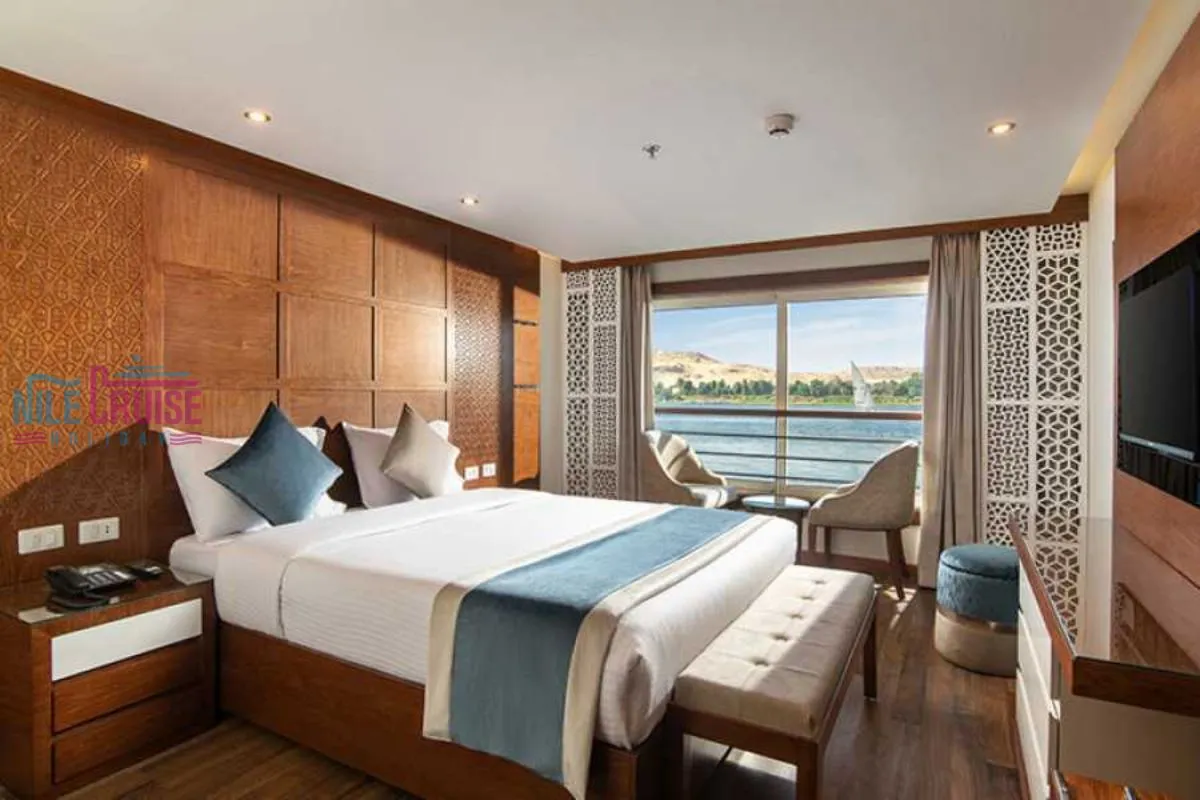
Glossy ship photography sells the lounge and the pool. Travelers actually live in the cabin. A guest changing vessels halfway through notices immediately if the room size, bed configuration, bathroom, storage, window type, balcony or terrace, noise level, or deck position is different from the first ship.
Standard Cabin or Suite?
A suite is genuinely worth paying for when its extra features are used. The ones that matter are square footage, a real sitting area, a larger bathroom, access to a private balcony or terrace where the vessel offers one, more storage, and the right bed configuration.
Suites are not automatically the right answer. A traveler who spends most of each day touring temples may gain more from a well-positioned standard cabin than from lounge space used only at night. Balconies also vary, and some ships offer none. Anyone choosing a cruise by budget can often keep one suite leg and one strong standard cabin leg without losing comfort.
Read Both Deck Plans
Both vessels deserve the same scrutiny. The checks are forward versus midship versus stern, distance from the engines, whether the cabin sits under the sundeck, where the lounge and bar are, where the crew service areas sit, whether there is an elevator on that ship, and how many stairs lie between the cabin and the gangway.
Mobility needs make this essential. Not every ship has an elevator, and travelers looking for a wheelchair accessible Nile cruise need the details confirmed for both vessels, not just one. A beautiful suite in the wrong position can be less comfortable than a standard cabin in the right one.
Boutique or Larger Luxury Ships?
Boutique for Privacy
Smaller, boutique vessels suit honeymooners, anniversary trips, and couples who want quiet. They also work for travelers who dislike large groups, guests who value calm lounges, and anyone who prioritizes personal staff attention.
The remote Lake Nasser environment can work particularly well with a smaller ship. Long stretches of desert shoreline, few other vessels, and quiet evening moorings suit an intimate atmosphere. Smaller does not automatically mean better, however. A boutique ship with dated cabins is still a weak choice.
Larger Ships for Facilities
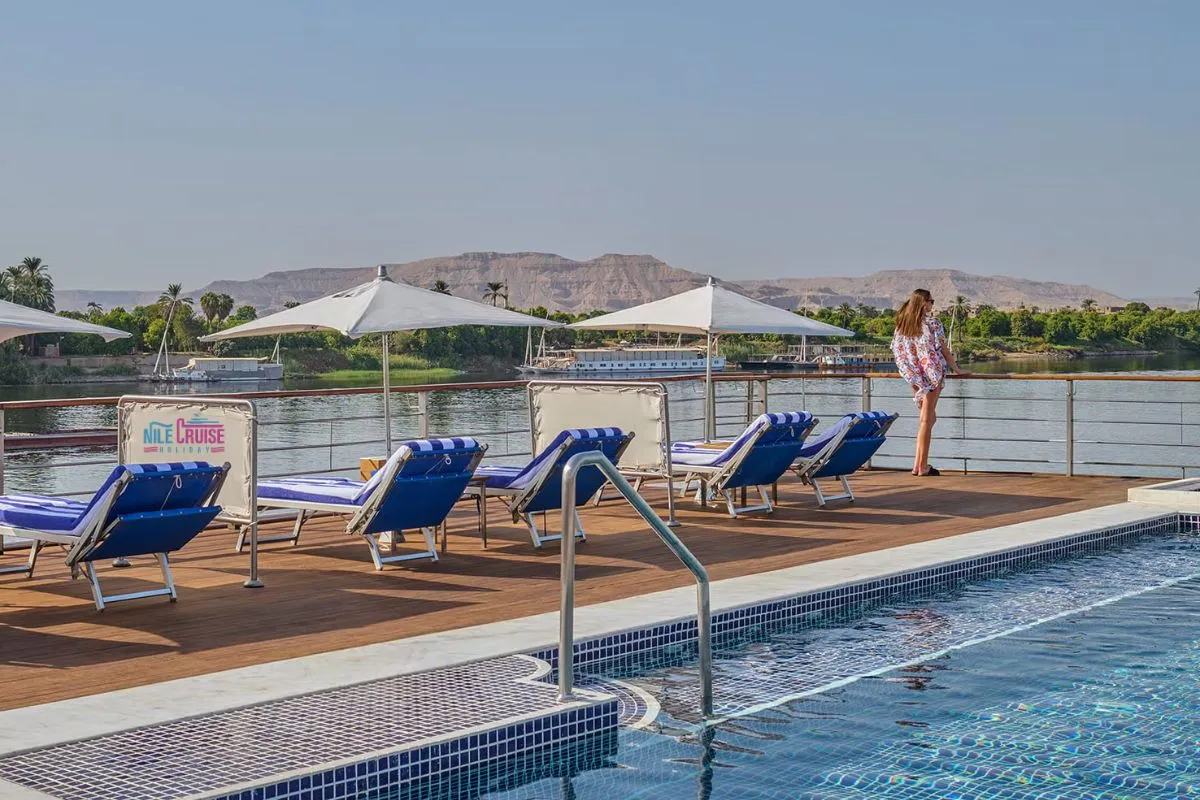
Larger luxury vessels can suit travelers who want a bigger pool area, a spa or gym, more public space, evening entertainment, and larger lounges. Some ultra-luxury ships combine generous facilities with high service levels, depending on the vessel.
Those onboard facilities matter most to families and sociable travelers. More facilities do not automatically mean more luxury for every traveler. For a couple who mainly wants quiet and good service, a larger ship can feel busier rather than better.
Match the Sailing Dates Before the Ships
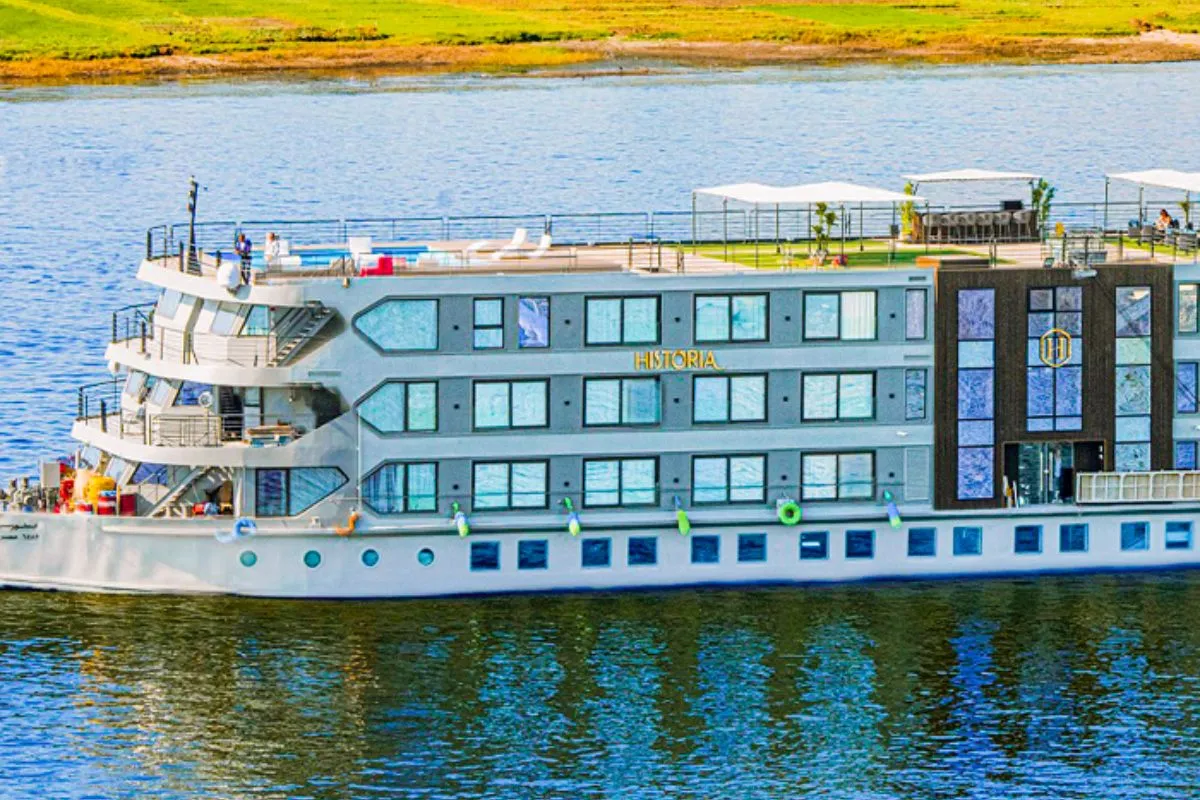
The best ship on paper is useless if its departure does not connect with the second cruise. Most travelers leave this step too late, after falling for a specific vessel.
The smarter decision order runs from fixed to flexible: first the travel dates, then the Nile sailing dates, then the Lake Nasser sailing dates, then transfer compatibility, and only then the cabin category. Many Luxor and Aswan sailings run on fixed weekly patterns, and Lake Nasser departures are less frequent, so schedule compatibility often matters more than brand prestige.
Same-Day Connection in Aswan
The ideal scenario is smooth. Guests leave the Nile ship in Aswan, a private transfer collects them, the luggage is handled for them, and they board the Lake Nasser vessel above the dam the same day, ready for an Aswan to Abu Simbel itinerary.
This works when the two schedules align. It is not possible for every pairing of ships, and it should never be assumed. Check-out and boarding times vary by vessel and are confirmed at booking.
When One Night in Aswan Is Better
An overnight stay can improve the whole trip. It makes sense if the schedules do not align, if check-out from the first ship is late or boarding the second is early, or if the traveler wants extra Aswan sightseeing. Seniors and travelers who prefer a slower pace often benefit most.
A night in an Aswan hotel turns a rushed transfer into a rest day, with time for the things to do in Aswan that a cruise schedule often skips. A luxury itinerary should not feel rushed simply to avoid one hotel night.
Match the Guide and Service Style
Luxury is not just the ship. Travelers spend many hours ashore, so Egyptologist quality and how excursions are organized can shape the experience more than cabin décor.
Private vs Shared Egyptologist
Private guiding often suits honeymooners, seniors, photographers, families, repeat visitors, and serious history travelers. It allows flexible timing, deeper explanation, and visits paced to the group. Shared guiding can be perfectly suitable for sociable travelers, value-conscious premium travelers, and guests comfortable with fixed timing. The trade-offs are covered in more detail in private vs group touring.
Keep the Experience Consistent
The mismatch to avoid is premium private guiding on the Nile followed by a large shared touring group on Lake Nasser. Where possible, the pacing, service expectations, transport quality and guiding depth should stay consistent across both legs. Many packages with a Nile cruise can be adjusted so the guide setup carries through the whole journey.
How NCH Matches Both Luxury Cruises

We Match More Than Price
The challenge is not finding two luxury cruises. It is finding two that belong in the same journey. Nile Cruise Holiday works as the matchmaker for both legs, not a seller taking two unrelated bookings.
The team can recommend pairings based on ship quality, cabin category, deck position, ship size, privacy, service level, sailing dates, Egyptologist setup, accessibility needs, the Aswan connection and Abu Simbel plans. Specific cabins can be requested, subject to vessel availability, and NCH's zero-commission shopping policy keeps excursions focused on the sites.
One Plan From Luxor to Abu Simbel
The journey itself is simple: Luxor, then Aswan, then the change of ship, then Lake Nasser, then Abu Simbel. The value lies in coordinating everything around it. NCH can arrange baggage handling, private transfers and drivers, a possible hotel night in Aswan, domestic flights, guide arrangements, cabin preferences and the timing of the Abu Simbel arrival.
Travelers can share their dates, preferred cabin level and travel style, and the team will shortlist Nile and Lake Nasser sailings that connect smoothly as one tailor-made plan.


