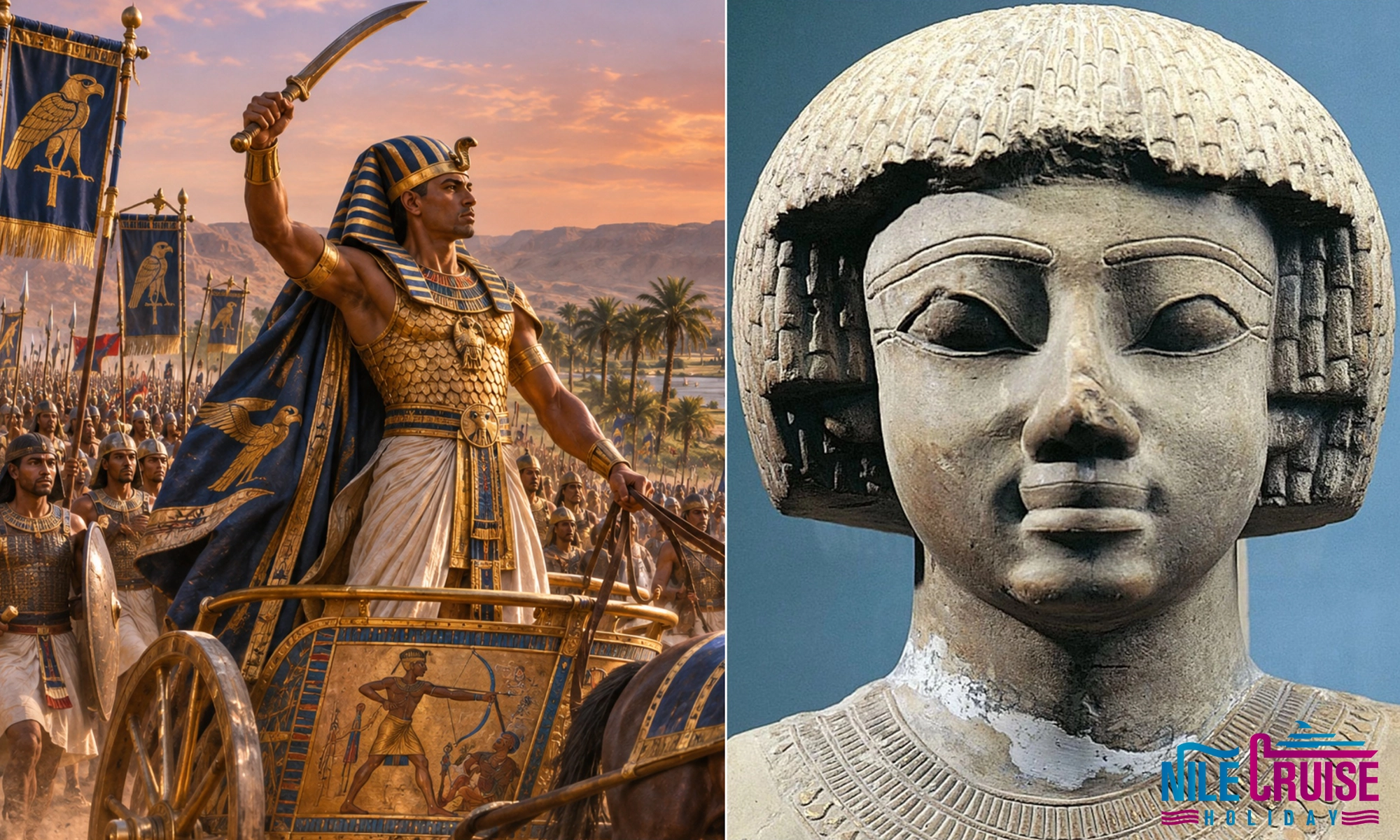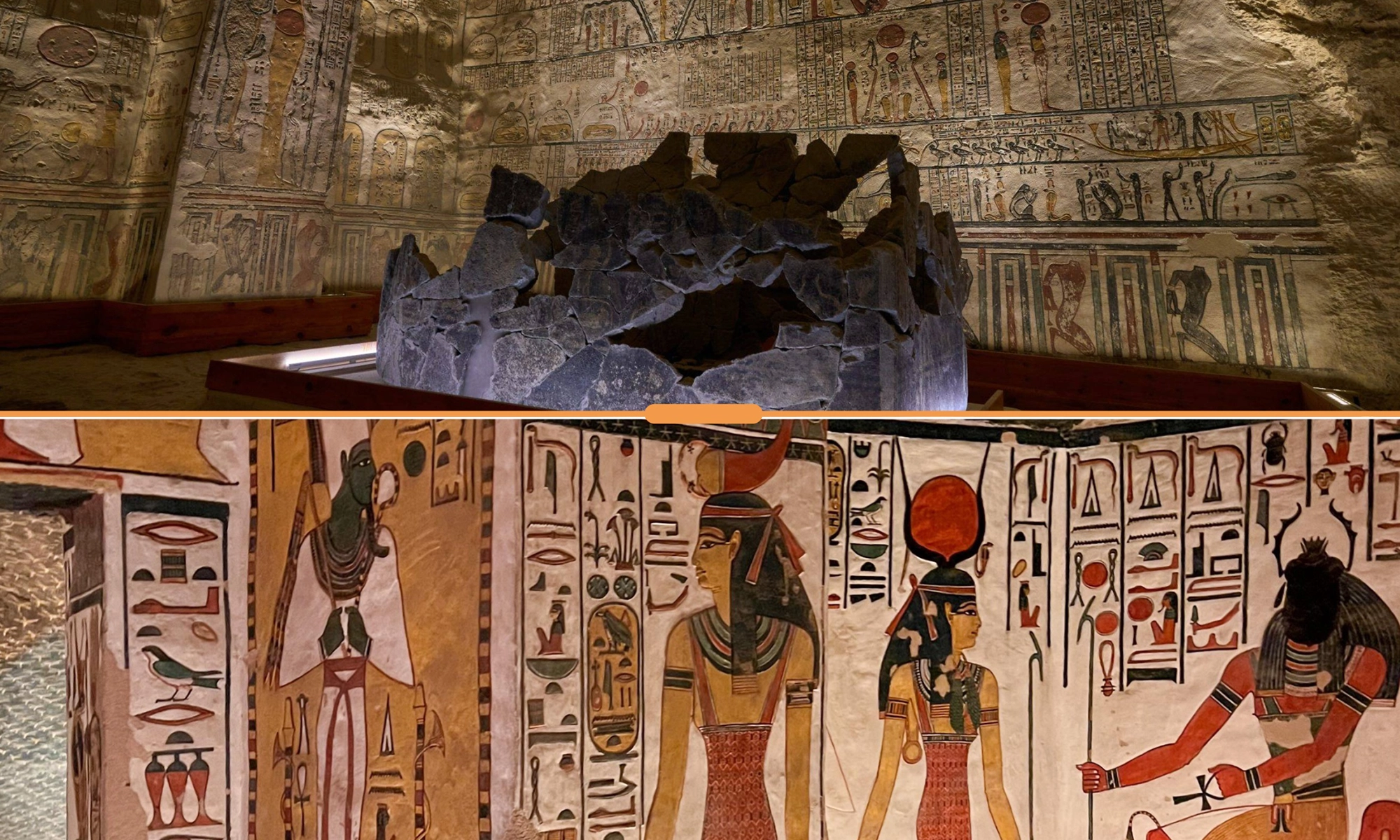

The Valley of the Kings and the Valley of the Queens sit a short drive apart on Luxor's West Bank, yet they offer very different experiences. The first holds 63 tombs of New Kingdom pharaohs, including Tutankhamun and Seti I. The second holds more than 100 tombs of queens, princes, and princesses. It is smaller, quieter, and much cheaper, but its most famous tomb, that of Queen Nefertari, has been closed to visitors since March 2024. Side by side in the same desert hills, one valley speaks of royal power and the other of the families who shared it.
This guide compares the two valleys, from history and art to tickets, crowds, and time. It explains what each ticket covers and which tombs are open. It then answers the real question: whether you should visit both, and how to fit them into one West Bank day.
Valley of the Kings vs Valley of the Queens at Full Display
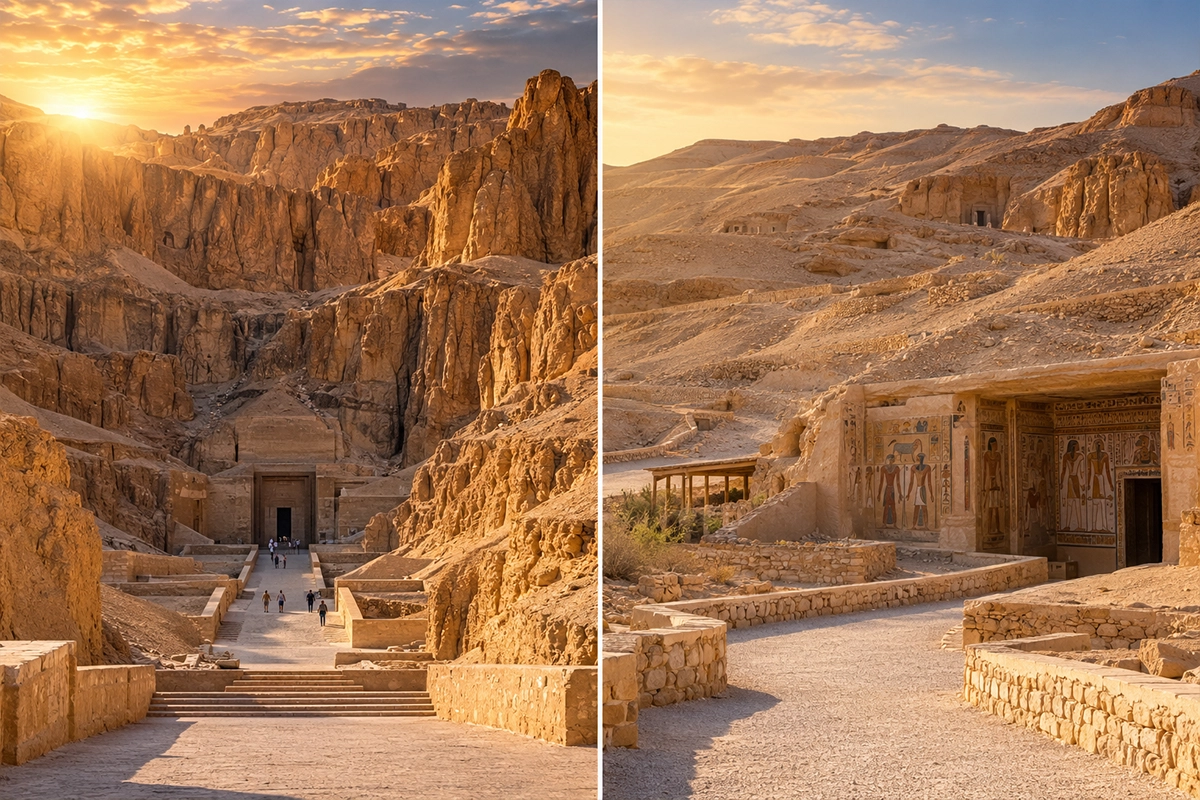
Both valleys belong to the Theban Necropolis, the great burial ground of ancient Thebes, which has been a UNESCO World Heritage Site since 1979.
Where Are the Two Valleys?
The Valley of the Kings lies in a remote desert valley behind the cliffs of Deir el-Bahari, under the pyramid-shaped peak of al-Qurn. The Valley of the Queens lies at the southern end of the West Bank, close to Medinet Habu and Deir el-Medina. The drive between them takes about 15 minutes. Our guide to Luxor East Bank vs West Bank shows how the sites fit together.
Side-by-Side Comparison
| Valley of the Kings | Valley of the Queens | |
|---|---|---|
| Who is buried | Pharaohs and some nobles | Queens, princes, and princesses |
| Known tombs | 63 | About 110 |
| In use | About 1539 to 1075 BC | About 1560 to 1130 BC |
| Tombs on the basic ticket | Any 3 from about 10 open | Usually 3 open tombs |
| Basic ticket (foreign adult) | EGP 750 | EGP 220 |
| Famous extra tomb | Seti I, Tutankhamun, Ramesses VI | Nefertari (closed) |
| Crowds | Busy, especially mid-morning | Usually quiet |
| Time needed | 2 to 3 hours | About 1 hour |
The Valley of the Kings: Tombs of the Pharaohs
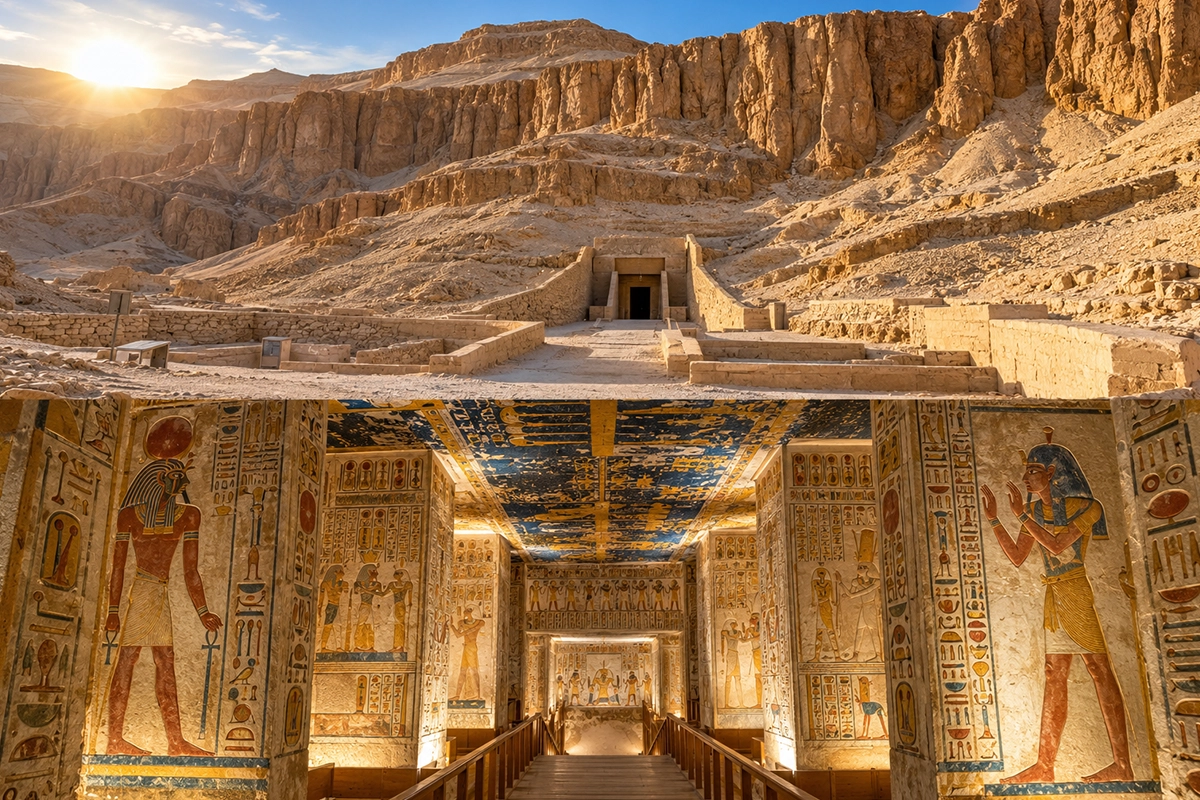
The Valley of the Kings is the headline sight of the West Bank, and for good reason. Its tombs are long, deep, and covered with some of the finest religious art in Egypt.
A Royal Burial Ground for 500 Years
From the reign of Thutmose I onward, New Kingdom kings gave up pyramids and cut their tombs into this hidden valley, hoping to protect them from robbers. Their walls carry scenes from the Amduat, the Book of Gates, and other funerary texts that guided the king through the underworld. Most tombs were still robbed in antiquity, which is why Howard Carter's discovery of Tutankhamun's nearly intact tomb in 1922 caused a sensation. Our Valley of the Kings page covers the full history.
What the Valley of the Kings Ticket Covers
The general ticket costs EGP 750 for foreign adults and covers any three tombs from a rotating list, such as Ramesses III (KV11), Ramesses IV (KV2), and Ramesses IX (KV6). Extra tickets cover four special tombs: Ramesses V and VI (KV9) for EGP 220, Tutankhamun (KV62) for EGP 700, Ay for EGP 200, and Seti I (KV17) for EGP 2,000.
The Tombs Worth Seeing
The tomb of Seti I is the longest and most richly carved in the valley. KV9, the tomb of Ramesses V and VI, has a dazzling ceiling of the sky goddess Nut and is the best-value extra ticket. Tutankhamun's tomb is small, but the king's mummy still lies inside. Read more about the tomb of Tutankhamun and the story behind the curse of King Tut.
The Valley of the Queens: The Place of Beauty
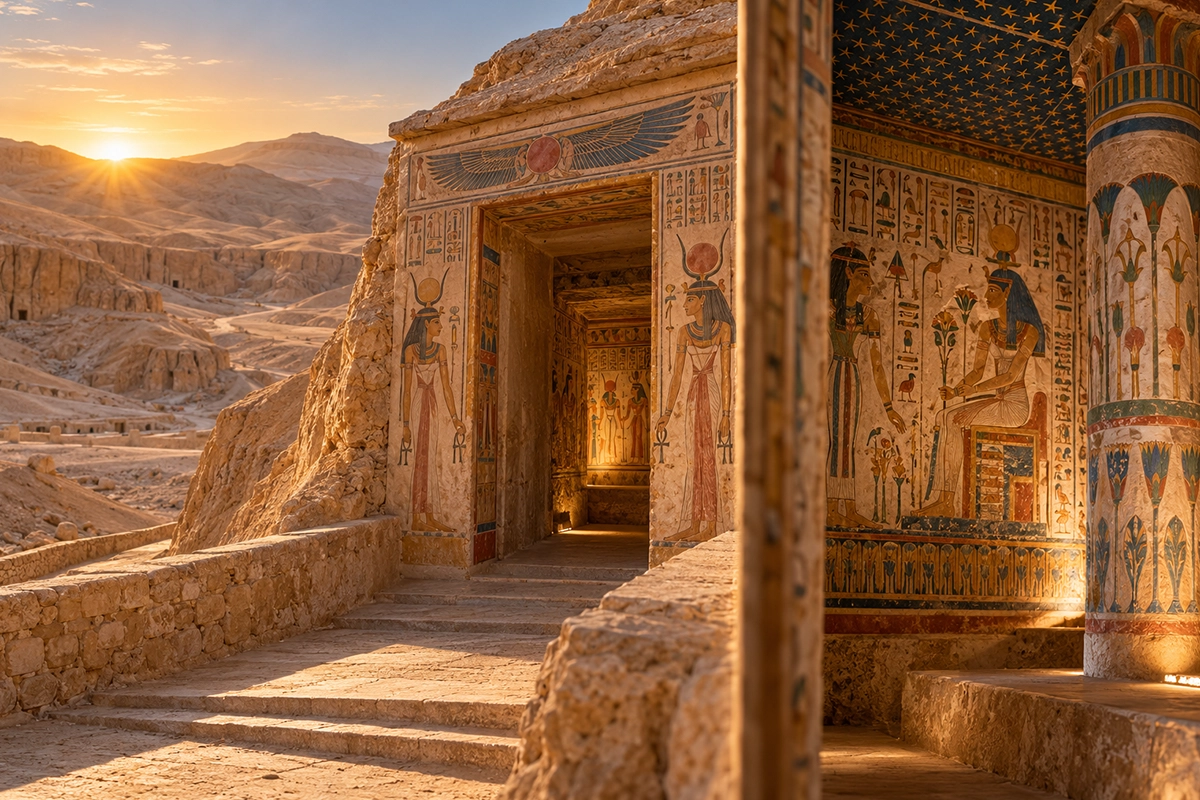
The ancient Egyptians called this valley Ta-Set-Neferu, often translated as "the Place of Beauty" or "the Place of the Royal Children." Our Valley of the Queens page has more on its history.
Who Was Buried in the Valley of the Queens?
The first tombs here belonged to princes, princesses, and court officials of the early 18th Dynasty. In the 19th Dynasty, the valley was reserved for royal wives, including the wives of Seti I and Ramesses II. In the 20th Dynasty, Ramesses III also buried several of his young sons here. A small grotto at the valley's entrance, linked to the goddess Hathor, may explain why the site was chosen.
Tombs Open in the Valley of the Queens
Three tombs are usually open on the basic ticket, all from the 20th Dynasty:
- QV44, Prince Khaemwaset: A son of Ramesses III, shown being led by his father before the gods. The colors are bright, with deep blues and yellows.
- QV55, Prince Amunherkhepeshef: Another son of Ramesses III, who died young. The reliefs of father and son with the gods are among the best preserved in the valley.
- QV52, Queen Tyti: A queen of the late 20th Dynasty, with painted scenes of Tyti making offerings to the gods.
These tombs are smaller and simpler than the royal tombs, but their colors are well preserved and you will often have them almost to yourself.
The Tomb of Nefertari (QV66)
Nefertari was the beloved principal wife of Ramesses II, honored with her own temple at Abu Simbel. Her tomb was discovered by the Italian archaeologist Ernesto Schiaparelli in 1904 and restored by the Getty Conservation Institute with Egypt's antiquities authority between 1986 and 1992. Its paintings are often called the most beautiful in Egypt. However, the tomb closed in March 2024 for conservation and monitoring, and travel guides updated in 2026 still list it as closed with no reopening date. Read more in our story of Ramses II and Nefertari.
Key Differences Between the Two Valleys
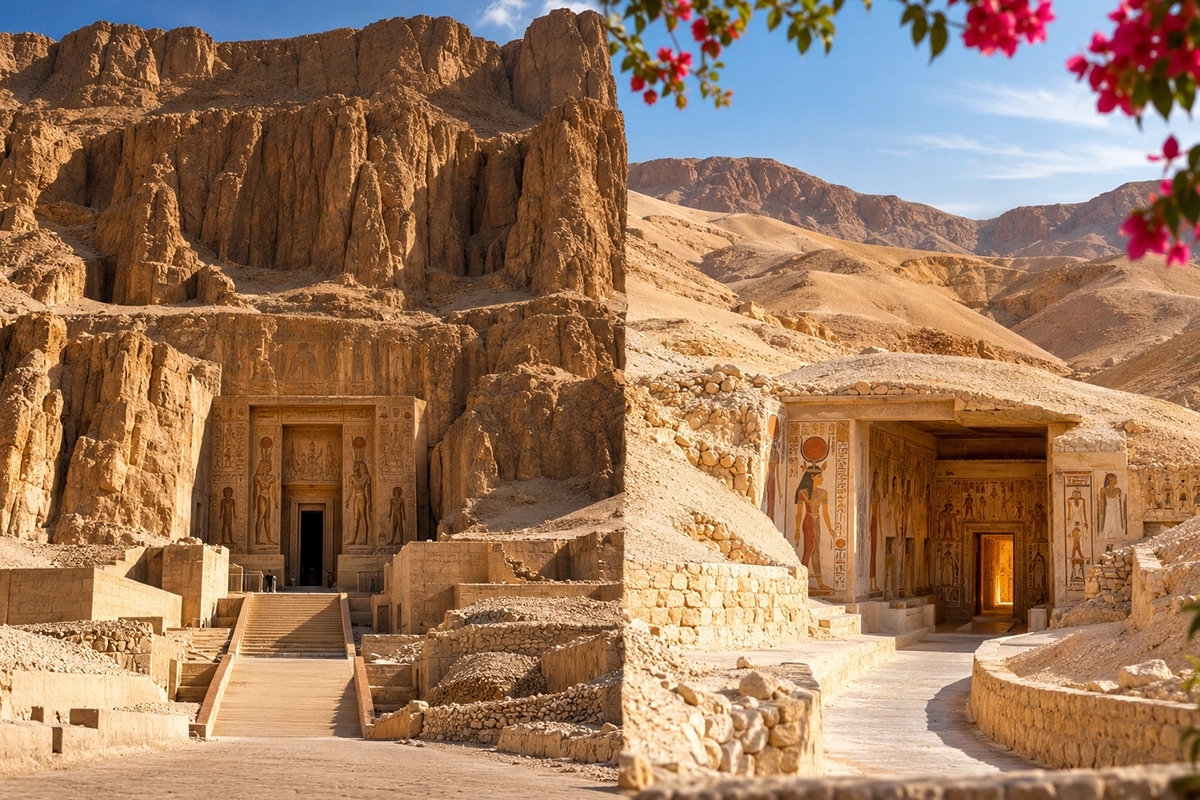
Knowing how the valleys differ makes it much easier to decide where to spend your time and money.
Art and Scale
Royal tombs in the Valley of the Kings are long corridors cut deep into the rock, with complex texts and astronomical ceilings. Tombs in the Valley of the Queens are shorter and more personal. Their scenes focus on the queen or prince meeting the gods, often with a parent guiding the way, which gives them a tender, family feel.
Crowds and Atmosphere
The Valley of the Kings is one of Egypt's busiest sites, and most Nile cruise groups arrive between 8am and 10am. The Valley of the Queens sees far fewer visitors, and its tombs are often quiet even in high season. If you dislike crowds, the contrast is striking.
Cost
A full visit to the Valley of the Kings with one extra tomb costs about EGP 970 to 1,450 per person. The Valley of the Queens costs EGP 220, so adding it to your day costs little.
Time and Effort
Plan two to three hours for the Valley of the Kings, including the walk between tombs and some steep descents. The Valley of the Queens takes about an hour, and its tombs are closer together with shorter stairs.
Should You Visit Both Valleys?
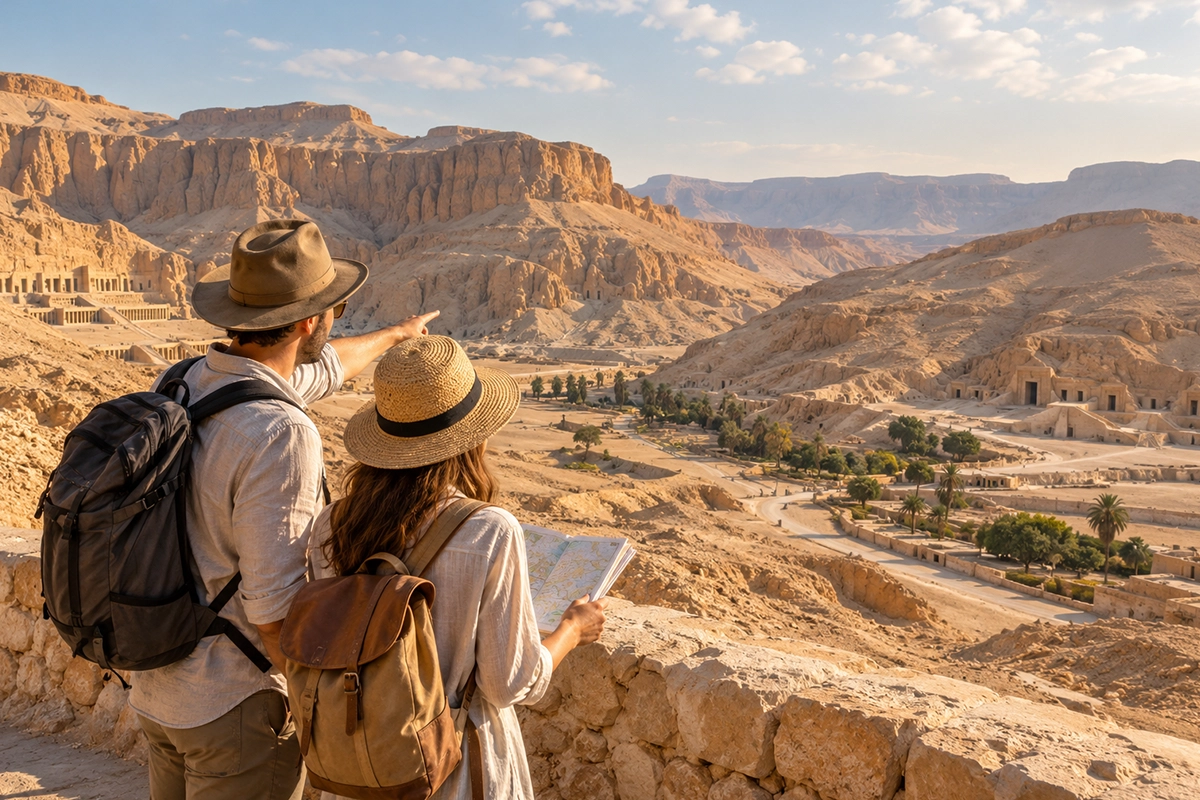
The honest answer depends on your time, your interests, and whether Nefertari's tomb is open when you visit.
If You Only Have Time for One
Choose the Valley of the Kings. Its tombs are larger, more famous, and more varied, and it includes the tombs of Tutankhamun and Seti I. On most Nile cruises, the guided West Bank morning includes the Valley of the Kings for this reason.
When Visiting Both Is Worth It
Visit both if you have a full day on the West Bank, love ancient art, or want to see a quieter side of royal life. The Valley of the Queens adds very little cost, and the princes' tombs of QV44 and QV55 are some of the most charming in Luxor. It also sits next to Medinet Habu and Deir el-Medina, so it fits easily into the afternoon.
When You Can Skip the Valley of the Queens
If your time is short, you are traveling with young children who tire quickly, or you are visiting in the summer heat, you can skip it without regret while Nefertari's tomb remains closed. Families can find more tips in our ultimate guide to a Nile cruise with kids.
If Nefertari's Tomb Reopens
If QV66 reopens, the Valley of the Queens becomes a must for art lovers. In the past, the tomb needed its own premium ticket and allowed visits of about 10 minutes. Check its status at the ticket office or with your guide before you go.
Planning a West Bank Day With Both Valleys
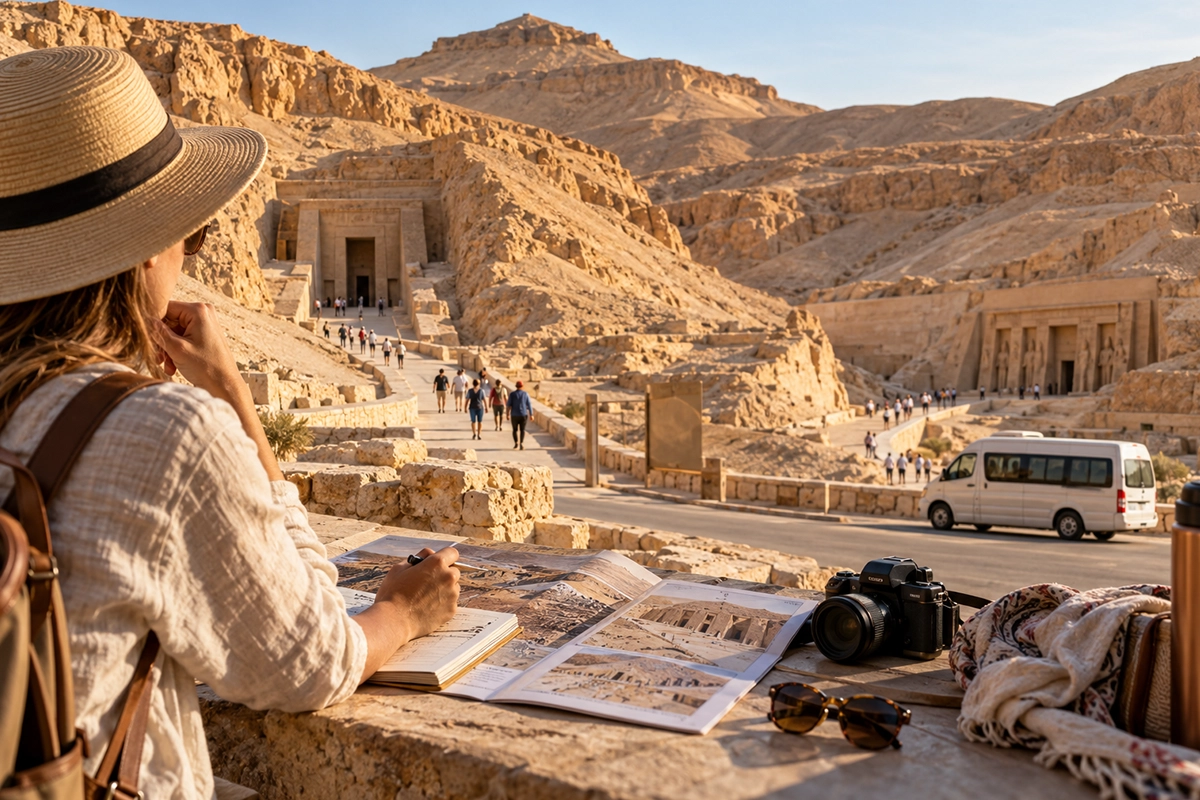
With an early start, you can see both valleys and several other sites in one well-paced day.
A Sample One-Day Itinerary
Start at the Valley of the Kings at 6am, before the crowds and heat. Move on to the Temple of Hatshepsut at about 9am, built for the remarkable female pharaoh Hatshepsut. Visit the Valley of the Queens late in the morning, then Medinet Habu or Deir el-Medina. With extra time, add the Ramesseum or the Tombs of the Nobles. Stop at the Colossi of Memnon on the way back. For a sunrise view of the whole West Bank first, book a Luxor hot air balloon ride.
Tickets, Cash, and Practical Tips
Each valley has its own ticket office, so buy tickets at each site. Bring Egyptian pounds in cash, comfortable shoes with good grip, a hat, sunscreen, and water. Phone photography without flash is allowed in most tombs, but not in Tutankhamun's tomb. Our guides to money in Egypt and what to pack for a Nile cruise cover the details.
Best Time to Visit
October to March is the most comfortable season. From June to August, temperatures can pass 40°C, so plan to finish both valleys by late morning. Our guide to the best time to cruise the Nile compares the months.
Visiting on a Nile Cruise
Most Luxor to Aswan Nile cruises include the Valley of the Kings, Hatshepsut's temple, and the Colossi of Memnon. To add the Valley of the Queens, ask for a private guide or an extra day in Luxor before you sail. The 5 days Nile cruise from Luxor to Aswan and our tailor-made trips leave room for both. See all Luxor attractions and our guide to things to do in Luxor.
Enjoy the Beauty of the Ancient Valleys of Kings and Queens
The Valley of the Kings is the essential stop, with the great royal tombs of Seti I, Ramesses VI, and Tutankhamun. The Valley of the Queens is a quieter, cheaper, and more personal companion, with the colorful tombs of the sons of Ramesses III. While Nefertari's tomb stays closed, visit both only if you have a full day. If it reopens, make room for it.
Whichever valley you choose, you will walk the same paths that once carried kings, queens, and princes to their eternal homes. To plan your West Bank day, explore our Nile cruises from Luxor or contact us for a guided visit.