

Most travelers already know they want Cairo and a Nile cruise. The hard part comes next. How many nights does each deserve, and does adding the Red Sea improve the holiday or turn it into a rushed sequence of flights, check-ins, and transfers?
There is no single perfect split. The right answer for Nile cruises and stay holidays depends on total vacation length, whether this is a first visit or a return trip, how much sightseeing feels right, how important beach time is, age and mobility, and whether the trip is for a family or a couple. This guide offers a practical framework for 7, 10, 12 and 14-day trips, with honest advice on where each night is best spent.
What Is a Nile Cruise and Stay Holiday?

A Nile cruise and stay holiday combines a cruise between Luxor and Aswan with additional hotel nights elsewhere in Egypt. The cruise covers the great temples of Upper Egypt, and the hotel nights add the places a ship cannot reach.
Three combinations cover most trips. Cairo plus a Nile cruise is the classic first-time route, pairing the pyramids with the temples of the south. A Nile cruise plus the Red Sea suits travelers who have already seen Cairo or simply want sun after sightseeing. Cairo, a Nile cruise and the Red Sea together form the fullest version, usually on trips of ten days or more.
Most Egypt packages with a Nile cruise follow one of these shapes. The valuable question, though, is not simply which destinations to combine. It is how many nights each one should receive.
How Many Nights Should the Nile Cruise Get?
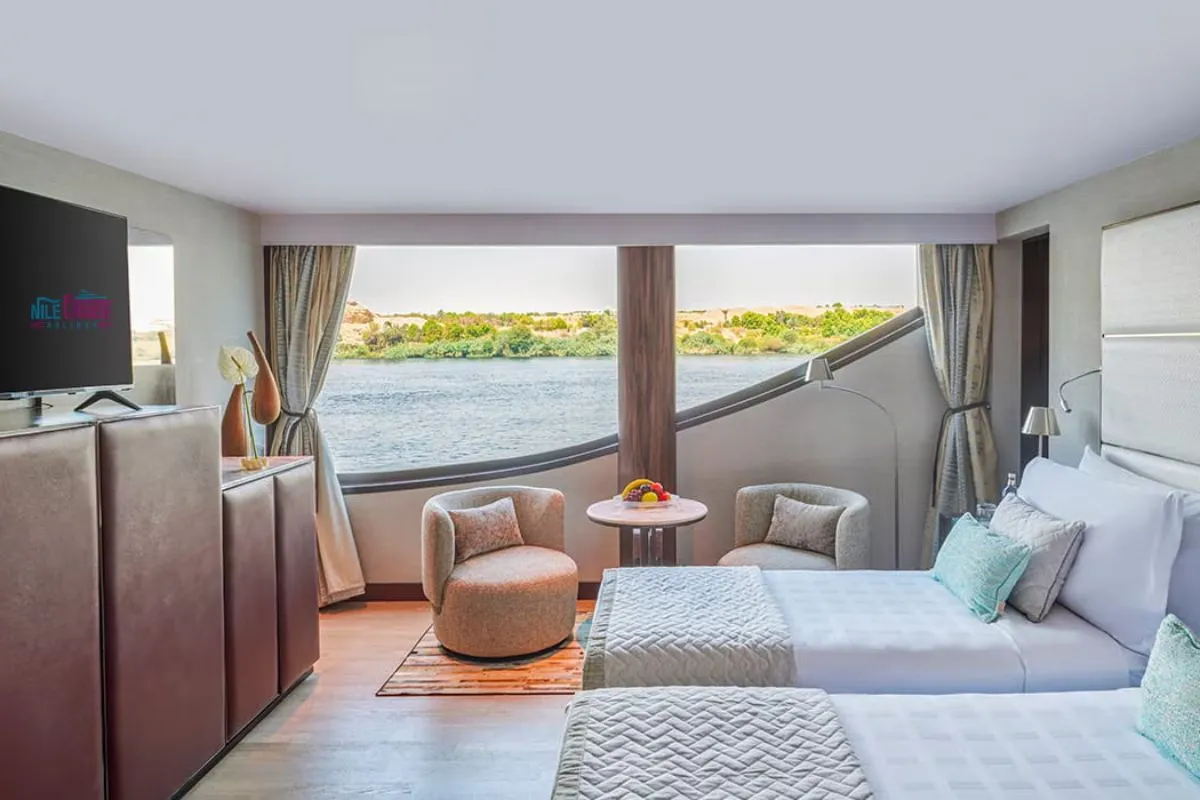
3 to 4 Nights for a Bigger Egypt Trip
A shorter cruise is often the smarter choice inside a wider Egypt holiday. Three or four nights on a classic Luxor and Aswan sailing still covers the core temple corridor: Karnak and the West Bank in Luxor, Edfu, Kom Ombo and the sights of Aswan.
Shorter does not mean inferior. It means efficient. Those saved nights can go to Cairo, to an early-morning trip to Abu Simbel from Aswan, to Alexandria, to the Red Sea or simply to an extra hotel night in Luxor. For first-time visitors with ten days or less, a three or four-night cruise usually gives the best overall balance.
7 Nights for a Slower Nile Holiday
Seven nights makes sense when the cruise itself is the main experience. It suits travelers who value onboard downtime, seniors and slow travelers, people who dislike frequent hotel changes and transfers, and repeat visitors who have already seen Cairo.
The trade-off is real, though. Every extra cruise night is one less night available for Cairo, Abu Simbel, or the Red Sea. On a ten-day trip, a seven-night cruise leaves almost nothing for anything else. Anyone unsure about how many days a Nile cruise needs should start from the total trip length, not from the cruise.
How Long Should You Stay in Cairo?

Two Nights for the Essentials
Two well-timed nights in Cairo can cover the essentials. That usually means one full day at Giza for the pyramids and the Sphinx, and time at the Grand Egyptian Museum. A little extra Cairo sightseeing may fit around flight times, but not much.
Two nights are workable, not relaxed. If an international flight lands late on the first evening, the stay effectively shrinks to one full day. Domestic connections matter too, since the Cairo to Luxor flight usually needs an early start or a half-day of travel.
Three to Four Nights for First-Timers
Three to four nights is the stronger option for a full first visit. That extra time adds Saqqara, Islamic Cairo, Old Cairo, and an evening at Khan el-Khalili without squeezing everything into one exhausting day.
One of the most common planning mistakes is under-allocating Cairo, or treating the arrival and departure days as sightseeing days. Most Cairo and Nile cruise tours give the city at least two nights for that reason. For anyone with ten days or more and a real interest in ancient Egypt, a third night is usually money well spent.
Should You Add the Red Sea?
Hurghada After the Cruise
For many travelers, the natural flow is Cairo, then the Nile cruise, then the Red Sea. The holiday starts with intensive sightseeing and ends with rest. Quiet mornings by the water make the whole trip feel less exhausting.
Hurghada is the usual choice, roughly four hours by road from Luxor. It suits honeymooners, families, divers and snorkelers, and anyone on a ten to fourteen-day trip who wants real downtime after temple-heavy days. Some travelers reverse the logic and use cruises starting from Hurghada with a transfer to Luxor. Either way, the things to do in Hurghada are mostly about the sea itself.
When to Skip the Beach
Commercial honesty matters here. On a trip of around seven days, two rushed Red Sea nights often add more stress than rest. They bring extra transfer time and another hotel check-in, and they take away Cairo time and Nile time. The result is very little actual relaxation.
A beach extension should make the itinerary slower, not busier. If it means cutting Cairo to a single night or shortening the cruise, it is usually better left for a longer trip or a future visit.
Best Egypt Time Splits by Trip Length
The table below is a starting point, not a rule. It shows how most first-time travelers can divide their nights for a balanced Egypt Nile cruise and stay.
|
Total Trip |
Cairo |
Nile Cruise |
Red Sea or Extra Stay |
Best For |
|
7 Days |
2 to 3 nights |
3 to 4 nights |
Usually skip |
Essentials |
|
10 Days |
3 nights |
3 to 4 nights |
2 to 3 nights |
First-time balance |
|
12 Days |
3 nights |
4 nights |
3 to 4 nights |
Comfortable pace |
|
14 Days |
2 to 3 nights |
4 to 7 nights |
3 to 4 nights |
Full Egypt experience |
7 Days
One week is enough for Cairo and the Nile, and that should be the priority. Squeezing Cairo, a cruise, and a beach into seven days only works for travelers who accept a rushed itinerary. A focused 7-day Cairo and Nile trip is usually the better holiday.
10 Days
Ten days is one of the strongest first-time splits. It allows a proper Cairo stay and a classic Nile cruise, plus either a short Red Sea stay or Abu Simbel and extra time in Upper Egypt. A 10-day Cairo, Nile and Hurghada trip shows how the beach option fits without cutting the essentials.
12 Days
Twelve days adds breathing room. Travelers keep their sightseeing depth while adding a meaningful Red Sea stay of three or four nights, long enough to actually relax. Choosing the best time to cruise the Nile also matters more here, since longer trips feel the heat of summer more.
14 Days
Two weeks allows genuine choice rather than compromise. Common structures include Cairo, a four-night cruise and a full Red Sea stay, or Cairo, a seven-night cruise and a shorter extension. Another option is Cairo, the Nile, Abu Simbel and the Red Sea together. A two-week Cairo and Nile itinerary gives a sense of the slower pace.
The split also shifts with the traveler. Families do best with more downtime and fewer transfers. Honeymooners should prioritize the quality of the cruise and hotel, and Red Sea downtime, rather than adding more destinations. Seniors benefit from longer stays and fewer internal moves. History lovers can move Red Sea nights toward Cairo, Luxor or Abu Simbel. Repeat visitors can shorten Cairo if the major sites were already seen and spend more time in Upper Egypt.
Build Your Nile Cruise and Stay with NCH

The hardest part of planning is not choosing a package. It is deciding where the days are worth spending before the package is chosen. That is where Nile Cruise Holiday works as a planner rather than simply a seller.
The NCH approach starts with one simple message: "Tell us how many days you have. We help decide where those days are worth spending." From there, the team can recommend a cruise length, coordinate Cairo hotel nights and a Red Sea extension, and arrange domestic flights, airport transfers and private drivers, subject to availability. Private Egyptologist guides, Abu Simbel visits, extra Luxor or Aswan nights and the right hotel category can all be built in. A strict zero-commission shopping policy keeps sightseeing days focused on the sights.
Because NCH already offers trips of many different lengths, there is no need to force a vacation into one fixed template. The result is less planning time, fewer unnecessary transfers and fewer logistical mistakes. Travelers ready to plan can share their dates and priorities for a tailor-made itinerary shaped around the time they actually have.