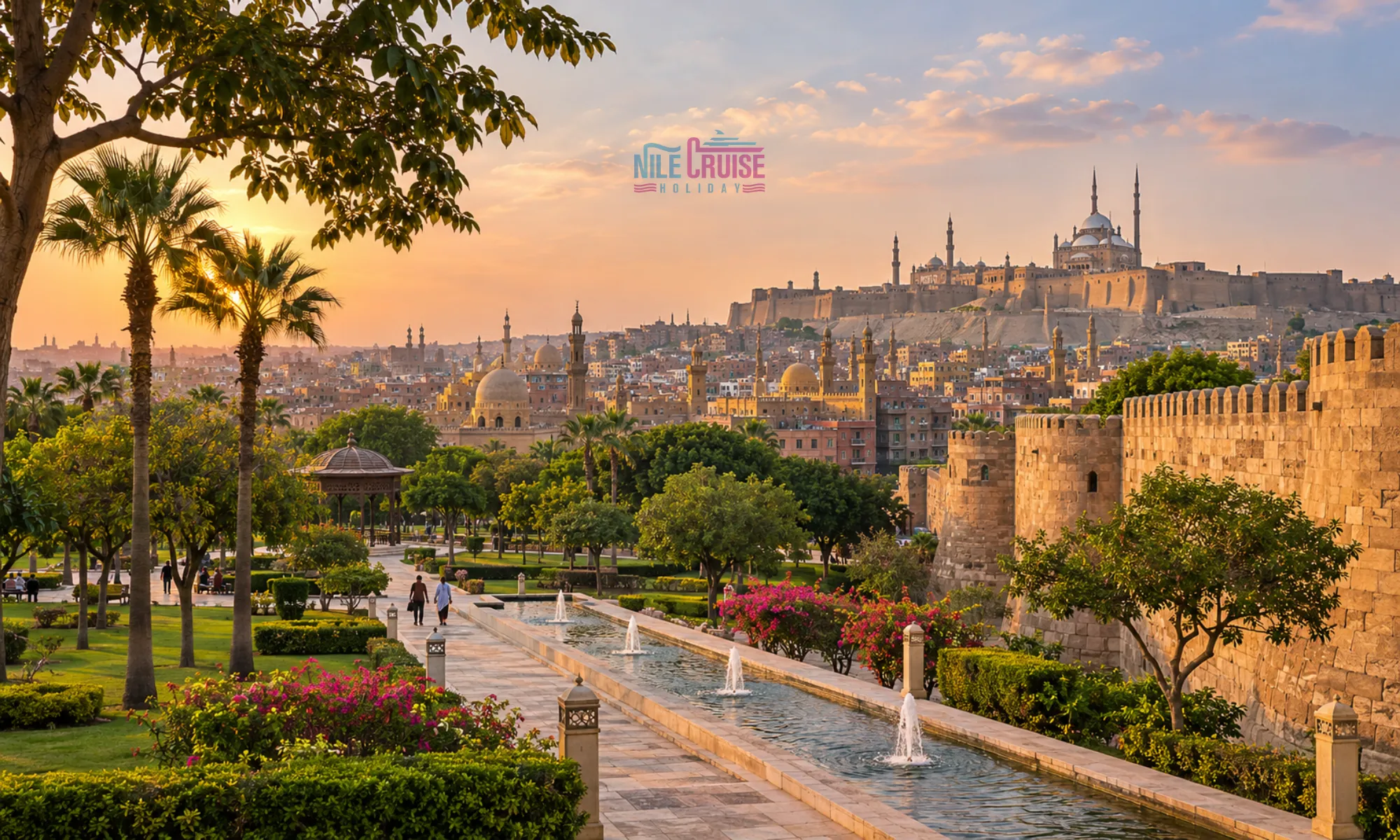

From the upper terraces of Al-Azhar Park, Historic Cairo spreads out as one continuous landscape. Domes and minarets rise from dense streets, the Citadel sits on the ridge to the south, and a long stretch of medieval wall runs beside the park's edge.
That view is the park's real value. Beyond green space, Al-Azhar Park shows how the historic districts fit together, and it is among the strongest sunset viewpoints in Cairo. This guide covers its history, what to see, when to go, and how it fits into a day among Cairo's attractions.
What Is Al-Azhar Park?
Al-Azhar Park is a roughly 30-hectare landscaped park beside Historic Cairo, created as part of a wider urban-regeneration project that also supported restoration and rehabilitation in neighboring Darb al-Ahmar.
It stands on the al-Darassa hills, east of the historic city and north of the Citadel. Despite the name, the park is not part of Al-Azhar Mosque or Al-Azhar University, and it is a modern creation rather than an ancient garden. The Aga Khan Trust for Culture (AKTC) developed it, and it opened to the public by early 2005.
Quick Facts
| Question | Answer |
|---|---|
| Location | Historic Cairo / al-Darassa |
| Size | About 30 hectares |
| Best known for | Gardens and skyline views |
| Best time | Late afternoon/sunset |
| Nearby area | Darb al-Ahmar |
| Historic feature | Restored Ayyubid wall |
| Good for | Walking, views, families, sunset |
Why the Park Was Built
The idea began at a 1984 Cairo symposium on urban growth. The Aga Khan proposed creating a park for Cairo in 1984, and the al-Darassa site was later developed into what became Al-Azhar Park.
The site was not simply an empty plot. It had accumulated centuries of rubble, fill, and urban debris before redevelopment. According to the Aga Khan Development Network, rubble built up there from the 15th century onward, and the earthworks moved about 1.5 million cubic meters of rubble and soil.
The project unfolded in phases. Design development ran through the mid-1990s, and construction continued from 1997 to 2004, including three large fresh-water reservoirs for the city. From the start, the project went beyond landscaping and was linked to the rehabilitation of Historic Cairo around it.
What to See in Al-Azhar Park
Skyline Views
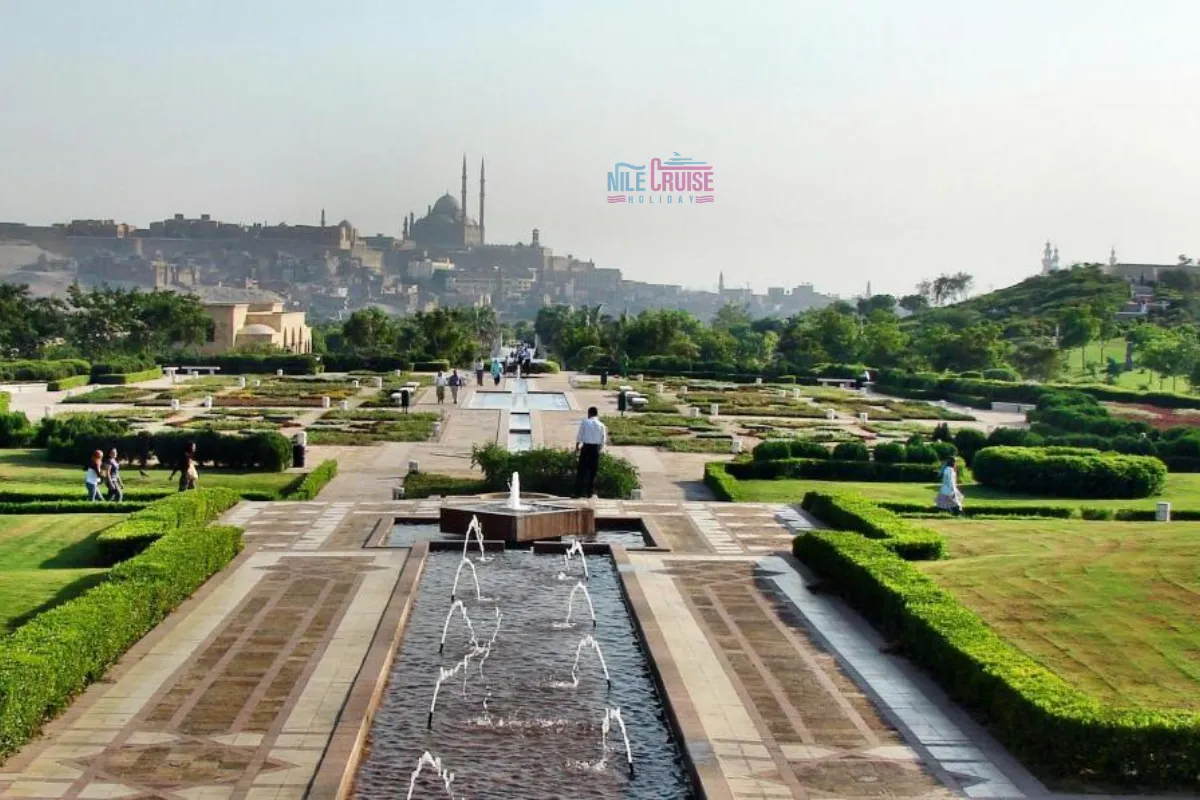
The park's elevation is one of its greatest strengths, giving visitors a broad view over Historic Cairo rather than one isolated monument. To the south, the Saladin Citadel and the domes of the Muhammad Ali Mosque dominate the ridge. To the west, the minarets of Historic Cairo rise above Darb al-Ahmar.
Haze, dust, and weather can soften distant landmarks.
Gardens and Water
A formal central axis runs through the park, tied together by a long water channel. Fountains and pools sit along the main paths and lead toward a lake in the southern meadow.
The Ayyubid Wall
Along the park's western edge runs its most important historic feature. Begun by Salah al-Din in 1176, the Ayyubid wall once helped enclose medieval Cairo, and parts of it had become buried under rubble.
One of the project's most significant archaeological outcomes was the exposure and restoration of surviving sections of Cairo's medieval Ayyubid wall. According to AKTC, around 1.5 km of the remaining wall, with towers and battlements, has been excavated and restored. The wall predates the park by more than eight centuries and ties the walk to Islamic Cairo.
Cafés and Dining
The park's design includes a hilltop restaurant and a lakeside café, useful for a sunset or early evening visit. Current dining operations should be checked before visiting, especially if a meal is an important part of the plan.
Best Time for Sunset
Late afternoon is usually the best time to visit because travelers can explore the gardens in daylight and stay as the historic skyline changes toward sunset. From the terraces, the Citadel and the domes of Historic Cairo often stand out more clearly as the light warms.
Haze and seasonal conditions can affect visibility, and sunset time shifts through the year. Arriving an hour or so beforehand leaves room for both the gardens and the view.
Al-Azhar Park and Darb al-Ahmar
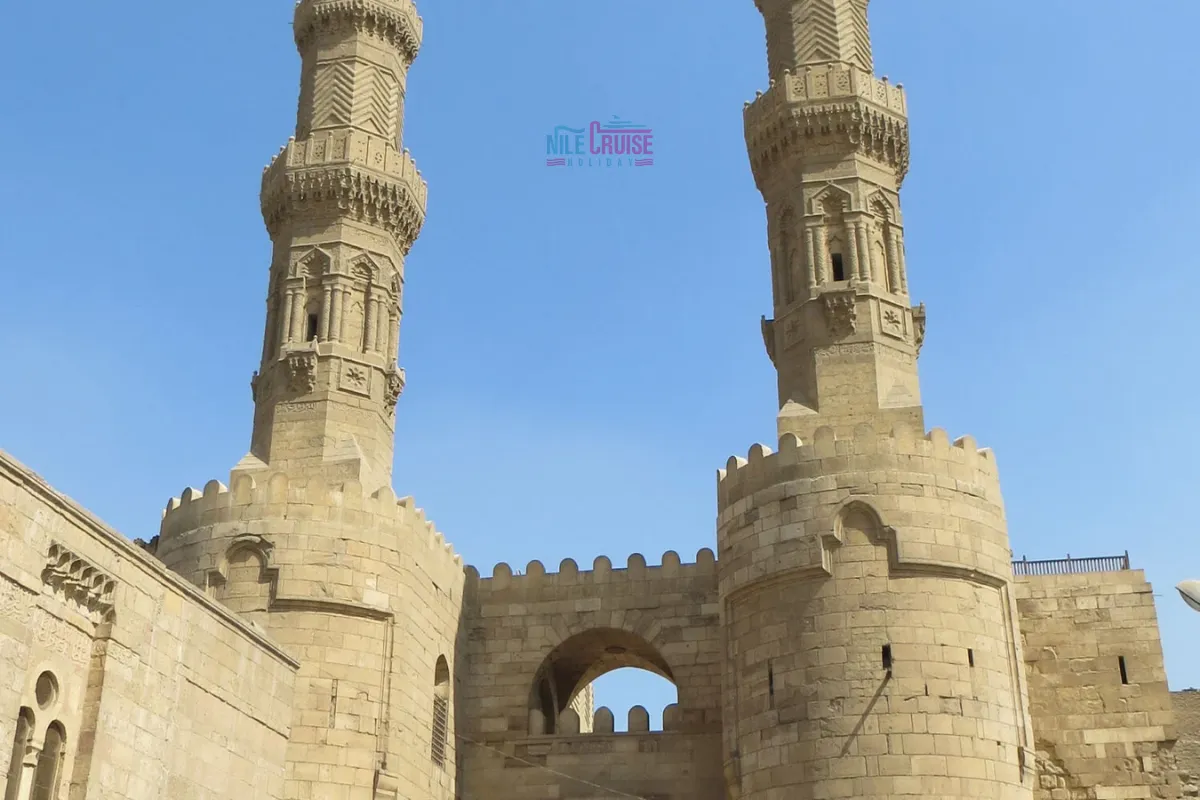
The park was designed as part of a wider urban-regeneration strategy rather than as an isolated beautification project. Its western edge borders Darb al-Ahmar, one of the historic city's oldest lived-in districts.
Alongside the park, AKTC's Historic Cairo program worked in Darb al-Ahmar on monument restoration, housing rehabilitation, public-space improvements and community development, including microcredit, job training and apprenticeships. Restored buildings include the 14th-century Mosque of Umm Sultan Sha'ban and the Khayrbek complex.
The aim was to improve living conditions as well as monuments, and the park is one part of that broader effort rather than its sole cause.
What to Visit Nearby

Private transport can make multi-stop Historic Cairo days more practical because entrance points and walking distances do not always align neatly. None of these sites is inside the park.
Citadel and Sultan Hassan
The Citadel and the Sultan Hassan Mosque make the most natural earlier-in-the-day pairing, with major Islamic architecture and views of their own. Finishing at Al-Azhar Park then shows the Citadel from the opposite angle as the light fades.
Al-Muizz and Khan el-Khalili
Al-Muizz Street and Khan el-Khalili lie north and west of the park, offering a historic walk and the bustle of the market. They can work before or after the park depending on timing and transport.
Darb al-Ahmar
Darb al-Ahmar is the park's closest historic neighborhood, a quieter option that adds context to the restoration seen from the terraces.
Tickets and Opening Hours
Al-Azhar Park charges an entrance fee, and the main gate is on Salah Salem Street. Current guidance puts opening hours at roughly 9 AM to 10 PM. Ticket prices, opening hours, and dining operations can change, so travelers should verify current information shortly before visiting.
Is Al-Azhar Park Worth Visiting?
Yes, especially for travelers with at least two days in Cairo who want a slower experience within a Historic Cairo day. It suits sunset seekers, photographers, families, couples, and anyone needing a break from museums.
It is a lower priority for one-day visitors focused on Giza and the Grand Egyptian Museum, and for tightly compressed archaeology itineraries.
How Long to Spend
Around 1 to 2 hours is enough for a walk and skyline views, while travelers staying for sunset or a meal may spend longer. This is planning guidance, not an official time. An evening Tanoura show can follow.
Nile Cruise Holiday's Role
Nile Cruise Holiday can place Al-Azhar Park at the end of a Historic Cairo day, after the Citadel, Sultan Hassan, or an Islamic Cairo walk, so travelers arrive late enough to enjoy the gardens and skyline rather than rushing it.
Depending on the itinerary booked, NCH coordinates a private vehicle, Egyptologist-guided sightseeing, hotel transfers, and timing, and can fit the day into one of the Cairo and Nile cruise tours. NCH's value is in sequencing the day intelligently, not adding another checklist stop.
Travelers building a Historic Cairo day can ask Nile Cruise Holiday to place Al-Azhar Park where it makes the most sense for transport, sightseeing, and sunset as part of a tailor-made Egypt trip, rather than as an isolated stop.