Stone minarets lean over narrow lanes, brass lamps catch the light outside tiny workshops, and the smell of cumin and cardamom drifts from spice stalls that have operated on the same corners for centuries. Cairo's modern traffic and noise sit just a few streets away, yet this stretch of the old city still moves at a completely different pace. Islamic Cairo compresses nearly a thousand years of architecture into a walkable stretch of the old city, and it rewards travelers who see it on foot rather than from a bus window. Before most itineraries ever reach things to do in Giza or a Nile cruise departing from Cairo, this walk is where the city first reveals its real character. The route below runs north to south along a clear, logical line, the same way locals have always understood this part of Cairo.
Start at Bab al-Futuh
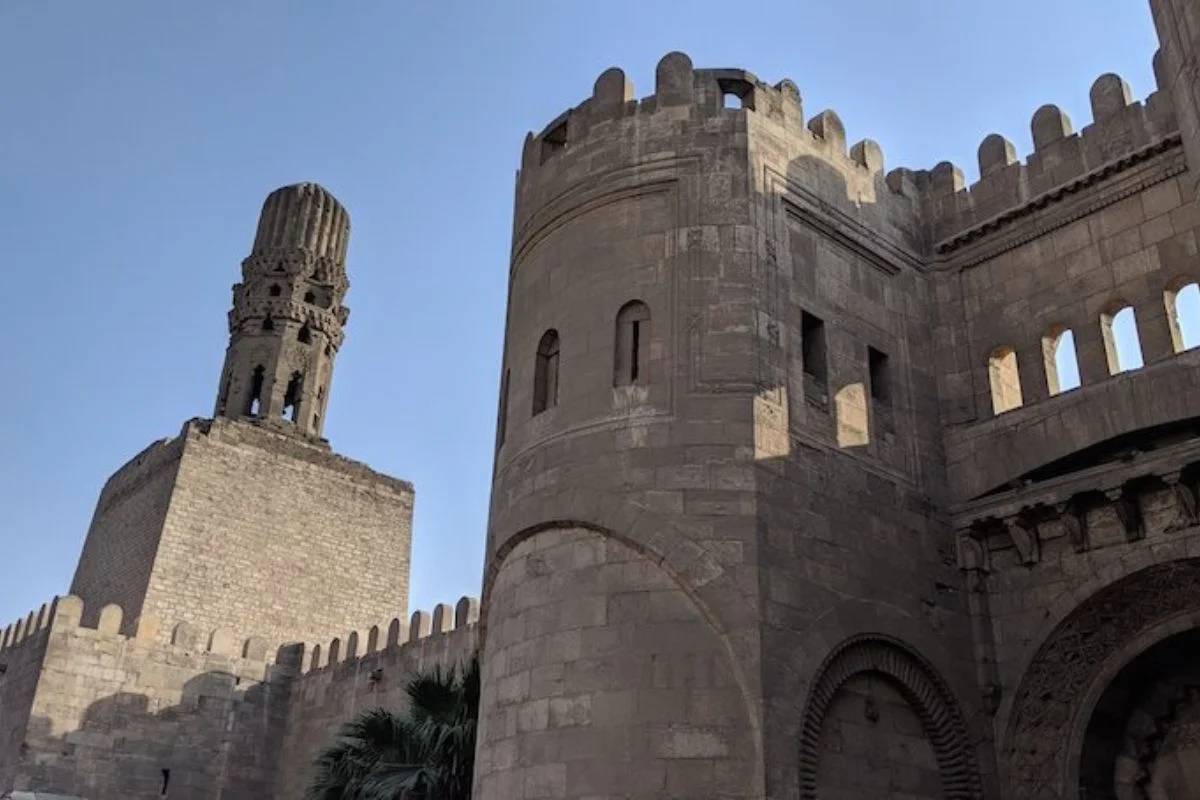
A good Islamic Cairo walk needs a clean starting point, and the northern Fatimid gate gives it one.
The Northern Gate
Bab al-Futuh was built as part of the Fatimid city walls nearly a thousand years ago, and passing through it means stepping directly into the historic core rather than approaching it piecemeal from a side street. Starting here sets up a clean north-to-south walk rather than a confusing zigzag through the old city.
Bab al-Nasr, the second great northern Fatimid gate, sits nearby and is worth a short detour if time allows, especially for travelers interested in Cairo’s original fortified walls.
Al-Hakim Mosque
Just inside the gate sits Al-Hakim Mosque, the walk's first major stop and one of Cairo's oldest Fatimid religious buildings. Its vast open courtyard feels almost empty compared with the crowded lanes waiting further south, a useful contrast before the walk gets busier. Mosques this old carry their own layers of restoration and myth, not unlike the documented damage and folklore surrounding what happened to the Sphinx's nose out at Giza.
Walk Al-Muizz Street
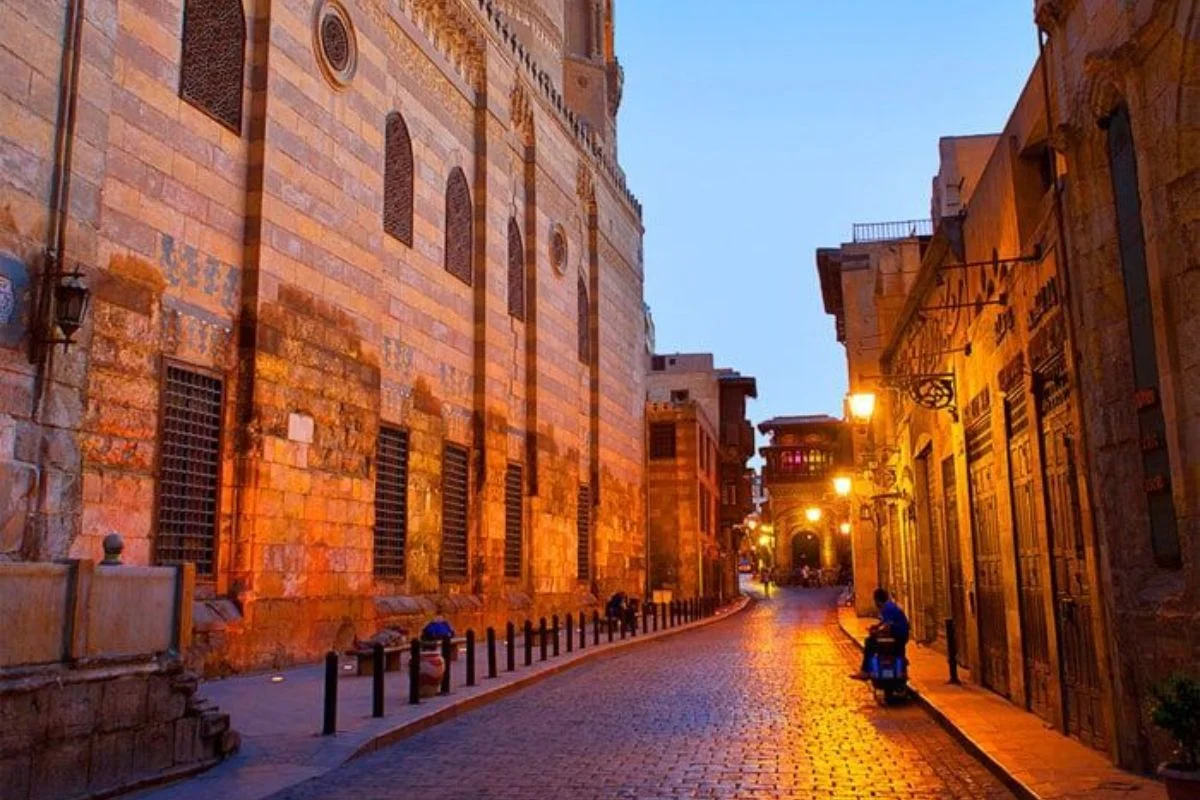
Al-Muizz Street is less a single attraction than a living architectural timeline, with Fatimid, Mamluk, and Ottoman buildings standing shoulder to shoulder along the same stretch of road.
Look beyond the mosques as you walk: sabils once supplied free drinking water, kuttabs taught local children, and historic baths and merchant buildings reveal how this street functioned as a living city rather than simply a ceremonial avenue.
Bayt al-Suhaymi
This restored merchant house shows how wealthy Cairenes actually lived centuries ago, built around a shaded central courtyard designed to keep the heat out long before air conditioning existed. It is one of the clearest windows into domestic life anywhere on the route.
Qalawun Complex and Bayn al-Qasrayn
The Qalawun complex is Al-Muizz Street's Mamluk showpiece, combining a mausoleum, a madrasa, and a hospital within a single sweep of elaborate facade. Telling these three functions apart from the street is genuinely difficult without someone who already knows which door leads where, a distinction not unlike separating fact from folklore in a story like who Hatshepsut really was, where context changes everything.
Enter Khan el-Khalili

South of Al-Muizz Street, monumental architecture gives way to the noise and motion of a working market that has traded in the same spot for centuries.
Wander the Market Lanes
Brass lamps, spices, and textiles fill the first lanes closest to the main entrance, along with a fair amount of stock aimed squarely at passing tour groups rather than locals. The experience genuinely improves once a visitor moves past that initial layer and into the quieter lanes beyond, where the market starts to feel like Cairo's own rather than a display built for tourists, and where prices and conversations both tend to relax.
Stop at El Fishawy
El Fishawy, one of Cairo's oldest cafés, is the natural place to pause the walk entirely. Mint tea or Arabic coffee here, surrounded by mirrors and old lanterns, gives tired legs a break and lets the atmosphere actually sink in rather than rushing straight through it, the same unhurried pacing worth building into a Nile dinner cruise in Cairo later in the evening.
Al-Azhar Mosque
Al-Azhar Mosque sits right at the market's edge, a logical final religious stop before the walk either ends or continues south. Its presence is a reminder that Islamic Cairo's religious and commercial life have always overlapped rather than existing in separate zones, one of the details that makes this stretch of the city stand out among Egypt's top tourist attractions.
Continue to Bab Zuweila

For travelers with energy left, the walk can continue south to the other great Fatimid gate.
Al-Ghuri Complex
The Al-Ghuri complex works as a transition point between the market zone and the quieter streets leading to the southern gate, its own Mamluk architecture a reminder that the walk's history did not end with Al-Muizz Street.
Bab Zuweila and Tentmakers' Street
Bab Zuweila forms the southern architectural bookend to Bab al-Futuh, completing a satisfying full-length walk through the old city. Tentmakers' Street just beyond it offers a quieter, more specialized crafts market, appliqué textiles rather than the brass and spice of Khan el-Khalili, and noticeably fewer visitors.
What to Know Before You Walk
A little planning turns this from an overwhelming errand into an actual pleasure, the same practical mindset worth applying to any longer Egypt itinerary, including a 9-day Cairo, Nile cruise, and Hurghada package built around similarly dense sightseeing days.
How Long It Takes
The core walk from Bab al-Futuh through Khan el-Khalili takes roughly three to four hours at a comfortable pace. A fuller route that includes monument interiors, the extension to Bab Zuweila, and real shopping time easily fills half a day.
What to Wear and Timing
Comfortable walking shoes matter more than anything else here; the paving is uneven and the distances add up. Modest clothing is expected inside the mosques, and monument interiors require separate tickets and close earlier than the street itself stays active, so timing the day around opening hours rather than around the market alone avoids disappointment.
Why You Need a travel agency in Islamic Cairo
Islamic Cairo is a genuine maze, and independent travelers routinely discover that the hard way.
A Maze Without Context
Without local knowledge, it is easy to walk straight past an important doorway, confuse one dynasty's architecture for another, or miss the one detail that explains why a building matters at all. The same gap in context shows up across the debate over private tours versus group tours in Egypt generally, and nowhere does it matter more than in a district this dense. A private route built around a 5-day Nile cruise itinerary from Cairo to Luxor and Aswan solves that gap before it ever becomes a problem.
A Hassle Shield
Unsolicited sales pitches, aggressive bargaining, and the sheer density of the crowds can turn a magical walk into an exhausting one surprisingly fast. Nile Cruise Holiday's private Egyptologist guides manage those interruptions directly, the same hands-on approach the case for booking through a specialist describes, keeping the group's attention on the architecture rather than on fending off a sales pitch. The same standard carries into longer trips, including an 8-day Cairo and Nile cruise package with Abu Simbel built around the same guided approach.
A Better Pace
Beyond navigation and hassle management, a guide curates the entire pace of the day: hotel transfers timed to avoid the worst heat, a walking route sequenced so nothing important gets missed, and a relaxed café stop built in rather than squeezed out. Travelers ready to see Islamic Cairo properly can build it into broader Cairo and Nile cruise tours or a fully tailor-made itinerary shaped around exactly this kind of walk.
Conclusion
Islamic Cairo rewards travelers who give it a proper, unhurried walk rather than a rushed photo stop, from the quiet courtyard at Al-Hakim Mosque to mint tea at El Fishawy and the crafts market beyond Bab Zuweila. Nile Cruise Holiday's private Egyptologists turn that walk into a properly guided, hassle-free morning or afternoon, built into Egypt tour packages with a Nile cruise, an 8-day Cairo and Nile cruise package, a 9-day Cairo and Nile cruise package including Abu Simbel, or simply as one well-planned day among everything else to do in Egypt.