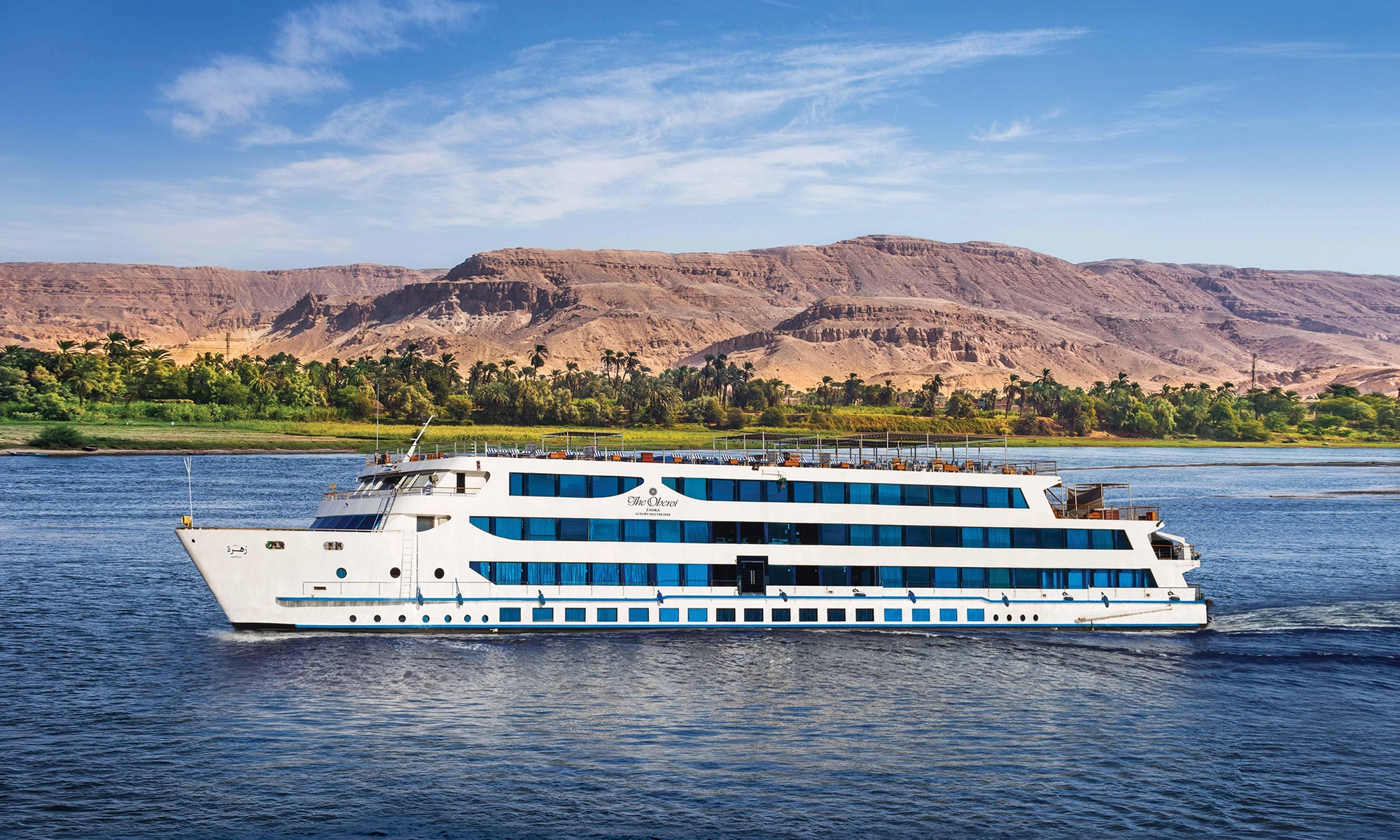
A Nile cruise is one of the gentlest ways to see Egypt. You unpack once, the temples come to you, and the river between Luxor and Aswan is calm enough that most people forget they are on a boat at all. Still, a few days on the water raises a fair question for anyone with a health condition, young children or older parents in tow: what happens if someone gets sick on board?
The honest answer is that a Nile cruise ship is not an ocean liner with a hospital deck. It is a small floating hotel that never sails far from a town, and that changes how medical care works. Between the golden cliffs of the West Bank and the granite islands of Aswan, help is rarely far away.
This guide explains what medical facilities you can expect on Nile cruises, how doctors and emergencies are handled, which hospitals sit along the route, and the practical health tips that prevent most problems before they start.
Is There a Doctor on a Nile Cruise?
How Medical Care Differs From Ocean Cruises
On large ocean ships, medical care follows guidelines set by the American College of Emergency Physicians (ACEP) and the cruise industry body CLIA. Those ships carry at least one doctor and two nurses, keep staff on call 24 hours a day, and equip an infirmary with oxygen, cardiac monitors, an EKG machine and two defibrillators.
Nile river cruises work differently. The U.S. State Department states plainly that most Nile cruise boats do not have a doctor on board, and that medical capabilities on board may be limited. Nile ships are much smaller than ocean liners and moor near a town almost every day, so few carry a resident medical team.
The On-Call Doctor System
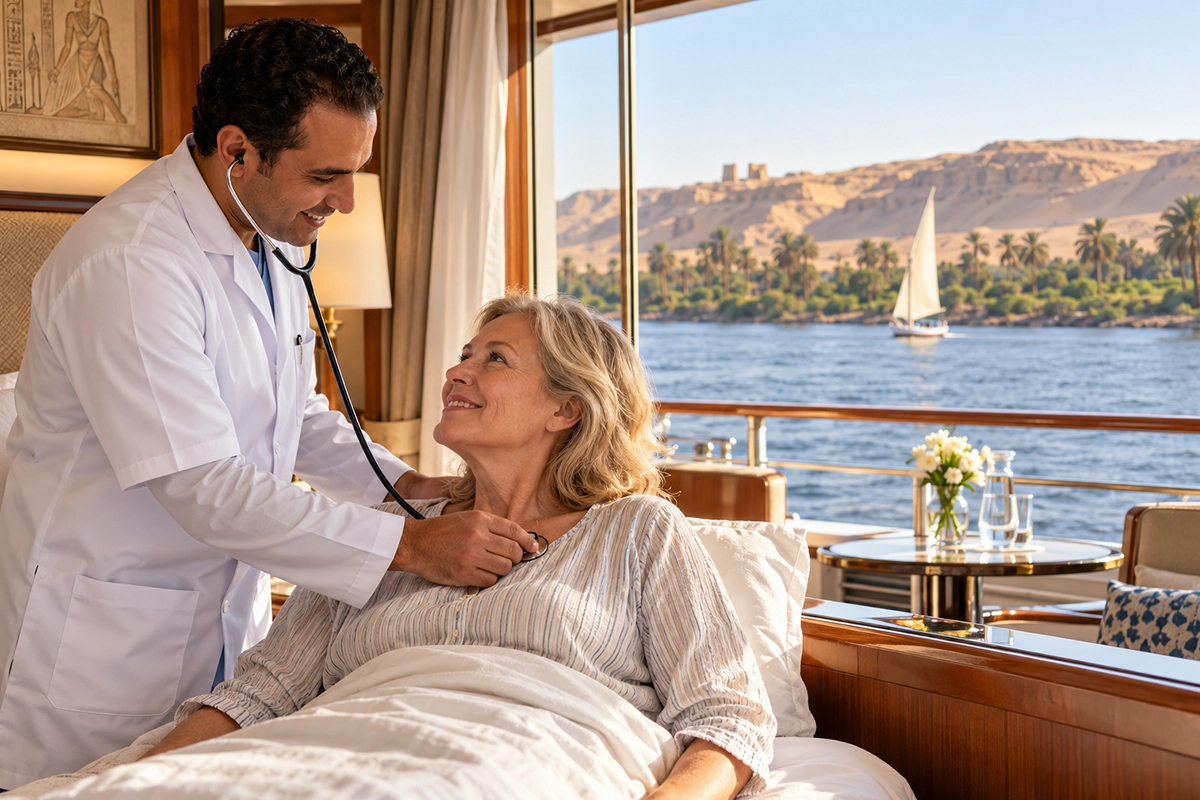
What most Nile ships offer instead is an on-call doctor. The ship's reception or hotel manager keeps a list of local physicians in the towns along the route, and a doctor can usually be called to the boat when it is moored at Luxor, Esna, Edfu, Kom Ombo or Aswan. Some higher-end ships, including several of the luxury Nile cruises, keep a doctor or nurse among the crew, but this varies by vessel and season.
Because policies differ, ask the question before you book rather than after you board. A good operator will tell you whether the ship has a medical practitioner, how quickly a doctor can reach the boat, and how a transfer to Luxor or Aswan would be arranged. This is one of the simplest reasons to book a Nile cruise through a company that knows the fleet well.
What You Will Find on Board
Even without a resident doctor, every licensed ship carries a first-aid kit, and reception staff can supply basics like plasters, painkillers and rehydration salts. You can also expect life jackets in cabins, fire extinguishers, smoke detection, emergency lighting and marked exits. Once on board, take two minutes to find your nearest staircase, exit and life jacket. Our guide to facilities and entertainment on a Nile cruise covers the rest.
Medical Emergencies on the Nile
What to Do First
If someone falls ill or gets hurt, the steps are simple:
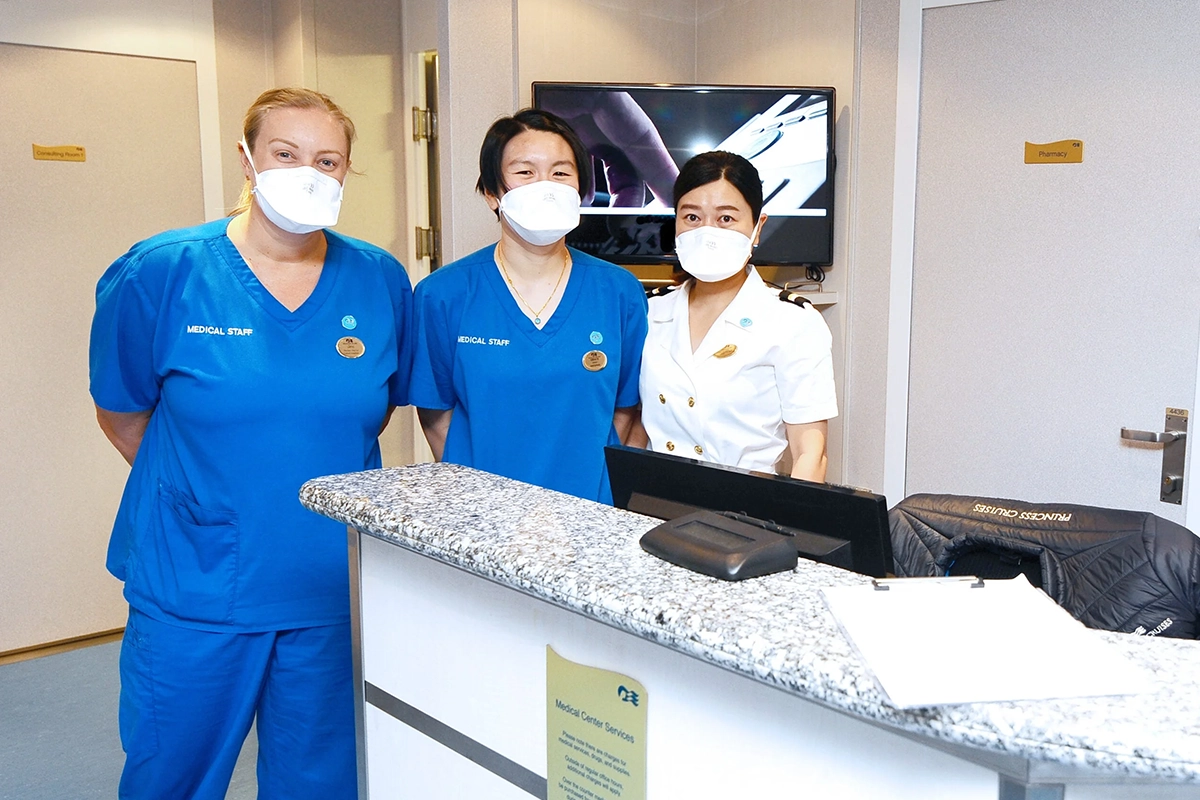
- Tell reception or the cruise manager immediately. They are the ship's link to local doctors and ambulances.
- Ask whether a medical practitioner is on board or can come to the boat.
- Call your travel insurer's emergency line as soon as hospital care looks likely. Most insurers want to be told before treatment, not after.
- Keep your passport and insurance documents where you or a companion can reach them quickly.
Your tour guide is also a valuable ally, able to translate between you and the doctor.
Emergency Numbers in Egypt
Save these numbers in your phone before you travel:
| Service | Number |
|---|---|
| Ambulance | 123 |
| Police | 122 |
| Tourist Police | 126 |
| Fire | 180 |
The UK Foreign Office advice for Egypt is to call 123 and ask for an ambulance, then contact your insurance or assistance company quickly once you are referred to a hospital. Add your insurer's and embassy's numbers too.
Hospitals Along the Route
The good news is that a Nile cruise between Luxor and Aswan never strays far from a city. U.S. government advice notes that healthcare in Luxor and Aswan is better than at many smaller ports of call, while emergency and intensive care can be limited elsewhere. Both cities have public and private hospitals, and your cruise manager will know which one the ship normally uses.
For anything serious, patients are often stabilized locally and then moved to Cairo, which has the country's widest choice of internationally accredited private hospitals. Domestic flights make that transfer quick; a Cairo to Luxor flight takes about an hour, and the Cairo to Aswan flight is not much longer.
Remote trips need more thought. On Lake Nasser cruises the boat spends long stretches far from any town, so travelers with heart or breathing conditions should discuss this route with their doctor and insurer first. Our comparison of Lake Nasser and Nile cruises explains how the two differ.
Paying for Care and Travel Insurance
Who Pays for Treatment
Medical care on and around a Nile cruise is paid for by the passenger. A visiting doctor will usually ask for payment on the spot, and private hospitals often want cash or a card deposit before admission. Keep some Egyptian pounds and a working card with you; our guide to money in Egypt covers cash and ATMs. Ask for itemized receipts every time, because your insurer will need them.
The UK Foreign Office also warns that some hotel doctors have overcharged for treatment and medicines, and that pharmacies outside hotels often sell medication more cheaply.
What Your Policy Should Cover
For a Nile cruise, your policy should include:
- Emergency medical treatment and hospital stays abroad
- Medical evacuation and repatriation, which the U.S. State Department specifically recommends for Egypt
- Trip cancellation and interruption, in case illness cuts the cruise short
- Pre-existing conditions, declared honestly, or the cover may not apply
Check that the policy stays valid under your government's current travel advice, since some policies exclude regions where official advice warns against travel. Our full guide to travel insurance for Egypt walks through the details.
Health Tips for a Nile Cruise
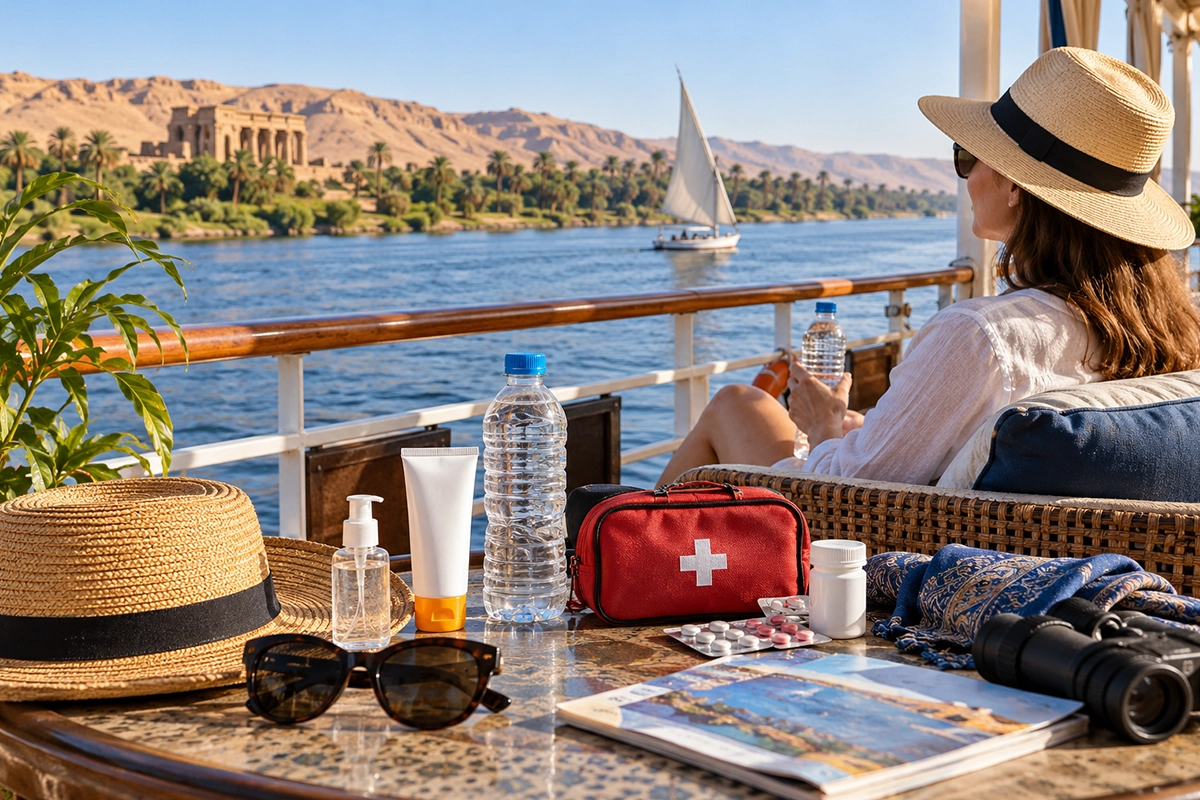
Pack a Small Medical Kit
Pharmacies are common in Luxor and Aswan, but a cruise schedule leaves little time for shopping, so bring a small kit:
- Your regular medication, enough for the whole trip plus a few extra days
- Copies of prescriptions, with the generic names of each drug
- Oral rehydration salts and an anti-diarrhea remedy
- Painkillers, plasters, antiseptic cream and blister pads
- High-factor sunscreen, after-sun lotion and insect repellent
- Motion sickness tablets if you are sensitive, though the Nile is far calmer than the sea
Some medicines that are legal at home, including certain painkillers and sleeping pills, are controlled substances in Egypt. Carry a doctor's letter that lists your condition, the medication and the quantity, and check with the Egyptian embassy if you take anything strong. If you need insulin or other refrigerated medicine, ask the ship in advance about fridge storage. Our Nile cruise packing list has the rest.
Food, Water and Stomach Upsets
Stomach upsets are the most common health complaint on any Egypt trip, though most travelers eat well on board without trouble. You can lower the risk further:
- Drink only sealed bottled water, and use it to brush your teeth if your stomach is sensitive.
- Choose hot, freshly cooked dishes over food that has sat warm for hours.
- Eat fruit you peel yourself, and go easy on raw salads in the first few days.
- Wash your hands before every meal, especially after temple visits.
If you do get ill, rest, sip rehydration salts and tell reception. Crews will usually bring meals to your cabin. Seek a doctor for high fever, blood in the stool, severe pain or signs of dehydration. For more on food and water, read our Egypt health guide and our look at food and drink on board Nile cruises.
Beat the Heat in Upper Egypt
Heat is the health risk travelers most underestimate. Upper Egypt regularly passes 40°C in summer, and visits to Karnak, the Valley of the Kings, Edfu, Kom Ombo and Philae mean long stretches in the open sun.
- Drink before you feel thirsty, and add electrolytes on very hot days.
- Wear a wide hat, sunglasses and loose, light clothing.
- Visit sites early in the morning, which most cruise itineraries already do.
- Watch for heat exhaustion: dizziness, headache, nausea and heavy sweating. Move to shade and rest.
- Treat heatstroke as an emergency: confusion, very high body temperature or no sweating in extreme heat. Call for help at once.
If heat worries you, pick your season carefully. Our guides to the best time to cruise the Nile and summer in Egypt explain what each month feels like.
Vaccinations and Pre-Trip Checks
Most travelers from Europe, North America and Australia need no special vaccines for a Nile cruise. Keep routine shots up to date, and ask your doctor about hepatitis A and typhoid. Book a travel health appointment four to eight weeks before departure.
Special Care for Seniors, Families and Travelers With Conditions
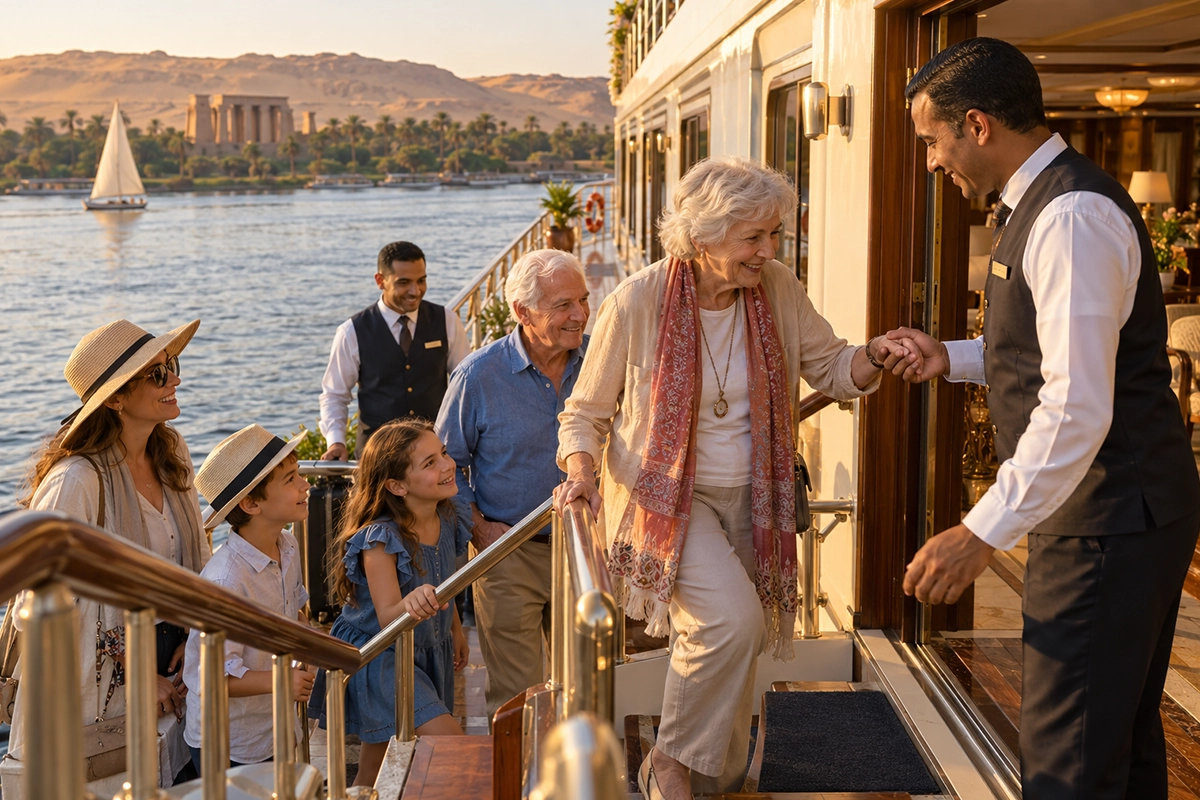
Seniors and Limited Mobility
Nile cruises suit older travelers well, but a few points matter. Decks and stairs can be slippery when wet or freshly polished, so wear shoes with grip and use the handrails. Many ships have no lift, and when several boats moor side by side you may need to cross through other ships to reach the shore. Ask about lifts and cabin location before you book, and read our guides to Egypt tours for seniors and Nile cruises for seniors.
Children on Board
Children dehydrate faster than adults and are drawn to open decks and pool edges. Supervise them on deck, keep their water bottles full on excursions, and pack child doses of fever and rehydration remedies. Our Nile cruise with kids guide and the family Nile cruises page have more ideas.
Heart, Breathing and Other Conditions
Travelers with heart or respiratory conditions should take extra care in the heat and dust, carry enough inhalers or tablets, and keep a short medical summary in English with their passport. A private guide or a tailor-made trip allows a slower pace, shorter walks and more rest stops. Our article on private versus group tours explains the trade-offs.
Enjoy the Best Nile Cruise With the Finest Medical Care
The ships on the Nile are small and rarely carry a full medical team, but they sail close to Luxor, Aswan and the towns between, and a doctor or hospital is usually within easy reach. The real safety net is preparation: the right insurance, a small medical kit, sensible eating and a healthy respect for the midday sun.
Do that, and the river can do what it has done for thousands of years, carrying you gently past the temples while you rest. When you are ready, browse our Luxor and Aswan Nile cruises or contact us to ask about the medical arrangements on any ship before you book.