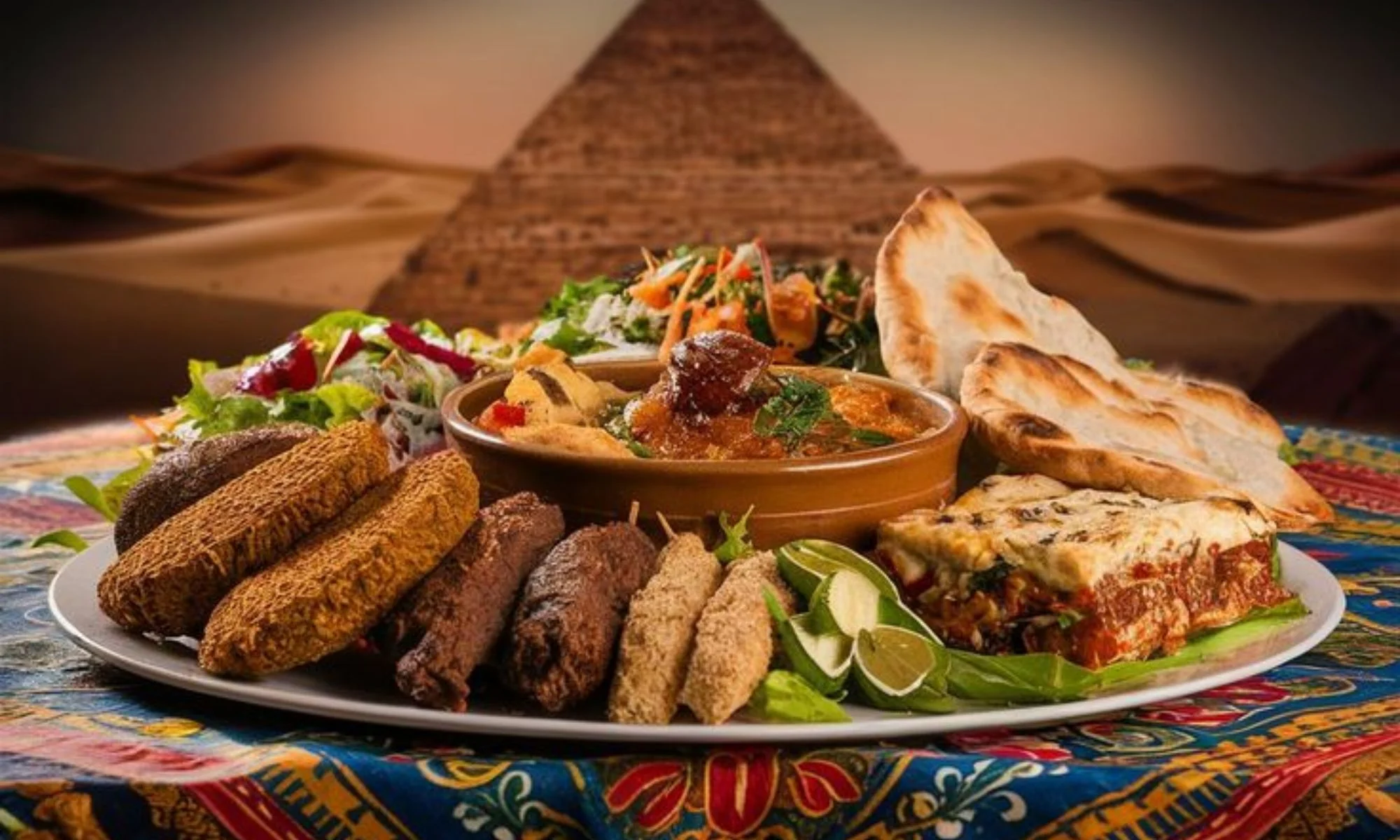
Each summer, the Nile rose over its banks and left behind a layer of dark, fertile silt. When the water drew back, farmers sowed wheat and barley in the wet earth, and a few months later the fields turned gold. The river was Egypt's pantry, and almost everything on an ancient Egyptian table began there.
For most people, two staples defined every day: bread and beer. A labourer, a scribe and a queen all ate bread and drank beer. What separated them was everything else. Meat, wine and fine pastries belonged mostly to the wealthy, while ordinary families relied on onions, lentils, fish and fruit.
This guide covers what ancient Egyptians ate and drank, how meals were made, what went into tombs, and where you can still taste the echoes of this ancient Egyptian food on Cairo and Nile cruise tours today.
Food from the Nile
Wheat and Barley
Emmer wheat and barley were the foundations of the diet. Grain was grown on a vast scale, stored in state granaries, and measured carefully, because a poor flood meant a hungry year.
Fields and Gardens
Beyond the grain fields, farmers grew onions, garlic, leeks, lettuce, lentils, chickpeas and broad beans. Tomb paintings show neat garden plots watered by hand with pots carried on a yoke.
Fruit and Honey
Dates, figs, grapes, pomegranates and the fruit of the sycamore fig added sweetness. Honey was the main sweetener, and tomb scenes show beekeepers smoking hives in clay cylinders, a method still used in parts of Egypt.
Bread and Beer
Ancient Egyptian Bread
Bread was made mostly from emmer and barley, shaped into round loaves, cones and even animal forms. Dozens of bread names survive in texts, which shows how central it was to daily life.
Ancient Egyptian Beer
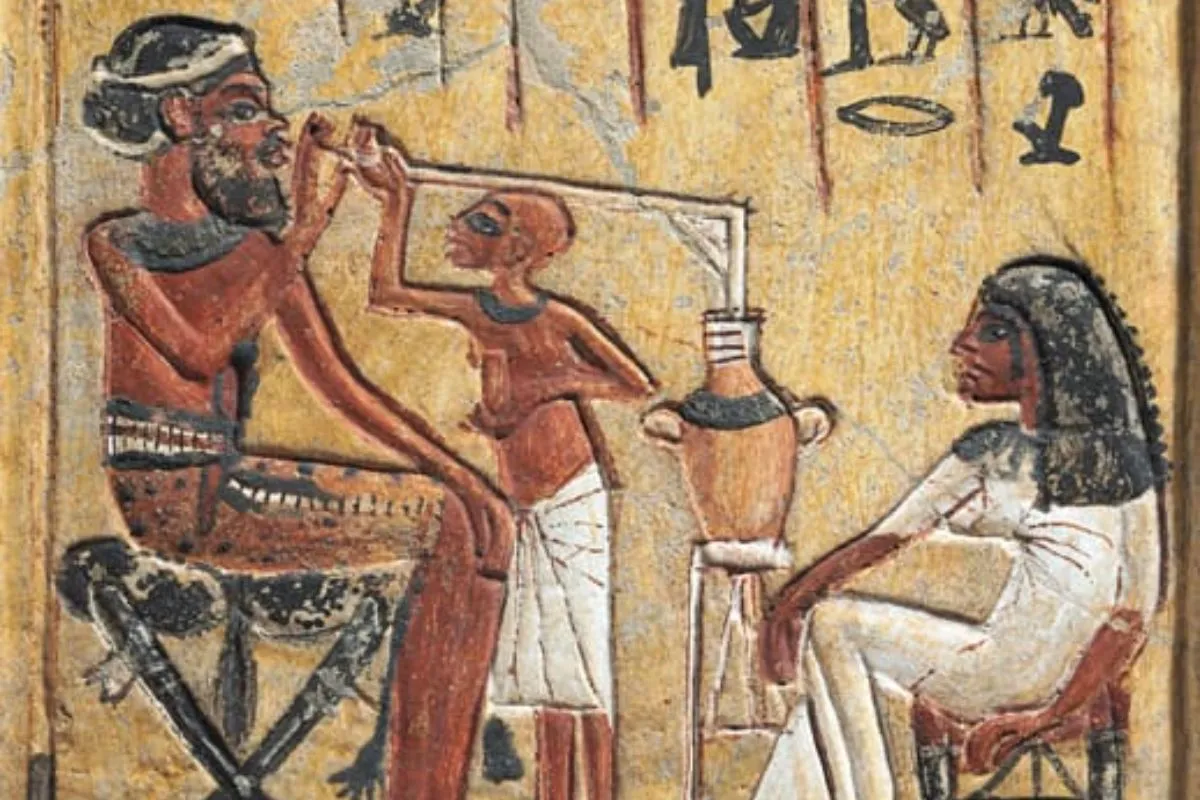
Ancient Egyptian beer was thick, cloudy and nutritious, closer to a mild, grainy porridge drink than modern lager. It was low in alcohol and safer than untreated water, and people often drank it through reed straws to filter the husks.
Food and Wages
Bread and beer were also money. Workers at Deir el-Medina, the village of the tomb builders of the Valley of the Kings, were paid in grain rations. Near the Giza pyramids, archaeologists have found large bakeries and breweries that fed the workforce.
The Ancient Egyptian Food List
Vegetables and Pulses
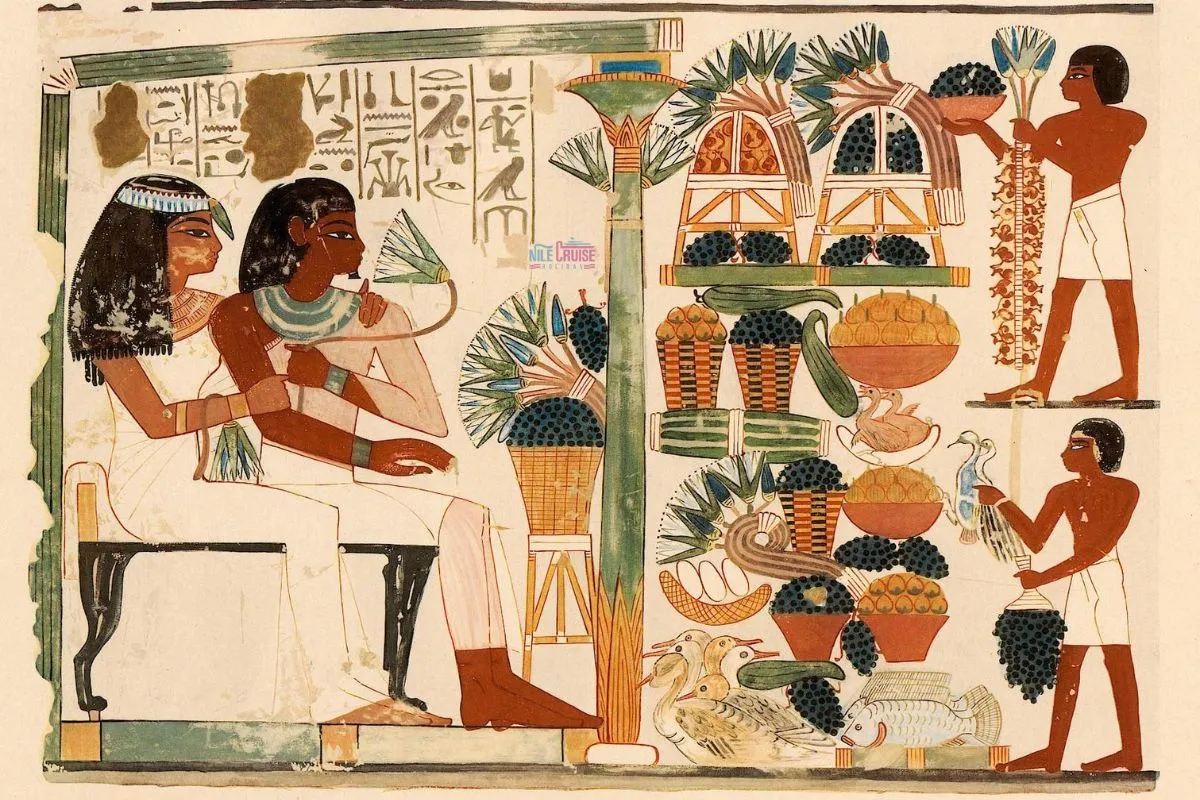
Onions, garlic, leeks, lettuce, cucumbers, lentils, chickpeas and broad beans formed the everyday ancient Egyptian food list.
Fruit and Nuts
Dates, figs, grapes, pomegranates and dom palm nuts were common. Tiger nuts, the small tubers of a sedge plant, were ground and sweetened.
Fish
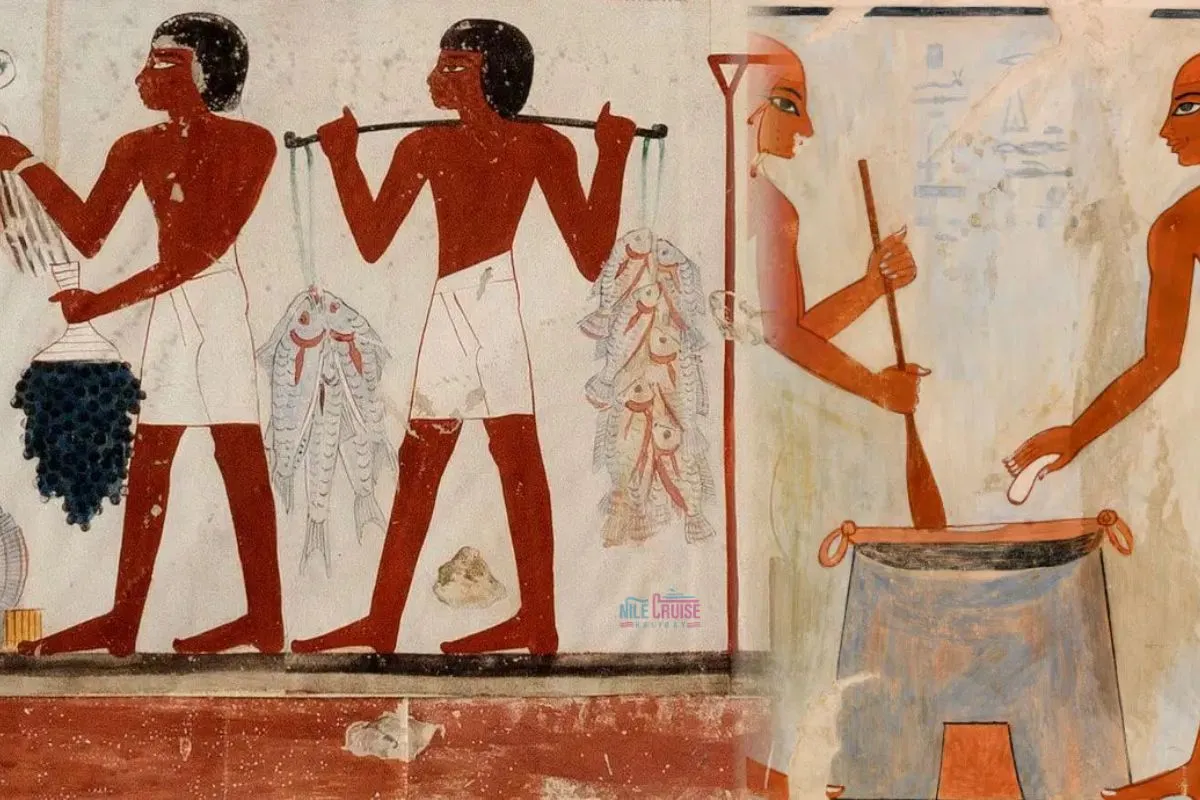
Fish was a major protein source for ordinary people. Tilapia, catfish and mullet were caught with nets, traps and spears, then eaten fresh or dried.
Diet also depended on local belief: some fish species were sacred or taboo in particular regions of Egypt, even while the same species could be eaten elsewhere along the Nile.
Poultry
Ducks, geese, pigeons and quail were hunted in the marshes or raised in farmyards. Geese were sometimes force-fed to fatten them.
Meat
Beef, goat and sheep depended on wealth. Cattle were expensive, so beef appeared mainly at elite tables, temple feasts and festivals.
Dairy
Milk came from cows and goats, and cheese was made too. Jars of cheese around 3,200 years old were identified in the Saqqara tomb of the official Ptahmes.
What Did They Drink?
Beer for Everyone
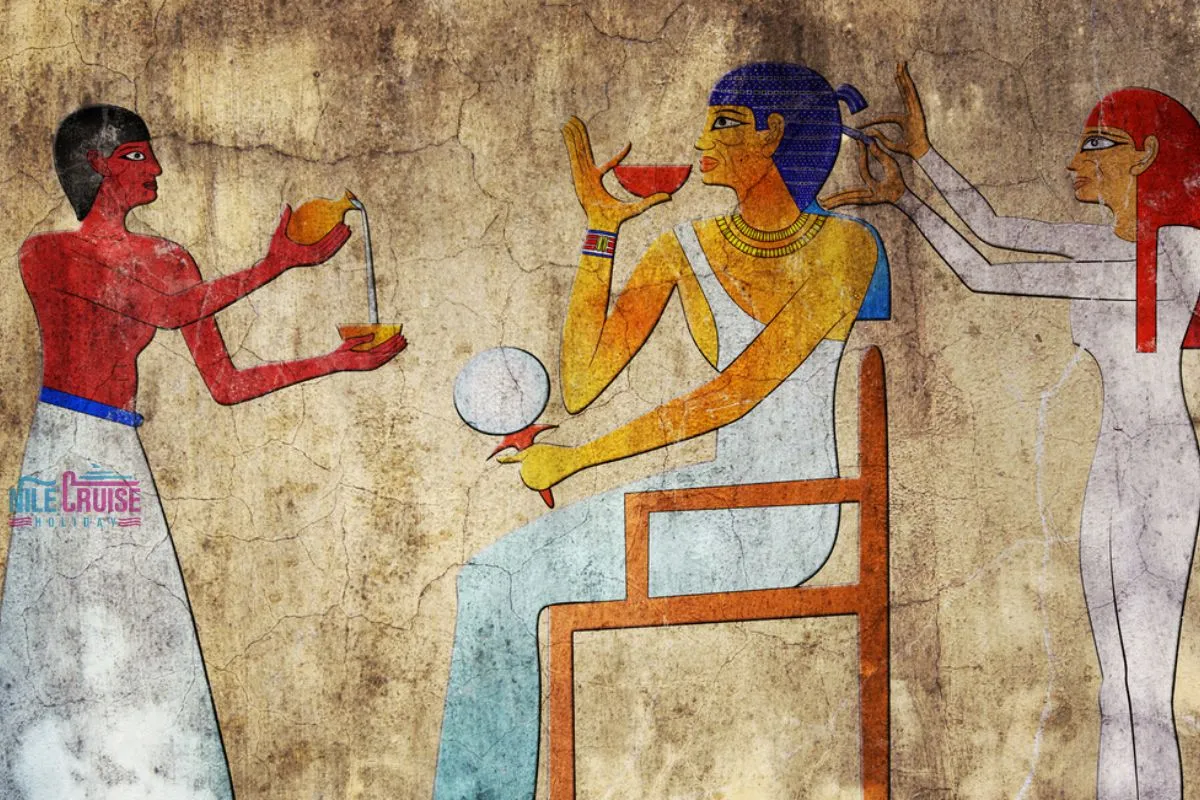
Beer was the daily drink for adults and children alike, brewed at home and in large institutional breweries.
Wine for the Elite
Wine came from vineyards in the Delta and the western oases. Jars found in the tomb of Tutankhamun were labelled with the year, the estate and even the chief vintner, much like a modern wine label.
Nile Water
Yes, they drank water too, drawn from the Nile and from wells, sometimes stored in porous jars that cooled it. Modern travelers should stick to bottled water, as our guide on whether you can drink tap water in Egypt explains.
How Food Was Made
Grinding Grain
Women ground grain on stone querns, kneeling for hours each day. Tiny particles of sand and stone found their way into the flour, and mummies show teeth heavily worn by this gritty bread.
Baking and Brewing
Baking and brewing were closely connected. Both used the same grain, and partly baked bread may have been crumbled into water to start the beer.
Cooking Meat and Fish
Meat and poultry were roasted over open fires or boiled in pots. Fish were often split, salted and laid out in the sun.
Preserving Food
In the dry heat, drying and salting kept fish, meat and fruit for months. Grain stored well in sealed granaries.
What Did a Daily Meal Look Like?
Breakfast
Breakfast was simple: bread, beer and perhaps an onion.
Evening Meal
The evening meal was more substantial, with vegetables, lentil stews, fish and fresh bread, shared by the family.
Elite Banquets
Wealthy hosts held banquets with roast meat, fruit, cakes and wine. Tomb paintings show guests in fine linen, servants pouring drinks, and musicians playing harps and lutes.
Food for the Afterlife
Tomb Offerings
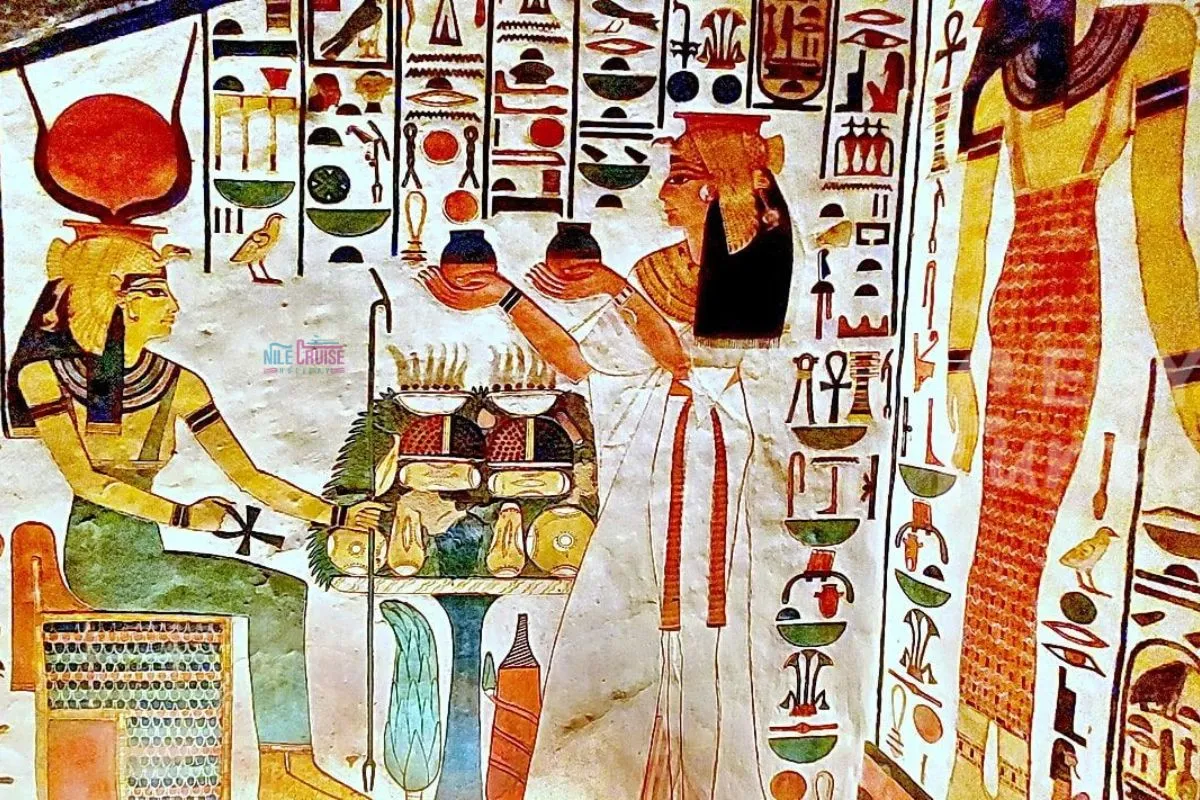
Offering tables carved with loaves, jugs of beer and joints of meat stood in tombs, and prayers asked for "a thousand of bread and a thousand of beer" for the dead.
Meals for Eternity
Families left real food in tombs, along with painted scenes and small models of bakeries and breweries that would magically keep working forever.
What Archaeologists Found
Excavators have found preserved loaves, jars of grain, dried fruit and joints of meat. The tomb of the architect Kha and his wife Merit at Deir el-Medina, now in Turin's Egyptian Museum, held loaves of bread, dried fruit and other foods still in their vessels.
Did Ancient Egyptians Have Recipes?
What We Know
Ingredients and techniques are well documented through texts, tomb scenes and remains found by archaeologists.
What We Don't Know
Exact recipes with quantities are rare. Most cooking knowledge passed from person to person, not on papyrus.
The Tiger Nut Cake
The tomb of the vizier Rekhmire in Luxor's Theban necropolis shows workers preparing a cake from ground tiger nuts and honey, cooked in fat. Scholars treat it as a scene rather than a written recipe, but it is one of the closest glimpses of an ancient Egyptian dessert. Rekhmire's tomb is among the quieter things to do in Luxor.
Taste the History Today
Many ancient ingredients still define traditional Egyptian food.
Bread Still Matters
The Egyptian word for bread, eish, also means life. In Upper Egypt, eish shamsi, or sun bread, is still left to rise in the sun before baking.
Beans and Pulses
Ful medames, slow-cooked fava beans with oil, cumin and lemon, is Egypt's national breakfast, and lentil soup warms winter evenings.
Dates and Hibiscus
Dates remain a daily sweet, and karkadeh, the deep red hibiscus drink, is served hot or iced across the country.
Spices of Aswan
Aswan's markets glow with cumin, coriander, hibiscus and dried chillies. Our guide on what to buy in Egypt covers spice shopping.
Eat Your Way Along the Nile
Cairo Markets
Cairo is the place to begin with modern staples, as falafel, koshari and fresh bread fill the lanes of Islamic Cairo. An evening Nile dinner cruise in Cairo adds river views, and our 8 days Cairo and Nile cruise package brings both together.
Luxor Flavors
In Luxor, temple walls show offering tables piled with bread, fowl and fruit, and the same ingredients still appear in Upper Egyptian kitchens. Nile cruises from Luxor start here, as does the August 2027 solar eclipse cruise.
Aswan Markets
Aswan adds Nubian food and spices, from slow-cooked stews to hibiscus by the sack. It ranks high among things to do in Aswan and is a highlight of Nile cruises from Aswan.
Dine with NCH
5-Star Dining
Our luxury Nile cruises serve international and Egyptian menus, with buffets, à la carte dinners and themed evenings. Our guide to food and drink onboard Nile cruises explains what to expect.
Egyptian Flavors Onboard
On ultra-luxury Nile cruises, chefs serve mezze, molokhia, grilled fish and fresh baladi bread alongside international dishes.
Trusted Local Restaurants
Our guides recommend vetted local restaurants, not tourist traps, as part of our Egypt tour packages with a Nile cruise.
Aswan Spice Markets
A guided visit to Aswan's souq gives the spices real context, and it pairs beautifully with a sunset felucca ride in Aswan.
A Culinary Extension
Cooking classes, market walks and home-cooked meals can all be added to a tailor-made Egypt holiday.
Taste Egypt's Story on the Nile
Breaking fresh bread on a sun deck as the Nile slides past links you to thousands of years of Egyptian meals. Our team can build that experience into your journey, from Cairo's markets to Aswan's spice stalls.