One of archaeology's greatest discoveries came out of one of the smallest royal tombs in the Valley of the Kings. The Tomb of Tutankhamun, catalogued as KV62, is modest in scale next to the burials nearby, yet it remains Egypt's single most famous tomb. This guide covers both halves of that story: what happened here in 1922, and exactly how to visit KV62 today.
Where Is the Tomb of Tutankhamun and Why Is KV62 So Famous
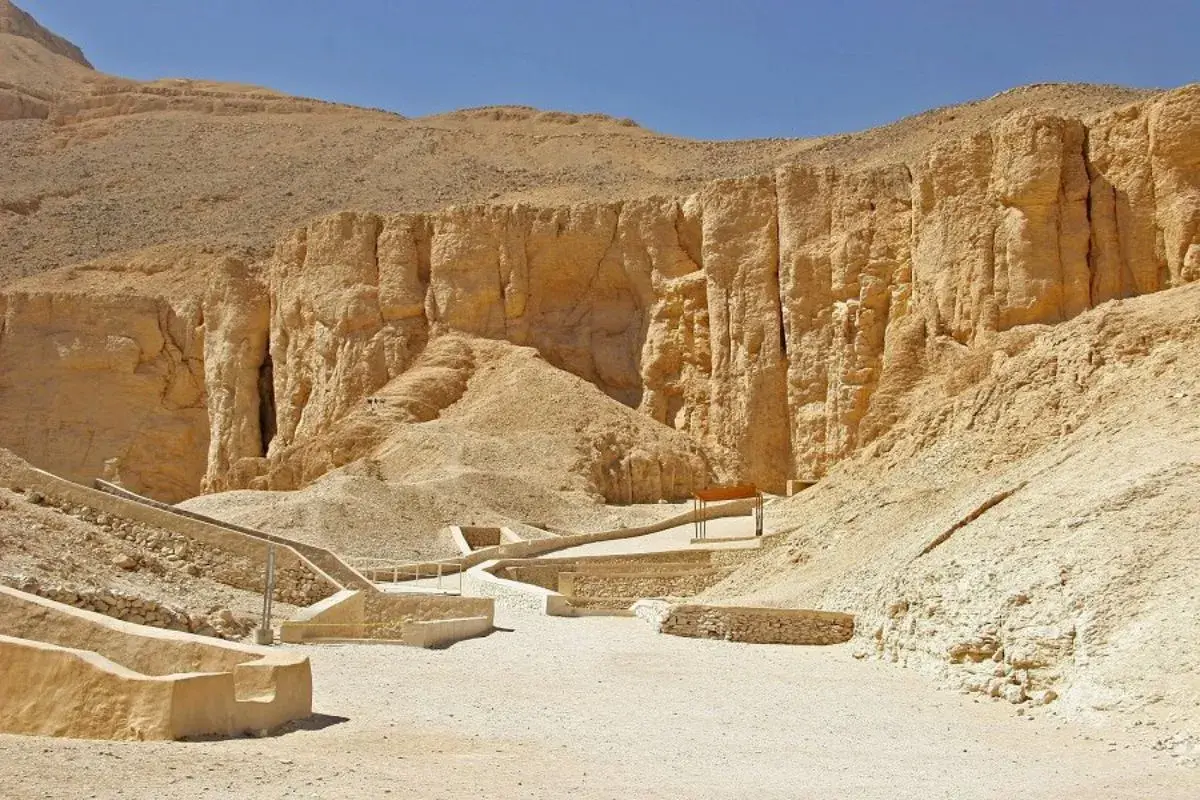
KV62 sits in the Valley of the Kings, on Luxor's West Bank, among dozens of other royal burials cut into the same limestone. What separates it from its neighbors is not its size but its condition. Tutankhamun's burial survived unusually intact compared with almost every other tomb in the Valley of the Kings, most of which were emptied by robbers in antiquity. Travelers often pair this site with Nile cruises departing from Luxor, since the West Bank sits a short transfer from the embarkation point.
Inside KV62: A Surprisingly Small Royal Tomb
Compared with the monumental corridors nearby, KV62 is compact: a stairway, a short corridor, an antechamber, an annex, the burial chamber, and a small treasury. Only the burial chamber carries substantial decoration, part of why first-time visitors sometimes expect more scale than the tomb delivers.
Its unusually compact scale may reflect Tutankhamun's sudden death and short reign; Egyptologists have also proposed that KV62 was originally intended for a non-royal burial and was adapted when the young king died before a larger royal tomb was ready.
How Tutankhamun's Tomb Survived When Others Were Robbed
The tomb was not literally untouched. Ancient robbers entered it, at least twice, not long after the burial. What saved most of its contents was a combination of factors: the thieves were interrupted before stripping it bare, the entrance was resealed, and later construction debris eventually buried the modest doorway and let it be forgotten.
Its survival made KV62 remarkable, but its modern fame begins with the excavation that brought it back into the world in 1922.
The Discovery of Tutankhamun's Tomb by Howard Carter
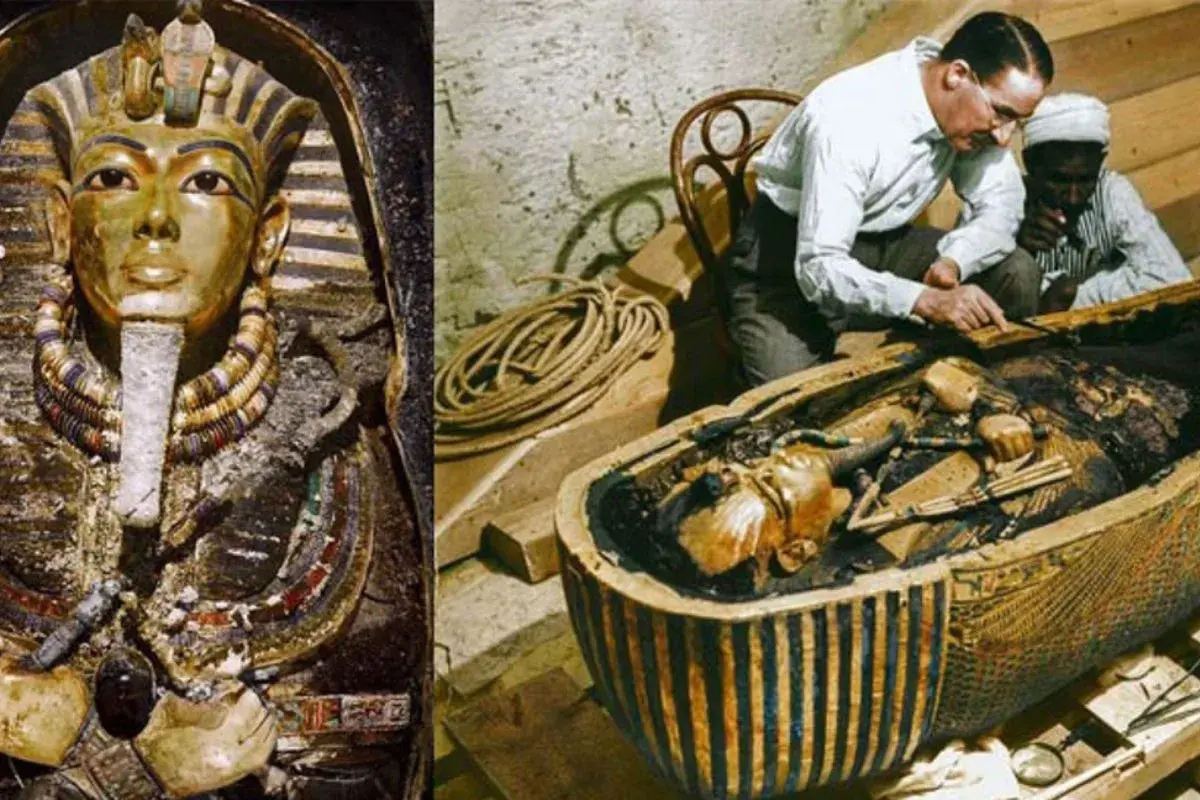
Howard Carter had searched the Valley for years, funded by Lord Carnarvon, before his team uncovered the first step of a hidden stairway in November 1922. What followed was one of the most closely documented excavations in archaeological history, moving room by room into the antechamber and finally the burial chamber itself.
What Howard Carter Found Inside KV62
The scale of what Carter found packed into so small a space is still hard to summarize: furniture, jewelry, clothing, weapons, dismantled chariots, ritual objects, nested coffins, and royal burial equipment numbering in the thousands of pieces. Much of it reflected afterlife beliefs similar to those told through the mythology of Isis and Osiris, which shaped how Egyptians equipped a king for the journey beyond death.
Where Are Tutankhamun's Treasures Today
A common misconception trips up many first-time visitors: Today, the Grand Egyptian Museum in Giza displays Tutankhamun's golden mask and the wider burial collection in the dedicated Tutankhamun Galleries, where the complete collection is presented together for the first time. The king's mummy, however, remains inside KV62 in the Valley of the Kings. Ramses II and Nefertari's burial sites were rescued and documented under very different circumstances, but the same lesson applies: separate a tomb from its contents.
The treasures made KV62 famous, but visiting the original tomb offers something no museum case can: standing inside the actual place where the story happened.
What Can You See Inside the Tomb of Tutankhamun Today
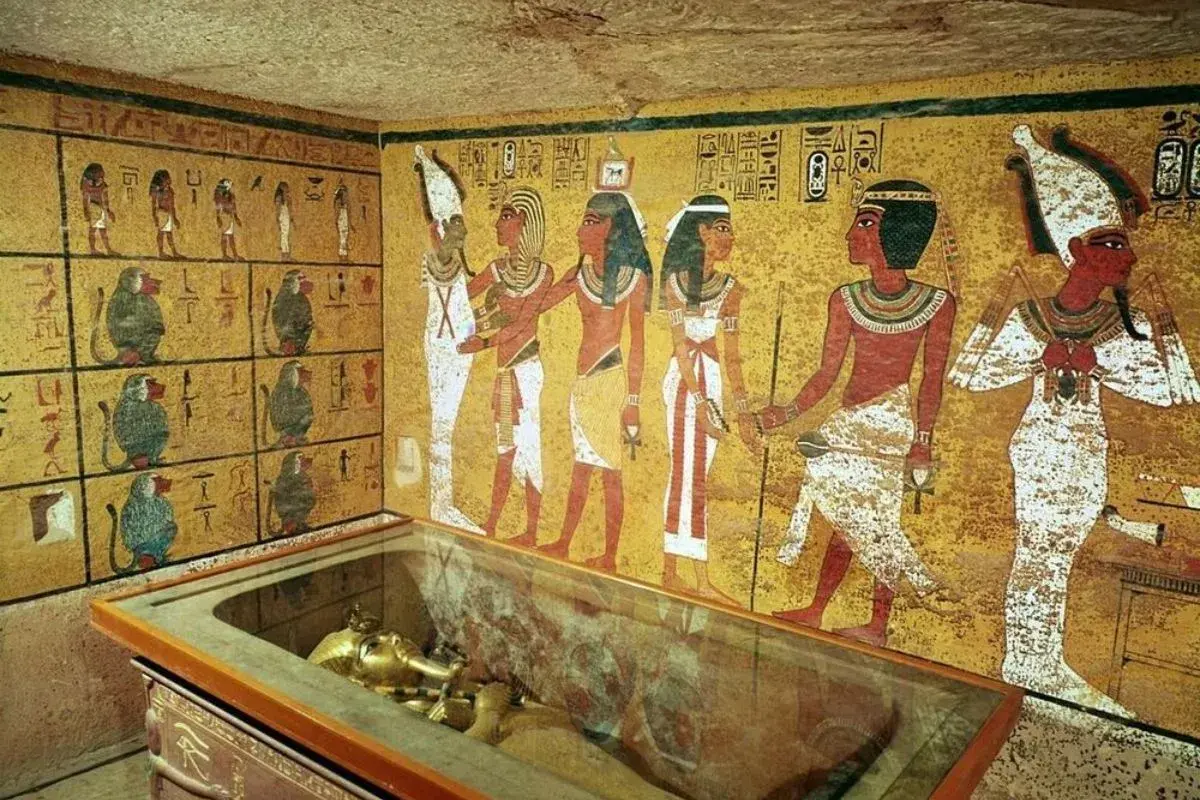
Expectations matter here. KV62 is compact and far less decorated than several tombs nearby, and its importance comes from authenticity and history rather than architectural grandeur.
The Burial Chamber Wall Paintings and Tutankhamun's Mummy
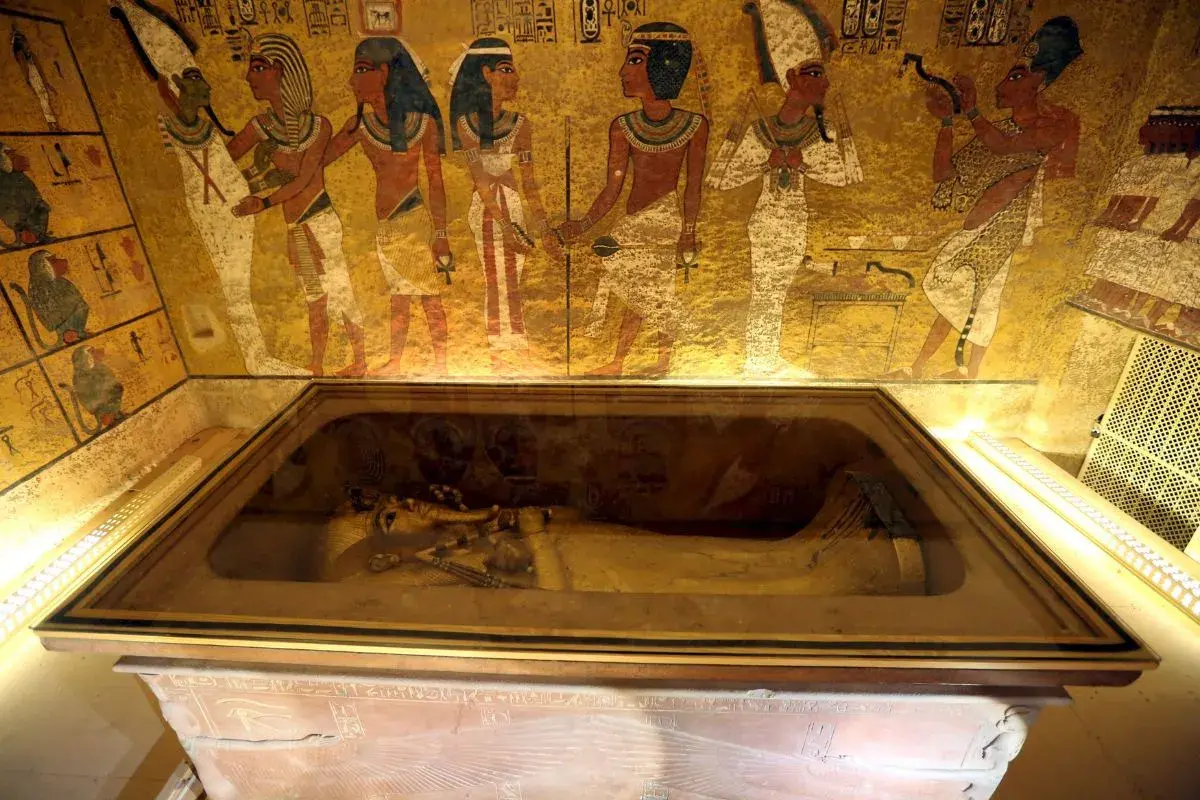
The burial chamber's walls carry distinctive yellow-painted funerary scenes depicting the king's passage into the afterlife, noticeably plainer than the decoration found at some of the best stops along the Nile. Tutankhamun's mummy remains inside, within the outer sarcophagus, the detail most visitors come specifically to see.
Why the Tomb Can Feel Less Impressive Than You Expect
Visitors arriving fresh from the painted ceilings of Seti I or the scale of Ramses V and VI often find KV62 smaller and plainer than expected. That reaction is worth anticipating rather than denying. The tomb's value sits in what it represents and what was found inside it, not in wall space, and a traveler who understands that going in finds the visit far more rewarding. A slower-paced 5-day Dahabiya cruise from Luxor to Aswan suits travelers who want time to sit with that distinction rather than rush between tombs.
Understanding that distinction before arrival makes the visit far more rewarding, and that preparation matters because KV62 also comes with its own ticketing and guiding rules.
Tomb of Tutankhamun Tickets Opening Hours and Visiting Tips
The relationship between general Valley admission and Tutankhamun's tomb trips up a surprising number of visitors, so it is worth stating plainly.
Tutankhamun Requires a Separate Valley of the Kings Ticket
Standard Valley of the Kings admission does not include KV62. Tutankhamun's tomb requires an additional, separately priced ticket, currently listed at EGP 700 for a foreign adult, a figure worth rechecking close to travel since monument fees change. For private clients, Nile Cruise Holiday's operations team can arrange that admission alongside the main Valley ticket in advance, so nobody discovers the extra requirement at the gate and has to manage a second purchase on the spot. Building that into a tailor-made Luxor itinerary removes one more variable, alongside sensible preparation like confirming travel insurance for Egypt before departure.
Your Egyptologist Cannot Lecture Inside the Tomb
Guides are not permitted to deliver lectures inside Valley of the Kings tombs, KV62 included, under the site's own visitor-management rules. Rather than treat that as a limitation, Nile Cruise Holiday's certified Egyptologists use it as the reason for a proper briefing outside the tomb first, walking through the layout, the symbolism, the paintings, and the burial story before the guest steps inside. That outside briefing matters more than people expect, since it is the only point where real explanation is actually possible.
Best Time to Visit KV62 Without the Heaviest Crowds
Arriving early, before the main wave of coach groups reaches the West Bank, remains the most reliable way to see KV62 with some breathing room. Coordinating that timing around a cruise's own excursion schedule, rather than against it, matters more than chasing a guaranteed quiet hour, which no operator can honestly promise. Knowing how many days you actually need on a Nile cruise helps set that pacing in advance, and a well-timed 4-day Nile cruise itinerary between Aswan and Luxor usually builds in exactly this kind of early West Bank morning.
Once the ticket and timing are handled, the remaining decision is whether KV62 earns a place in a carefully planned Luxor itinerary.
Is the Tomb of Tutankhamun Worth Visiting in Luxor
For historical significance, yes. For travelers chasing the Valley's grandest decoration above all else, KV62 works best paired with another premium tomb rather than visited alone.
Pair KV62 with the Valley's Most Spectacular Tombs
Seti I's tomb and the joint tomb of Ramses V and VI, both subject to their own opening status and tickets, offer the scale and decoration KV62 does not, and the three together give a far more complete picture of royal burial than any one tomb alone. The same logic applies across Luxor's temples; the best temples to see on a Nile cruise are rarely worth visiting in isolation either.
Build Tutankhamun into a Private Luxor or Nile Cruise Itinerary
The practical version looks like a private West Bank day built around the Valley of the Kings, with a transfer from a Luxor hotel or a Luxor-to-Aswan Nile cruise, timed admission, the Tutankhamun ticket already arranged, and the outside briefing built into the schedule rather than left to chance. Nile Cruise Holiday fits that day into itineraries from an 8-day Cairo and Nile cruise package to a broader range of Cairo and Nile cruise packages, or for a slower rhythm, a Dahabiya Nile cruise built around the same sites.
Conclusion
The tomb is small. The story is enormous. A well-planned visit, with the right tickets arranged in advance and a proper briefing before you step inside, makes the difference between the two clear.