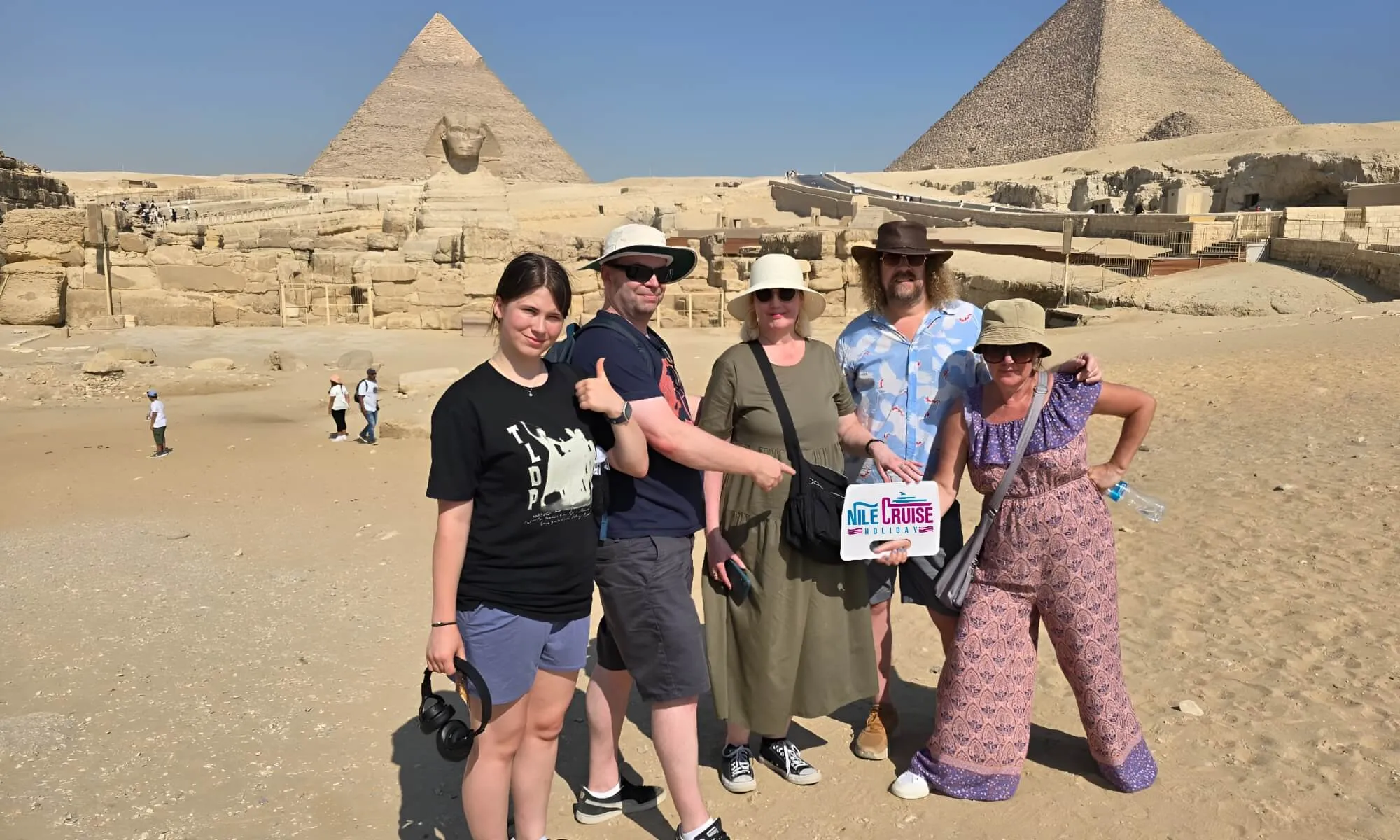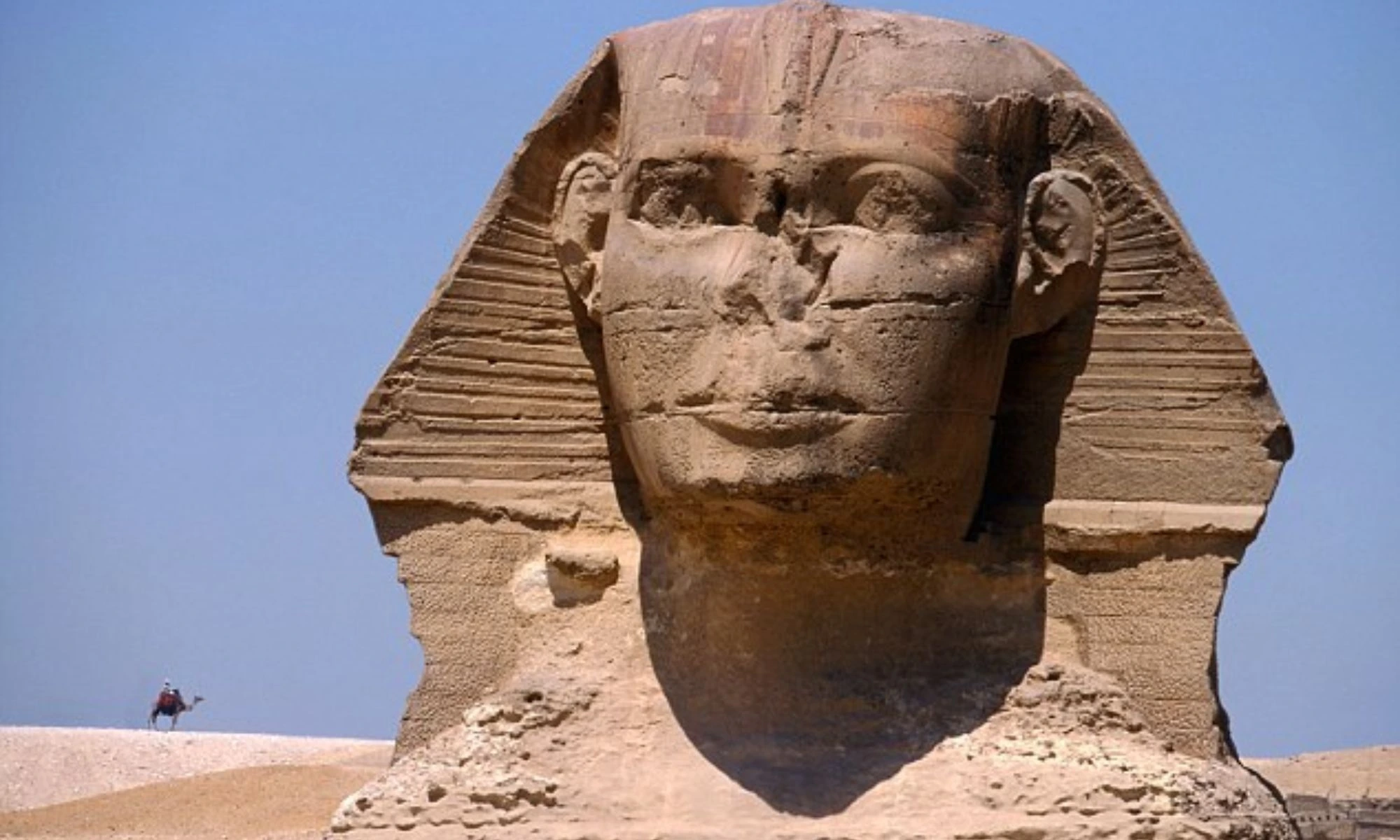
Almost everyone recognizes the Great Sphinx of Giza on sight, and almost everyone also notices, sooner or later, that its nose is missing. The gap is so famous it has become a kind of visual shorthand for ancient Egypt itself, repeated in cartoons and photographs so often that the real explanation gets buried under one persistent myth. Before most travelers even reach Nile cruises from Cairo and the rest of their Egypt itinerary, Giza and its missing nose are usually the first mystery they ask about. This guide separates what is actually documented, what is credible but unproven, and what is simply a good story that refuses to die.
What Did the Sphinx Originally Look Like?
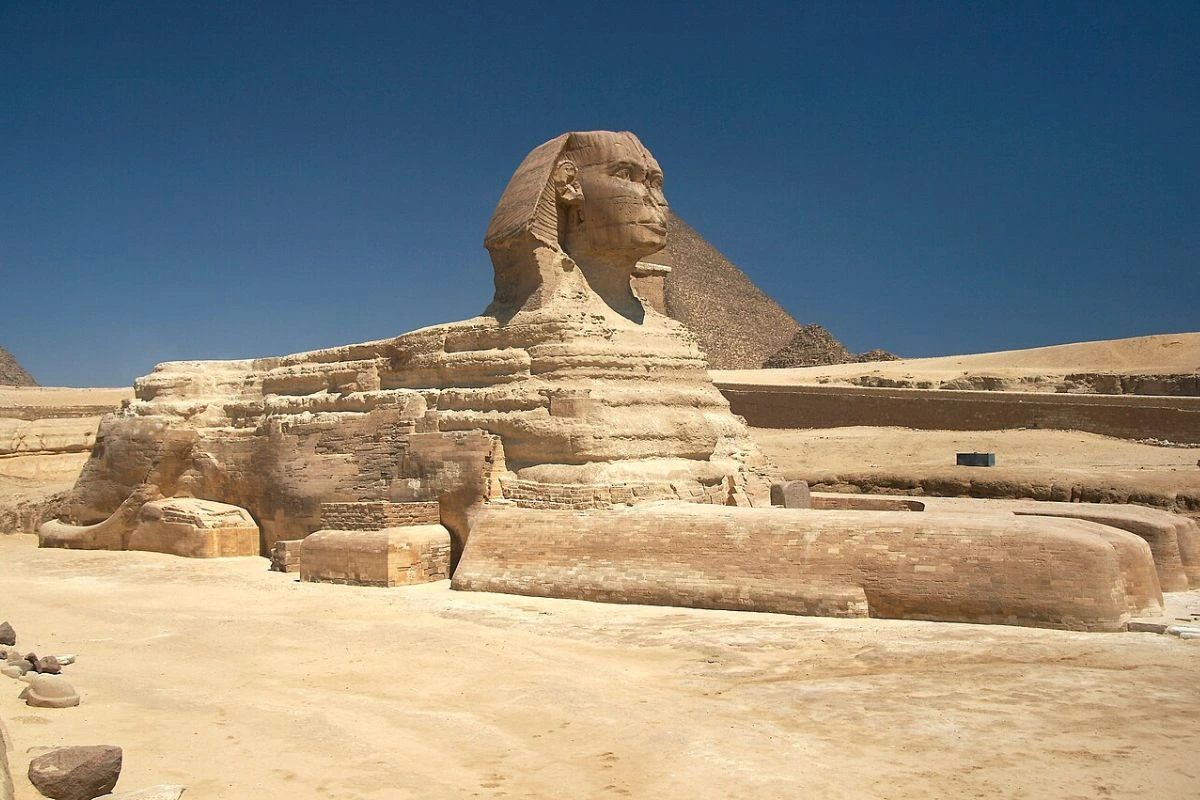
The Great Sphinx is a colossal limestone statue combining a lion's body with a royal human head, carved from the Giza Plateau bedrock and widely associated with the pharaoh Khafre. Its scale and royal face, much like the symbolism built into the mythology of Isis and Osiris elsewhere in Egyptian religion, tied the monument directly to the authority of Egyptian kingship rather than making it a generic statue.
The Missing Nose
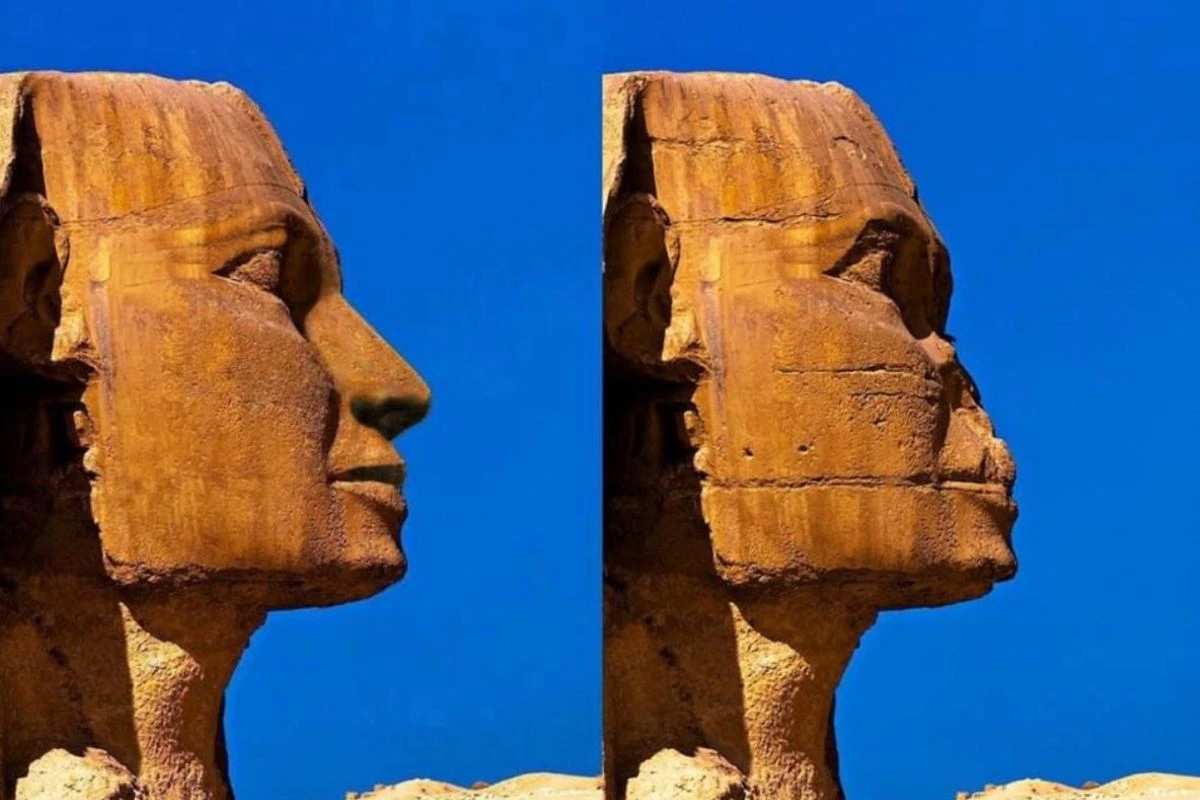
The nose is not a casualty of ordinary weathering. The damage shows clear signs of deliberate removal rather than the gradual wearing away that sand and wind might otherwise cause over thousands of years.
More Than the Nose
The nose is also not the only feature missing. Parts of the Sphinx's ceremonial false beard disappeared as well, and a surviving fragment of that beard now sits in the British Museum in London, physical proof that more than one part of the statue has been altered since antiquity.
The Napoleon Myth
The most repeated explanation for the missing nose is also the easiest one to disprove: that French soldiers under Napoleon Bonaparte shot it off with a cannon during his 1798 Egyptian campaign. Versions of the story differ on the details, sometimes blaming target practice, sometimes a stray shot, but the core claim stays the same.
The 1737 Drawing
The decisive evidence against this story predates Napoleon by more than sixty years. Frederic Louis Norden, a Danish explorer and draftsman, sketched the Sphinx in 1737 and recorded it already missing its nose, decades before Napoleon ever set foot in Egypt in 1798. A drawing made that far in advance of Napoleon's arrival makes his army's involvement essentially impossible.
Why the Myth Survived
The cannonball story endures because it gives an already mysterious monument a famous, dramatic villain, the same instinct that keeps colorful folklore alive around sites like the tomb of Tutankhamun long after the documented facts are settled. A memorable story simply travels further than a dated sketch, even when the sketch is the stronger evidence.
The Sa'im al-Dahr Story
The strongest historical account of the damage comes from the 15th-century Egyptian historian al-Maqrizi, who wrote about a Sufi named Muhammad Sa'im al-Dahr.
What Al-Maqrizi Wrote
According to al-Maqrizi's account, in 1378 AD local villagers were making offerings to the Sphinx, a practice Sa'im al-Dahr viewed as idolatry. He is said to have damaged the statue's face in response, an act of medieval record-keeping not unlike the way later historians preserved the story of Ramses II and Nefertari, written down generations after the events themselves took place.
How Certain Is the Story?
This account is the most influential historical explanation available, but historians are careful to note it is not absolute proof. A documented account written generations after the fact is strong evidence, not the same thing as a contemporary eyewitness record, and responsible historians treat it accordingly rather than presenting it as settled fact.
What the Stone Tells Us
Written history is not the only evidence available. The stone itself, examined directly, tells its own part of the story, which is what makes this explanation genuinely authoritative rather than secondhand.
Chisel Marks on the Face
Close examination of the damaged area reveals marks consistent with rods or chisels driven into the stone before the nose was pried away, exactly the kind of physical evidence a trained eye looks for at any ancient site. The best temples along the Nile reward that same close reading, when examined properly rather than glanced at from a distance.
Not a Cannonball
Artillery damage leaves a distinctive signature: a sudden fracture pattern and scattering consistent with an explosive impact. The Sphinx's nose shows neither. Both the written history and the physical evidence point in the same direction, and neither one points toward Napoleon.
What Else Is Missing?
The nose draws most of the attention, but it was never the only part of the Sphinx altered since it was carved, a pattern visible across many sites along a Luxor to Aswan Nile cruise where later rulers and later eras all left their own mark on earlier monuments.
The Ceremonial Beard
The plaited false beard once attached to the Sphinx's chin likely belongs to a later restoration rather than the original carving. Fragments of it, including the piece now in London, confirm the statue was maintained and modified well after Khafre's era, a detail travelers extending their trip with a 4-day Nile cruise itinerary from Aswan to Luxor often hear echoed at other restored monuments further south.
Thousands of Years of Damage
Wind, blowing sand, salt in the limestone, and the stone's own geological weaknesses have all shaped the Sphinx over roughly four and a half thousand years, alongside repeated restoration efforts across multiple periods of Egyptian and later history. Understanding that longer timeline matters as much as understanding any single incident is a point worth keeping in mind before extending a trip, where weathering and restoration both show up again and again.
See the Sphinx for Yourself
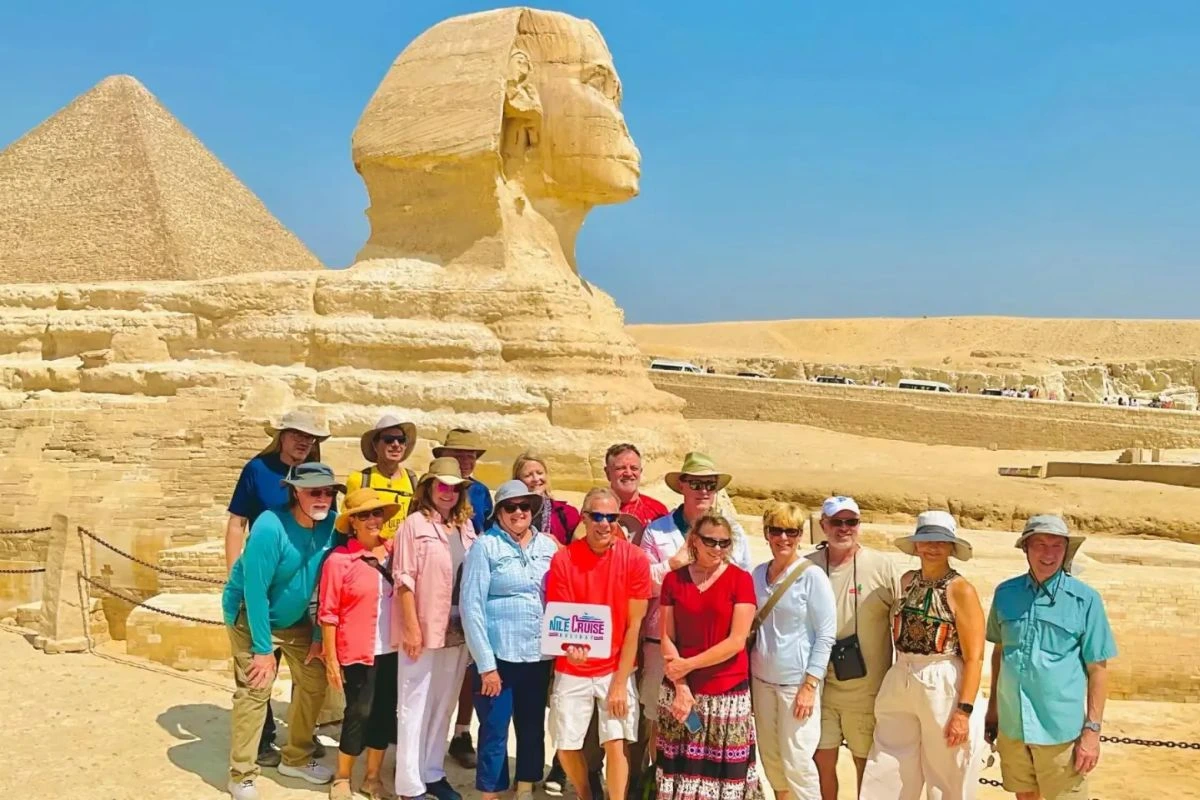
You can still see the damaged face in person, and knowing what to look for changes the visit considerably.
Look for the Tool Marks
The bridge of the nose, where the damage is clearest, becomes far more meaningful once an expert points out exactly where the tool marks sit and what they actually indicate. Independent visitors determined to tour Egypt alone with confidence can still see the damage, but most walk past the real evidence without ever knowing where to look, a gap Nile cruises from Luxor travelers rarely run into once an Egyptologist is part of the day.
Visit with an Egyptologist
Nile Cruise Holiday's private Egyptologists walk clients through the myth, the documented history, and the physical evidence directly in front of the Sphinx, pointing out the exact chisel marks that most visitors miss entirely, and detail the case for planning this through a specialist makes well. Our guides also act as a hassle shield against the persistent vendors who work the Giza Plateau, managing those interruptions so a client's attention stays on the monument rather than on fending off a sales pitch. Travelers ready to see Giza properly can build it into a tailor-made itinerary, broader Cairo and Nile cruise tours, or a day trip extended later with things to do in Aswan once the Giza story is properly told.
Conclusion
The missing nose turns out to be a far better story than the myth usually told about it: a documented historical account, physical tool marks still visible in the stone, and nearly five thousand years of weather and restoration layered on top of each other. Seeing that evidence in person, with someone who knows exactly where the chisel marks sit, turns a quick photo stop into a proper introduction to Egypt rather than a passing glance. A trip that includes Cairo and a Nile cruise, or broader Egypt tour packages, both build that properly guided Giza morning into a longer trip, extended further with things to do in Luxor once travelers decide how many days their trip actually needs to do Egypt justice.