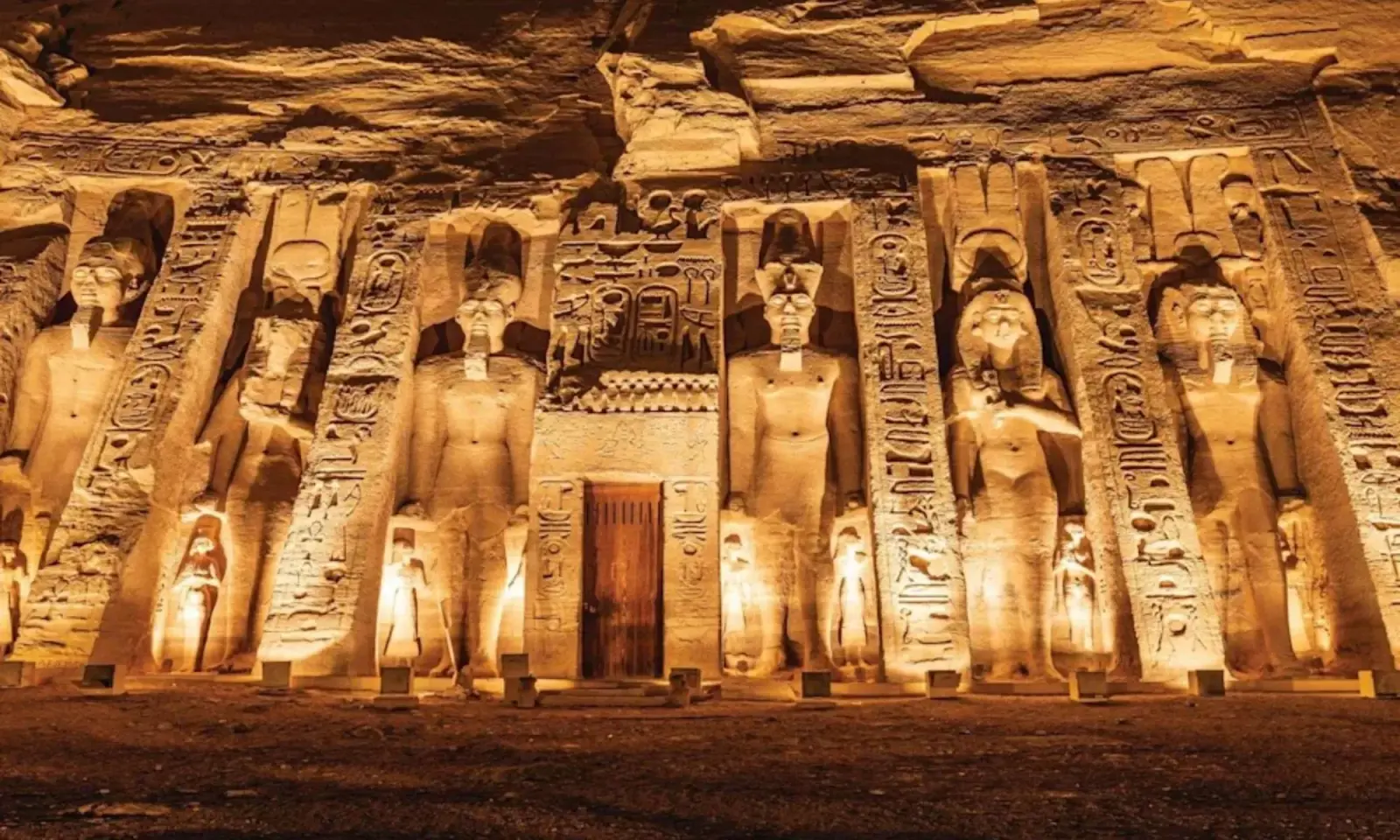
In the 13th century BCE, Egypt’s most powerful king carved two temples into a Nubian cliff. One proclaimed the greatness of Ramesses II. The other gave his queen, Nefertari, a place beside him on a scale rarely granted to an Egyptian royal wife.
That is why the story of Ramesses II and Nefertari still feels personal more than 3,000 years later. We do not have their private letters or diaries, so we cannot reconstruct a modern romance from their own words. What survives is something more public and more permanent: titles, inscriptions, colossal statues, a magnificent tomb, and a temple dedicated to Nefertari and the goddess Hathor.
Those monuments let us ask a better question than “Were they in love?” Why did Nefertari receive a place in Ramesses II’s monumental world that no other queen of his reign matched in quite the same way?
Who Was Queen Nefertari?
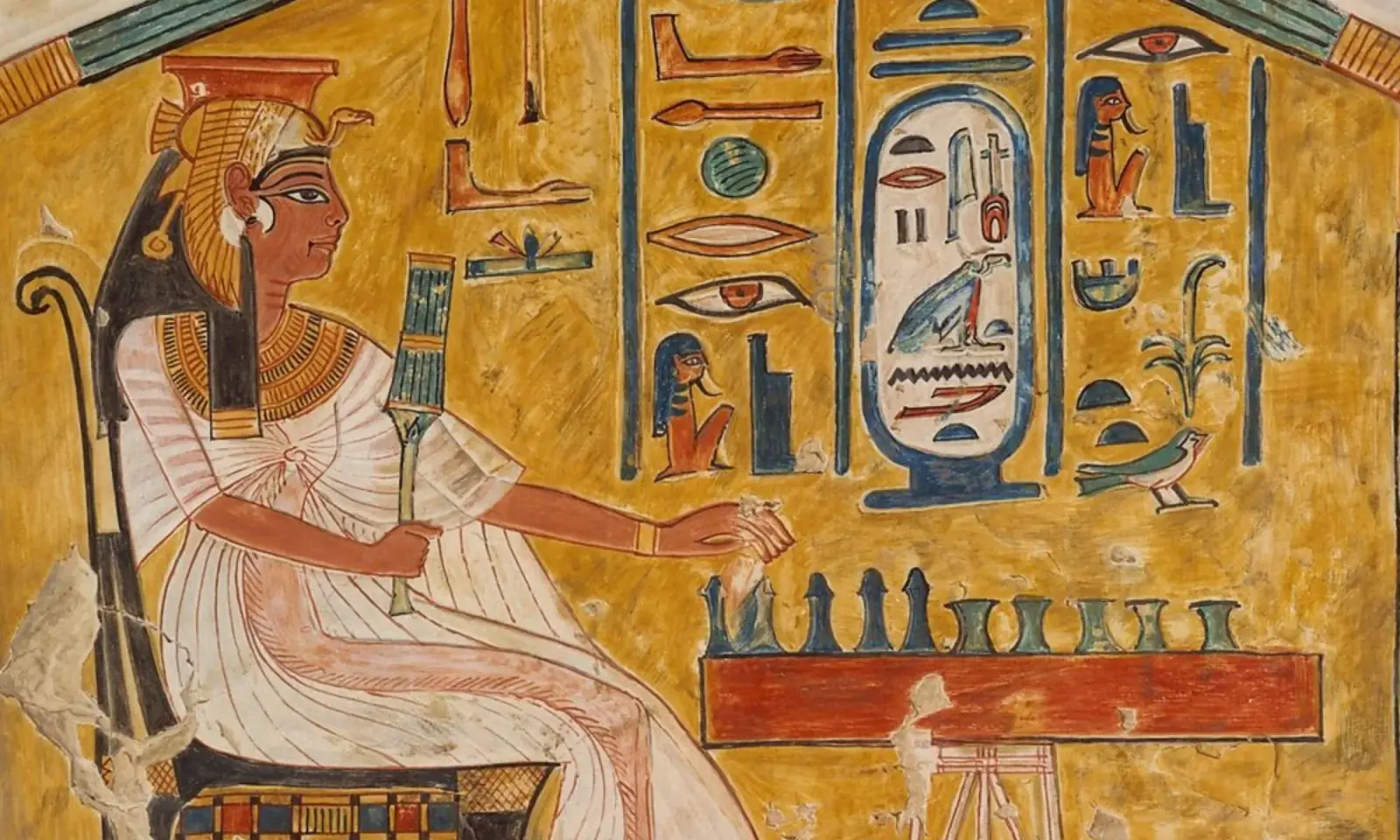
Nefertari Meritmut was one of the earliest and most prominent queens of Ramesses II, who ruled Egypt from 1279 to 1213 BCE. She held the title Great Royal Wife, the highest formal rank available to a queen, and should not be confused with Nefertiti, who lived in the previous dynasty.
Nefertari appears beside Ramesses in temple reliefs, inscriptions, and ritual scenes during the earlier part of his reign. Her visibility matters because Egyptian royal art was highly controlled. Placement, scale, titles, and proximity to the king were political statements as much as artistic choices.
Her parentage is still uncertain, and no surviving inscription gives us a complete biography. Even so, the monumental record makes one thing clear: she occupied an unusually elevated position at court.
Why Did Nefertari Stand Apart From Ramses II’s Other Queens?
Ramesses II had several royal wives and a very large family. Ancient inscriptions name many sons and daughters, but exact totals vary depending on how scholars classify wives, consorts, and children. The more revealing question is not how many women were connected to the king, but why Nefertari received such exceptional treatment.
• Great Royal Wife: Nefertari held the principal queenly title during the early part of Ramesses II’s reign.
• Exceptional monumental visibility: her image appears prominently in temples and ceremonial contexts from Thebes to Nubia.
• A temple at Abu Simbel: the Small Temple was dedicated to Hathor and Nefertari, giving the queen an extraordinary place within one of Ramesses II’s greatest building projects.
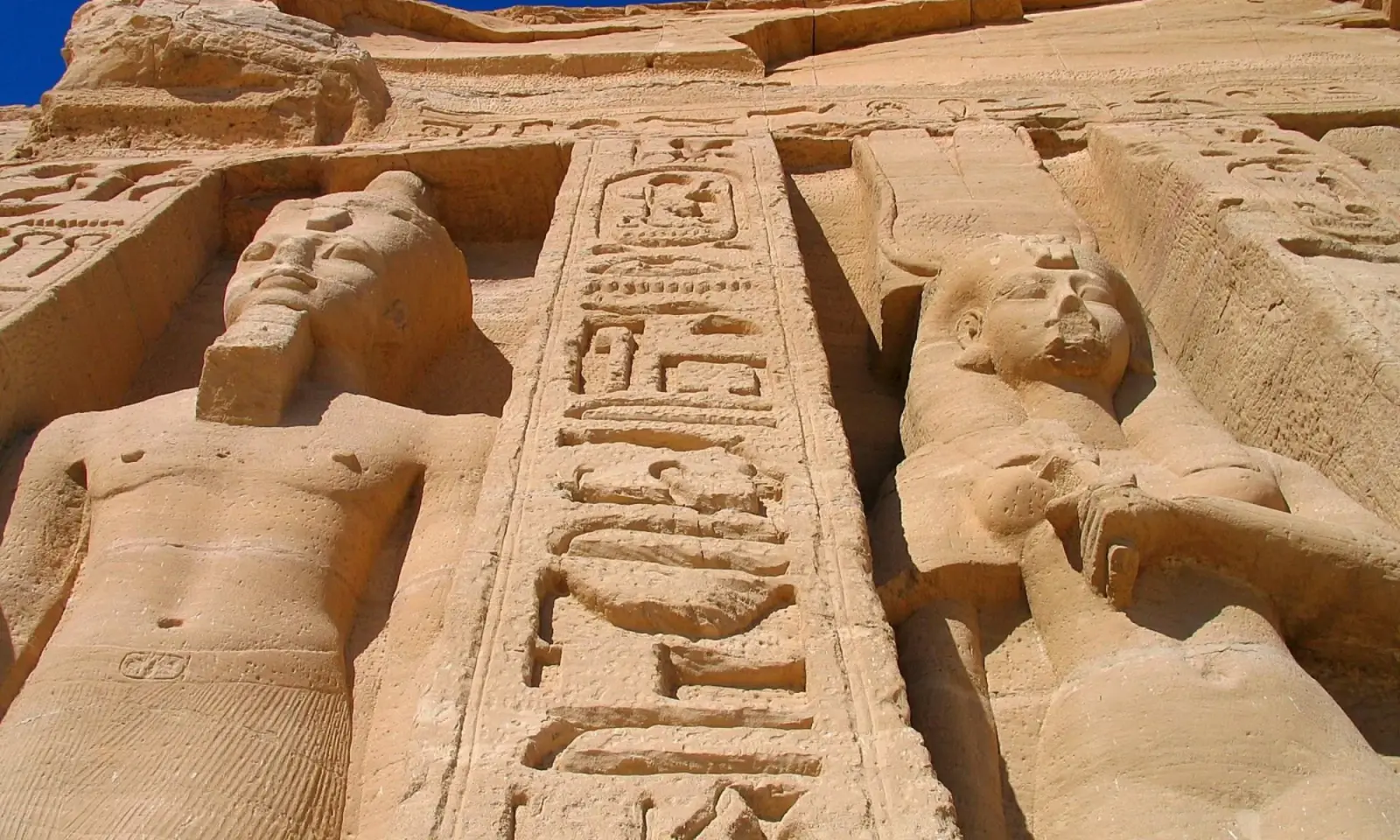
• Colossal representation: on the Small Temple façade, Nefertari appears at the same monumental scale as Ramesses II, a striking departure from the more common convention of showing queens much smaller than kings.
• A remarkable royal tomb: QV66 in the Valley of the Queens is among the finest painted tombs to survive from ancient Egypt.
This evidence is why Nefertari is often described as Ramesses II’s favorite queen. That interpretation is reasonable, but it should not be turned into a claim we cannot prove. No surviving private correspondence tells us exactly what either person felt. The safest and more interesting conclusion is that Ramesses wanted Nefertari’s status to be visible to everyone. Nefertari appears to have died relatively early in Ramesses II’s long reign, probably around his 24th regnal year, c. 1255 BCE, although neither the exact date nor the cause of her death is known.
Abu Simbel: Where Their Story Became Monumental
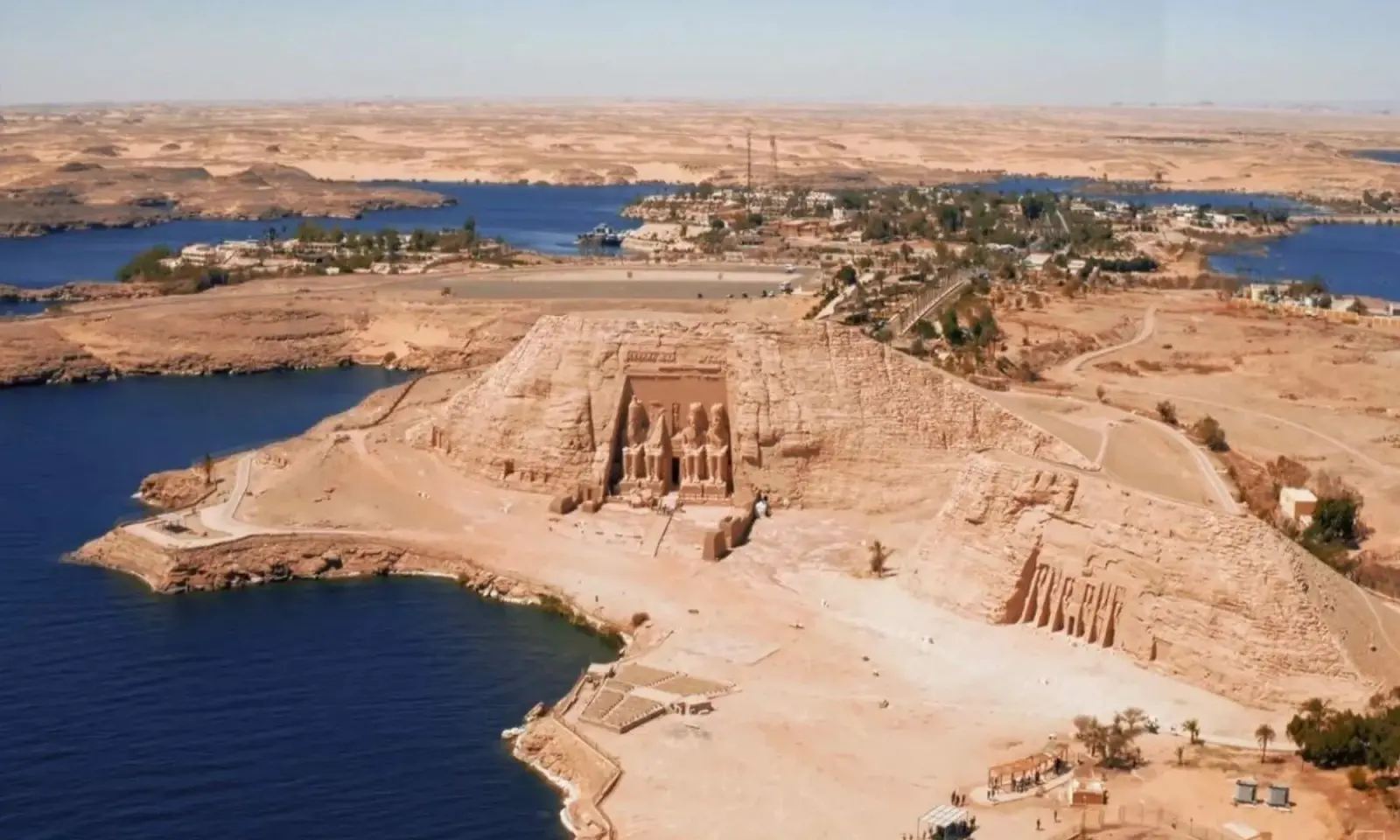
The strongest surviving statement of Nefertari’s status stands at Abu Simbel, deep in ancient Nubia. The two rock-cut temples were created during the reign of Ramesses II in the 13th century BCE. Their precise construction dates are debated, but a frequently cited range is approximately 1264 to 1244 BCE.
The Great Temple: Ramesses II as King, Warrior, and God
The Great Temple is dominated by four colossal seated statues of Ramesses II. Inside, reliefs celebrate royal power, divine favor, and events such as the Battle of Kadesh in 1274 BCE. The entire complex was designed to project authority at Egypt’s southern frontier.
The Small Temple: Nefertari Beside Ramses
Beside the Great Temple stands the smaller sanctuary dedicated to the goddess Hathor and Queen Nefertari. Its façade is what changes the story from a standard royal monument into something exceptional.
Nefertari is not reduced to a tiny supporting figure at the king’s feet. She stands beside Ramesses II at colossal scale. For an ancient Egyptian queen, that visual equality is rare. It does not prove a modern love story by itself, but it does prove that Ramesses chose to monumentalize her extraordinarily.
The temple therefore works on several levels at once: it honors Hathor, reinforces royal ideology in Nubia, and preserves Nefertari’s public identity as a queen whose presence mattered.
Nefertari’s Tomb QV66: The More Intimate Half of the Story
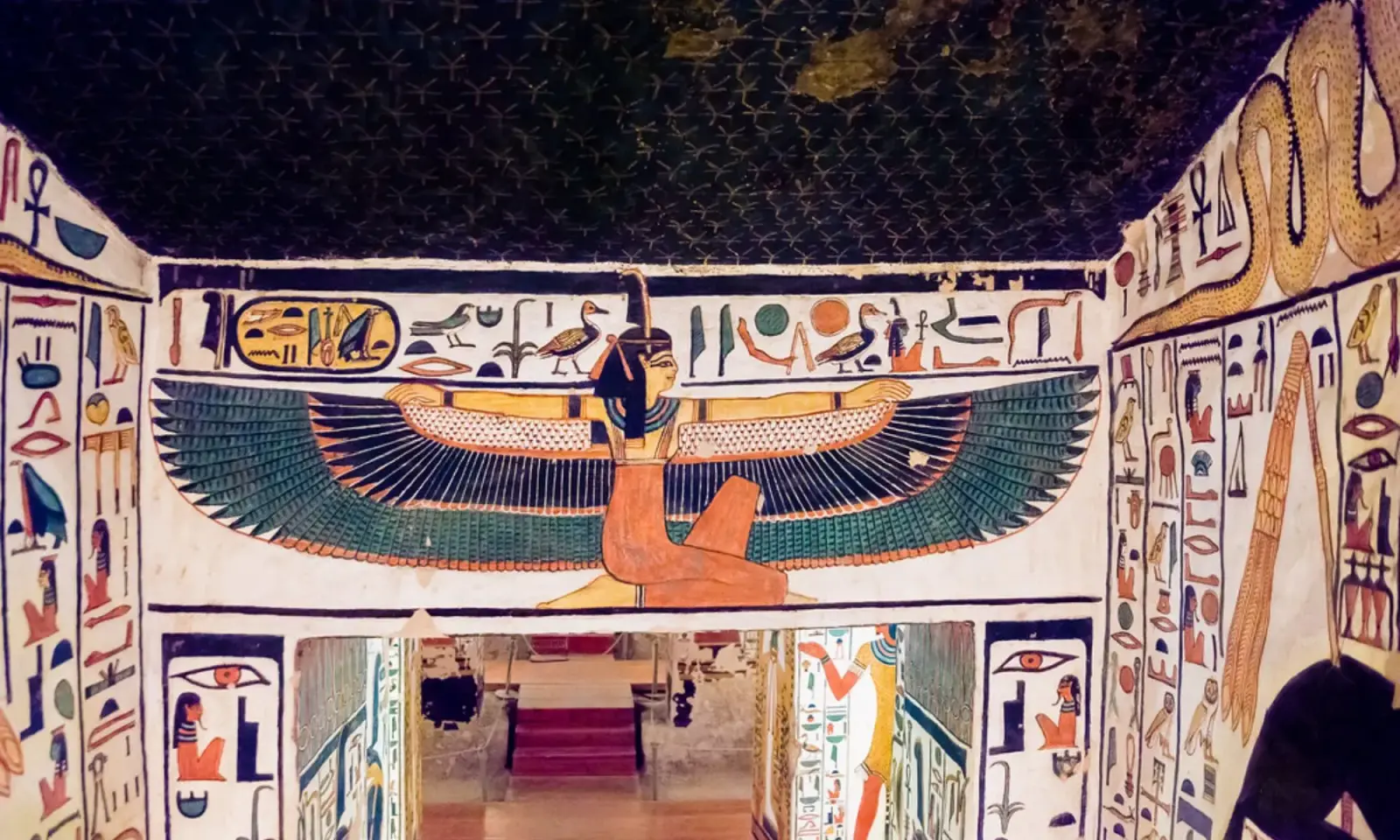
If Abu Simbel shows Nefertari as a public royal figure, her tomb in Luxor reveals a different kind of legacy. QV66, in the Valley of the Queens, was created in the 13th century BCE and is celebrated for the quality and color of its wall paintings.
The scenes follow Nefertari through the afterlife, showing her before deities and moving through a sacred world of rebirth. Deep blues, warm reds, gold tones, white garments, and finely drawn hieroglyphs make the tomb feel astonishingly immediate despite its age.
Italian archaeologist Ernesto Schiaparelli discovered the tomb in 1904. By the 20th century, however, its fragile paintings had suffered significant deterioration. From 1986 to 1992, the Getty Conservation Institute and the Egyptian Antiquities Organization carried out a major conservation program focused on stabilizing and cleaning the surviving decoration.
Modern writers sometimes call QV66 the “Sistine Chapel of ancient Egypt.” The comparison is modern, not ancient, but it captures the reason visitors remember it: the tomb is not simply historically important; it is visually overwhelming.
The Temple That Nearly Disappeared
The modern history of Abu Simbel adds another extraordinary chapter. Construction of the Aswan High Dam threatened to submerge the Nubian temples beneath the rising waters of Lake Nasser. UNESCO launched an international campaign in 1960 to save the monuments of Nubia.
Work to rescue Abu Simbel began in 1964. The temples were carefully cut into more than a thousand blocks, moved to higher ground, and reconstructed within an artificial cliff. The operation was completed in 1968, and Abu Simbel was inaugurated in its new location on September 22 of that year.
That means the monument visitors see today carries two intertwined histories: the 13th-century BCE ambition of Ramesses II and one of the 20th century’s most famous international heritage-rescue projects.
Was Ramses II and Nefertari’s Relationship Really a Love Story?
The answer depends on what we mean by love story. If we mean a fully documented private romance, the evidence is not there. We have no surviving diary, intimate correspondence, or personal testimony from either Ramesses or Nefertari.
If, however, we mean an unusually powerful royal partnership preserved through titles, imagery, temple architecture, and funerary art, then the phrase becomes much more defensible. Nefertari’s importance is not based on one poetic line. It is visible across an entire monumental program.
That distinction makes the story stronger, not weaker. The most compelling version is not a modern romance projected backward onto ancient Egypt. It is the story of a queen whose status was deliberately carved into stone so that people would still recognize her thousands of years later.
Where to Experience the Ramses and Nefertari Story in Egypt Today
1. Valley of the Queens, Luxor
Begin with QV66, where the story becomes personal. Because access can be restricted or managed for conservation, travelers should confirm current opening arrangements and ticket requirements before visiting.
2. Sail From Luxor to Aswan
A Nile cruise links ancient Thebes with the southern landscape that leads toward Nubia. Rather than treating Luxor and Abu Simbel as disconnected highlights, the river gives the journey geographical continuity.
3. Continue From Aswan to Abu Simbel
Abu Simbel lies well south of Aswan and is normally reached separately by road or, when schedules permit, by air. Standing before the Small Temple after seeing QV66 changes the experience: the queen painted for eternity in her tomb becomes the queen carved at monumental scale beside Ramesses II.
Step Inside the Story With Nile Cruise Holiday
A tailor-made journey can connect the two strongest surviving chapters of Nefertari’s story: her tomb in Luxor and her temple at Abu Simbel. The route can begin with dedicated West Bank sightseeing, continue by Nile cruise from Luxor to Aswan, and finish with an Abu Simbel excursion timed around the cruise schedule.
• Luxor: Visit the Valley of the Queens and, when available, QV66 with time to appreciate the tomb properly.
• Nile Cruise: Sail through Upper Egypt from Luxor toward Aswan with guided temple visits along the route.
• Aswan to Abu Simbel: Continue by private vehicle or flight, depending on preference and availability, for the final chapter of the story.
Explore Our Luxor to Aswan Nile Cruises and Trace the Royal Story or Stand Before Abu Simbel by Customizing Your Ramses and Nefertari Journey
More than three millennia after Nefertari disappeared from the historical record, the monuments still make the same argument: she was meant to be remembered.