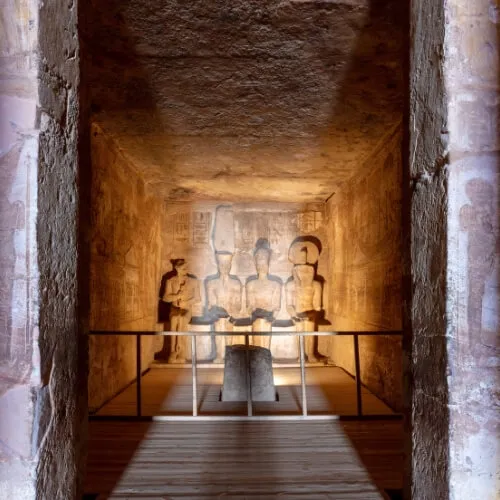
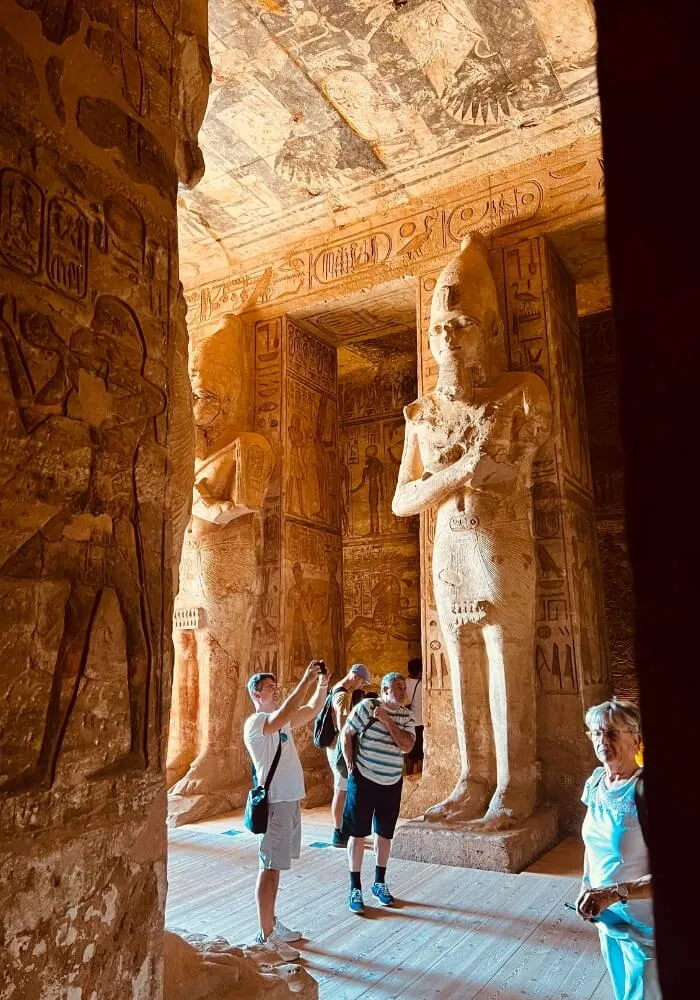
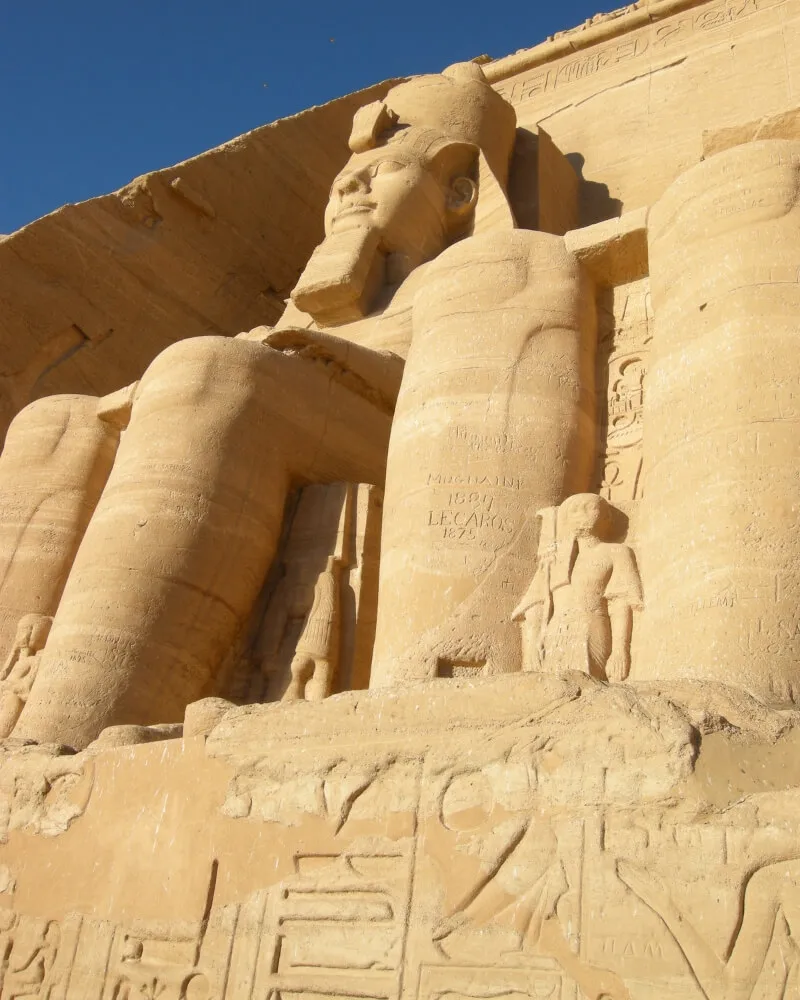
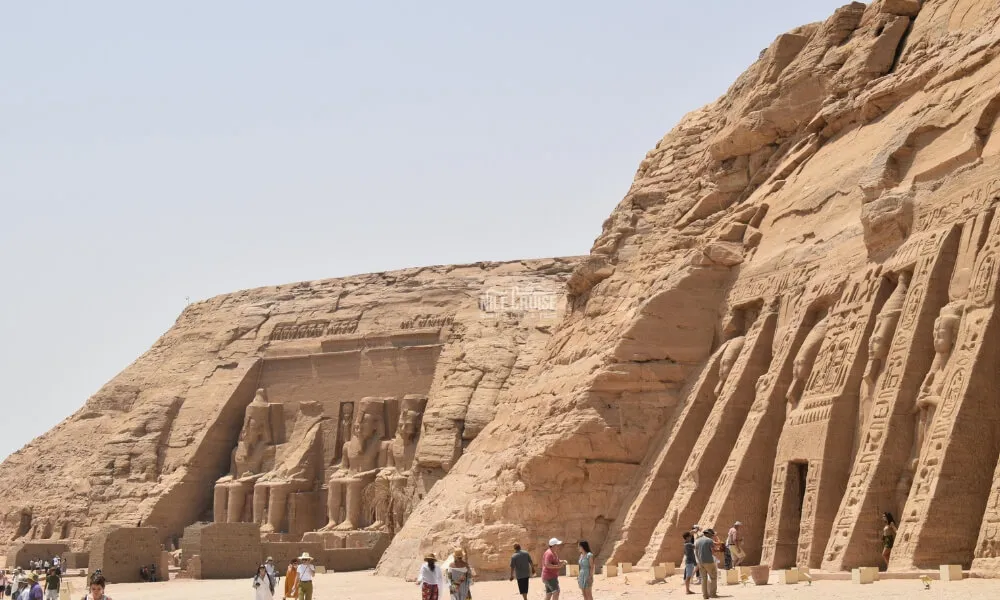
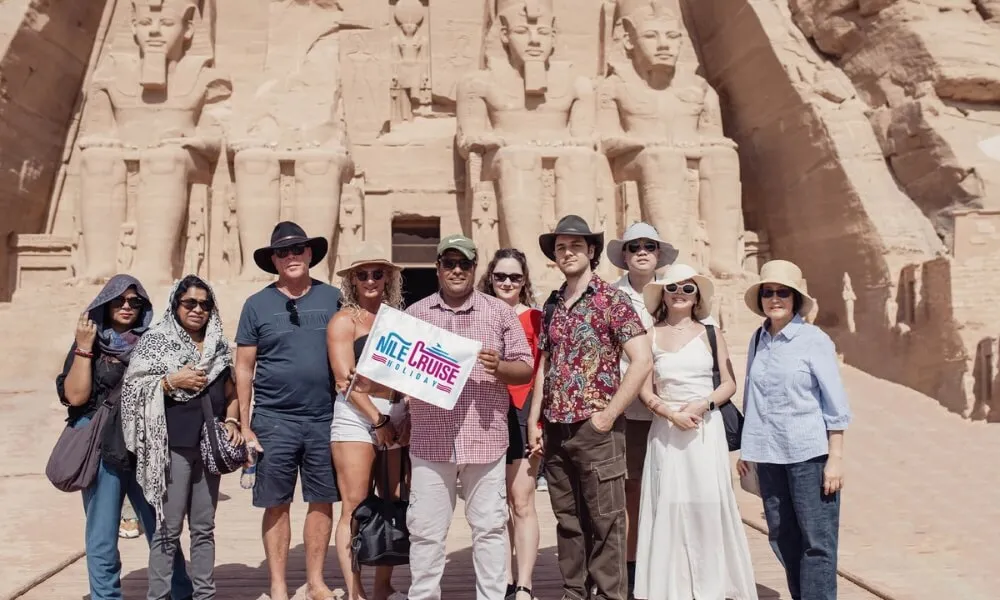
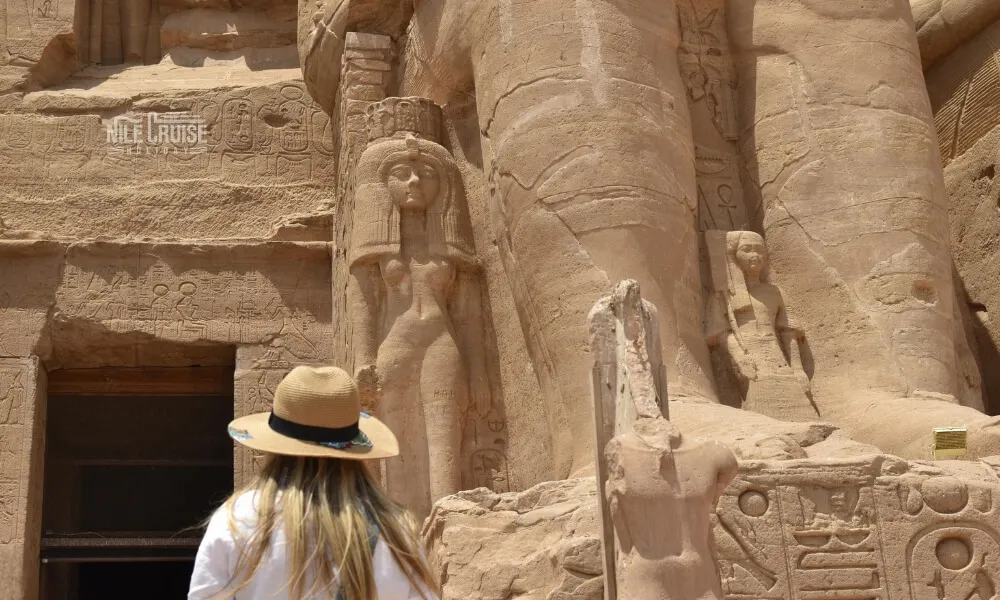
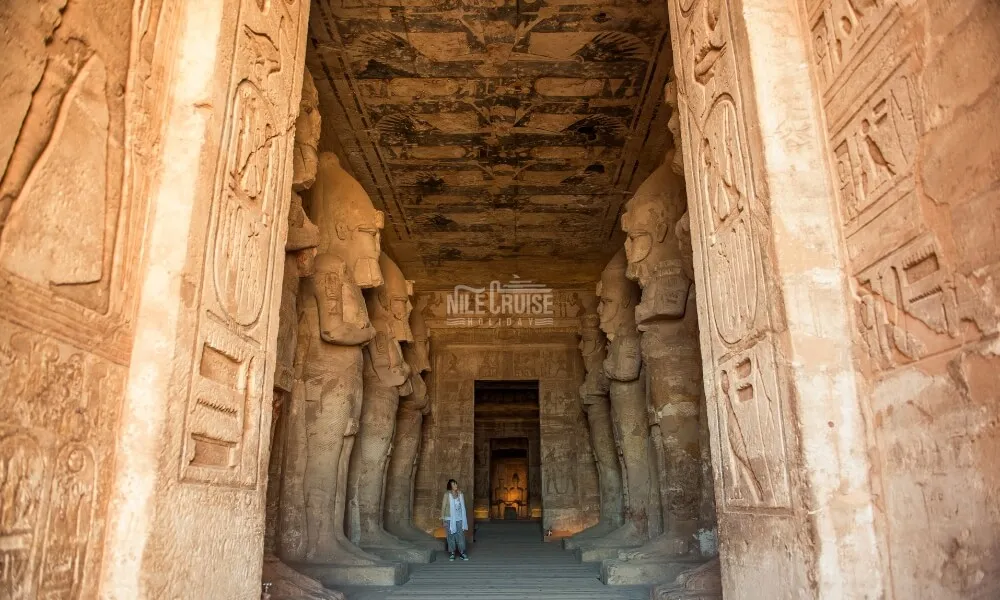
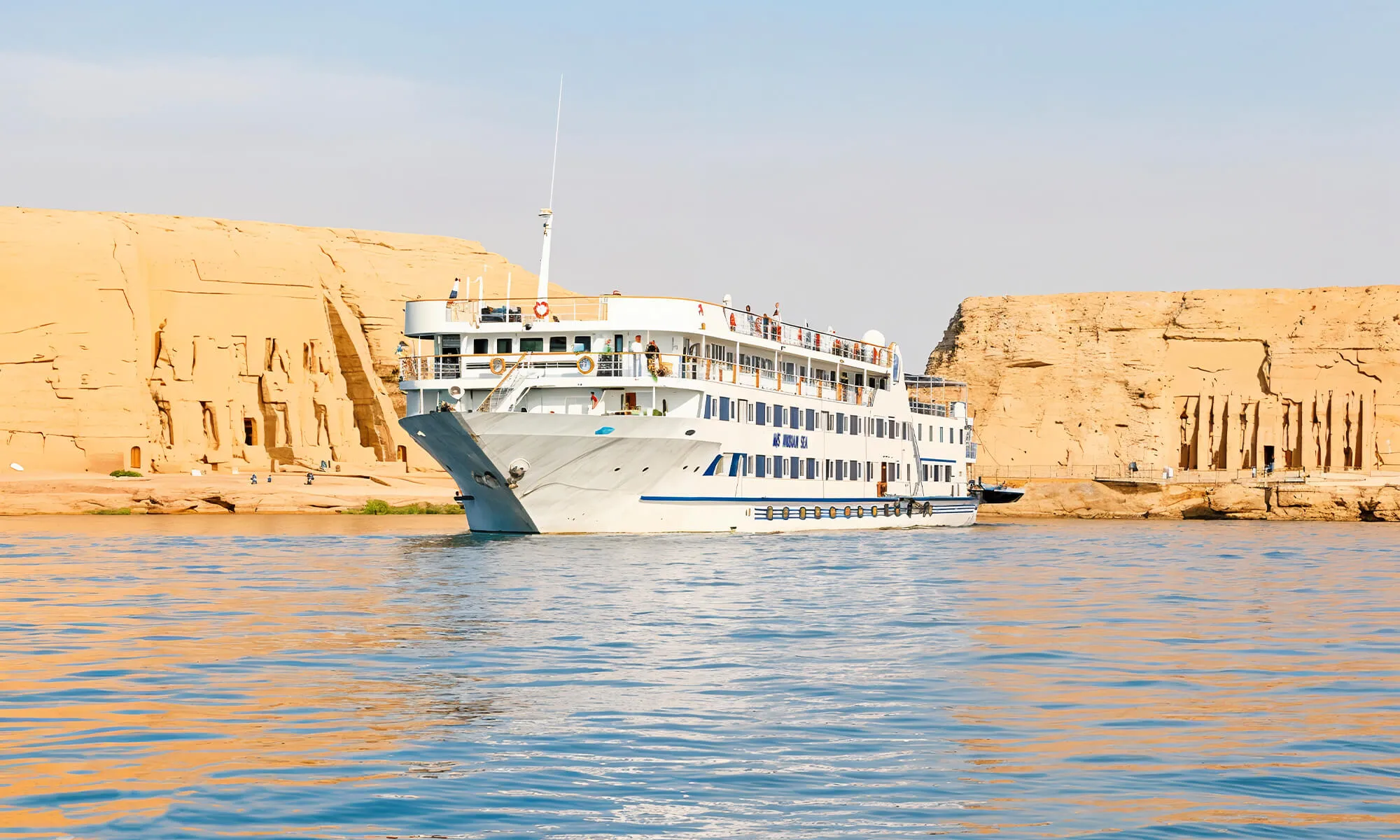
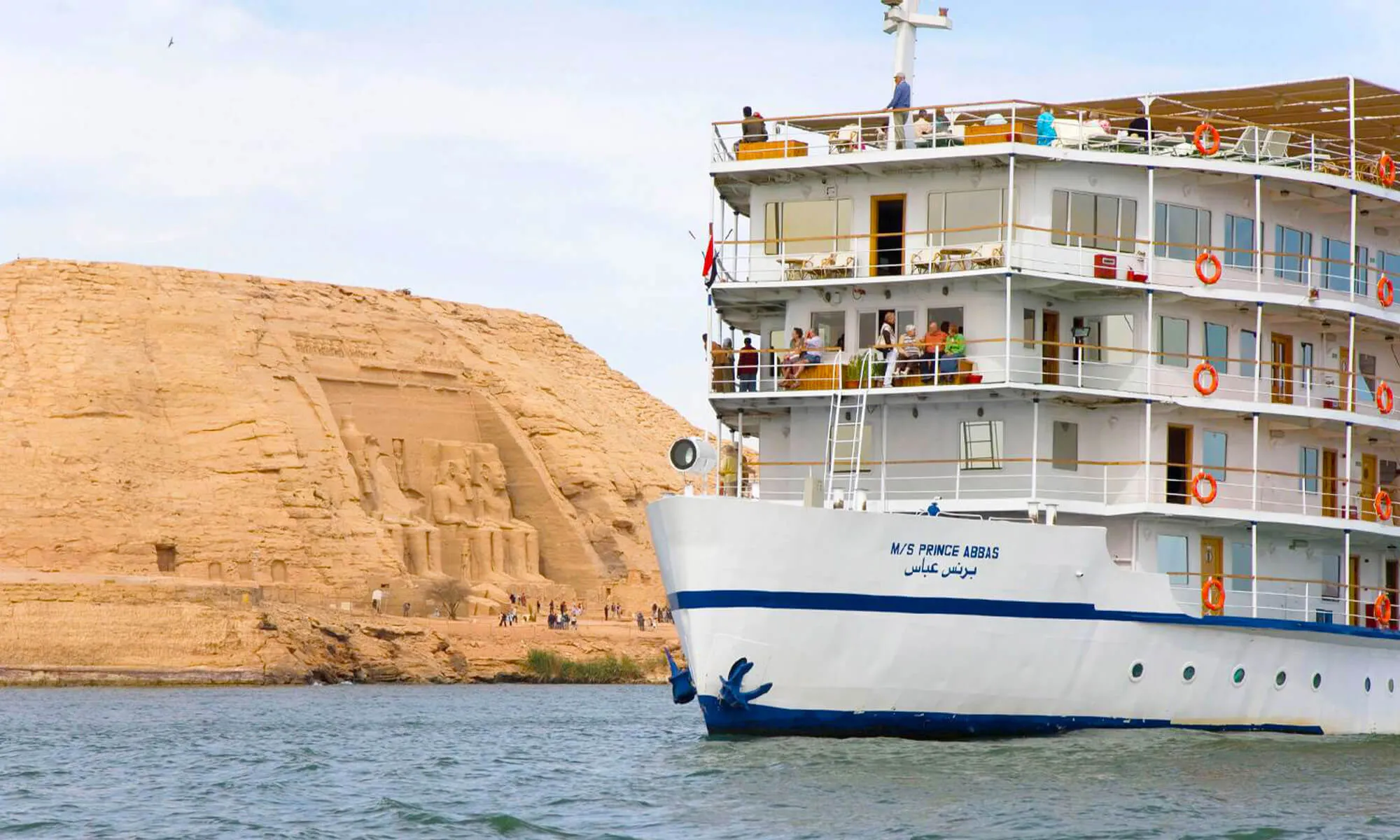
Carved in the 13th century BC under Pharaoh Ramesses II, the twin temples at Abu Simbel projected royal power and piety at Egypt’s Nubian frontier. The Great Temple honors Ra-Horakhty, Amun, Ptah, and the deified Ramesses II, while the smaller Hathor Temple celebrates Queen Nefertari, remarkably giving the queen statues nearly equal in height to the king. In the 1960s, rising waters from the Aswan High Dam threatened the site. An unprecedented international rescue cut the temples into sections and reassembled them on higher ground, preserving their original orientation. Twice each year, around 22 February and 22 October, sunrise illuminates the sanctuary of the Great Temple, lighting three of the four seated deities while Ptah remains in shadow. Abu Simbel stands today as both a pharaonic masterpiece and a modern conservation triumph.
Discover a Complete Abu Simbel Temples Travel Guide
Journey to Egypt’s far south to meet Abu Simbel’s monumental rock-cut temples. Learn their pharaonic story, relocation to save them from Lake Nasser, how to get there, the best time to visit, and the must-do experiences that make this Nubian wonder unforgettable.