
Hatshepsut ruled Egypt for roughly two decades, oversaw one of the most prosperous periods of the 18th Dynasty, and commissioned some of the finest architecture the ancient world ever produced. After her death, someone made a deliberate effort to chip her name and image off the monuments she built, a campaign of erasure so thorough that later king lists sometimes skip her reign entirely. Her story is both a success story and a mystery, and both halves still shape how a visitor understands her temple on Luxor's West Bank today.
Hatshepsut's Early Life
Hatshepsut was born into the 18th Dynasty's royal family at Thebes, with a pedigree few Egyptians of her era could match.
Daughter of Thutmose I
As the daughter of Pharaoh Thutmose I and his principal wife, Queen Ahmose, Hatshepsut grew up at the center of Egyptian religious and political life. She held the title God's Wife of Amun, a position that gave her significant religious authority at Thebes long before she ever wore a crown, tying her closely to the mythology of Isis and Osiris and the wider cosmology that legitimized Egypt's kings.
Wife of Thutmose II
Hatshepsut married her half-brother Thutmose II, becoming Great Royal Wife, the most senior consort position in the royal household. Thutmose II also had a son, the future Thutmose III, born to a secondary wife rather than to Hatshepsut herself, a detail that would matter enormously once Thutmose II died.
Her position as Great Royal Wife gave her standing. What came next gave her the throne.
How Hatshepsut Became Pharaoh
When Thutmose II died around 1479 B.C., the throne passed to his young son, setting up one of ancient Egypt's most unusual political arrangements.
Regent for Thutmose III
Thutmose III, Hatshepsut's stepson and nephew, inherited the kingship as a child, far too young to rule alone. Hatshepsut stepped in as regent, managing the kingdom on his behalf while he remained king in name throughout, his own image still appearing alongside hers on official monuments from this period. The two co-ruled for years rather than Hatshepsut simply replacing him, a cooperative arrangement without a clean parallel in the tomb of Tutankhamun's own much later and far shorter reign.
From Queen to King
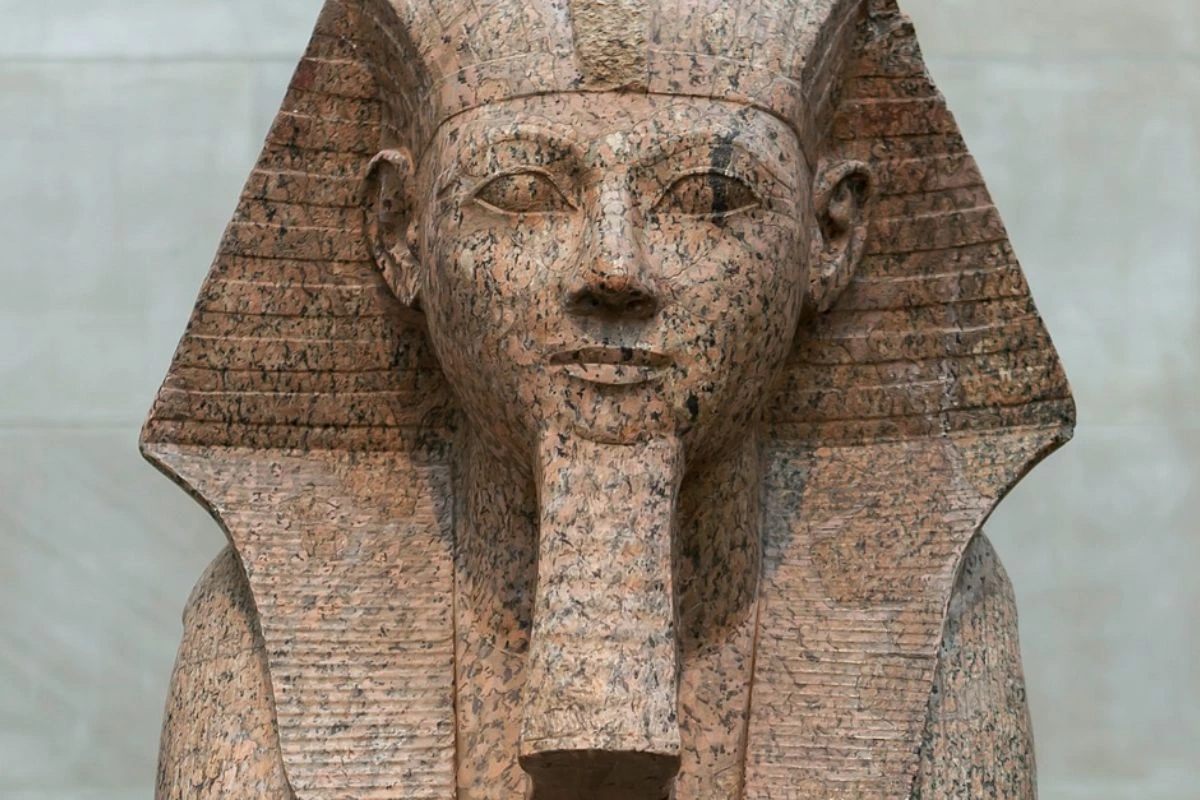
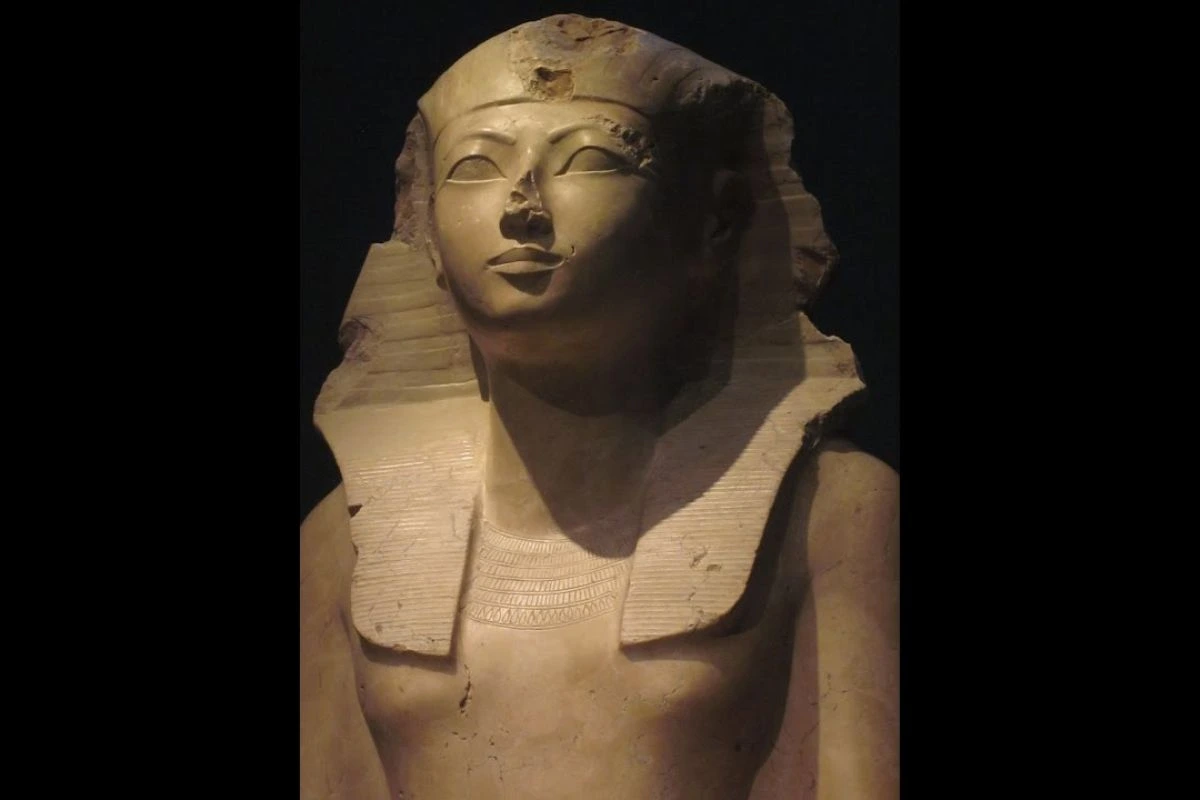
Within a few years of becoming regent, Hatshepsut adopted the full royal titles, imagery, and regalia of a pharaoh, including the king's kilt, crown, and ceremonial false beard. These were symbols of the office itself, not an attempt to disguise her as a man, and Egyptian art had long used the same royal regalia regardless of the ruler's gender. The result was something genuinely new: a woman holding the full formal authority of kingship, a distinction as striking in its own way as the partnership between Ramses II and Nefertari a century later.
Her rise also depended on powerful court officials, especially Senenmut, a senior administrator and overseer of royal works who became one of the most prominent figures of Hatshepsut’s reign.
What Hatshepsut Achieved
Hatshepsut's roughly two-decade reign is remembered for construction, trade, and stability rather than military conquest, and the best temples to see along the Nile still carry her mark today.
The Expedition to Punt
One of her reign's most celebrated achievements was a major trading expedition to the land of Punt, likely located along the Red Sea coast of modern Eritrea or Somalia. The ships returned loaded with incense trees, ebony, ivory, gold, and exotic animals, all recorded in detailed relief carvings that still survive. Travelers tracing that same stretch of coastline today usually do it by continuing south along a 4-day Nile cruise itinerary from Aswan to Luxor rather than the ancient sea route itself.
Temples and Obelisks
Hatshepsut's building program at Karnak included a pair of monumental obelisks dedicated to the god Amun, among the tallest ever raised in Egypt, one of which still stands at its original height. Her construction projects there add another layer to temples most visitors already encounter on a Luxor to Aswan Nile cruise.
Deir el-Bahari
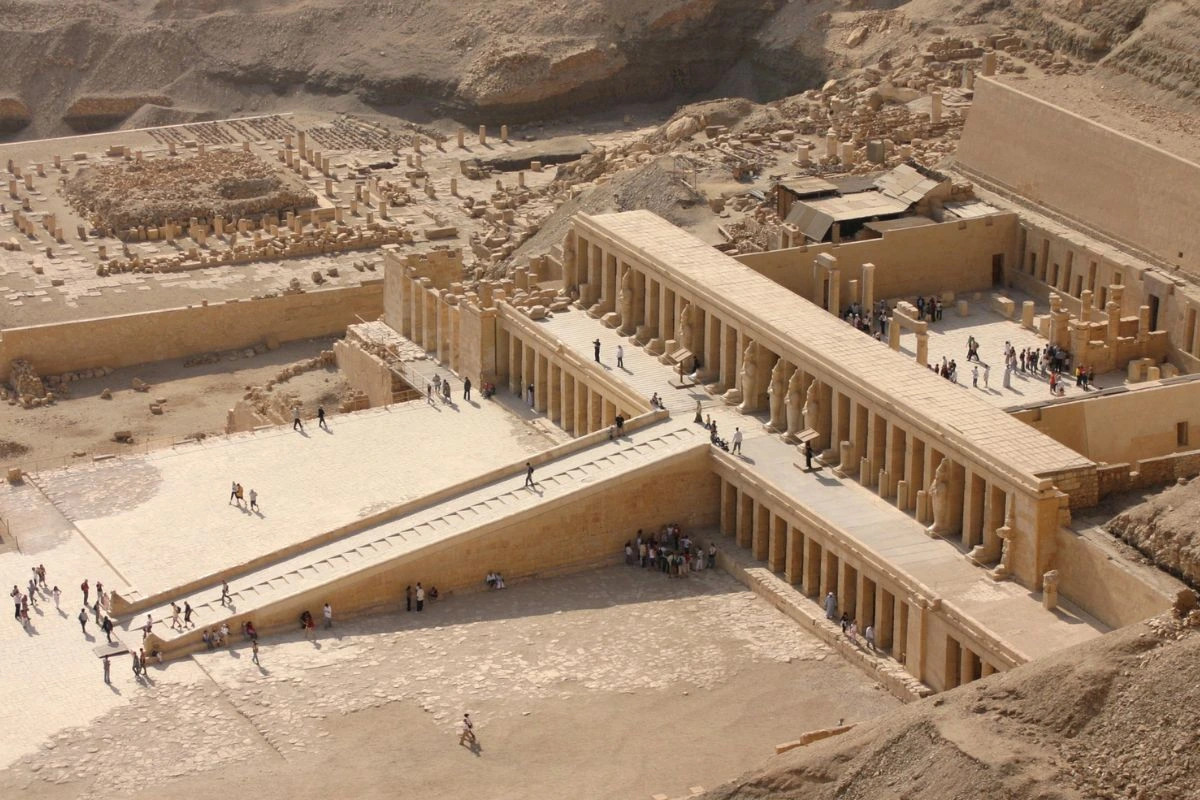
Her mortuary temple at Deir el-Bahari, built into the cliffs on Luxor's West Bank, is the clearest physical expression of her reign: three broad terraces connected by ramps, colonnades carved directly from the rock, and relief scenes recording her divine birth and the Punt expedition in full. The design itself argued for her legitimacy as much as any inscription did, built to be seen from across the river and to outlast any single ruler's reign. Nothing else from her reign communicates her ambition as directly as this temple does in person.
The temple that announced her reign so confidently also became the clearest target once that reign ended.
Her Death and Erasure
Hatshepsut died around 1458 B.C., and what followed her death is where history gives way to genuine mystery.
What Happened After Her Death
The precise cause of Hatshepsut's death remains uncertain, with no definitive ancient record explaining it, and theories ranging from illness to natural causes remain speculative rather than settled. What is clear is the political transition that followed: Thutmose III, long her co-ruler, assumed sole and unchallenged control of Egypt, continuing to reign for decades afterward. Travelers weighing how many days a Nile cruise through this stretch of history actually needs often don't realize how much of that story sits within a single day's sightseeing on the West Bank.
Why Was Her Name Erased
Years after Hatshepsut's death, her cartouches and images were deliberately chiseled away from many of her monuments, and some of her statues were damaged or buried. The popular explanation, an angry stepson erasing a resented stepmother, does not fit the timeline. Because the campaign began years after her death, simple personal revenge no longer fits the evidence well; historians instead consider dynastic succession and royal legitimacy among the leading explanations, although the exact motive remains uncertain.
The same instinct to reshape history for the next generation echoes further south in things to do in Aswan, where later rulers repeatedly rebuilt and rededicated existing temples to their own names.
How to Visit Hatshepsut's Temple Today
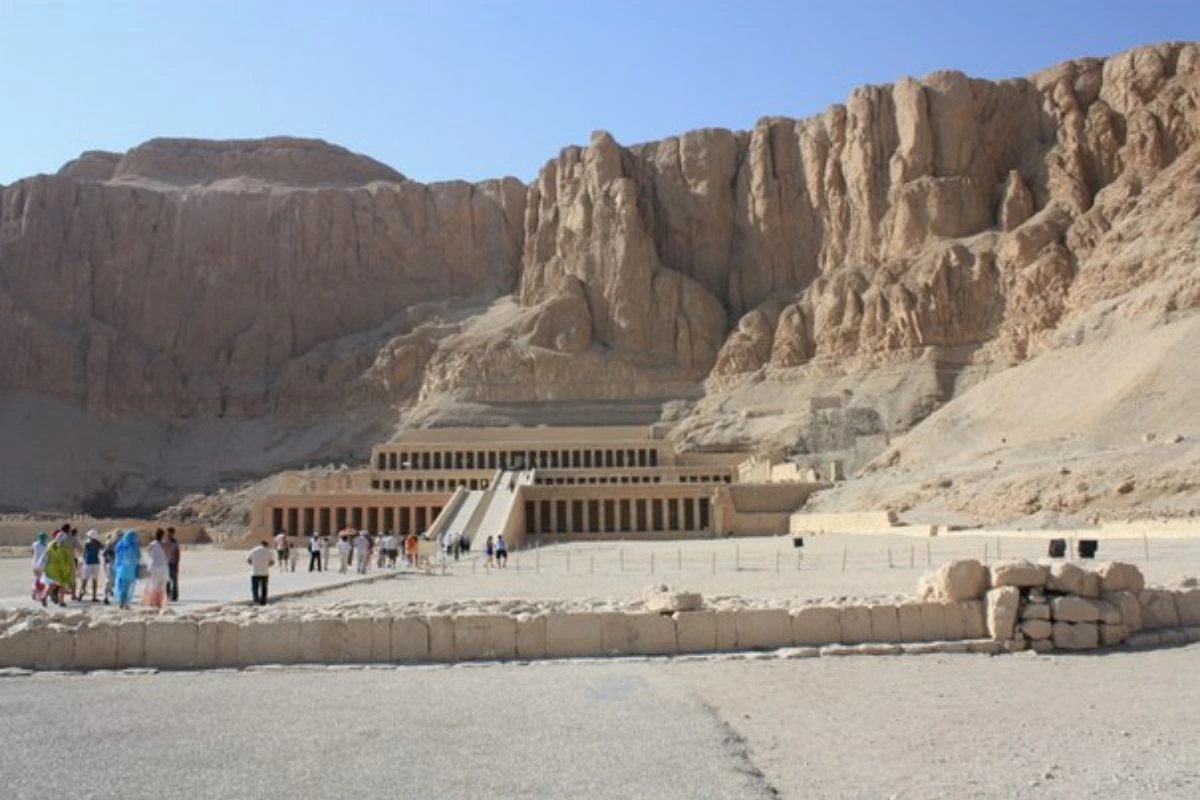
Deir el-Bahari sits on Luxor's West Bank, and this is where Hatshepsut's story stops being a history lesson and becomes something a traveler can stand inside.
What to Look For
A visit here rewards looking past the architecture itself. The Punt expedition reliefs, the divine birth scenes, and the places where Hatshepsut's cartouches were deliberately damaged or replaced with another king's name are all still visible to someone who knows exactly where to look, the same temple that makes Luxor one of Egypt's essential stops for travelers who want more than a photograph. Pairing the temple with a 5-day Nile cruise itinerary from Luxor to Aswan gives this one site the context of the wider Theban landscape around it.
Visit Early with an Egyptologist
The West Bank's heat builds quickly once the sun clears the cliffs, which is exactly why Nile Cruise Holiday schedules Deir el-Bahari for early morning, well ahead of the midday temperatures and the heaviest tour-bus traffic. Our private Egyptologists know precisely where the altered cartouches and erased reliefs sit among the temple's columns, detail that the case for planning this kind of visit through a specialist covers well, and that most independent visitors walk straight past without ever noticing. Travelers ready to see Hatshepsut's story told properly can build it into a tailor-made itinerary, a stop along Nile cruises departing from Luxor, or broader Cairo and Nile cruise tours built around the same Theban sites.
Conclusion
Hatshepsut's reign left behind obelisks, a trading expedition still recorded in stone, and a temple unlike anything else on the Nile, even after a later king tried to erase her from it. Seeing that full story in person, including the damage that was meant to hide it, is best done early in the morning with someone who knows exactly where to look. Egypt tour packages with a Nile cruise built around Luxor's West Bank make that version of the visit straightforward to arrange.


