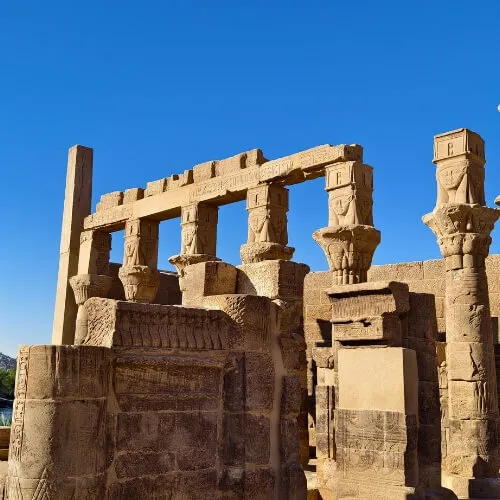
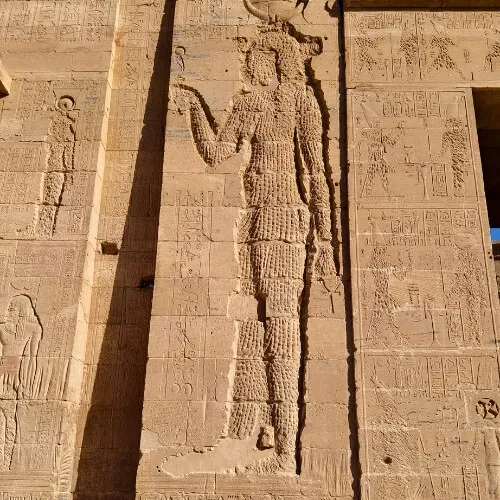
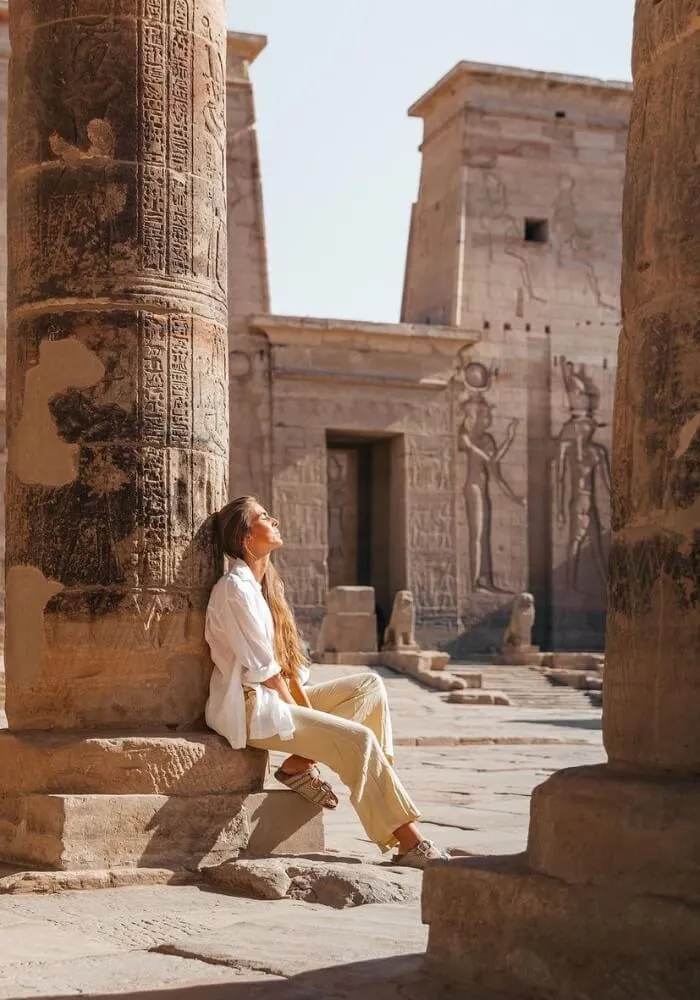
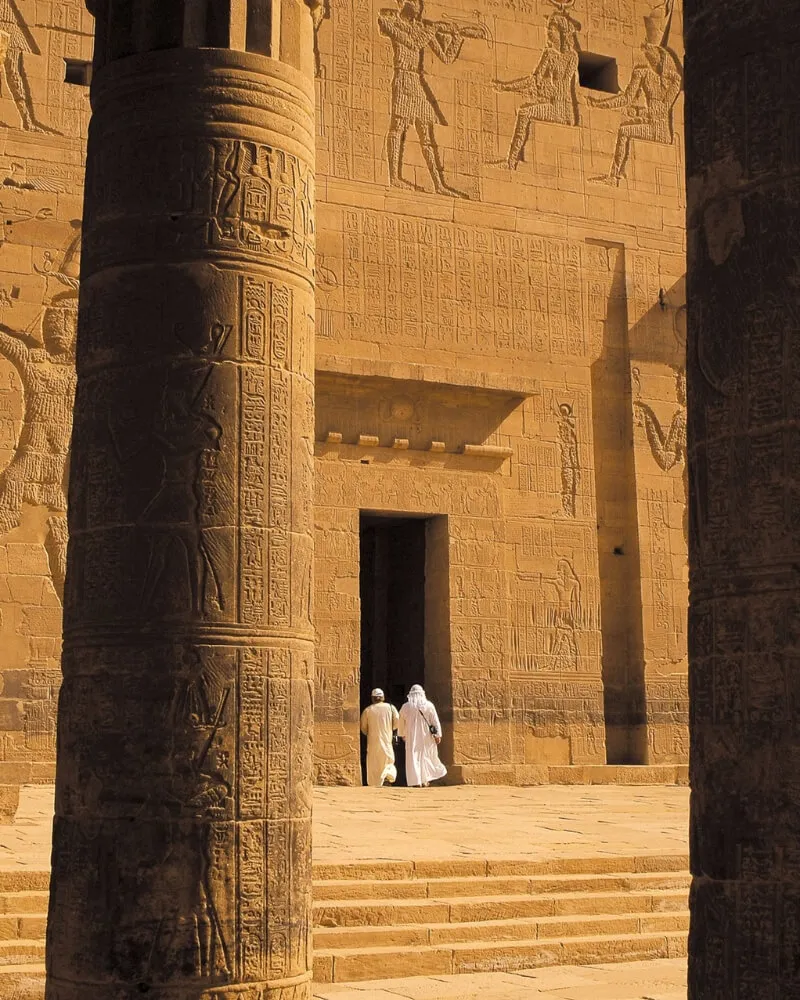
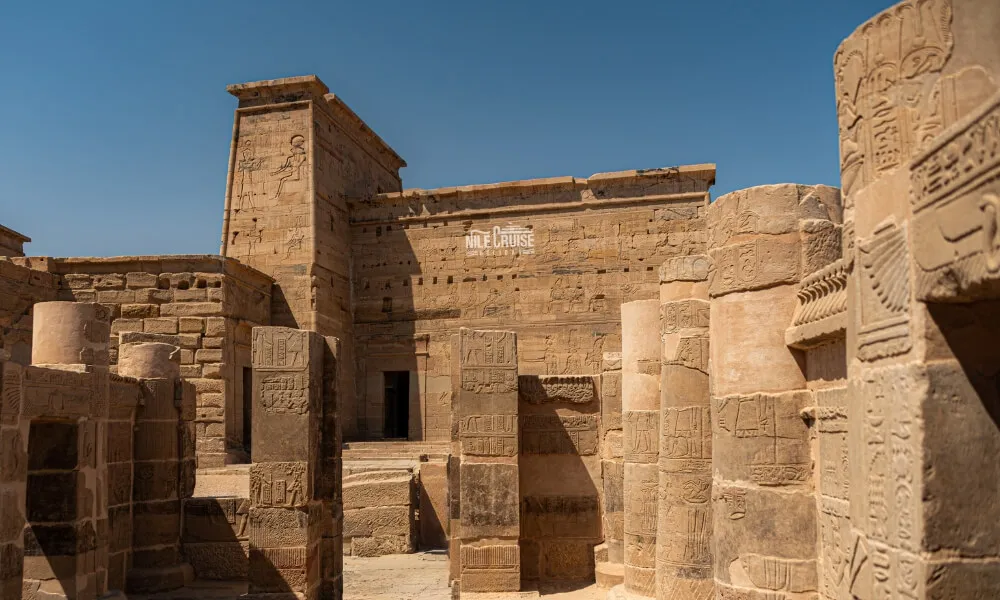
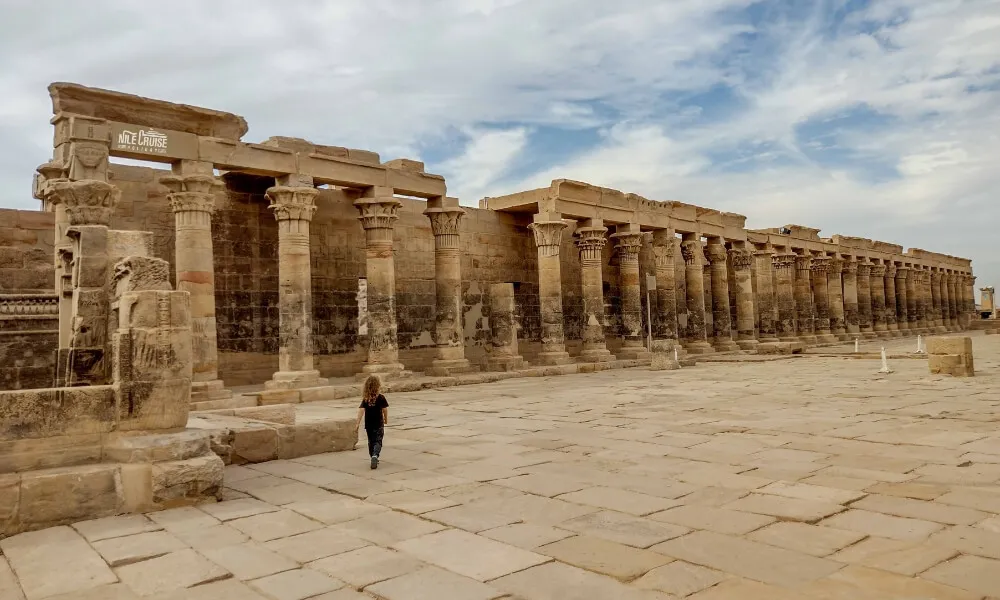
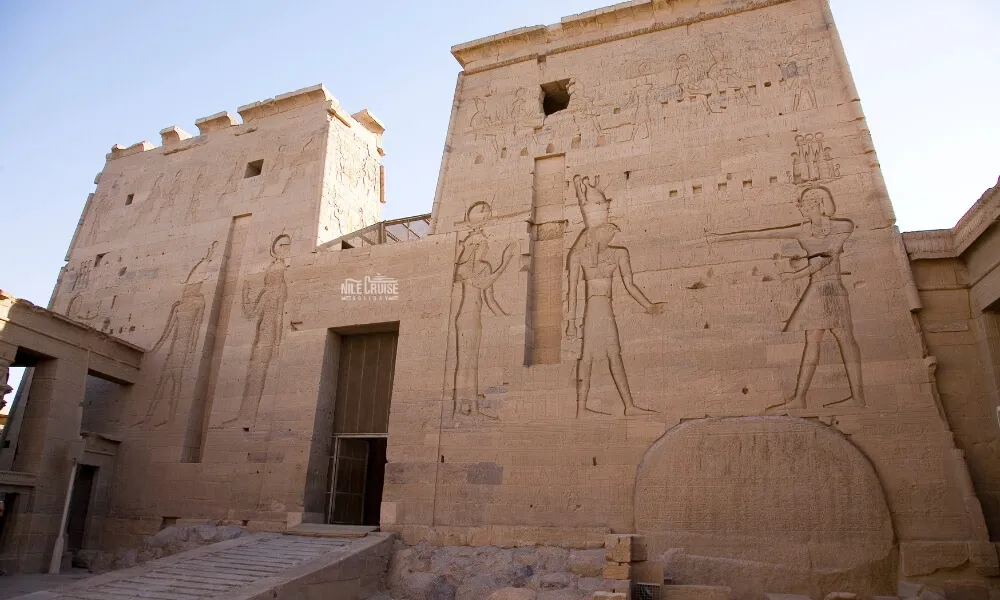
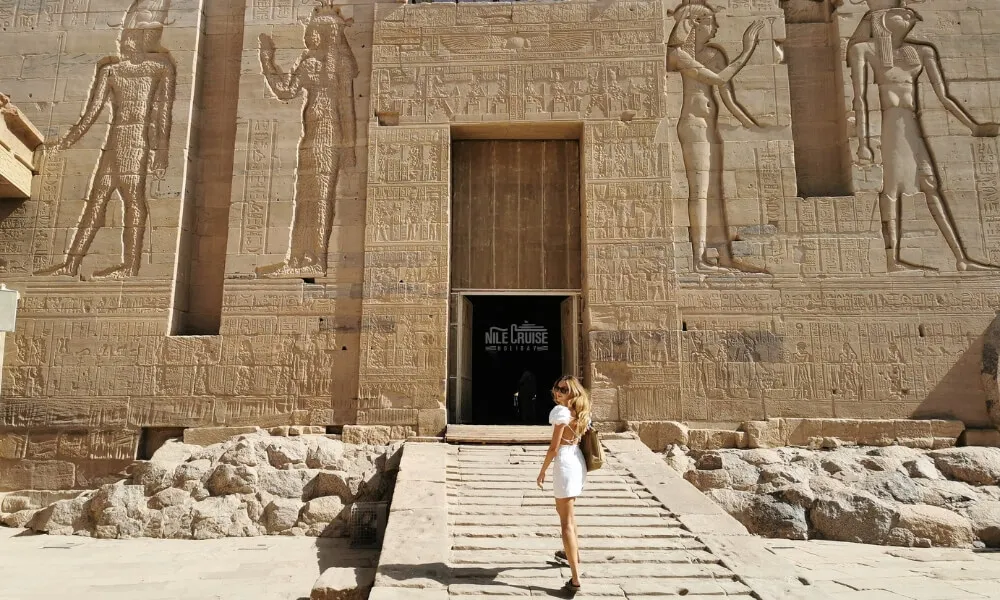
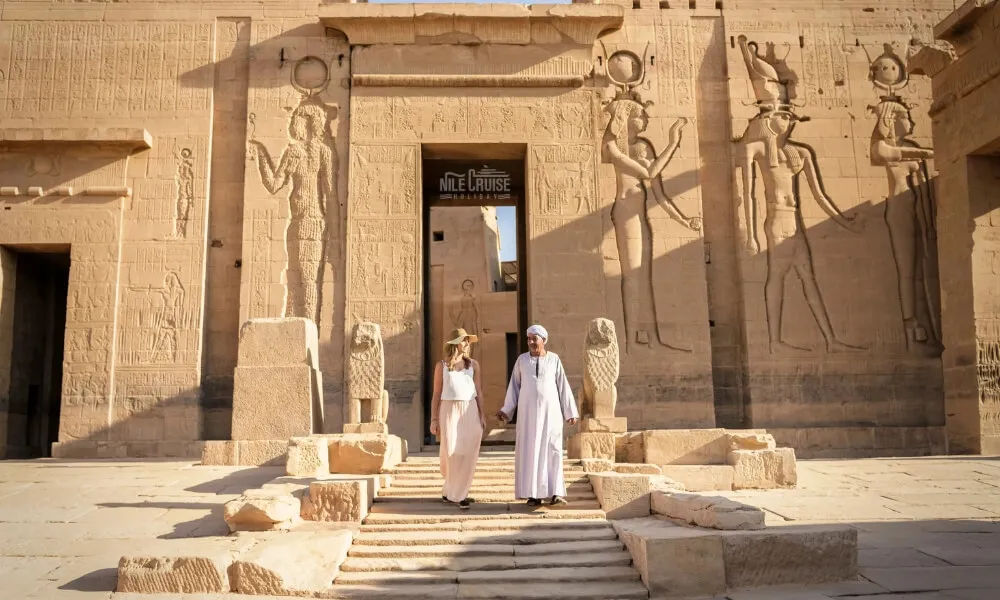
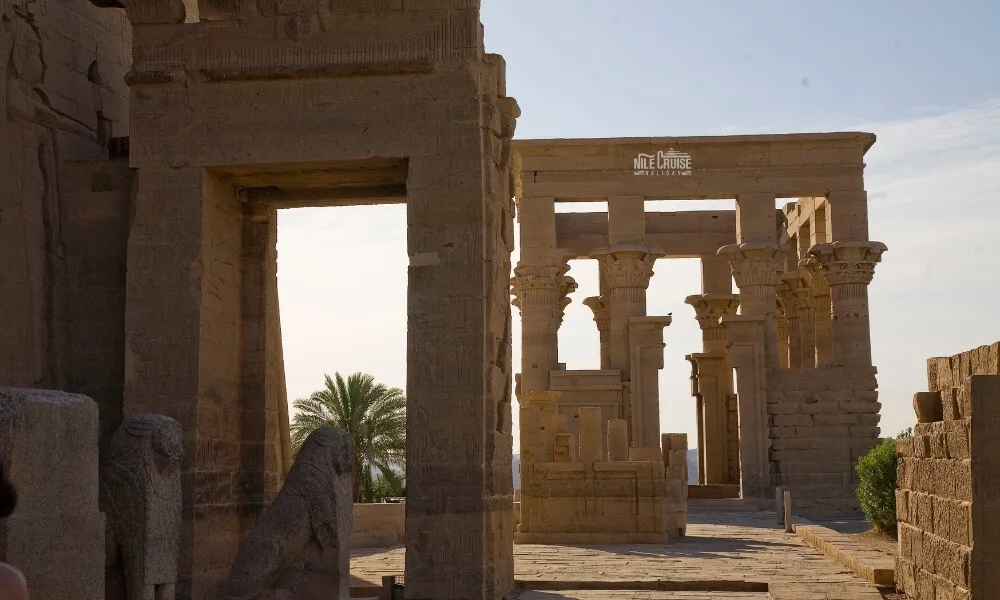
Philae Temple flourished during the Ptolemaic and Roman eras as the premier cult center of Isis, revered as mother, healer, and protectress. The complex grew around a grand axial temple with pylons, courts, a hypostyle hall, and a Birth House celebrating Horus. Roman emperors added reliefs and the elegant Kiosk of Trajan, while later Coptic communities repurposed spaces for Christian worship, leaving crosses and inscriptions. After rising waters from the Aswan dams threatened the site, UNESCO coordinated the careful dismantling, transport, and reassembly of thousands of numbered sandstone blocks on nearby Agilkia Island. Today, Philae retains its serene sacred character, its reliefs still crisp with scenes of offerings to Isis, Osiris, and Horus.
Definitive Philae Temple Travel Guide
A graceful island temple rescued from the Nile, Philae Temple blends Ptolemaic elegance, Roman imprints, and early Christian layers. Discover its history, island location, how to get there by boat, the top things to do, the best time to visit, and concise facts to enrich your Aswan itinerary.