If your Egypt trip falls on Sham El Nessim, you do not need to avoid the day, but it helps to understand how Egyptians spend it. Parks fill, families head outdoors, traditional foods appear in shops and markets, and parts of a normal sightseeing schedule may need more careful timing.
Sham El Nessim is Egypt's national spring holiday, held on the Monday after Coptic Easter. In 2027, it falls on Monday, May 3. Travelers may notice busier parks and Nile-side promenades, while sightseeing usually remains possible.
The practical answer for most travelers is coordination rather than cancellation. Sham El Nessim usually does not require anyone to redesign an Egypt trip, but it can change the rhythm of the day, especially for those already weighing the best time to cruise the Nile.
What Is Sham El Nessim?

Sham El Nessim is a spring festival and public holiday celebrated across Egyptian society. Its date follows the Coptic Easter calendar, so it moves each year, but today it is a shared national day off.
| Fact | Sham El Nessim |
|---|---|
| What It Is | Egyptian spring festival and national holiday |
| When | Monday after Coptic Easter |
| 2027 Date | May 3, 2027 |
| Who Celebrates | Egyptians across different communities |
| Common Traditions | Picnics, colored eggs, feseekh, herring, onions, and lettuce |
| Popular Places | Parks, gardens, Nile banks and coastal areas |
| Traveler Impact | Busier leisure spaces and possible holiday schedule changes |
Its historical roots are often traced to ancient Egyptian spring celebrations linked with the harvest season and renewal, although the exact continuity is debated and should not be overstated. Easter itself is a separate subject, covered in our guide to a Nile cruise at Easter.
Sham El Nessim is not a festival staged for tourists. Travelers experience it alongside Egyptian families going about a national holiday.
What Will Travelers Notice on Sham El Nessim?
Parks, Nile Banks and Public Spaces Get Busier
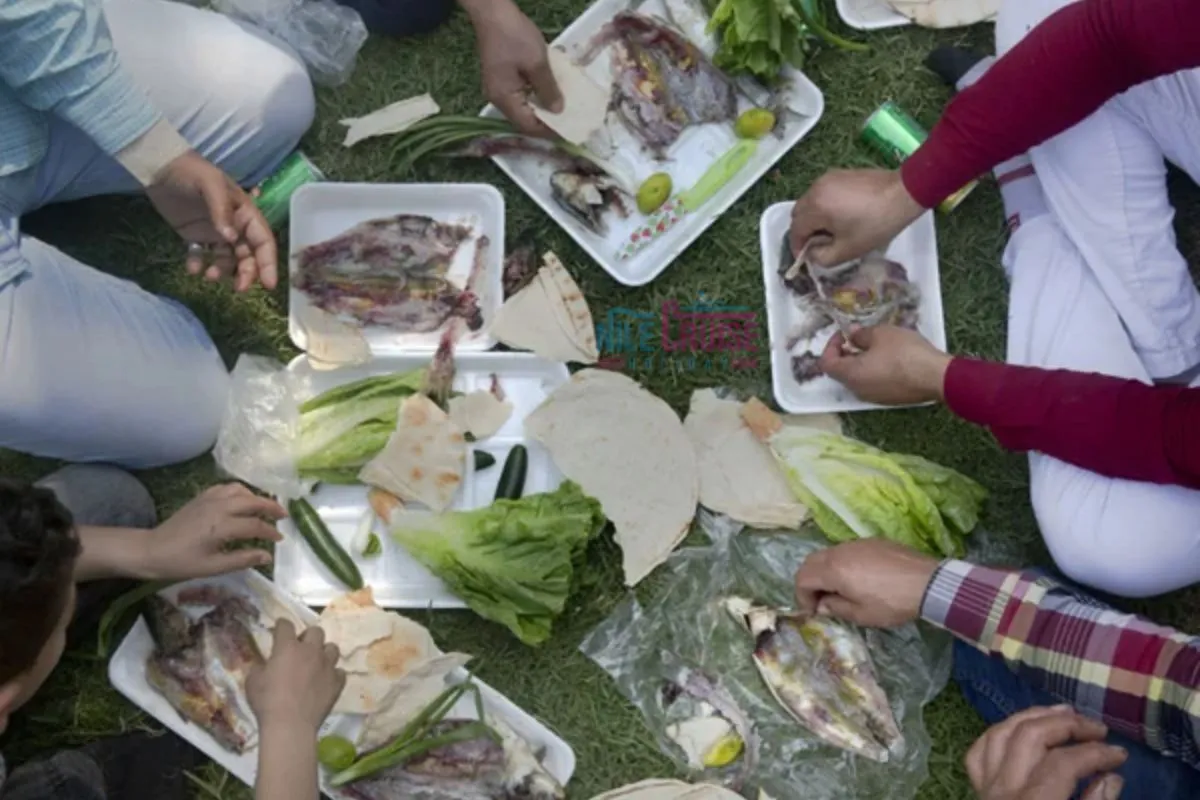
By mid-morning, many Egyptian families have already claimed a patch of grass. Blankets spread across public gardens, and children chase balls along the Nile promenades. Coastal resorts can be busy too.
Crowding tends to be most noticeable in family leisure spaces and popular outdoor areas. Major archaeological attractions may see different visitor patterns from public parks, so a busy riverside promenade does not necessarily mean a crowded temple.
Traditional Foods Appear Everywhere
In the days around the holiday, travelers may notice feseekh, smoked herring, colored eggs, green onions and lettuce in shops, markets, restaurants and homes. Some hotels may offer seasonal dishes, though this varies and should not be assumed.
The Atmosphere Is Local Rather Than Ceremonial
There is no single nationwide parade and no official performance laid on for visitors. The celebration happens through family gatherings and long meals outdoors.
Visitors therefore see ordinary Egyptian social life at its most relaxed. For many travelers, that small window into daily life is the real appeal of the day.
Will Sham El Nessim Affect Sightseeing?
Ancient Sites and Museums
A national holiday does not automatically mean archaeological sites or museums close. Many tourist sites, from the Giza pyramids to major temples, may continue normal operations, but schedules can change from year to year.
No site should be assumed open or closed simply because it is Sham El Nessim. Public leisure areas are usually more affected by crowds than archaeological zones. Before the guest travels, NCH reconfirms the relevant opening hours and adjusts the sightseeing sequence so the key visits happen at sensible times.
Roads, Transfers and Domestic Travel
Family movement can increase road traffic around parks, gardens, riverfronts and leisure destinations, especially in Cairo. Transport continues to operate, but timing needs attention.
Airports, trains and domestic flights, such as a Cairo to Luxor flight, should be checked individually, and holiday traffic should be factored into every connection. NCH can adjust pickup times and route sequencing when Sham El Nessim overlaps with a domestic flight, train, hotel transfer or cruise boarding. Traffic cannot be avoided entirely, but realistic buffers help.
Restaurants, Banks and Services
Government offices and some public-sector services may close or operate differently on the holiday. Private businesses vary, while restaurants, cafés and tourism businesses often remain active.
Banks may also follow holiday hours, so having enough cash or a working card for the day is sensible. Our guide to money in Egypt covers the basics.
What Happens to a Nile Cruise on Sham El Nessim?

A Nile cruise does not automatically stop or change itinerary simply because it is Sham El Nessim. Published cruise itineraries normally continue unless the operator makes an operational adjustment, and practices can differ from one company to another.
The impact is more likely to show up around the edges of the cruise: transfers, local road conditions, excursion timing, hotel and cruise handoffs, and optional sightseeing.
If You Are Boarding or Leaving the Cruise
Holiday days put the most pressure on connections. An airport arrival, a hotel checkout, a train, or a drive to the ship can each take longer than usual, and luggage has to move with the guest.
For NCH, the important question is not simply whether the ship is sailing. It is whether every connection around the ship still works smoothly on the holiday. The driver, hotel, cruise, guide and onward transfer are coordinated as one journey, so boarding time, leaving time and the next leg to a hotel or airport all line up. The same coordination sits behind our Cairo and Nile cruise tours.
If You Are Already Sailing
Onboard routine usually continues as normal, and temple visits generally proceed according to the published itinerary on a Luxor and Aswan Nile cruise.
Travelers may notice more local activity in riverfront towns, with families gathered along the banks as the ship passes. Some cruise companies may acknowledge the holiday in small ways, but special meals or events should never be assumed unless the specific ship has confirmed them.
Should You Change Your Egypt Itinerary for Sham El Nessim?
Usually, no major redesign is necessary. Small timing or sequencing changes may be enough, and the overall shape of the trip, including how many days you need on the river, rarely changes.
| Travel Situation | Sensible Approach |
|---|---|
| Already on a Nile cruise | Same cruise plan, with excursions and transfers reconfirmed |
| Cairo sightseeing day | Site hours and local traffic checked in advance |
| Park or Nile promenade visit | Larger local crowds likely |
| Domestic flight | A realistic airport buffer |
| Hotel-to-cruise transfer | Exact pickup timing confirmed |
| Abu Simbel or early excursion | Departure time reconfirmed |
| Free leisure day | Good opportunity to observe local celebrations |
Who Might Enjoy the Holiday Most?
Cultural travelers, families, and repeat visitors to Egypt often enjoy the day most. Anyone curious about contemporary Egyptian life gets an easy, relaxed view of it.
Who May Prefer a Quieter Schedule?
Travelers uncomfortable with crowds, seniors who need easy access, and families with complex logistics may prefer a calmer plan. So may anyone with tight airport or train connections, or simply a traveler hoping for a quiet rest day. Our page on Egypt tours for seniors explains how pacing works.
The same Sham El Nessim day can be planned very differently for a family, an older couple, or a traveler who wants maximum local immersion. NCH can keep archaeological sightseeing efficient in the morning, steer clear of the busiest parks, and leave free time for those who want to watch the celebrations.
Sham El Nessim Traditions Travelers May See
Feseekh and Herring
Feseekh is traditionally associated with Sham El Nessim. It is a salted, fermented gray mullet, served at many family meals alongside smoked herring, known locally as renga.
Travelers who want to try feseekh should choose a reputable food provider rather than treating it as an informal street-food challenge. Other dishes in our guide to traditional Egyptian food are easier introductions.
Colored Eggs, Lettuce and Green Onions
Colored eggs are one of the holiday's most visible traditions, and children often decorate them at home. Lettuce and green onions are commonly served with the fish.
These foods are traditionally associated with spring, renewal, and seasonal eating. Links to ancient symbolism are often suggested, but they are better understood as modern tradition than proven continuity.
Picnics and the Spring Breeze
The heart of the day is eating outdoors. Families gather in gardens and along riverbanks while the spring weather is still pleasant, before the heat of summer arrives. A hat and sunscreen help, and our list of what to pack covers the rest.
The name is commonly understood as "smelling the breeze," which reflects that outdoor spirit, though its exact origins are debated.
If your Egypt itinerary overlaps with Sham El Nessim, NCH can coordinate the cruise, hotels, drivers, sightseeing and transfers as one journey, so the holiday becomes part of the experience rather than a logistical surprise. Every detail can be shaped as part of a tailor-made itinerary.