
Gebel el-Silsila: Quarry Inscriptions, Temples & What to See
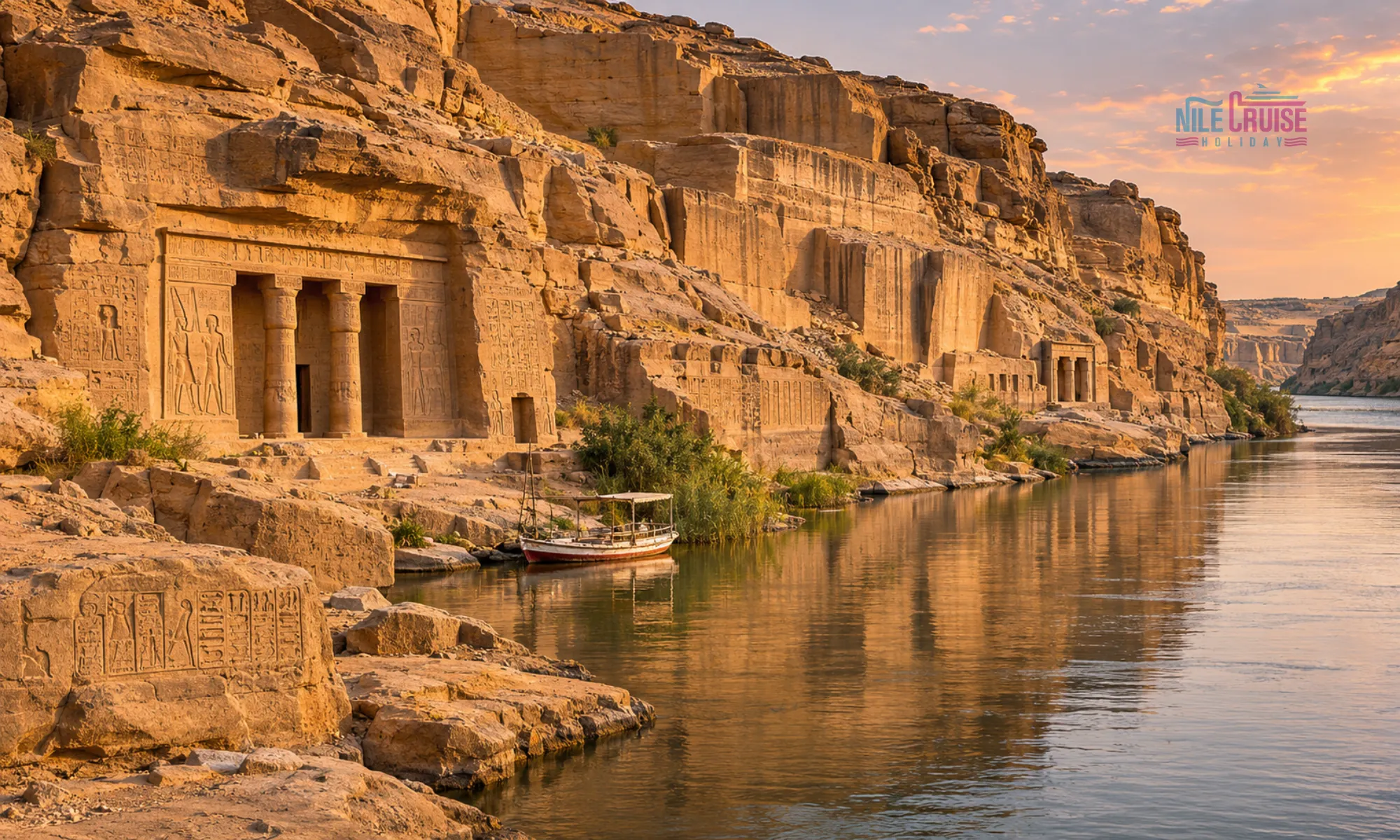
Between Edfu and Kom Ombo, the Nile narrows between two banks of honey-colored sandstone. The cliffs look cut, and they are.
Gebel el-Silsila is far more than a quarry, though. Its walls carry officials' names, quarry marks, painted notes, prayers, royal stelae, and a rock-cut temple. Together they make the site one of the Nile Valley's richest records of ancient working life.
What Is Gebel el-Silsila?
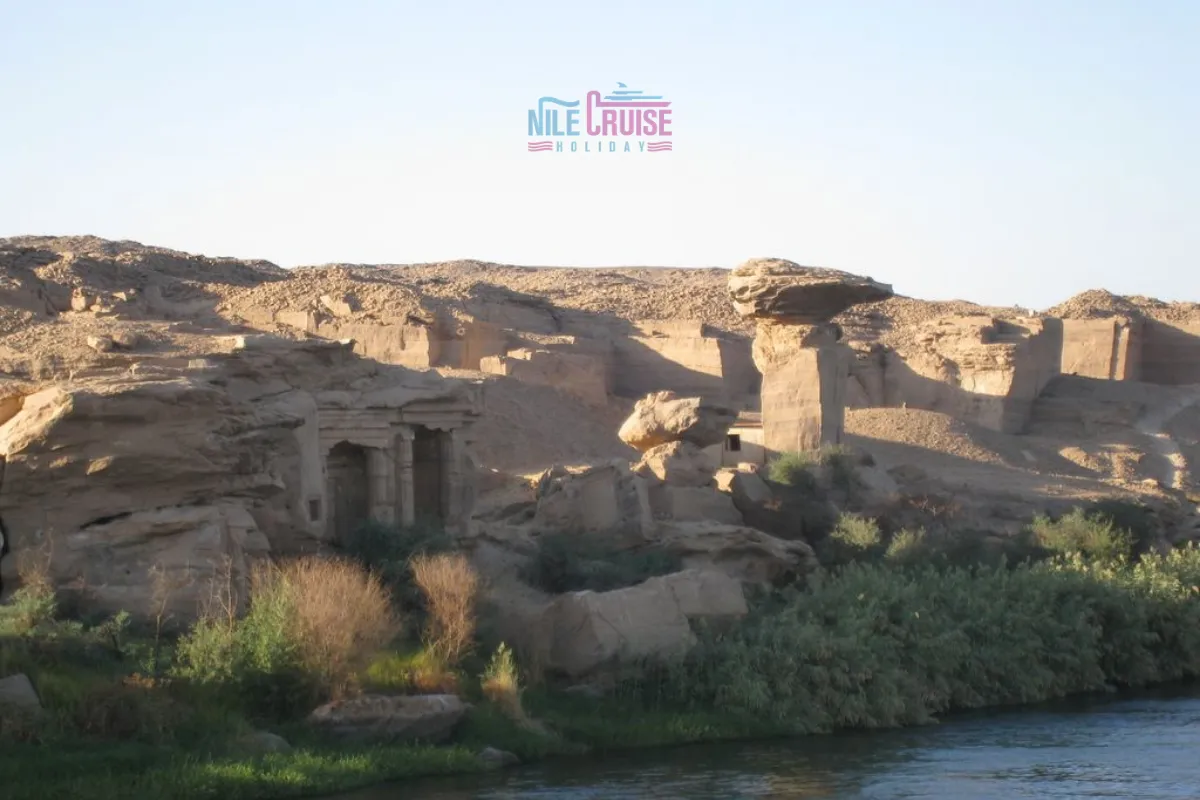
Gebel el-Silsila was one of ancient Egypt's most important sandstone quarrying landscapes, preserving quarry faces, inscriptions, shrines, and royal monuments across both banks of the Nile. It lies roughly 65 kilometers north of Aswan, a short way north of Kom Ombo.
The site is known in ancient sources as Kheny or Khenu, though translations of the name vary. This is a large archaeological landscape rather than a single monument.
Quick Facts
| Question | Answer |
|---|---|
| Location | Nile Valley, north of Kom Ombo |
| Ancient name | Kheny / Khenu |
| Famous for | Sandstone quarries |
| Major monument | Speos of Horemheb |
| Main evidence | Inscriptions, quarry marks, shrines |
| Quarry periods | Middle Kingdom onward, with later reuse |
| Quarry scale | 100+ quarry areas |
| Inscriptions | Thousands of inscriptions and graffiti, plus roughly 5,000 quarry marks |
Why the Quarries Mattered
From the New Kingdom onward, sandstone became one of the principal monumental building materials for temples in Upper Egypt. Gebel el-Silsila was among Egypt's most important sandstone sources, and the Egyptian Ministry of Tourism and Antiquities describes more than a hundred quarries exploited here.
Blocks cut close to the water could be loaded onto boats and moved downstream. Stone from Silsila is widely linked with major Theban temples such as Karnak, although it was not the only sandstone source and not every temple can be traced to it.
Quarry Inscriptions to Look For
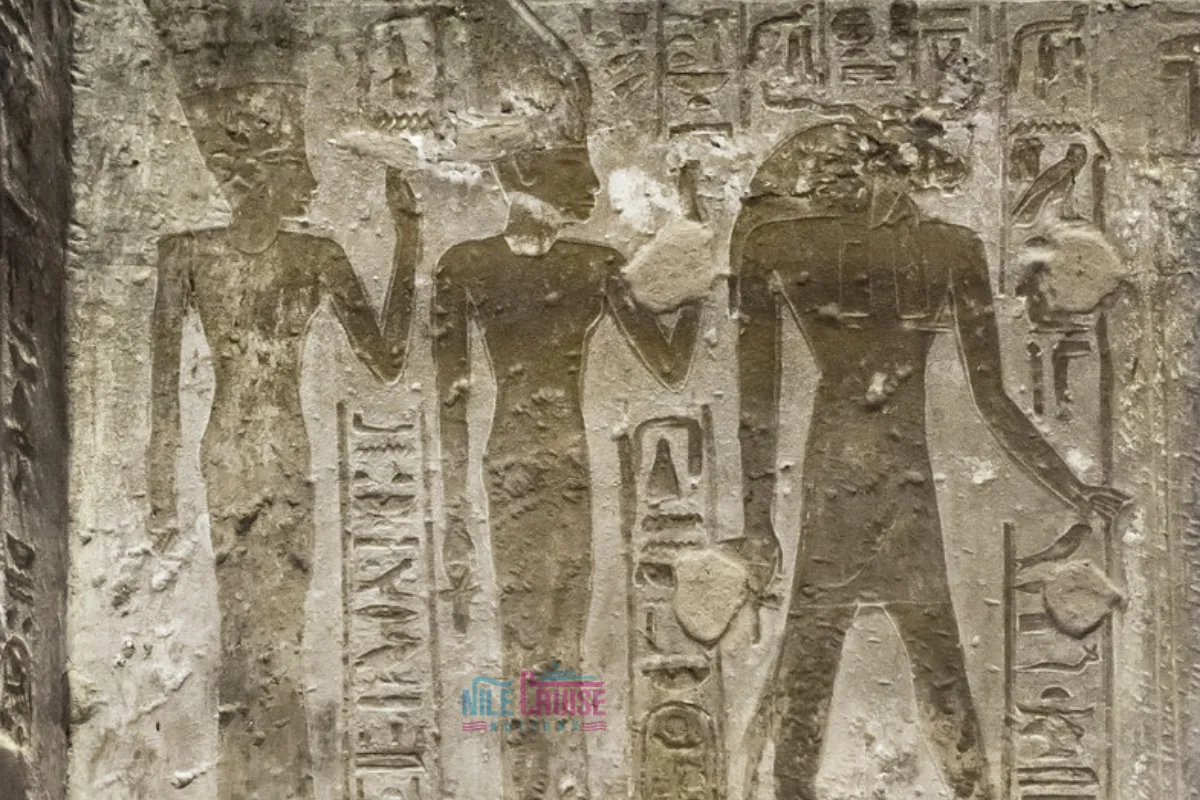
The site preserves not only royal history but the people who worked around the quarries. Since 2012, the Gebel el-Silsila Archaeological Project, a joint Egyptian and Lund University mission, has documented thousands of inscriptions and graffiti across the wider landscape, along with roughly 5,000 quarry marks. They include personal names, titles, expedition records, religious texts and quarry marks, written in hieroglyphic, hieratic, Greek, and other scripts.
Workers' Names and Titles
Some inscriptions name individuals connected with quarry expeditions or administration, allowing archaeologists to identify real people behind the stone-working landscape. They include officials, expedition leaders, people with boat and transport titles, and quarry personnel. A name on the rock does not mean its owner was a laborer.
Quarry Marks
Quarry marks are repeated symbols cut or painted on the quarry faces. They have often been interpreted as mason, team, or ownership marks, but research at Gebel el-Silsila suggests their functions may have been more varied, including symbolic or religious uses.
Some marks probably did help organize work. Others resemble deities, and some may have had a protective purpose, though that reading is not certain for every mark. Quarry marks should not automatically be read as simple worker signatures or ownership labels, and their meaning often remains uncertain.
Painted Inscriptions
Not every record was carved. On the east bank, researchers have published 18th Dynasty dipinti, painted texts and images applied with a brush in local red iron oxide, alongside a black ink hieratic text. One painted scene shows a hippopotamus goddess beside a hieratic date, which the researchers suggest was probably linked with protection.
Painted quarry texts are particularly valuable because they preserve more temporary administrative or personal records that would otherwise have disappeared.
Expedition Records
Other inscriptions record dates, reigns, officials, and expedition members' professions. They show organized work, though rarely in full detail.
The Speos of Horemheb
On the west bank stands the site's best-known monument, the Speos of Horemheb. A speos is a temple cut into rock. It was cut during Horemheb's reign, probably inside an older quarry gallery, and was made for the king, rather than carved by him.
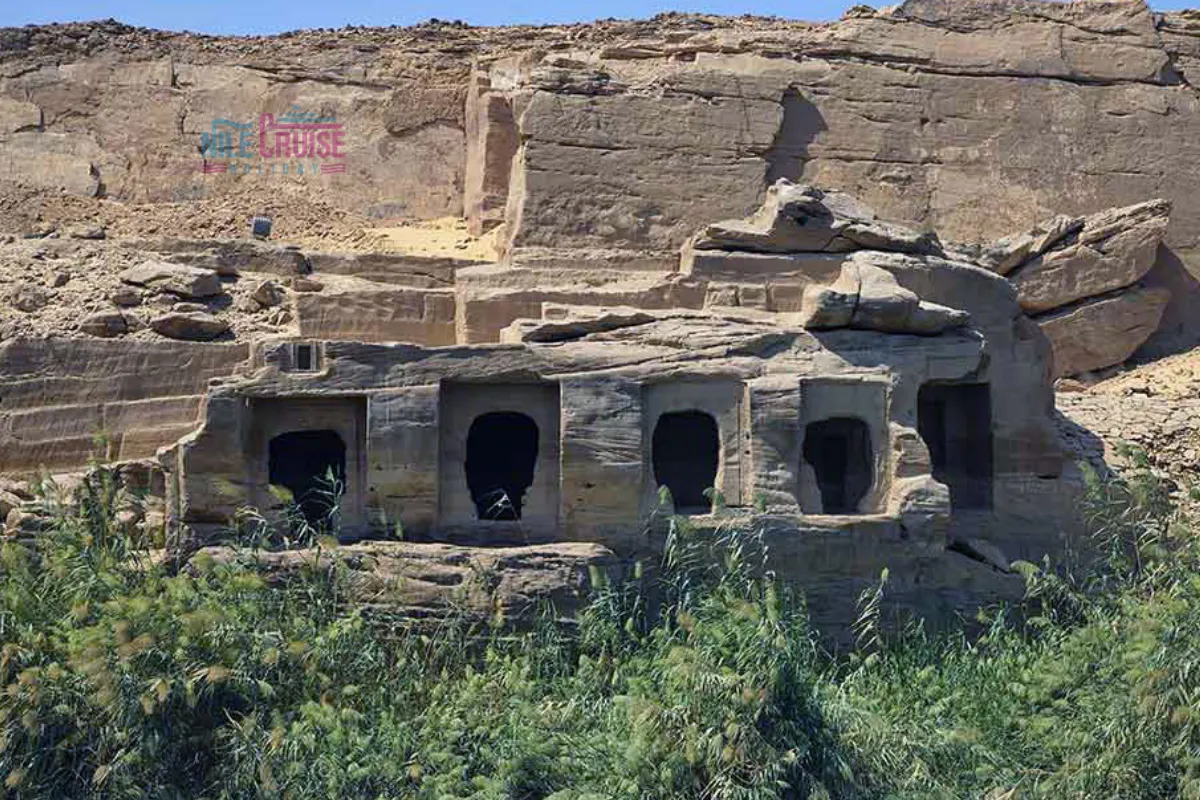
The facade has five openings cut into the cliff and separated by pillars, with the king's names around the central entrance. In the sanctuary, seven seated figures are carved from the rock: Amun-Ra, Mut and Khonsu, along with Sobek, Taweret, Thoth and Horemheb himself.
A wall relief shows Horemheb's triumphal return from Nubia. Ramesside kings and officials later added stelae and inscriptions, and carved crosses show later Christian use. The Speos shows how Gebel el-Silsila was both an industrial and sacred landscape.
Shrines Along the Nile
South of the Speos, a row of chapels is cut into the cliff above the water. The Egyptian Ministry currently describes around 32 rock-cut chapels in this area, made for New Kingdom high officials, mostly contemporaries of Hatshepsut and Thutmose III.
These are commemorative and religious monuments, not tombs, and they were not made for quarry workers. The shrines show that Gebel el-Silsila was not merely a quarry zone but also a place of memory, worship, and elite commemoration. Nearby royal shrines and stelae of Seti I, Ramesses II and Merenptah continue the tradition.
From Pharaohs to Roman Quarrymen
Quarrying and inscriptional activity at Gebel el-Silsila span multiple periods, with important evidence from the Middle Kingdom, New Kingdom and Graeco-Roman eras. The New Kingdom saw major expansion, and Amenhotep III left stelae on the east bank.
Under the Ptolemies and Romans, the quarries were worked again. Some New Kingdom quarries were reused by the Romans, and Greek inscriptions from this phase list names and professions. Demotic texts are also recorded. A 2019 study of early Roman quarry marks and texts argued that blocks from one east bank quarry were used at Dendera, including parts of the Roman birth house and the unfinished enclosure wall, though the authors describe their conclusions as preliminary.
The People Behind the Stone
The inscriptions preserve administrators, officials, priests, boat crews, quarry teams, and individuals who signed their names. Some worked on royal projects, while others came to honor gods. That human record sets Silsila apart from many ancient Egyptian ruins known mainly for their kings.
The evidence does not support calling it a slave quarry or showing one labor system in every period. These inscriptions make Gebel el-Silsila valuable because they preserve working lives alongside royal monuments.
What to Look For Today
A short checklist helps:
- Quarry faces
- Extraction scars
- Tool marks
- Personal inscriptions
- Quarry marks
- Painted texts, where visible
- Rock-cut shrines
- The Speos of Horemheb
- The Nile-side quarry landscape
Without context, many inscriptions look like small scratches. An Egyptologist can help distinguish quarry marks, names, royal texts and later graffiti from the surrounding extraction scars. Aswan's granite quarry at the Unfinished Obelisk makes a useful comparison.
Visiting Gebel el-Silsila

Gebel el-Silsila can be visited, but it is not a standard stop on every Luxor to Aswan cruise, so travelers should confirm whether it is actually included rather than assuming the ship will stop there. Some dahabiya itineraries include it. Our dahabiya guide explains how those boats differ.
Not every quarry area or bank is open, and landing depends on routing and local arrangements. Access arrangements and included areas should be confirmed before travel. Silsila sits on the same stretch of river as Edfu Temple and Kom Ombo.
Nile Cruise Holiday's Role
Nile Cruise Holiday can help travelers determine whether Gebel el-Silsila can realistically be added to their Nile itinerary, coordinating transport and Egyptologist-guided interpretation where routing and access allow.
Depending on the itinerary booked, NCH coordinates planning, private transfers or boat logistics, an Egyptologist guide, and sequencing with Edfu, Kom Ombo and other temples along the Nile.
The 5-day Esna to Aswan dahabiya itinerary already includes a Gebel el Silsila stop. The aim is not simply to see an old quarry, but to understand how extraction scars, inscriptions, shrines and royal monuments fit together in one working landscape.
Travelers interested in Egypt's lesser-visited archaeological landscapes can ask Nile Cruise Holiday whether Gebel el-Silsila can be incorporated into a tailor-made Egypt trip, with guided interpretation and routing arranged where practical.