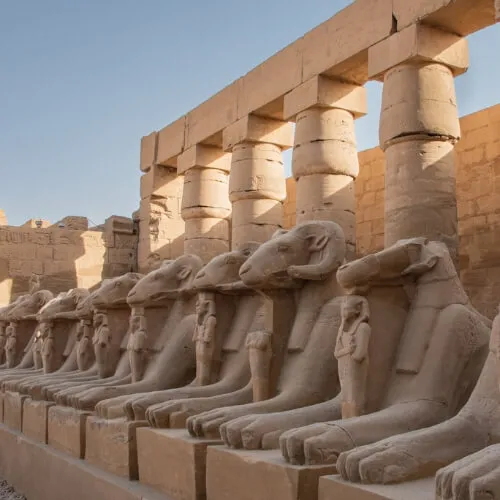
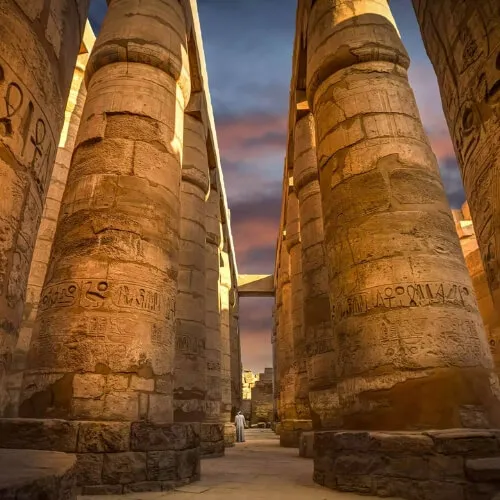
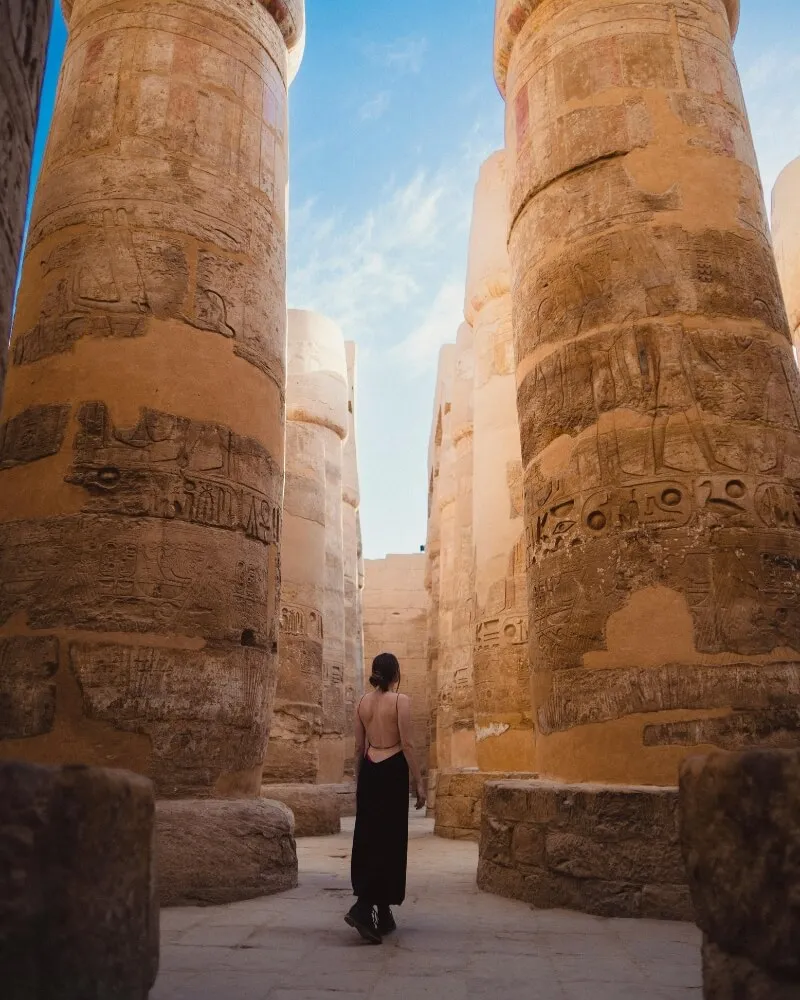
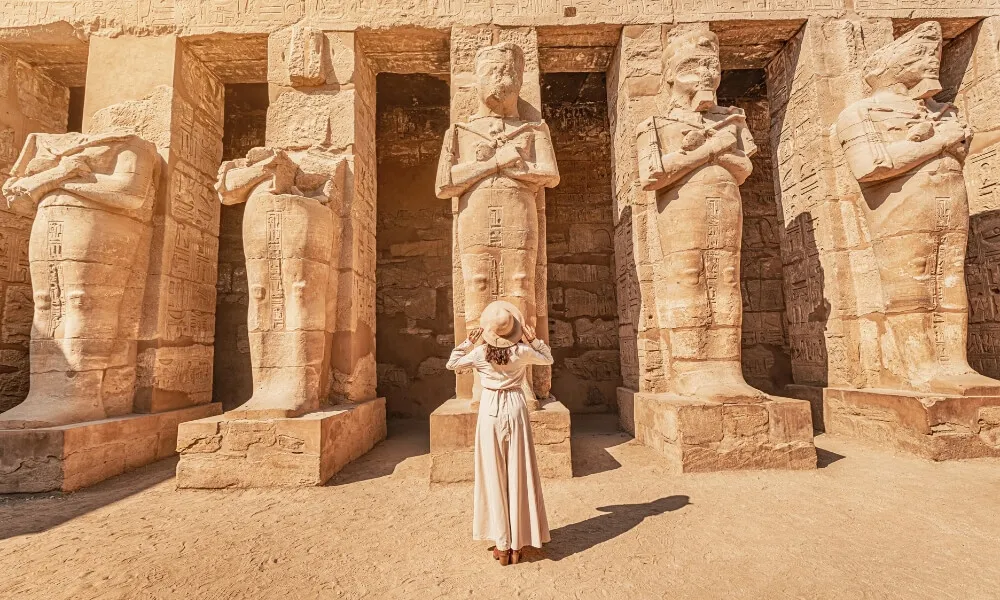
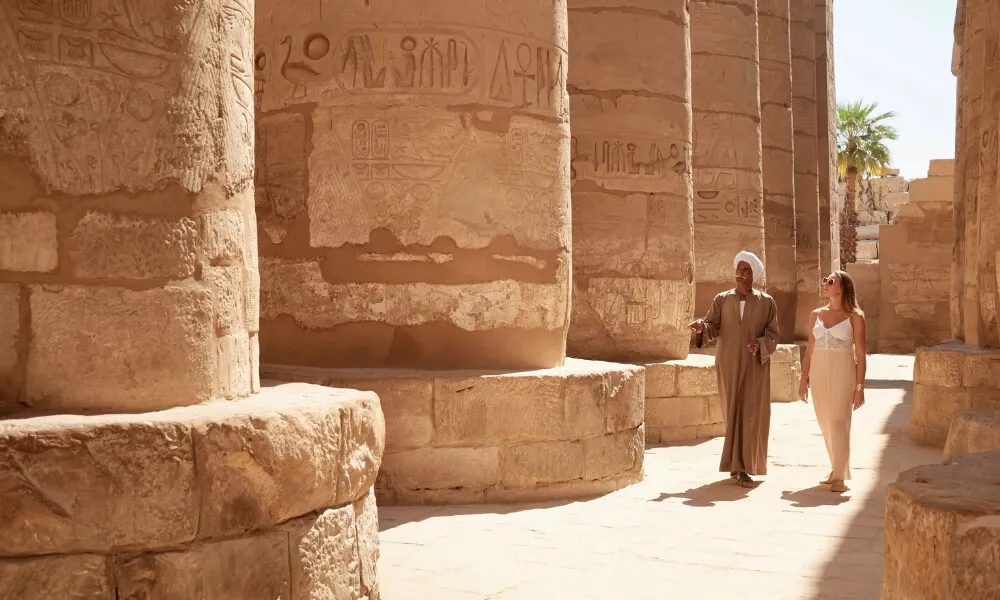
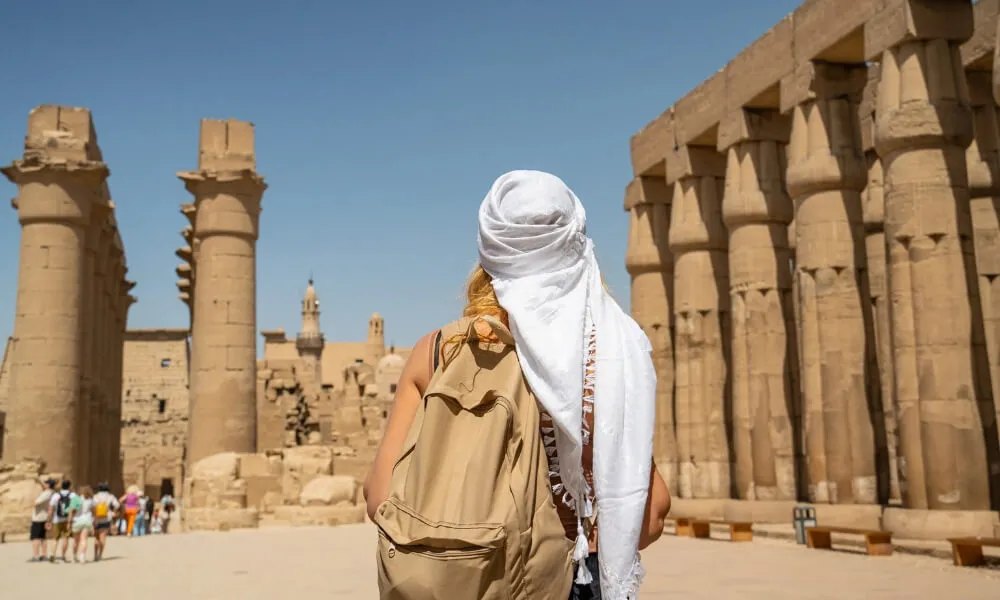
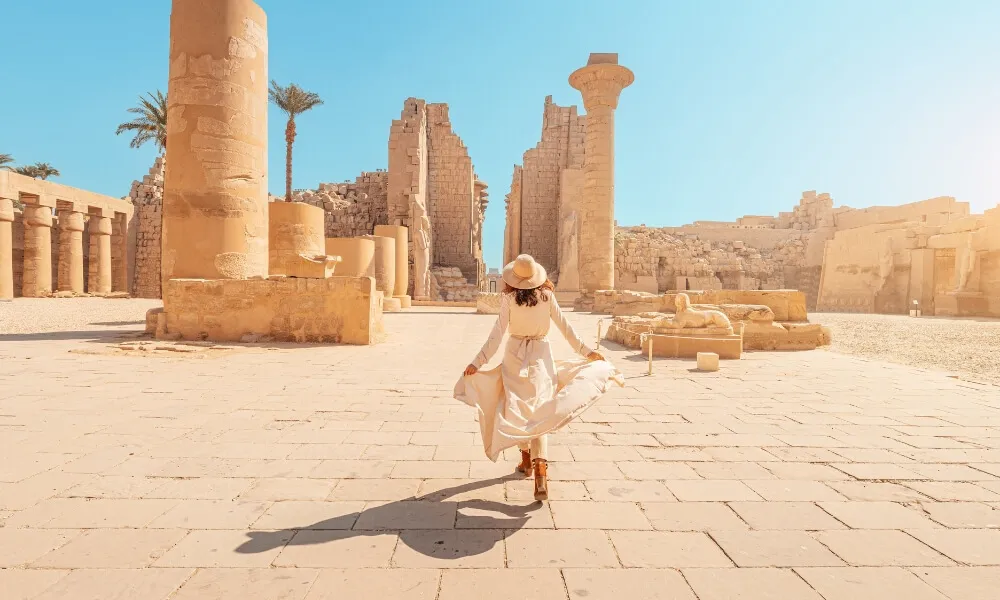
Karnak Temple in Luxor is not just a monument, but a vast open-air museum showcasing over 2,000 years of ancient Egyptian history. Construction began around 2000 BC and continued under more than 30 pharaohs, each leaving their mark with colossal pylons, sacred lakes, obelisks, and shrines. Dedicated primarily to Amun-Ra, alongside Mut and Khonsu, Karnak became the spiritual and political heart of Thebes, where priests wielded immense power and festivals like the grand Opet linked gods to kings. The highlight of the complex, the Hypostyle Hall, with its 134 towering sandstone columns carved with vibrant hieroglyphs, still leaves visitors in awe. Beyond its staggering scale, Karnak’s true significance lies in its role as a living chronicle of pharaonic ambition, artistry, and devotion. To walk through its avenues of ram-headed sphinxes and colossal statues is to witness the rise and glory of a civilization that shaped human history.
Ultimate Karnak Temple Travel Guide 2026/2027
The Best Karnak Temple Travel Guide by Nile Cruise Holiday packs essential history, key facts, top activities, exact location, hours, and ideal visiting times for a smooth, crowd-free Luxor experience.