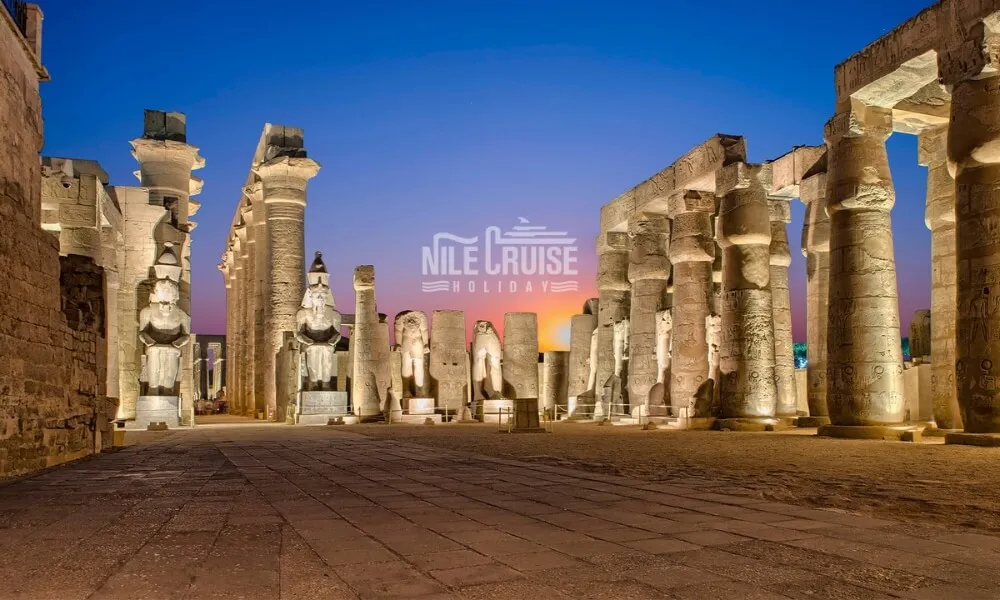
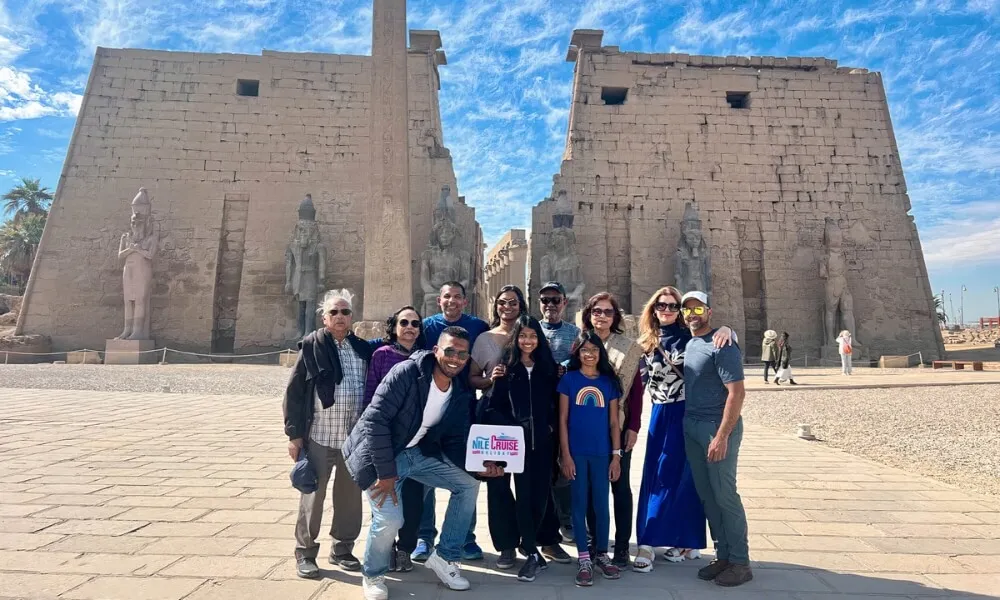
Raised primarily by Amenhotep III and enlarged by Ramses II, Luxor Temple formed the ceremonial heart of ancient Thebes, dedicated to Amun, Mut, and Khonsu. Unlike funerary temples, it celebrated kingship itself: during the Opet Festival, statues of the gods processed along the Sphinx-lined Avenue from Karnak to renew divine power. Centuries layered new meanings here: Tutankhamun restored reliefs, Alexander the Great is depicted as pharaoh, Romans converted a court into a legion chapel, and later a Coptic church rose within the precinct. Today, the active Abu Haggag Mosque crowns the temple’s medieval village remains, symbolizing uninterrupted worship. Colossal statues, towering papyrus-bud columns, and once-paired obelisks (one now in Paris) reveal New Kingdom ambition and theology.
Top Luxor Temple Travel Guide 2026/2027
Luxor Temple is a living chronicle of royal power, sacred festivals, and layered faith right in the heart of modern Luxor. This travel guide from Nile Cruise Holiday covers its story, how to get there, what to do, when to go, and the essential facts every traveler should know.