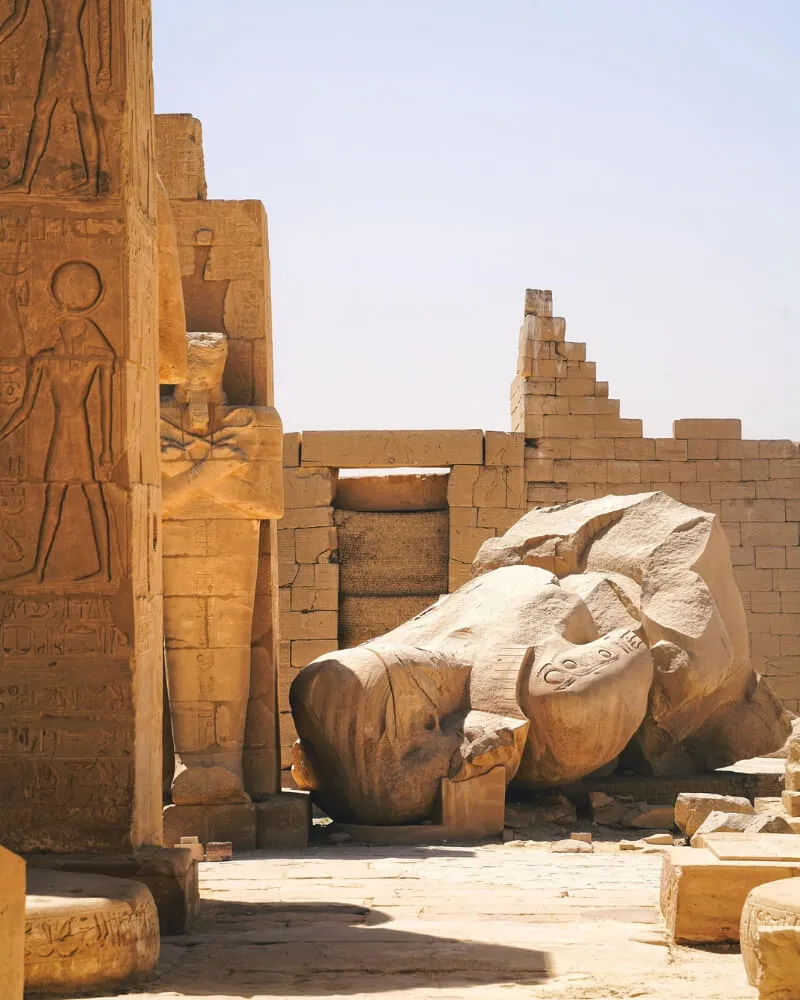
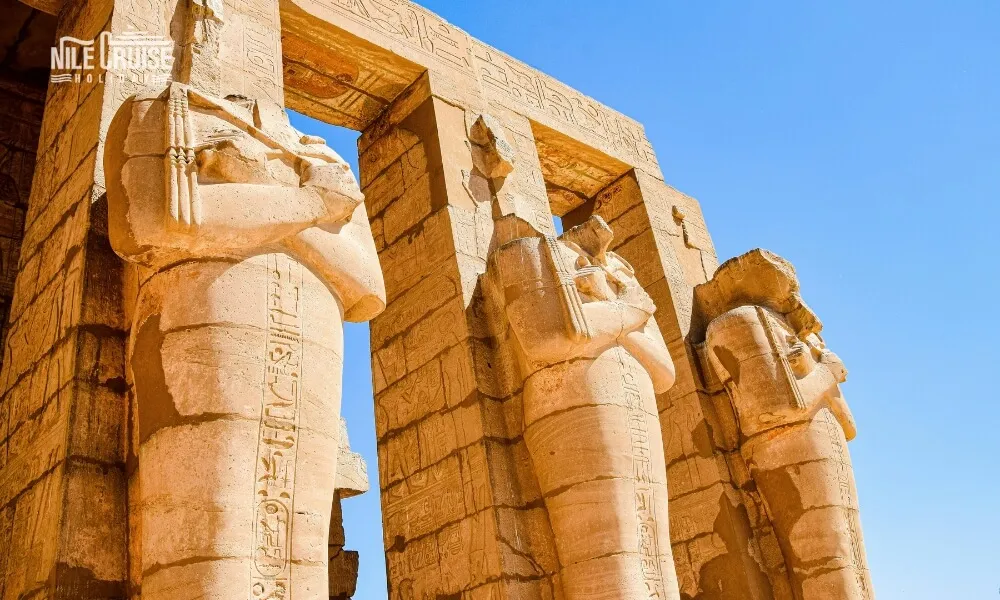
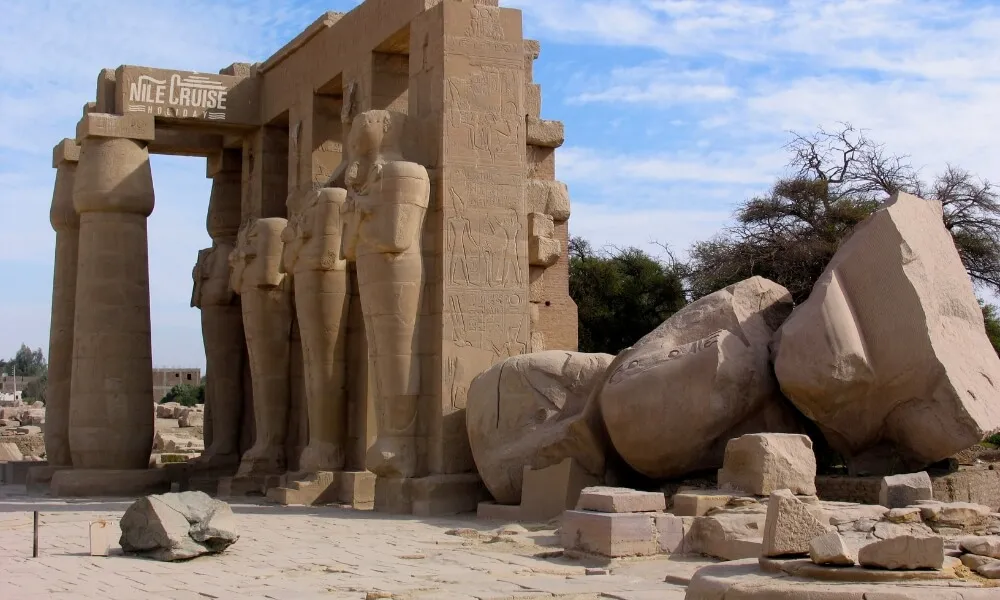
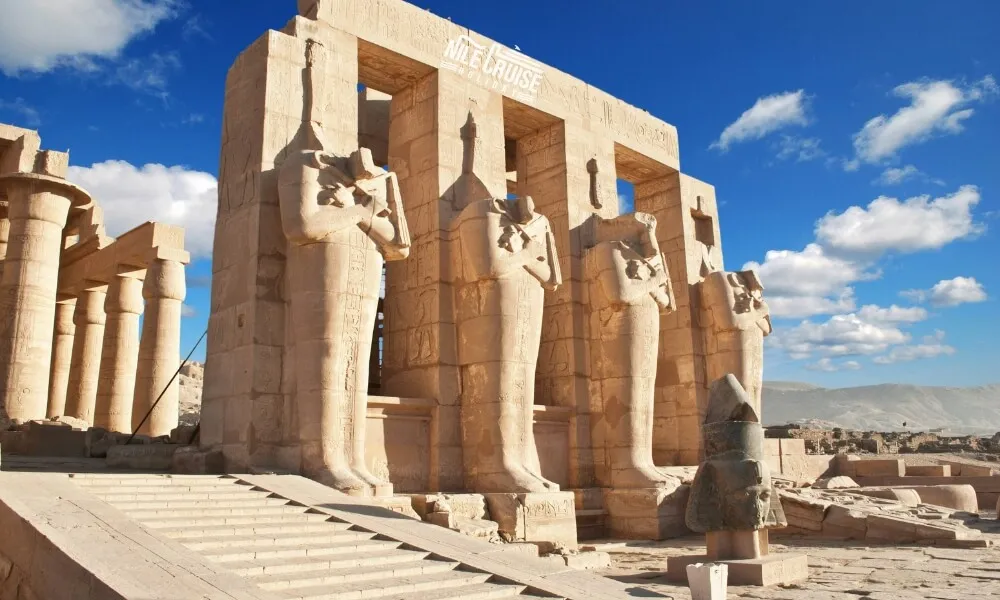
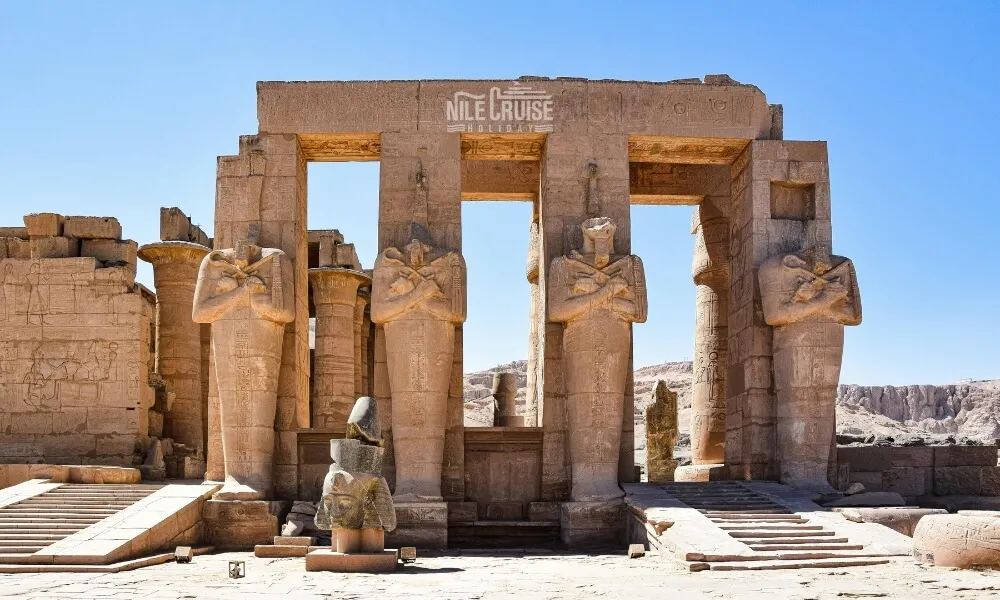
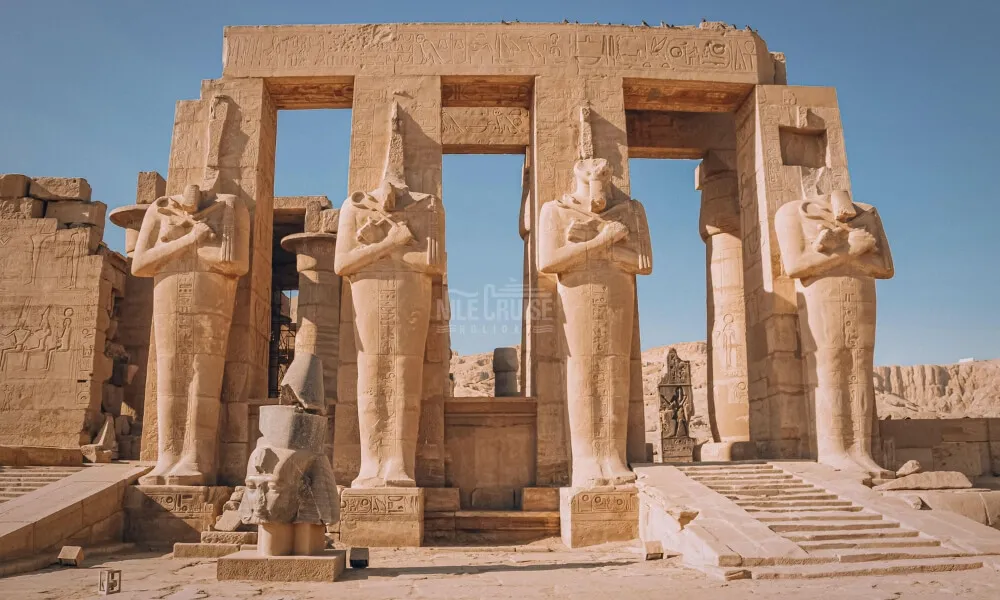
Commissioned by Ramesses II in the 13th century BCE, the Ramesseum functioned as his mortuary temple and a center for ritual and administration within the Theban Necropolis. Towering pylons once carried vivid scenes from the Battle of Kadesh, and a colossal red granite statue of the king dominated the first court. Hypostyle halls with papyrus columns led to storerooms that supported the daily cult. Known to Greek and Roman visitors as Ozymandias, the site later inspired Shelley’s poem. Despite quarrying in later eras, the fallen colossus, crisp hieroglyphs, and the temple’s axial plan still showcase New Kingdom engineering and Ramesses II’s vision.
Complete Ramesseum Travel Guide 2026/2027
Step into the Ramesseum, Ramesses II’s majestic mortuary temple on Luxor’s West Bank. Discover epic battle reliefs, toppled colossi, serene courts, and storerooms that once powered a sacred economy. This guide covers history, location, access, top things to do, timing tips, and essential facts.