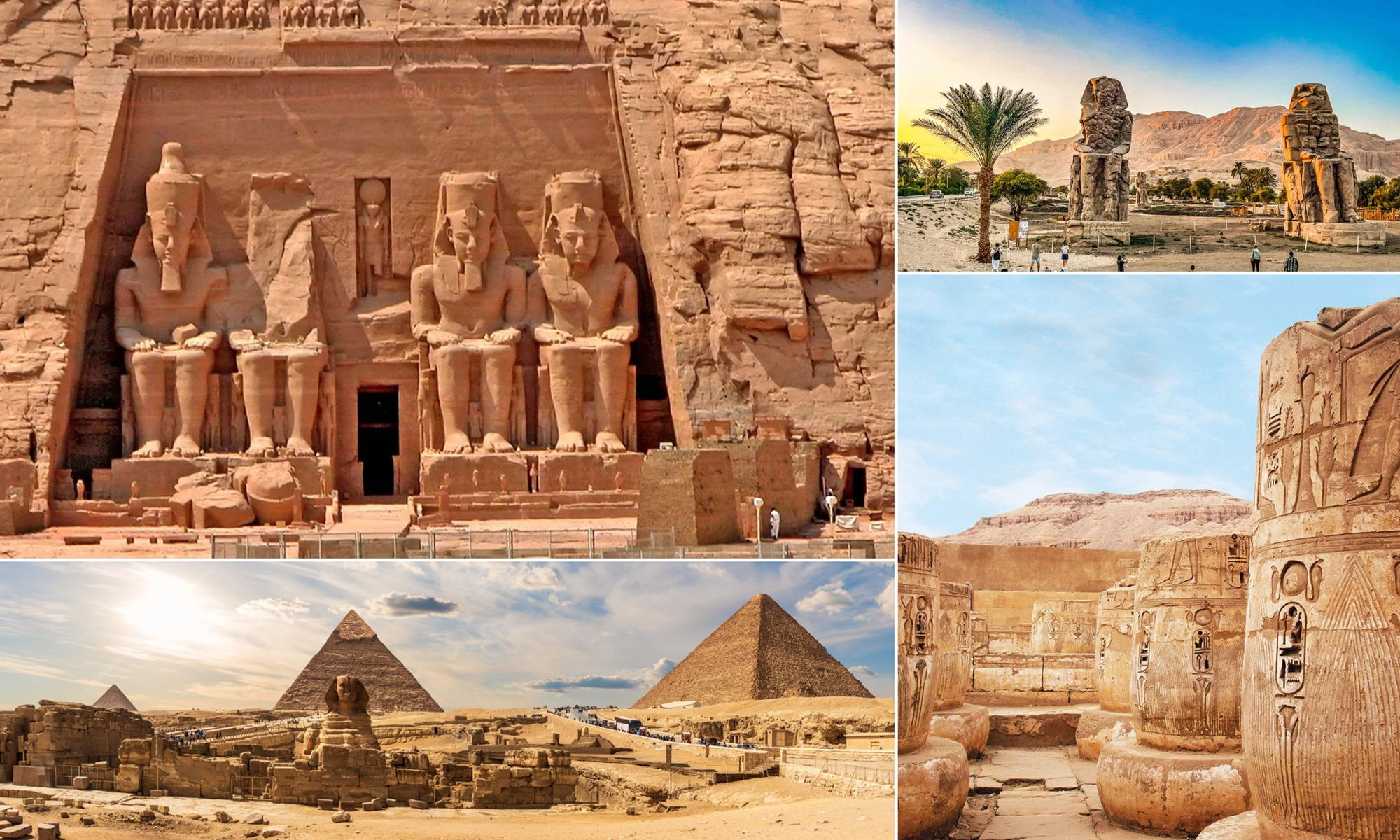
Ancient Egyptian ruins are the embodiment of the history and cultures of the entire civilization that line the Nile for more than a thousand kilometers, from the pyramids on the edge of Cairo to the colossal statues of Abu Simbel near the southern border.
They span over three thousand years of building, from the first stone pyramid around 2670 BC to temples still being decorated under Roman emperors in the 3rd century AD. Few places on earth let you walk through so much of humanity's story in a single journey, with every bend of the river revealing another temple, tomb or forgotten city.
This guide explains how ancient Egypt architecture developed, maps the main ruins from north to south, describes the sites most worth seeing, and shares ancient Egyptian ruins facts for adults and kids, along with tips for visiting them on a Nile river cruise.
All the Main Ancient Egyptian Ruins, Cities and Artifacts

Ruins and Monuments
- Step Pyramid of Djoser (Saqqara)
- Bent Pyramid (Dahshur)
- Red Pyramid (Dahshur)
- Great Pyramid of Giza (Khufu)
- Pyramids of Khafre and Menkaure (Giza)
- Great Sphinx of Giza
- Saqqara necropolis and Old Kingdom tombs
- Karnak Temple and the Great Hypostyle Hall
- Luxor Temple
- Avenue of Sphinxes
- Valley of the Kings
- Tomb of Tutankhamun
- Temple of Hatshepsut (Deir el-Bahari)
- Medinet Habu (Temple of Ramesses III)
- Ramesseum
- Colossi of Memnon
- Temple of Hathor at Dendera
- Temple of Seti I at Abydos
- Edfu Temple (Temple of Horus)
- Kom Ombo Temple
- Temple of Khnum at Esna
- Temple of Philae (Temple of Isis)
- Unfinished Obelisk (Aswan)
- Abu Simbel temples (Great Temple of Ramesses II and Temple of Nefertari)
- Wadi es-Sebua temples
- Kalabsha Temple
- Amada Temple
- Pompey's Pillar (Alexandria)
- Serapeum (Alexandria)
- Malkata Palace (Luxor)
Ancient Cities and Places
- Memphis
- Thebes (modern Luxor)
- Tanis
- Heracleion
- Tell el-Amarna
- Abydos
- Dendera
- Giza
- Saqqara
- Dahshur
- Esna
- Edfu
- Kom Ombo
- Aswan
- Elephantine Island
- Agilkia Island
- Gebel el-Silsila quarries
- Alexandria
Artifacts and Architectural Features
- Rosetta Stone
- Abydos King List
- Mummified crocodiles (Kom Ombo Crocodile Museum)
- Kom Ombo carvings of medical instruments
- Dendera relief of Cleopatra VII and Caesarion
- Esna zodiac ceiling
- Medinet Habu reliefs of the Sea Peoples
- Fallen colossus of Ramesses II (Ramesseum, the "Ozymandias" statue)
- Four seated colossi of Ramesses II (Abu Simbel)
- Philae's last dated hieroglyphic inscription (AD 394)
- Mastabas
- Pylons
- Hypostyle halls
- Obelisks
- Royal coffins found at Saqqara
Ancient Egypt Architecture History: How the Ruins Came to Be

From Mud Brick to the First Stone Pyramid
Early Egyptian kings were buried under mastabas, flat rectangular tombs of mud brick. Around 2670 BC, the architect Imhotep stacked six of these shapes in stone for King Djoser at Saqqara, creating the Step Pyramid, about 62 meters high. It is the oldest large stone building in Egypt.
The Age of True Pyramids
Builders learned fast. King Sneferu experimented at Dahshur, where the angle of the Bent Pyramid changes halfway up, before achieving smooth sides with the Red Pyramid. His son Khufu then raised the Great Pyramid of Giza around 2560 BC, originally about 146 meters tall and the tallest human-made structure on earth for around 3,800 years. Our guide to how the pyramids were built explains the theories.
Temples, Tombs and the New Kingdom
From about 1550 BC, the pharaohs of the New Kingdom ruled from Thebes, modern Luxor. They stopped building pyramids, which attracted robbers, and cut hidden tombs into the cliffs of the Valley of the Kings instead. Their energy went into vast stone temples with a set plan: a massive gateway called a pylon, an open courtyard, a hypostyle hall forest of columns, and a dark inner sanctuary for the god's statue. Obelisks and avenues of sphinxes completed the scene.
Greek and Roman Pharaohs
After Alexander the Great conquered Egypt in 332 BC, the Greek Ptolemaic kings and later the Roman emperors kept building temples in the traditional style to win local support. That is why the best-preserved temples you see today, such as Edfu, Dendera, Kom Ombo, Esna and Philae, are among the youngest.
Stone From the Nile Valley
Egyptian builders used what the river offered: limestone around Cairo, sandstone from quarries such as Gebel el-Silsila for the temples of Upper Egypt, and hard red granite from Aswan for obelisks, statues and sarcophagi. Blocks were floated down the Nile on barges, which is why almost every major ruin stands close to the river.
Egypt Ruins Map: The Main Ancient Sites From North to South

The easiest way to picture an ancient Egyptian sites map is to follow the Nile upstream, from north to south. Distances are approximate road distances.
| Region | Main ruins | Location |
|---|---|---|
| Alexandria and the Delta | Pompey's Pillar, the Serapeum, Tanis | Mediterranean coast and Delta |
| Cairo and Giza | Giza Pyramids, Great Sphinx, Saqqara, Memphis, Dahshur | Around Cairo |
| Middle and Upper Egypt | Tell el-Amarna, Abydos | About 300 to 500 km south of Cairo |
| Qena | Dendera | About 60 km north of Luxor |
| Luxor | Karnak, Luxor Temple, Valley of the Kings, Hatshepsut Temple, Medinet Habu | About 650 km south of Cairo |
| Between Luxor and Aswan | Esna, Edfu, Kom Ombo | Stops on a Nile cruise |
| Aswan | Philae, Unfinished Obelisk, Elephantine Island | About 210 km south of Luxor |
| Lake Nasser and Nubia | Kalabsha, Wadi es-Sebua, Amada, Abu Simbel | Abu Simbel is about 280 km south of Aswan |
Most of the great ruins sit between Luxor and Aswan, which is exactly the stretch a classic Luxor and Aswan Nile cruise covers.
The Best Ancient Egyptian Ruins to See
Giza Pyramids and the Great Sphinx
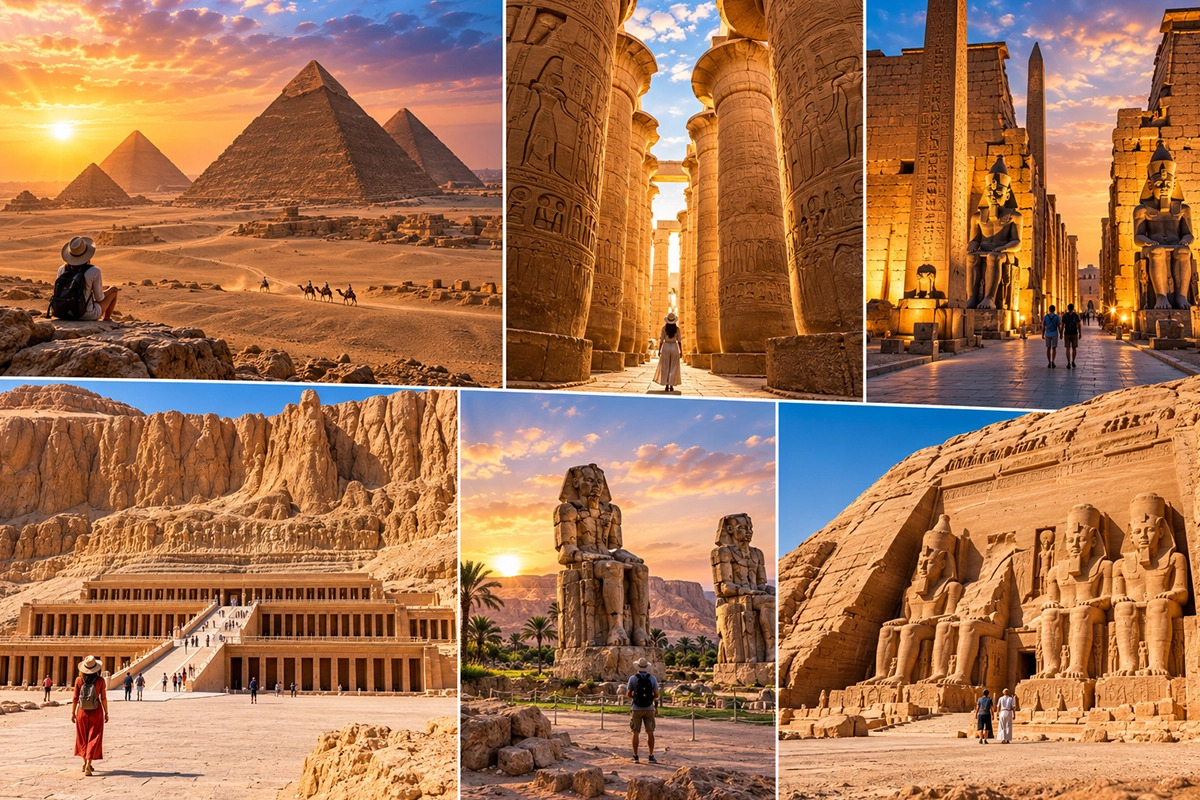
The Giza Pyramids Complex holds the pyramids of Khufu, Khafre and Menkaure, the only one of the Seven Wonders of the Ancient World still standing. The Great Sphinx, carved from the bedrock under Khafre around 2500 BC, is about 73 meters long and 20 meters high; our article on what happened to the Sphinx's nose solves its best-known mystery. See our things to do in Giza for more.
Saqqara and Memphis
South of Giza, Saqqara was the burial ground of Memphis, Egypt's first capital. Beyond Djoser's Step Pyramid, it has painted Old Kingdom tombs and continues to produce major discoveries, including dozens of sealed coffins found in recent years.
Karnak and Luxor Temple
Karnak Temple was enlarged by around 30 pharaohs over some 2,000 years and is one of the largest religious complexes ever built. Its Great Hypostyle Hall has 134 columns. Nearby, Luxor Temple, begun by Amenhotep III and expanded by Ramesses II, still has a medieval mosque built into it. The two are linked by the restored Avenue of Sphinxes, about 2.7 km long.
Valley of the Kings and the West Bank
The Valley of the Kings holds more than 60 tombs, including the tomb of Tutankhamun, found by Howard Carter in 1922. Nearby stand the terraced Temple of Hatshepsut, Ramesses III's Medinet Habu with its reliefs of the Sea Peoples, the Ramesseum, whose fallen colossus inspired Shelley's poem "Ozymandias", and the 18 meter Colossi of Memnon.
Dendera and Abydos
North of Luxor, the Temple of Hathor at Dendera keeps vivid blue ceilings and a relief of Cleopatra VII with her son Caesarion. Abydos, the cult center of Osiris, has the Temple of Seti I with its famous King List of pharaohs and some of Egypt's finest painted reliefs.
Edfu, Kom Ombo and Esna
Edfu Temple, built between 237 and 57 BC, is the best-preserved temple in Egypt, with a pylon about 36 meters tall. Kom Ombo is a double temple to Sobek and Horus, with carvings often described as early surgical instruments and a museum of mummified crocodiles. At Esna, the newly restored Temple of Khnum now shows its painted zodiac ceiling.
Philae and the Unfinished Obelisk
The island Temple of Philae, dedicated to Isis, was moved stone by stone to Agilkia Island between 1977 and 1980. It holds the last known dated hieroglyphic inscription, from AD 394. In Aswan's granite quarries, the Unfinished Obelisk cracked before it was lifted; finished, it would have stood about 42 meters high.
Abu Simbel
Abu Simbel is the grand finale. Ramesses II carved two temples into the rock in the 13th century BC, one for himself, fronted by four seated colossi about 20 meters high, and one for his queen, Nefertari. Between 1964 and 1968, a UNESCO campaign cut the temples into more than a thousand blocks and rebuilt them about 65 meters higher to save them from Lake Nasser. Twice a year, on about 22 February and 22 October, sunlight reaches the inner sanctuary; read about the Abu Simbel Sun Festival and visit the Abu Simbel temples page.
Hidden Ruins Worth the Detour
For travelers who have seen the classics, Egypt still has surprises: Tanis in the Delta, a former royal capital; Heracleion, a port city rediscovered on the seabed off Alexandria; Malkata, the palace city of Amenhotep III in Luxor; and the Nubian temples of Wadi es-Sebua and Kalabsha, best reached on a Lake Nasser cruise.
Ancient Egyptian Ruins Facts for Adults and Kids
Ancient Egyptian Ruins Facts
- Egypt has seven UNESCO World Heritage Sites, and three of them, Memphis and its necropolis, ancient Thebes, and the Nubian monuments from Abu Simbel to Philae, are filled with ancient ruins.
- The pyramids were built by paid, organized workforces who lived in a town beside Giza, not by slaves.
- Many temples were painted in bright colors; what looks like bare stone today was once red, blue, yellow and green.
- The Ptolemaic temples were built by Greek-speaking kings who had themselves carved in the dress of traditional pharaohs.
- Hieroglyphs could not be read for centuries until the Rosetta Stone helped scholars decode them in 1822.
Ancient Egyptian Ruins for Kids
Children love Egypt's ruins when they become stories. Try these facts on young travelers:
- The Great Pyramid was the tallest building in the world for about 3,800 years.
- Kom Ombo has a museum full of mummified crocodiles.
- Ancient Egyptians mummified cats, birds and even baboons.
- Tutankhamun became king at about nine years old.
- At Abu Simbel, the sun "visits" the king's statue inside the temple twice a year.
Our Nile cruise with kids guide has tips for keeping young explorers happy.
Visiting Egypt's Ruins on a Nile Cruise
Why a Cruise Works Best
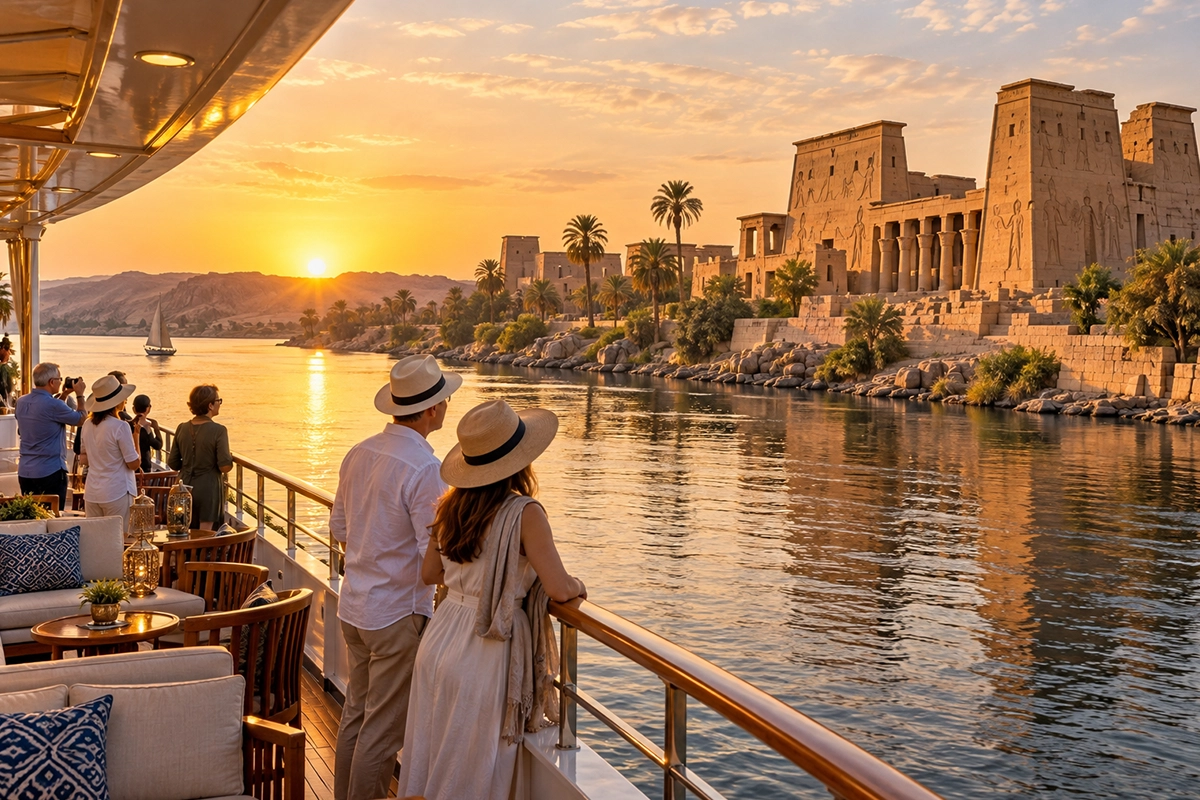
A cruise is the easiest way to see the greatest concentration of ruins, because the ship carries you between Luxor, Esna, Edfu, Kom Ombo and Aswan while you sleep. Add Cairo for the pyramids and a trip to Abu Simbel, and you have covered most of Egypt's ancient history in a week or two. Browse our Egypt tour packages with a Nile cruise and our guide to the best temples to see on a Nile cruise.
Tips for Exploring the Ruins
- Visit open sites early in the morning, especially from May to September.
- Travel between October and April for the most comfortable weather.
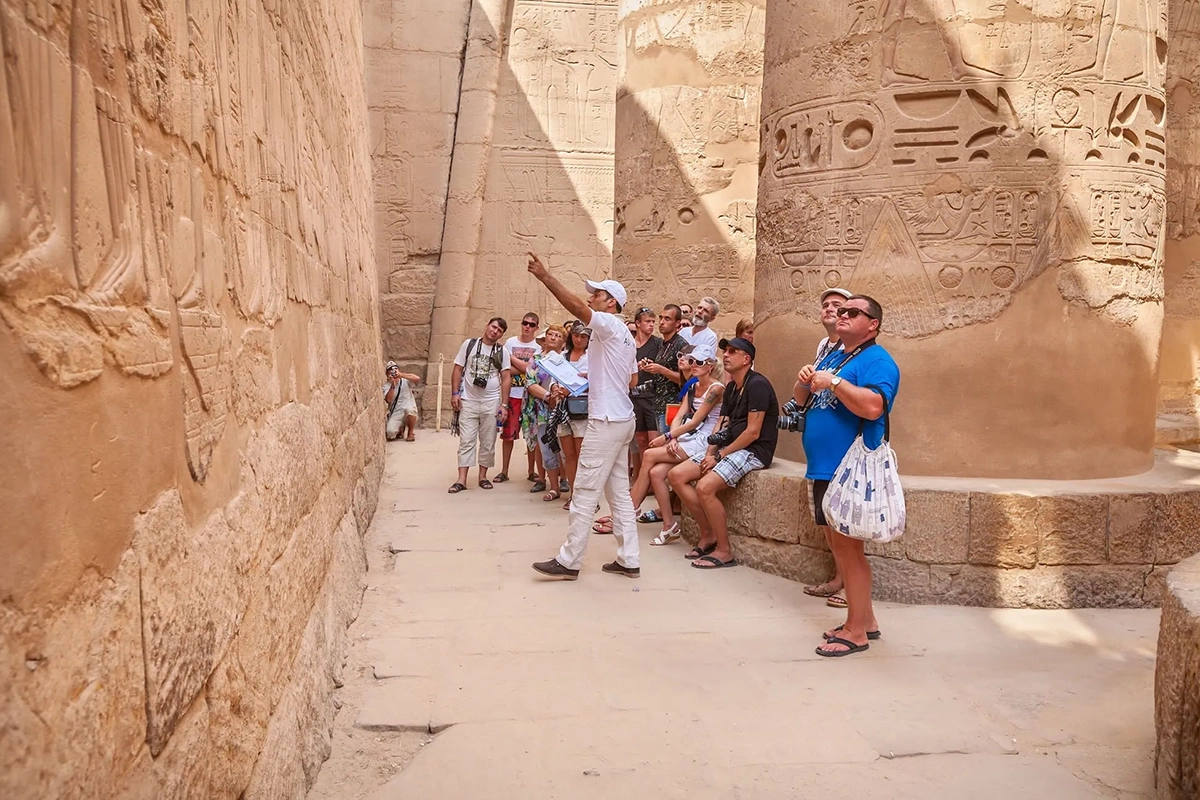
- Hire an Egyptologist guide; the inscriptions tell the real stories.
- Wear sturdy shoes, a hat and sunscreen, and carry water.
- Dress modestly for temples that are still near active mosques and churches.
Explore the Marvelous Treasures of this Glorious Civilization With Our Grand Cruises
Egypt's ancient ruins trace an unbroken story, from Djoser's first stone steps to the last hieroglyphs carved on Philae. Follow the Nile from Giza to Abu Simbel and you see that story unfold in the order it was built, pylon by pylon and tomb by tomb.
Their builders hoped these monuments would last forever, and after thousands of years, they very nearly have. When you are ready to see them, explore our Nile river cruises or contact us to plan your journey through ancient Egypt.