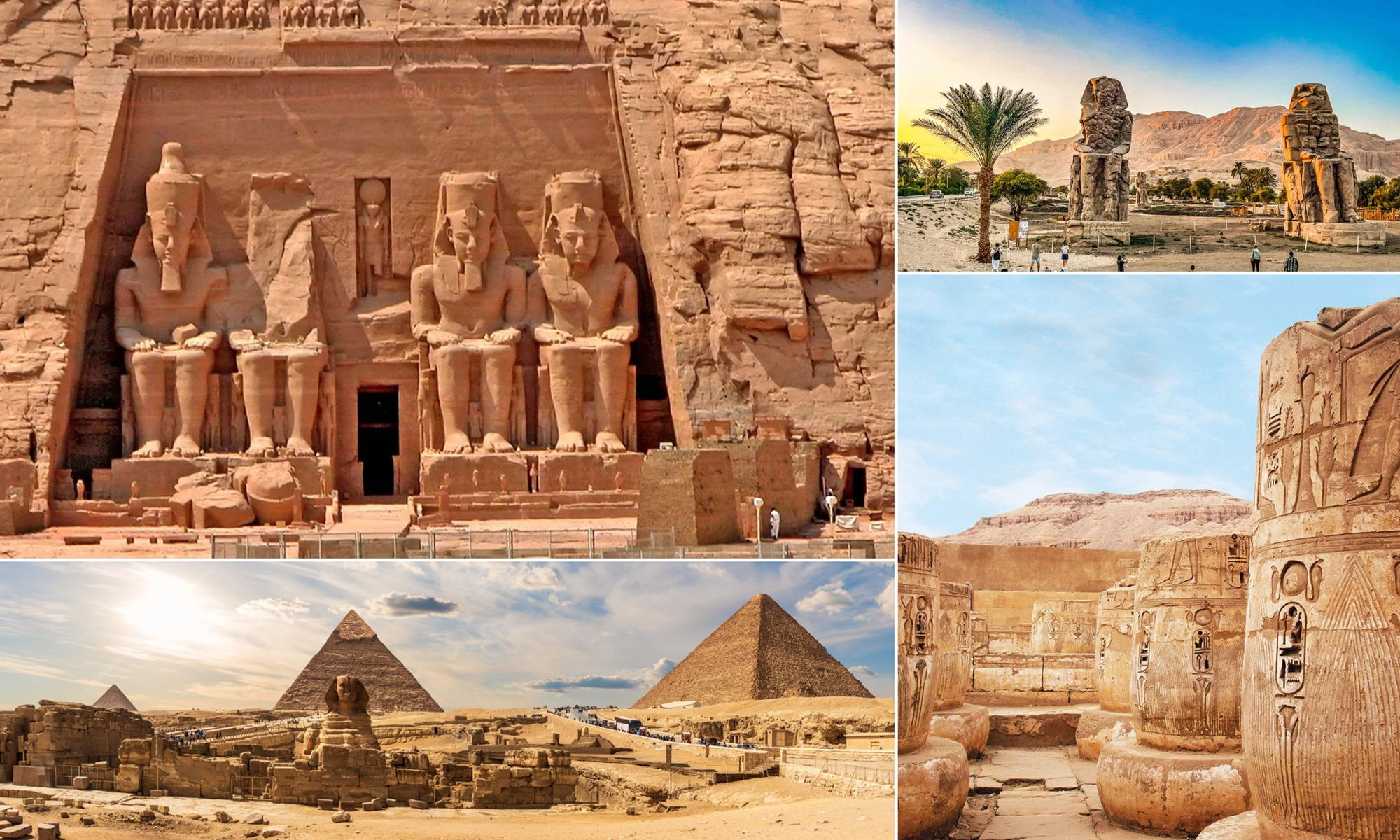
Djoser is best known as the king behind the Step Pyramid at Saqqara, but his importance goes beyond one monument. His reign marks the moment when Egyptian royal burial architecture moved decisively into monumental stone, creating a model that later kings would expand into the pyramid age.
This guide covers his reign, his link with Imhotep, his statue and tomb, the later famine legend, and where to see him today.
Who Was Djoser?
Djoser, whose Horus name was Netjerikhet, ruled during Egypt's early Third Dynasty in the 27th century BC. Exact dates vary between modern chronological systems.
He was not Egypt's first king, but his reign is usually placed at the start of the Old Kingdom.
Quick Facts About Djoser
| Question | Djoser |
|---|---|
| Dynasty | Third Dynasty |
| Period | Early Old Kingdom |
| Royal name | Netjerikhet / Netjerykhet |
| Best known for | Step Pyramid |
| Main site | Saqqara |
| Architect associated | Imhotep |
| Famous image | Seated limestone statue |
| Mummy | Not securely identified |
Djoser's Reign
Djoser appears to have been a major king of the early Third Dynasty. Few written records survive, so most of what is known comes from his monuments, seal impressions and short inscriptions.
They show a state whose administration could organize labor, materials, and specialists on a new scale. The capital region around Memphis, with the Saqqara plateau above it, formed the political and funerary landscape of his reign.
His family relationships are uncertain, and proposed links to other kings should not be read as a confirmed family tree.
Chronology
Modern chronological systems disagree on Djoser's exact reign dates, but most place him in the 27th century BC. Published ranges differ by decades, so any single pair of dates is an estimate within one system.
Netjerikhet and the Name Djoser
Netjerikhet, also written Netjerykhet, was the king's Horus name. It appears in inscriptions from his own time, including on the base of his famous statue. "Djoser" is the later familiar name, used in subsequent Egyptian tradition and by modern scholarship.
Djoser and the Step Pyramid
The Step Pyramid at Saqqara is generally regarded as Egypt's earliest pyramid and earliest large-scale royal pyramid complex. Many earlier royal and elite tombs used mastabas, flat-topped rectangular superstructures largely built of mudbrick. Djoser's monument began as a stone mastaba and was enlarged in several stages until it reached its final form of six stepped levels.
The pyramid was never a standalone building. It stood at the center of a huge walled funerary and ritual complex. Inside the enclosure were courts and dummy buildings, many in stone, linked to the Sed Festival, the royal jubilee associated with renewing a king's power. A separate structure known as the South Tomb stood within the enclosure, and a large system of underground passages and chambers lay beneath the site.
The complex represents one of the earliest and most ambitious uses of large-scale stone architecture in Egypt. Stone had been used in Egyptian buildings before, but never on this scale for a royal monument.
That is why the Step Pyramid matters for Djoser's legacy. It turned the king's tomb into a permanent stone landscape and set the direction later rulers would follow. Our guide on how the pyramids were built covers construction methods.
Djoser and Imhotep
Imhotep served Djoser as a high-ranking official, and his name and titles appear on a statue base found at Saqqara. Later Egyptian tradition strongly associated him with the Step Pyramid complex, and modern summaries often credit him as its architect.
Imhotep became inseparable from Djoser's architectural legacy, although the surviving evidence does not allow every design decision in the Step Pyramid complex to be assigned to him personally. Our article on Imhotep covers his own life and later reputation.
Djoser's Achievements

Djoser's main achievements are architectural and royal rather than military. Claims that he dramatically expanded Egypt's borders are not well supported.
What he left was a new model for royal burial:
- A tomb built in monumental stone rather than mainly mudbrick
- A pyramid shape that rose in stages above the burial
- A large enclosure combining tomb, ritual courts and jubilee architecture
Later kings developed this model further. Within a few generations, builders at Dahshur were experimenting with smooth-sided pyramids, including the Bent Pyramid, before the great pyramids at Giza. Djoser did not build those monuments, but his reign marks the starting point of that sequence.
Djoser's Statue, Tomb & Death
Djoser's Statue
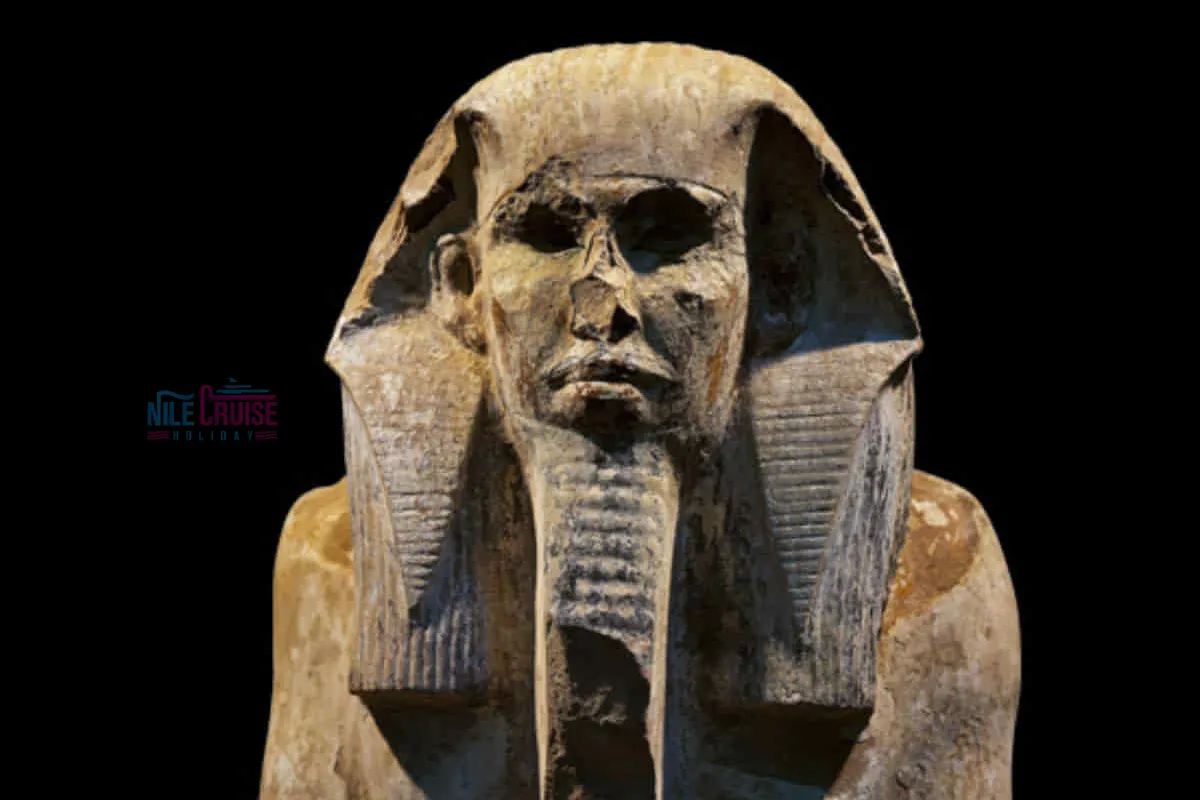
The best-known image of Djoser is a seated, life-size limestone statue found in the serdab, a closed statue chamber beside the Step Pyramid. It is among the earliest known life-size royal statues from Egypt.
The king sits on a throne, wrapped in a long garment, with a nemes headcloth over a heavy wig and a false beard. The statue was originally painted. Its eyes were once inlaid, and ancient robbers removed them. The pedestal carries his titles and the name Netjerikhet.
Like other Egyptian royal statues, it presents an idealized image of kingship rather than a modern portrait of Djoser's exact appearance.
Djoser's Tomb
Djoser's intended burial place lies beneath the Step Pyramid. A deep central shaft leads down to a burial chamber built of granite, surrounded by a complex system of passages and chambers.
Was Djoser's Mummy Found?
No securely identified mummy of Djoser is known. The burial area was robbed in antiquity, and fragments of human remains recovered from it have not been securely identified as his.
How Did Djoser Die?
No reliable surviving evidence records Djoser's cause of death. His age at death and his birth year are also unknown.
Djoser and the Famine Story
The famous seven-year famine story is preserved on the Famine Stela at Sehel Island, near Aswan, but the inscription was carved in the Ptolemaic Period, roughly two millennia after Djoser. It therefore cannot be treated as contemporary evidence for his reign.
In the story, Egypt suffers seven years of low Nile floods. Djoser consults Imhotep, and Khnum, the god of Elephantine linked with the flood, appears to him in a dream and promises the Nile flood will return. The king then grants revenues and support to Khnum's cult.
It shows how later Egyptians remembered Djoser, as a king of the distant past whose name could lend authority to a temple's claims. It does not prove the famine happened or support any biblical connection.
Where to See Djoser Today

Saqqara
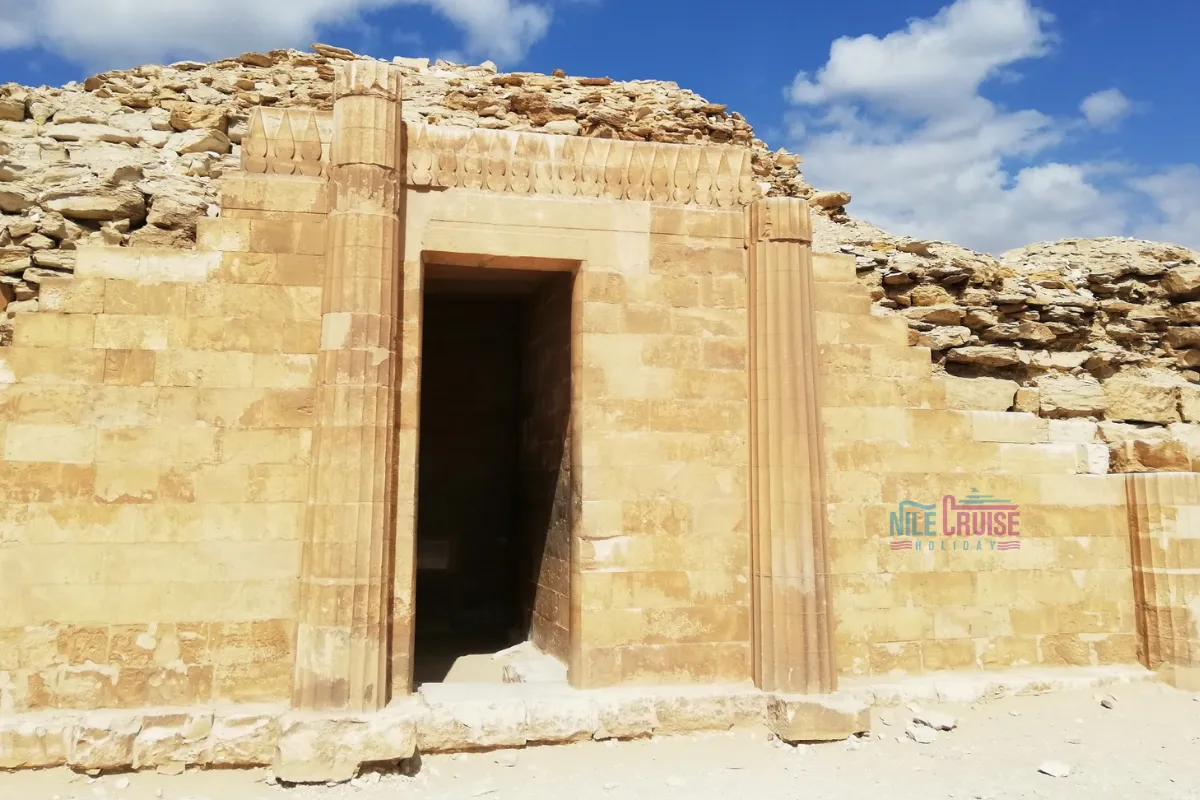
At Saqqara, the Step Pyramid complex is the clearest place to understand Djoser. Visitors pass through the colonnaded entrance into the great courtyard and can look through the serdab's openings at a replica of the seated statue.
Saqqara is far more than Djoser's pyramid. It is a vast necropolis used for thousands of years and one of the key ancient Egyptian ruins near Cairo.
Egyptian Museum in Cairo
The original seated statue is listed at the Egyptian Museum in Cairo, in Tahrir Square. Displays can change.
Saqqara shows Djoser's monument, and the Egyptian Museum preserves the original statue that once watched from the serdab.
Nile Cruise Holiday's Role
Nile Cruise Holiday can organize a Saqqara visit around the Step Pyramid complex and connect it with Djoser's original statue in the Egyptian Museum, so travelers see both the king's monument and his best-known image.
Depending on the itinerary booked, NCH coordinates Cairo transfers, sequences Saqqara and Memphis with Dahshur or the Giza Pyramids, and arranges Egyptologist-guided visits. NCH helps travelers follow the development of Egyptian royal architecture as a continuous story rather than visiting each site in isolation.
A Cairo and Nile cruise tour can fit these visits around a cruise departure or arrival.
Travelers interested in Djoser can ask Nile Cruise Holiday to connect Saqqara with Cairo's museum collections and later pyramid sites within a tailor-made Egypt trip, following Egyptian royal architecture from its earliest monumental stages.