Once a year, in the flood season, the gods left Karnak. Priests lifted a gilded shrine onto their shoulders and carried it out through the gates, and the image of Amun began a journey south toward Luxor Temple. This was the Opet Festival, the great annual celebration of ancient Thebes, and for several weeks it pulled the whole city into its orbit.
Crowds lined the route. Drummers set the pace, singers chanted, and boats strained against the current as soldiers and townspeople hauled them upstream by rope. At the end of the journey, the king met the god inside Luxor Temple, and something essential about kingship and the cosmos was renewed for another year.
The festival matters to travelers today because it explains why the East Bank of Luxor looks the way it does. Karnak, Luxor Temple and the long road between them were not three separate monuments. They were stages of one ritual journey. This guide covers what the festival was, why it mattered, how the procession travelled, what the Luxor Temple reliefs show, and where you can still trace its route.
What Was the Opet Festival?
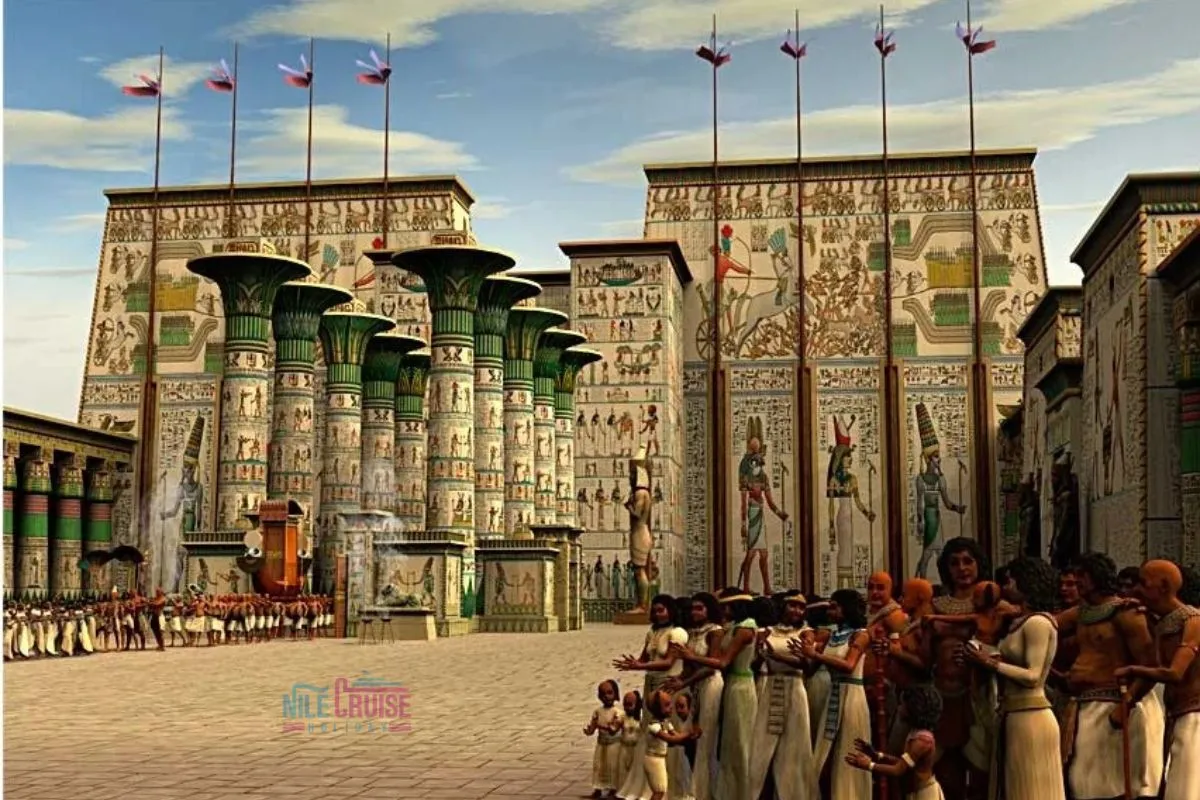
The Opet Festival, known to the Egyptians as the Beautiful Festival of Opet, was an annual religious celebration in Thebes, modern Luxor. Its heart was a procession that carried the image of Amun of Karnak, together with his consort Mut and their son Khonsu, from Karnak to Luxor Temple and back again.
The name comes from the temples themselves. Karnak was called Ipet-sut, often translated as "the most select of places," and Luxor Temple was Ipet-resyt, "the southern Opet." The festival linked the two.
| Quick Facts | Opet Festival |
|---|---|
| Location | Thebes (modern Luxor), East Bank of the Nile |
| Main temples | Karnak and Luxor Temple |
| Main gods | Amun, Mut and Khonsu (the Theban Triad) |
| Central event | The procession of the gods' barques between Karnak and Luxor Temple |
| Core theme | Renewal of Amun and of the king's right to rule |
| Main surviving evidence | Luxor Temple Colonnade reliefs |
The festival took place in the second month of Akhet, the inundation season, when the Nile was high, and the fields lay under water. It is first clearly attested under Hatshepsut in the early 18th Dynasty, and it remained a fixture of Theban life for well over a thousand years.
Why Was the Opet Festival Important?
At its simplest, the Opet Festival was about renewal. Egyptologists generally read it as a ritual in which Amun of Karnak visited the form of Amun who lived at Luxor Temple, and in that meeting the god's creative power was refreshed.
The king was bound into this from the start. Many scholars interpret the festival as a renewal of the royal ka, the life force passed from ruler to ruler, which tied each king to Amun and to every legitimate king before him. Inside Luxor Temple, the king's connection with the god was reaffirmed in front of priests and, in the outer stages, in front of the city.
This did not mean the king was crowned again every year, and nobody believed he was literally reborn. The festival restated his legitimacy. In a state where kingship and the order of the world were thought to depend on each other, that restatement mattered a great deal.
There was a public side too. For ordinary Thebans, the procession was one of the few times the god's shrine came out of the temple's closed interior. People could see it pass, receive food and drink from the offerings, and in some periods put questions to the god as the barque went by.
How Did the Opet Procession Travel from Karnak to Luxor Temple?
The procession is the part of the festival best preserved in stone, and it was never fixed. Its route and its means of travel changed across the New Kingdom.
The Procession Leaves Karnak
The gods travelled in barques, portable shrines shaped like boats and carried on poles by teams of priests. A barque was not an ordinary vessel. It was a model boat fitted with a closed cabin that held the cult image, so the god stayed hidden even while moving through crowds.
Amun's barque left Karnak with those of Mut and Khonsu, and from the later 18th Dynasty the king's own barque joined them. Incense burned ahead of the shrines and priests chanted as they walked.
The Route Through Thebes
The earliest detailed evidence, on Hatshepsut's Red Chapel at Karnak, shows Amun's barque carried south by land. Along the way it rested at six small barque stations, where priests could set down the shrine and make offerings. The return to Karnak in those scenes was by river.
The overland road was later rebuilt on a grander scale. The monumental processional way lined with sphinxes that visitors see today largely dates from the reign of Nectanebo I in the 30th Dynasty, long after the reliefs described below. The Avenue of Sphinxes in Luxor is the clearest physical trace of that later stage of the route.
Arrival at Luxor Temple
At Luxor Temple the barques passed through the courts into the inner rooms. Here, away from public view, the central rites took place, with the king, the high priests and the god.
What happened in those inner rooms is only partly recorded. The reliefs and inscriptions suggest offerings, hymns and the ceremonies that linked the king to Amun. Beyond that, scholars reconstruct the details with caution.
Return to Karnak
After the rites the gods went home. In the Luxor Temple Colonnade, the west wall shows the journey south from Karnak, and the east wall shows the return north. Read together, the two walls form one continuous story that starts and ends at Karnak.
What Happened During the Opet Festival?
Sound filled the festival. The reliefs show singers and musicians walking with the barques, women shaking the sistrum, a rattle linked with the goddess Hathor, and others carrying the menat necklace, which was shaken as a percussion instrument in ritual. Drummers kept time, and lines of people clapped in rhythm.
Dancers performed along the way. Some scenes show acrobatic dancers bending backward, and others show soldiers performing, including Nubian men in a leaping military dance. On the riverbank, troops and townspeople hauled the boats upstream on long tow ropes.
Offerings were everywhere. Tables were heaped with bread, meat, fowl, fruit, flowers, and jars of drink, and animals were brought for sacrifice. Priests read the ritual texts and burned incense, and the king took part in offering scenes at key points.
Much of the food was redistributed after it had been offered, so the festival was also one of the year's great feasts.
What Do the Luxor Temple Opet Reliefs Show?

The best record of the festival is in the Colonnade Hall of Luxor Temple, the long avenue of fourteen tall papyrus columns that leads into the temple from the north. In the late afternoon, light slides along its walls and picks out the carved boats.
Amenhotep III built and began the Colonnade. The Opet reliefs on its walls belong mainly to the reign of Tutankhamun, whose name was later carved over by Horemheb. Further work followed, including carving and restoration under Seti I. Tutankhamun did not invent the festival, which was already old by his time, but his reliefs are its fullest picture.
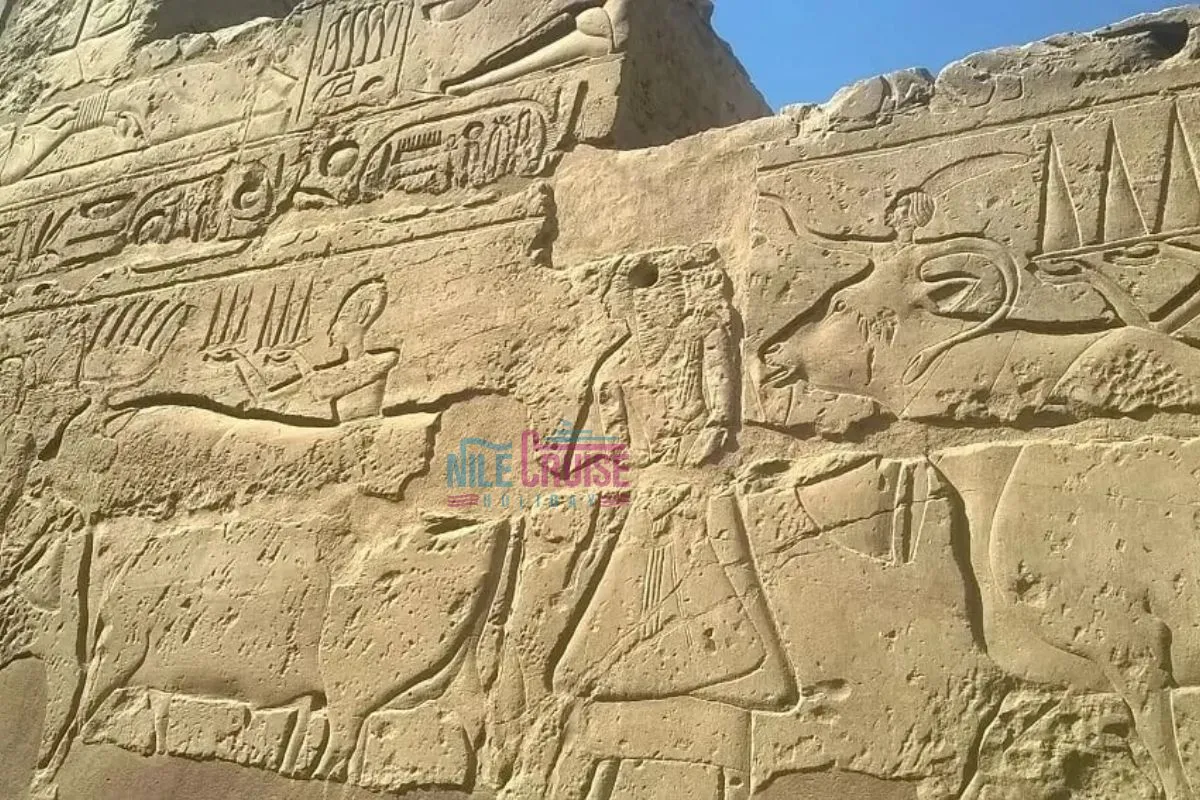
The west wall follows the procession south. Barques leave Karnak, the gods are loaded onto river boats, and the great barge of Amun, called Userhat, is towed upstream. The east wall shows the journey back. These were the first scenes to show the trip made by river in both directions, and two empty royal chariots in the scenes hint at the land route as well.
Around the boats, the walls fill with life. Musicians, dancers, soldiers, offering bearers and priests crowd the registers. The king appears making offerings to the Theban gods. Each scene leads into the next, so the hall reads like a long illustrated narrative. Visitors who walk the length of one wall and back down the other are, in a quiet way, following the procession.
Some of the reliefs are worn, and the upper registers can be hard to make out. A guide who knows the sequence makes a real difference here, pointing out the barques, the tow ropes and the drummers before they disappear into the general texture of the stone.
How Did the Opet Festival Change Over Time?
The festival grew as Thebes, and the temple of Amun grew. Under Hatshepsut, the evidence shows Amun's barque alone and a land journey south. By Tutankhamun's reign, Mut, Khonsu and the king's barque had joined the procession and the river had become the main route both ways.
The ritual setting also expanded. Successive kings added to Luxor Temple, including Ramesses II, who built a new forecourt and pylon. Much later, in the 30th Dynasty, Nectanebo I gave the road between the temples its monumental sphinx-lined form. The festival continued in some form into the Ptolemaic period.
How Long Did the Opet Festival Last?
There is no single answer, because the length changed with the reign. Under Thutmose III the festival lasted about 11 days. At the start of Ramesses III's reign, it had grown to about 24 days, according to the festival calendar at Medinet Habu, and it may have reached 27 days later in his reign. Any duration quoted without a reign attached should be read with caution.
Where Can Travelers See the Opet Festival Today?
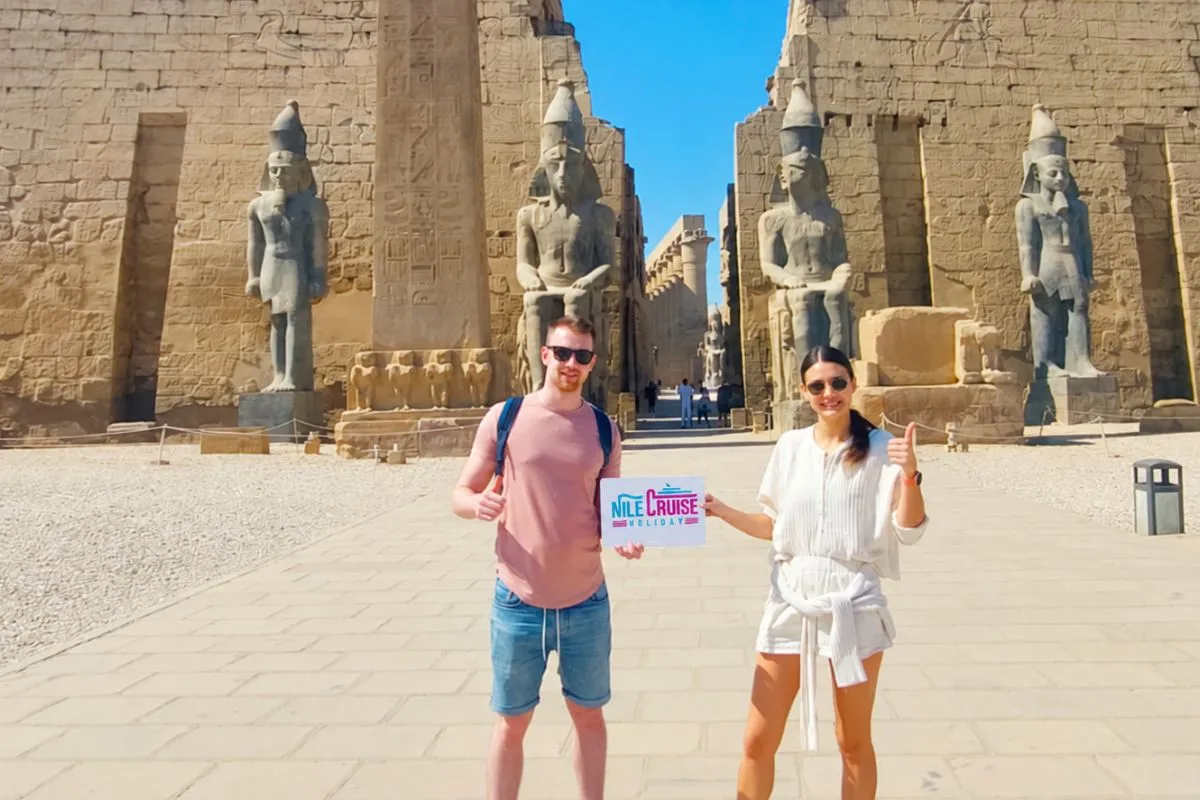
The good news for visitors is that the festival's landscape survives. All three key places sit on the East Bank of Luxor, and they can be visited in the order the gods used them.
Karnak Temple
The journey begins at Karnak Temple, the vast temple complex of Amun. Hatshepsut's Red Chapel, reassembled from its blocks, stands in Karnak's Open Air Museum, and its reliefs show the earliest known Opet procession.
Avenue of Sphinxes
The road south runs for roughly 2.7 kilometers between the two temples. Its sphinx-lined form is a later monument than the Tutankhamun reliefs, but it follows the line of the processional route and makes the connection between Karnak and Luxor Temple easy to picture on the ground.
Luxor Temple
At Luxor Temple, the Colonnade Hall holds the Opet reliefs. The temple sits close to the river, which helps explain the boat scenes on its walls. It ranks among the best temples to see on a Nile cruise for exactly this kind of layered history.
How Nile Cruise Holiday Fits In
Most visitors see Karnak and Luxor Temple on separate parts of a busy day, which makes the connection between them easy to miss. Nile Cruise Holiday can connect Karnak, the Avenue of Sphinxes and Luxor Temple as one interpreted ritual journey rather than three disconnected sightseeing stops.
On a Luxor and Aswan Nile cruise, the East Bank is usually covered on the first or last day. Nile Cruise Holiday times the visit around the sailing schedule and arranges a private driver and a local Egyptologist guide who can read the reliefs in sequence, with no commission shopping stops added to the day.
Travelers especially interested in the Opet Festival can ask Nile Cruise Holiday to arrange Luxor's East Bank around the ancient processional sequence, starting at Karnak, following the road south and ending in the Colonnade Hall. A tailor-made Egypt trip can give that day more room, so the route the gods once travelled is not squeezed between other stops.