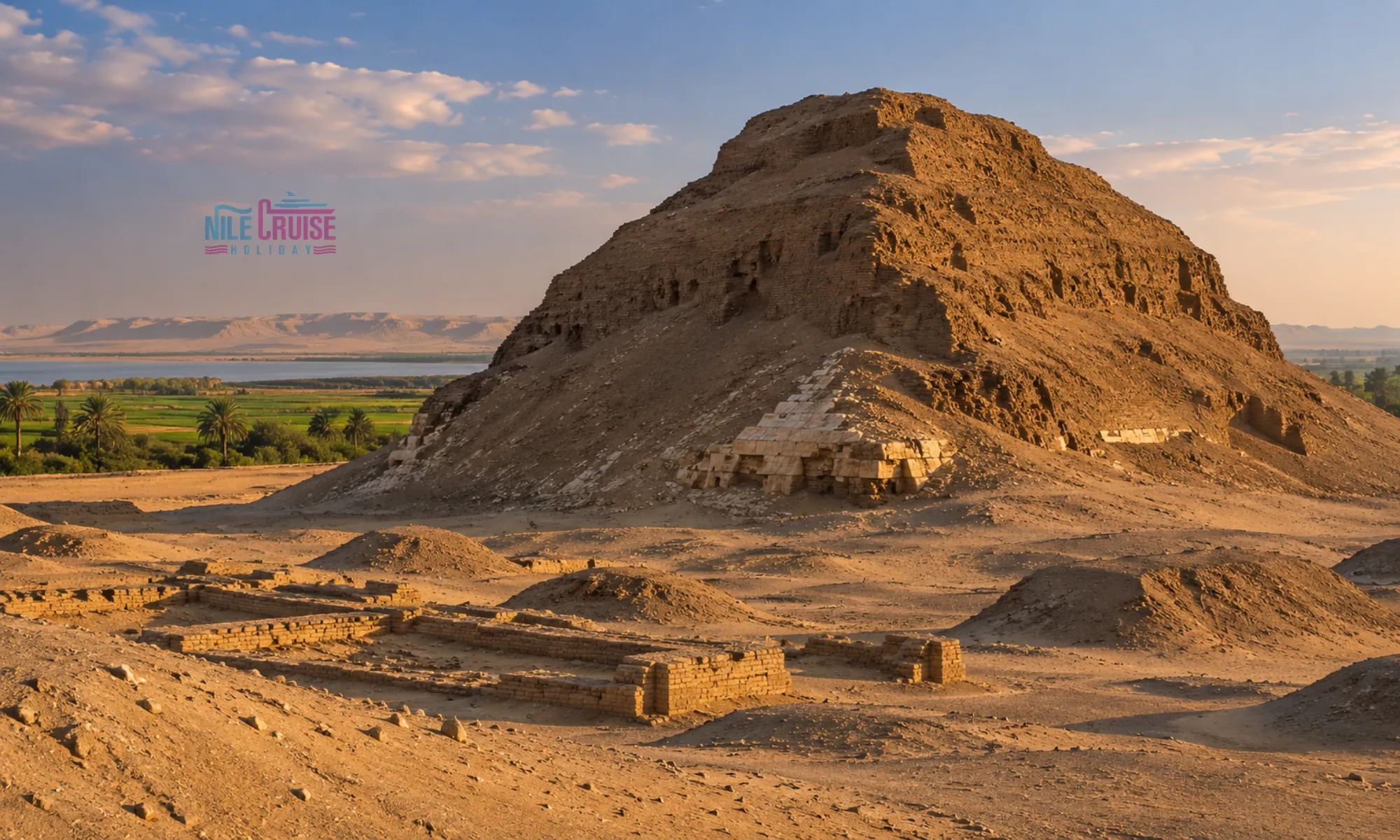

At the edge of the cultivation near the Fayum, a weathered brown mound rises above the desert. It looks nothing like the smooth stone pyramids of Giza, yet the Pyramid of Senusret II at El Lahun tells a story Giza cannot.
El Lahun shows how Middle Kingdom kings rethought the pyramid tradition, changing the materials, moving the route into the royal tomb, and surrounding the monument with a cemetery and planned town that preserve an unusually detailed picture of royal life.
What Is the Pyramid of Senusret II?
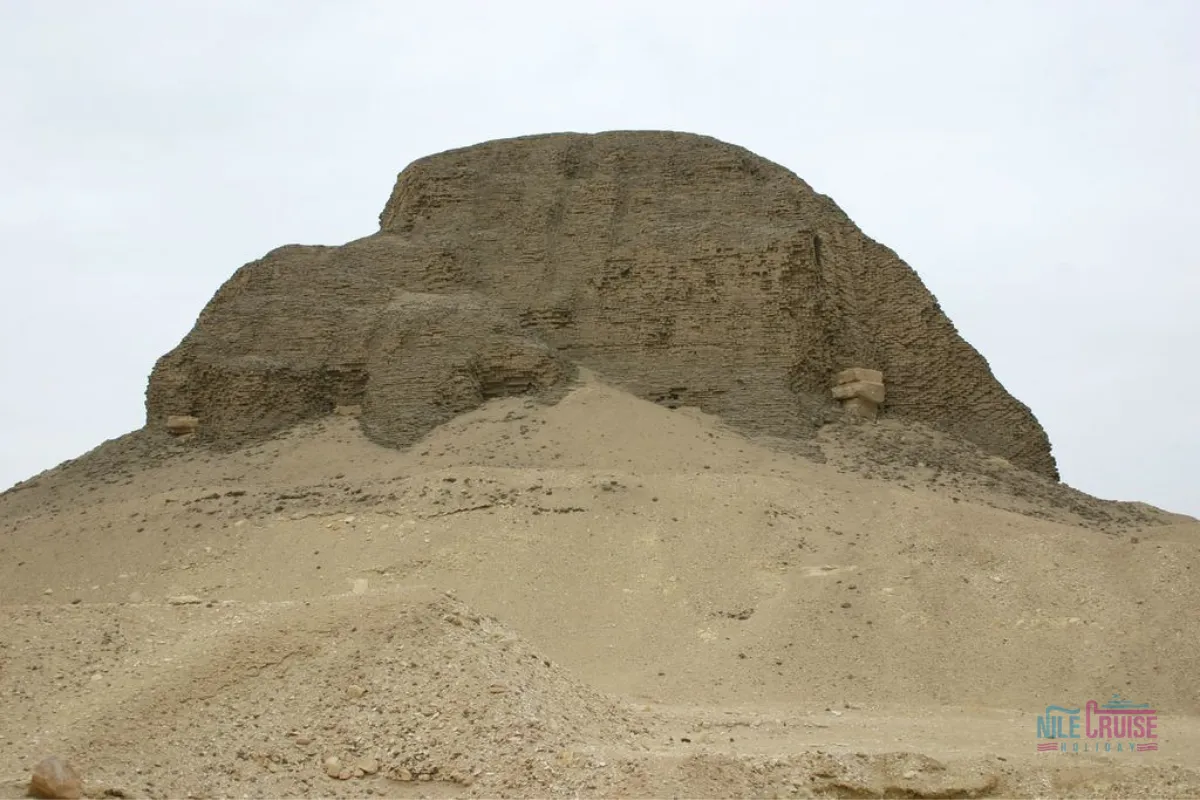
The Pyramid of Senusret II was the royal tomb complex of a Twelfth Dynasty king who ruled in the early 19th century BC. Exact reign dates vary between chronological systems. The king's name also appears as Senwosret II or Sesostris II.
The pyramid stands at El Lahun, near the entrance to the Fayum, roughly 100 kilometers south of Cairo. It was the center of a larger funerary landscape that included a temple, royal and elite tombs, and a town.
Quick Facts
| Question | Answer |
|---|---|
| King | Senusret II |
| Dynasty | Twelfth Dynasty |
| Period | Middle Kingdom |
| Location | El Lahun, Fayum |
| Main material | Mudbrick over limestone foundation |
| Original casing | Fine limestone |
| Burial access | Southern/southeastern approach |
| Archaeologist associated | Flinders Petrie |
Why El Lahun?
Senusret II moved royal pyramid building away from Dahshur, where his immediate predecessors had built. El Lahun sits where the Bahr Yusuf waterway enters the Fayum depression.
The choice fits the Twelfth Dynasty's growing interest in the Fayum, although the king's exact reasons for choosing the site are not fully documented. A cemetery and settlement then developed around the royal complex. The same dynasty's provincial rock tombs at Beni Hassan show Middle Kingdom power beyond the court.
How the Pyramid Was Built
The builders used a natural outcrop of yellow limestone to anchor the core, then added stone retaining walls running toward the corners, with cross walls between them filled with mudbrick.
The pyramid combined an elevated limestone foundation and core elements with a mudbrick superstructure and stone architectural components, originally covered by fine limestone casing. When complete, it would have looked like a smooth white pyramid.
Most of that casing is gone. An inscription found at the site indicates that stone was taken under Ramesses II, centuries later. Without its protective shell, the mudbrick eroded into the rounded mass visitors see today, which is far from its original appearance.
This method differs greatly from the Old Kingdom pyramids at Giza, which were built largely of stone. Our guide on how the pyramids were built covers construction methods in general.
The Hidden Entrance

Many earlier pyramids, from Djoser's Step Pyramid at Saqqara onward, placed the main entrance on or near the north side. Senusret II broke with that pattern.
The burial route was approached through shafts south or southeast of the pyramid rather than through the conventional northern access used in many earlier monuments. A narrow shaft appears to have served the burial itself, while a larger one further south was likely used to bring in the sarcophagus and building materials.
The unusual access may have made the burial route harder to identify, but its exact purpose cannot be proven. Protection from robbers is a reasonable interpretation, but religious or practical factors may also explain the change. It did not prevent the burial from being robbed.
Inside the Royal Tomb
Below ground, passages, shafts and chambers lead toward the royal burial. The route includes an antechamber and side rooms, and it winds rather than running straight to the burial chamber.
The burial chamber itself is lined and roofed with red granite. Inside stands a red granite sarcophagus, and an alabaster offering table bearing Senusret II's name was found in front of it. The substantial stone burial apartments contrast with the largely mudbrick pyramid superstructure above.
The tomb had been plundered in antiquity. Among the few remaining finds was a gold uraeus, the rearing cobra from a royal headdress, probably from a statue.
Was Senusret II Buried Here?
The pyramid was constructed as Senusret II's royal burial monument, but no securely identified mummy of the king provides a simple confirmation of his burial today. Some human bones were found in the tomb, but they cannot be confidently identified as his.
The World Around the Pyramid
Princess Sithathoriunet
South of the pyramid lie shaft tombs for royal women. Princess Sithathoriunet belonged to the royal family of this period and was buried in the cemetery beside Senusret II's pyramid. Some scholars suggest she was his daughter, and objects from her tomb suggest she lived into the reign of Amenemhat III.
Her tomb is a separate burial, not part of the king's own burial system. In 1914, excavators working for Petrie's school found a niche in it holding a cache of jewelry that had escaped the robbers. The finds include a gold pectoral inlaid with carnelian, lapis lazuli, and turquoise, bearing Senusret II's throne name. Pieces from the cache are now divided among museum collections, with major items at the Metropolitan Museum of Art in New York and others in Cairo.
The Lahun Pyramid Town
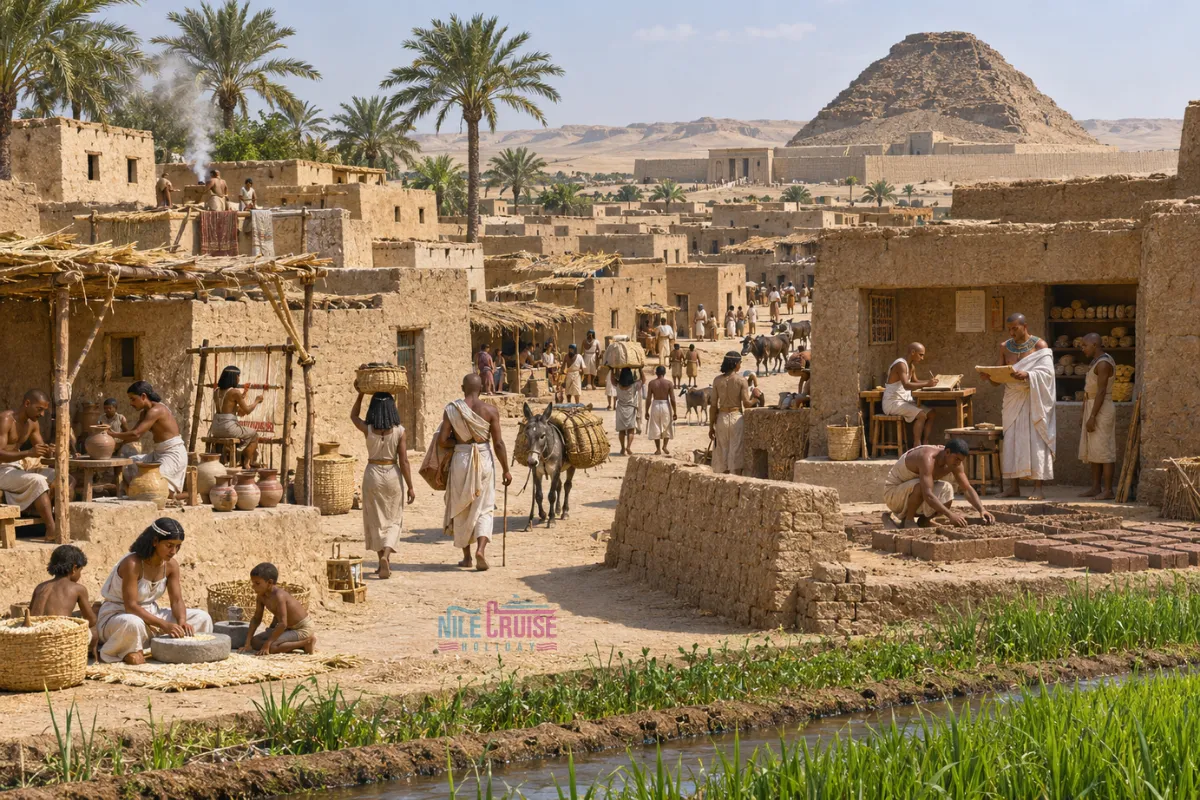
East of the pyramid lay a planned settlement known in older scholarship as Kahun and now generally called Lahun.
The town housed officials, priests, craftsmen, laborers and their families, and it served the king's mortuary cult and administration. Large houses stood alongside much smaller ones. Excavators recovered tools, household objects and papyri covering accounts, legal matters, medicine and mathematics.
The settlement shows that the pyramid was part of a functioning royal landscape rather than an isolated monument in the desert. It was not a slave camp or a temporary workers' village.
Petrie at Lahun
The pyramid was known long before modern excavation, and the German expedition under Karl Richard Lepsius surveyed it in the 1840s. Flinders Petrie worked at Lahun around 1889 to 1890 and spent months searching before locating the burial route.
Petrie did not discover the existence of the pyramid. His excavations helped reveal the internal arrangement, cemetery, and settlement to modern archaeology.
Visiting El Lahun Today
El Lahun belongs to the wider Fayum and Middle Egypt archaeological landscape. The eroded pyramid is clearly visible, and its value lies in context rather than polished appearance.
El Lahun can be included in a Fayum or Middle Egypt archaeological itinerary, but access to individual areas or pyramid interiors should be checked before travel. The interior was opened to visitors in 2019, but arrangements can change. It is one of the less-visited ancient Egyptian ruins within reach of Cairo.
Nile Cruise Holiday's Role
Nile Cruise Holiday can add El Lahun to a tailor-made Cairo, Fayum or Middle Egypt itinerary for travelers who want to move beyond the famous Old Kingdom pyramids and understand how royal pyramid building changed during the Middle Kingdom.
Depending on the itinerary booked, NCH coordinates private transport, Egyptologist-guided visits, timing, and the link with Cairo, and can sequence El Lahun with Saqqara, Giza, and Dahshur's Bent Pyramid where practical. NCH helps travelers connect Djoser, Dahshur, Giza and El Lahun as stages in the changing history of Egyptian pyramid building rather than viewing each monument in isolation.
El Lahun is not a standard stop on a Luxor to Aswan cruise, but it can be added before or after one of the Egypt tour packages with a Nile cruise.
Travelers interested in Egypt's lesser-visited pyramid sites can ask Nile Cruise Holiday to include El Lahun in a tailor-made Egypt trip through the Fayum or Middle Egypt, connecting the monument with the wider development of royal pyramid architecture.