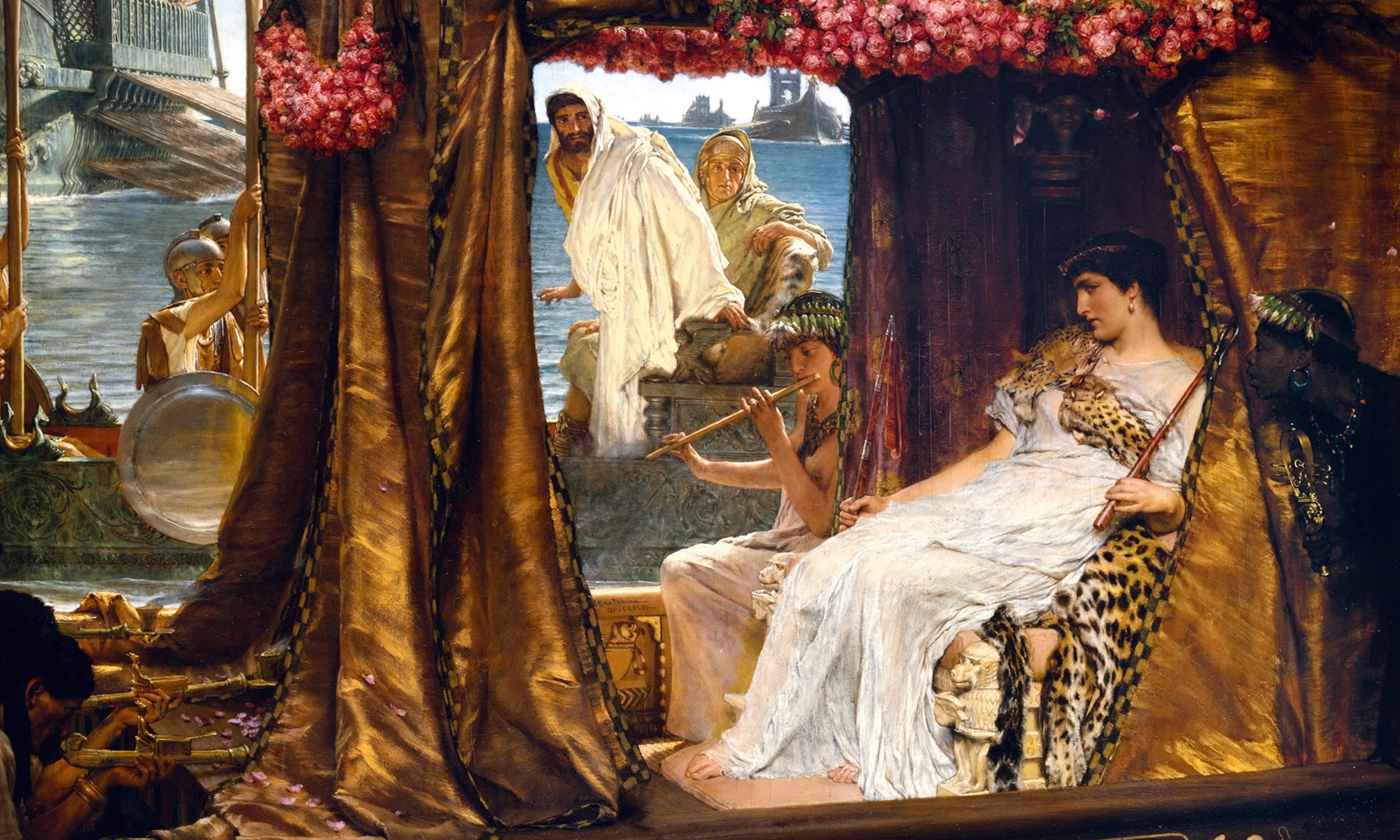
Cleopatra VII was the last active ruler of ancient Egypt and one of the most notorious names in the history books. Throughout her existence, much like Helen of Troy, her beauty, charm, and intelligence led to two great nations falling into utter chaos.
She reigned for about 21 years, spoke as many as nine languages, outmaneuvered two of Rome's most powerful men, and died in 30 BC rather than be paraded through Rome as a prisoner. Within weeks of her death, Egypt became a Roman province, and some 3,000 years of pharaonic rule came to an end.
Few women in history have been painted, filmed, and imagined as often as the queen who ruled from Alexandria, yet the real woman is still hidden behind Roman propaganda and Hollywood glamour. This guide tells the true Cleopatra story, from her father and family to her husbands and children.
It explains how she died, the search for her lost tomb, and what we know about Cleopatra's real face and skin color. It also separates myths from facts and shows where you can still find her legacy through our grand Nile River cruises.
Explore The Real Cleopatra Story From the Golden Pages of History
Her Father, Mother, and Family
Cleopatra was born in Alexandria in 69 BC. Her father was Ptolemy XII Auletes, the "flute player," a king of the Ptolemaic Dynasty. The dynasty was founded by Ptolemy I Soter, a Macedonian Greek general of Alexander the Great, and it had ruled Egypt for almost 300 years.
Her mother's identity is uncertain. She is usually thought to be Cleopatra V Tryphaena, the king's wife and probably his sister or half-sister, but no source confirms it. The Ptolemies often married within the family, and more than a dozen of Cleopatra's ancestors married a sibling or cousin.
Unlike her ancestors, who spoke only Greek, Cleopatra learned the Egyptian language. She was the first of her line known to do so. She presented herself to her people as a true pharaoh and as the living goddess Isis, and she was called the "New Isis."
Queen at 18: Her Brothers and Husbands
When Ptolemy XII died in 51 BC, Cleopatra, then about 18, became co-ruler with her brother Ptolemy XIII, who was about 10. By custom, they were married. Ptolemy's advisers soon turned against her, and in 49 BC she fled to Syria, raised an army and returned to fight a civil war.
Cleopatra's husbands were therefore her two younger brothers, in name only. Ptolemy XIII drowned in the Nile in 47 BC after his army lost to Julius Caesar. She then married her youngest brother, Ptolemy XIV, who died in 44 BC, probably on her orders. Many sources also call Mark Antony her husband, since they married in an Egyptian ceremony, although Rome never recognized it.
Julius Caesar and Caesarion
In 48 BC, Julius Caesar arrived in Alexandria. According to Plutarch, Cleopatra had herself smuggled into the palace to meet him, wrapped in a bedsack or carpet. Caesar backed her claim to the throne, and in June 47 BC she gave birth to a son, Ptolemy Caesar, known as Caesarion, or "little Caesar."
Cleopatra lived in Rome with Caesar from 46 BC. He set up a gilded statue of her in the Temple of Venus Genetrix, which scandalized many Romans. When Caesar was murdered on the Ides of March in 44 BC, she returned to Egypt and made Caesarion her co-ruler.
Mark Antony and the Fall at Actium
In 41 BC, the Roman general Mark Antony summoned Cleopatra to Tarsus, in modern Turkey. She sailed up the river on a golden barge with purple sails, dressed as Aphrodite. Their alliance became a long love affair. They spent the winter in Alexandria with a drinking club called the "Inimitable Livers." In 34 BC, at the Donations of Alexandria, Antony granted Roman lands to Cleopatra and her children.
Octavian, Caesar's adopted heir, used this to turn Rome against them, and the Senate declared war on Cleopatra in 32 BC. On 2 September 31 BC, Octavian's fleet defeated theirs at the Battle of Actium, off western Greece. Cleopatra led her own squadron of warships in the battle. She and Antony escaped to Alexandria, but their cause was lost.
How Did Cleopatra Die, and Where Is Her Tomb?
The Asp, the Cobra or Poison
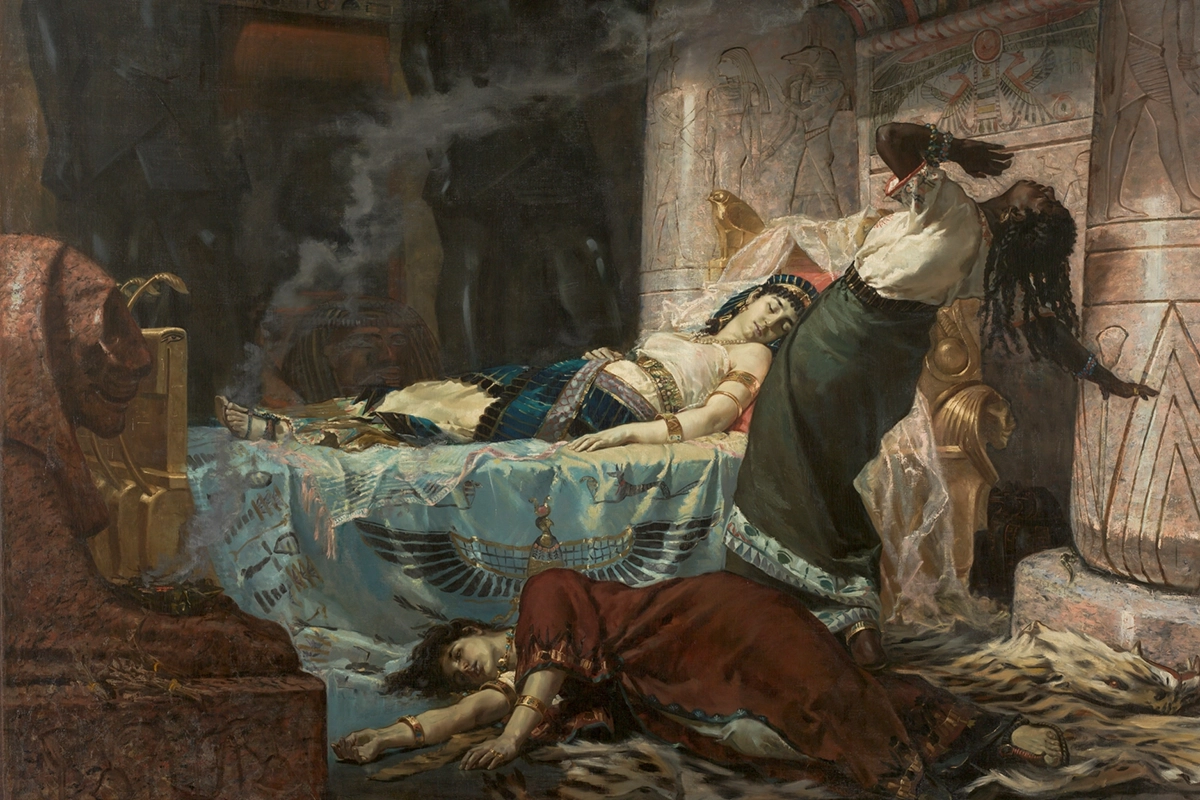
In August 30 BC, Octavian's army reached Alexandria. Antony, hearing a false report that Cleopatra was dead, stabbed himself and died in her arms. Cleopatra shut herself in her mausoleum. When she learned that Octavian planned to display her in his triumph in Rome, she took her own life on 10 or 12 August 30 BC, at the age of 39.
So how did Cleopatra die? The famous story says she let an asp bite her. Most scholars think that if a snake was used, it was an Egyptian cobra, a royal symbol linked to the gods. Plutarch himself admitted that "the truth of the matter no one knows." Ancient writers also mention poison hidden in a hairpin or an ointment, and many historians now think a prepared poison is more likely.
Cleopatra's Children After Her Death
Cleopatra had four children:
- Caesarion (born 47 BC), son of Julius Caesar. Octavian had him killed in 30 BC, aged about 17, because he was a rival heir to Caesar.
- Alexander Helios and Cleopatra Selene II, twins born in 40 BC to Mark Antony.
- Ptolemy Philadelphus, born in 36 BC to Antony.
The three younger children were taken to Rome and raised by Octavia, Octavian's sister and Antony's former wife. Cleopatra Selene later married King Juba II and became queen of Mauretania, in North Africa. The fate of her two brothers is unknown.
The Search for Cleopatra's Tomb
Cleopatra asked to be buried with Antony, and ancient writers say Octavian allowed it. Her tomb has never been found. Most Egyptologists believe it lay near the royal palace in Alexandria, an area now largely under the sea or beneath the modern city.
Since 2005, the archaeologist Kathleen Martínez has searched at Taposiris Magna, a temple of Osiris about 48 kilometers west of Alexandria. Her team has found coins bearing Cleopatra's portrait. In 2022, they found a tunnel about 1,300 meters long, cut beneath the temple. In 2025, working with oceanographer Robert Ballard, she announced a sunken port off the coast nearby. The theory that Cleopatra's tomb lies there is exciting, but it remains unproven.
Cleopatra's Real Face, Skin Color and Myths
What Did Cleopatra Really Look Like?
No portrait made from life has been identified with certainty, but several ancient images give clues to Cleopatra's real face:
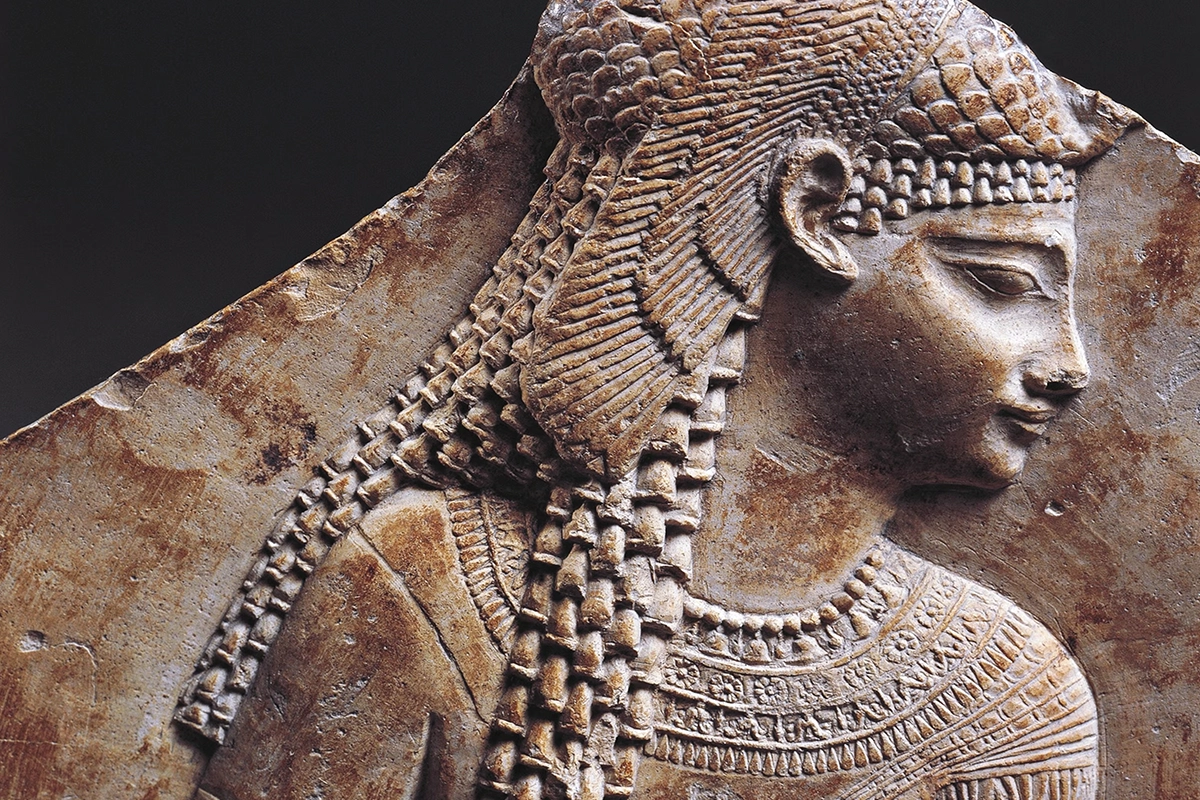
- Coins minted in her reign show a strong chin, a prominent hooked nose and her hair pulled back in a bun under a royal diadem.
- The Berlin Cleopatra, a marble head now in the Altes Museum, shows a similar "melon" hairstyle.
- A marble head in the Vatican Museums and a bust from Cherchell in Algeria may show her or her daughter Selene.
- On Egyptian temple walls, she appears in traditional pharaonic style, with no attempt at a realistic likeness.
Plutarch wrote that her beauty "was not altogether incomparable." What captivated people was her voice, her wit and her conversation.
Cleopatra's Skin Color and the Nubian Heritage Question
Cleopatra's skin color is one of the most searched questions about her. Her father's family was Macedonian Greek, and Ptolemaic marriages stayed largely within the family. Because her mother and paternal grandmother are not known for certain, some historians accept that she may have had some Egyptian or other ancestry. No evidence links her to Nubia or to sub-Saharan Africa. Modern ideas of race also did not exist in her world.
The debate came to a head in 2023, when the Netflix docudrama Queen Cleopatra cast a Black actress, Adele James. Egypt's Supreme Council of Antiquities objected, saying statues and reliefs show her with Hellenistic features. Whatever her appearance, Cleopatra was born in Egypt, ruled as an Egyptian pharaoh and was remembered fondly by her Egyptian subjects.
Cleopatra Myths Versus Facts
- Myth: she was Egypt's greatest beauty. Ancient sources praise her intelligence and charm far more than her looks.
- Myth: she was a seductress who ruined Rome's heroes. This image comes largely from Octavian's propaganda. She was a capable ruler who reformed the coinage and kept Egypt independent for two decades.
- Surprising but true: she lived closer to our time than to the building of the pyramids. The Giza Pyramids were already about 2,500 years old in her lifetime, while she lived about 2,050 years ago.
Cleopatra in the Movies
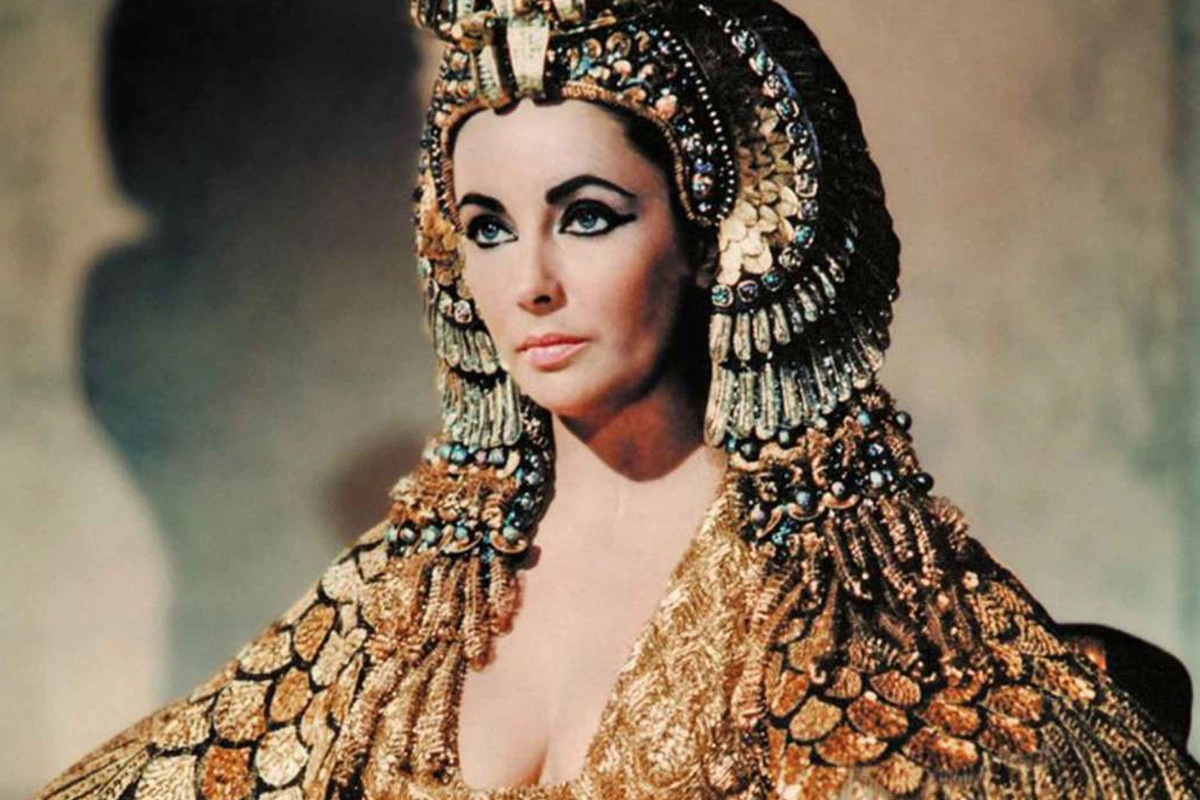
The most famous Cleopatra movie is the 1963 epic Cleopatra, starring Elizabeth Taylor and Richard Burton. Its budget rose from about 2 million to 44 million US dollars, making it the most expensive film ever made at the time. Earlier versions starred Theda Bara in 1917 and Claudette Colbert in 1934. Vivien Leigh played her in Caesar and Cleopatra in 1945. Shakespeare's play Antony and Cleopatra shaped her romantic image long before Hollywood did.
Where to Find Cleopatra's Legacy in Egypt
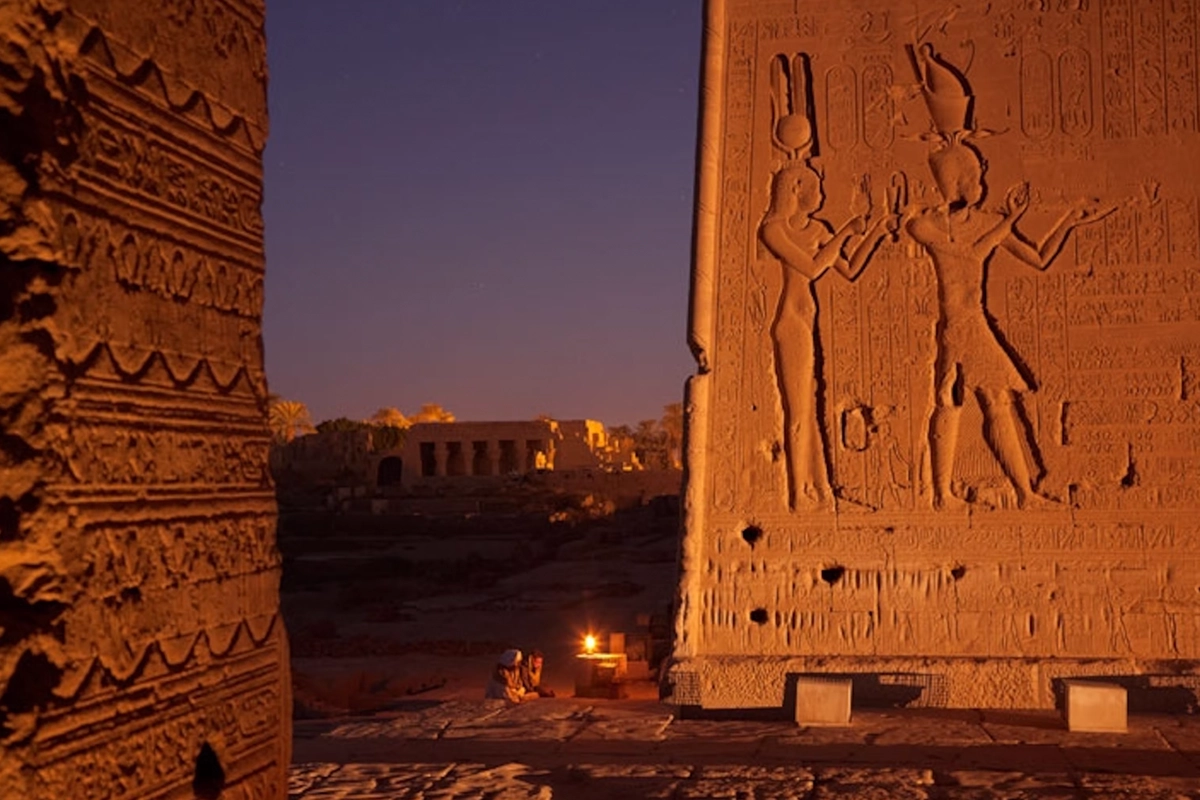
Cleopatra's world is still written in stone along the Nile, and many of the best places are stops on a classic Luxor to Aswan Nile cruise.
Dendera Temple
The Temple of Hathor at Dendera, north of Luxor, holds the most famous image of the queen. A huge relief on its rear wall shows Cleopatra and Caesarion making offerings to the gods. A chapel on its roof once held the Dendera Zodiac, dated to around 50 BC, during her reign. The original is now in the Louvre, as our guide to Egyptian zodiac signs explains.
Edfu, Kom Ombo and Philae
Cleopatra's ancestors built many of the great temples of the river. The Temple of Edfu, dedicated to Horus, was completed in 57 BC under her father, Ptolemy XII. The double temple of Kom Ombo is also Ptolemaic. The island temple of Philae near Aswan was the greatest shrine of Isis, the goddess Cleopatra claimed to be. Its first pylon shows Ptolemy XII striking his enemies. Read the myth behind it in our article on the story of Isis and Osiris.
Alexandria
Cleopatra's capital lies about 220 kilometers north of Cairo. Her palace on Antirhodos Island sank beneath the Eastern Harbor, and divers have recovered sphinxes and statues from the seabed since the 1990s. The Qaitbay Citadel stands on the site of the ancient Lighthouse of Pharos.
Museums and Monuments Abroad
In Cairo, the Egyptian Museum and the Grand Egyptian Museum display Ptolemaic statues and jewelry from her era. Abroad, the two obelisks known as Cleopatra's Needles, in London and New York, actually date from Thutmose III, about 1,400 years before her. They were moved to Alexandria under Augustus, about 17 years after her death.
Discover the Heritage of Cleopatra Through Our Epic Nile Cruise Trips
The real Cleopatra was a scholar, a strategist and the last pharaoh of a civilization that had lasted 3,000 years. Rome's historians wrote her story as a warning. Hollywood turned it into a romance. The temples of Dendera, Edfu and Philae still show her as she saw herself: a queen and goddess of Egypt.
Two thousand years later, her legend still drifts down the Nile like a golden barge. To follow her footsteps, explore our Egypt tour packages with a Nile cruise or our Nile cruises for couples. You can also design a tailor made journey, and our best temples to see on a Nile cruise guide helps you choose the stops.