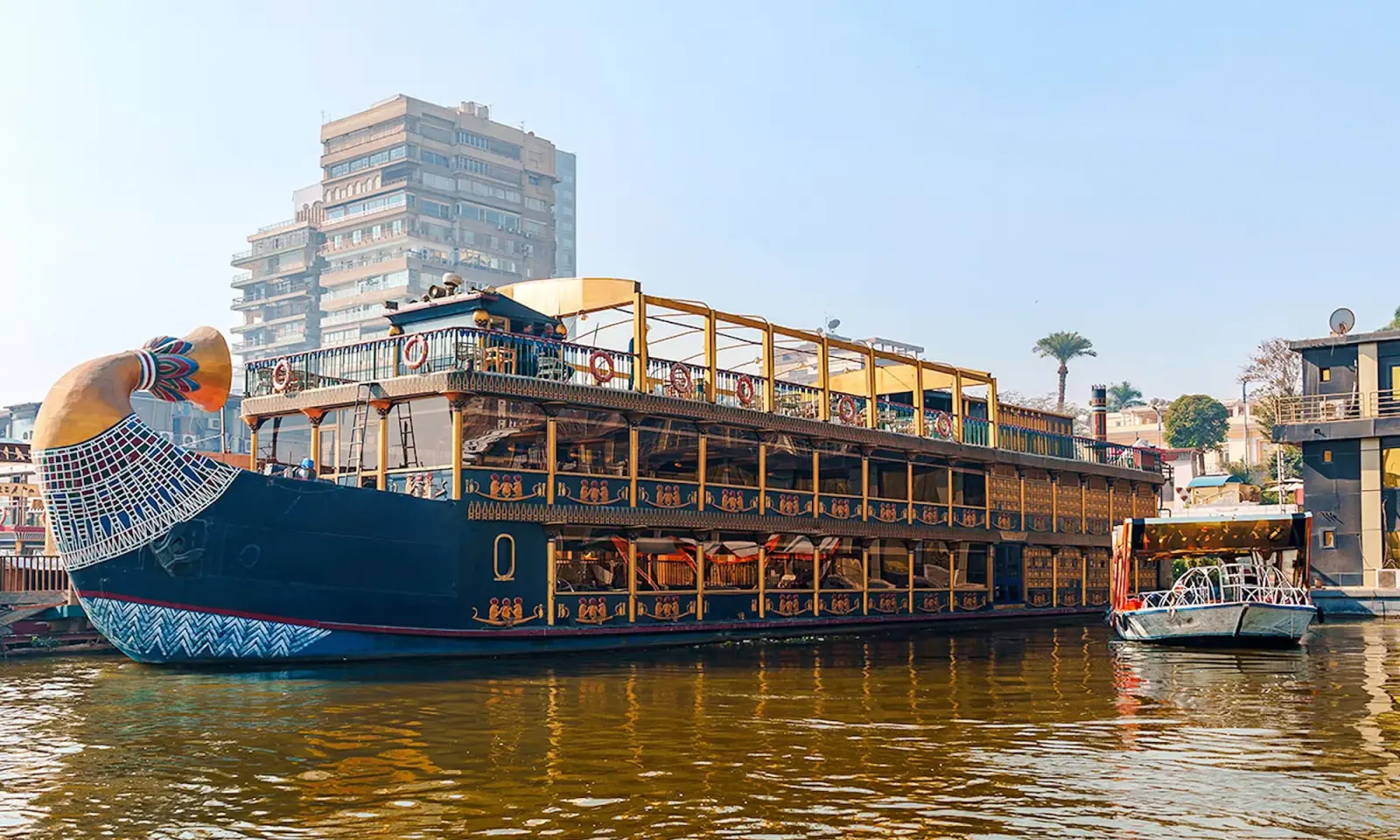
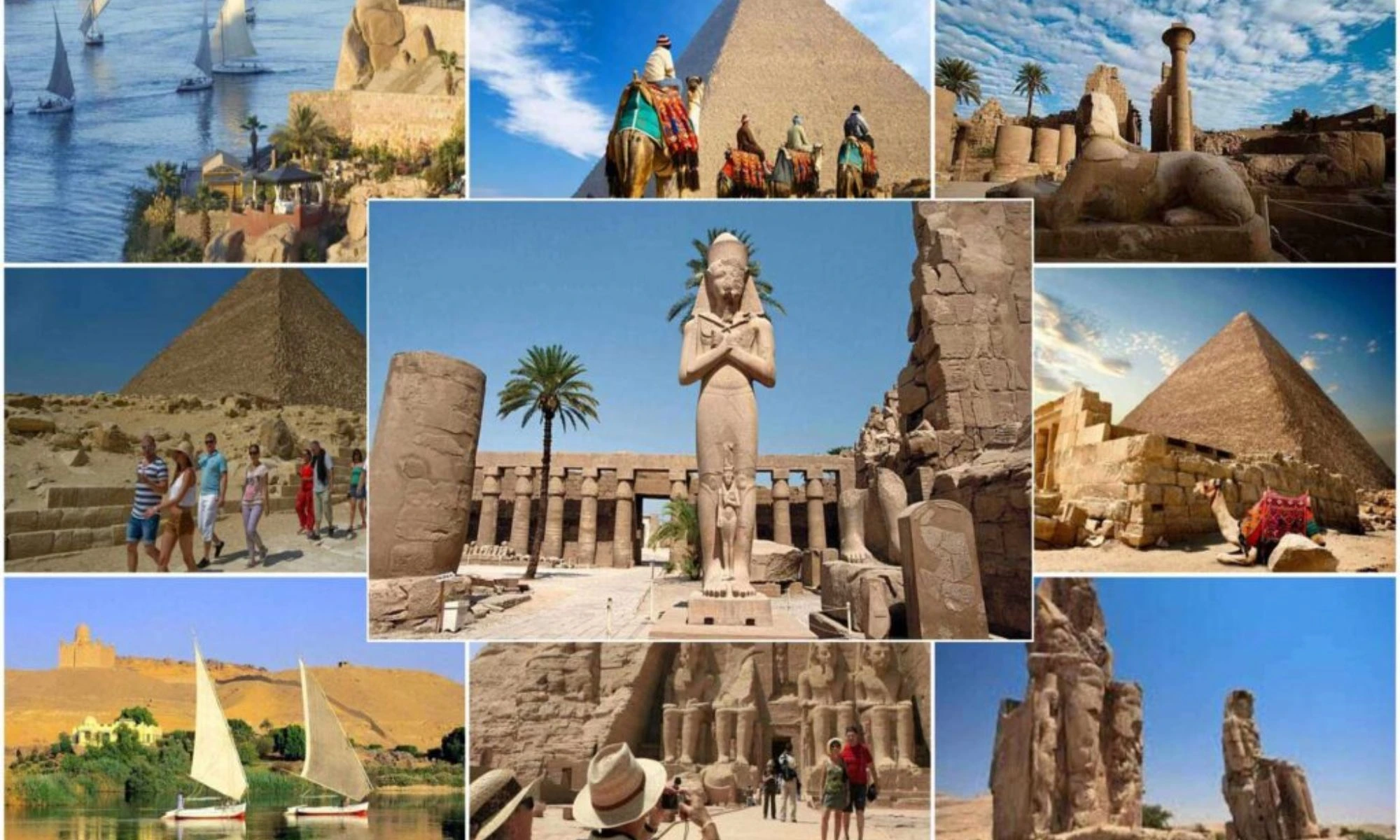
Long before horoscopes filled the back pages of magazines, priests in Egypt watched the night sky from temple roofs, timing festivals, floods and even the hours of the night by the stars. The popular Egyptian zodiac draws on that heritage, giving each birthday a guardian from among the ancient Egyptian gods and goddesses, from the river Nile itself to Isis, Thoth and the lioness Sekhmet. Under the same stars that once guided countless Nile River Cruises across time and to safety, you can still stand beneath carved ceilings where the sky goddess Nut swallows the sun each night.
This guide gives you the full Egyptian astrology chart with dates for all 12 signs, explains the god or goddess behind each one, and separates what the ancient Egyptians really did with the stars from the modern zodiac that grew from it. It ends with the temples along the Nile where you can see Egyptian astrology carved in stone.
Discovering the Meaning of Egyptian Astrology
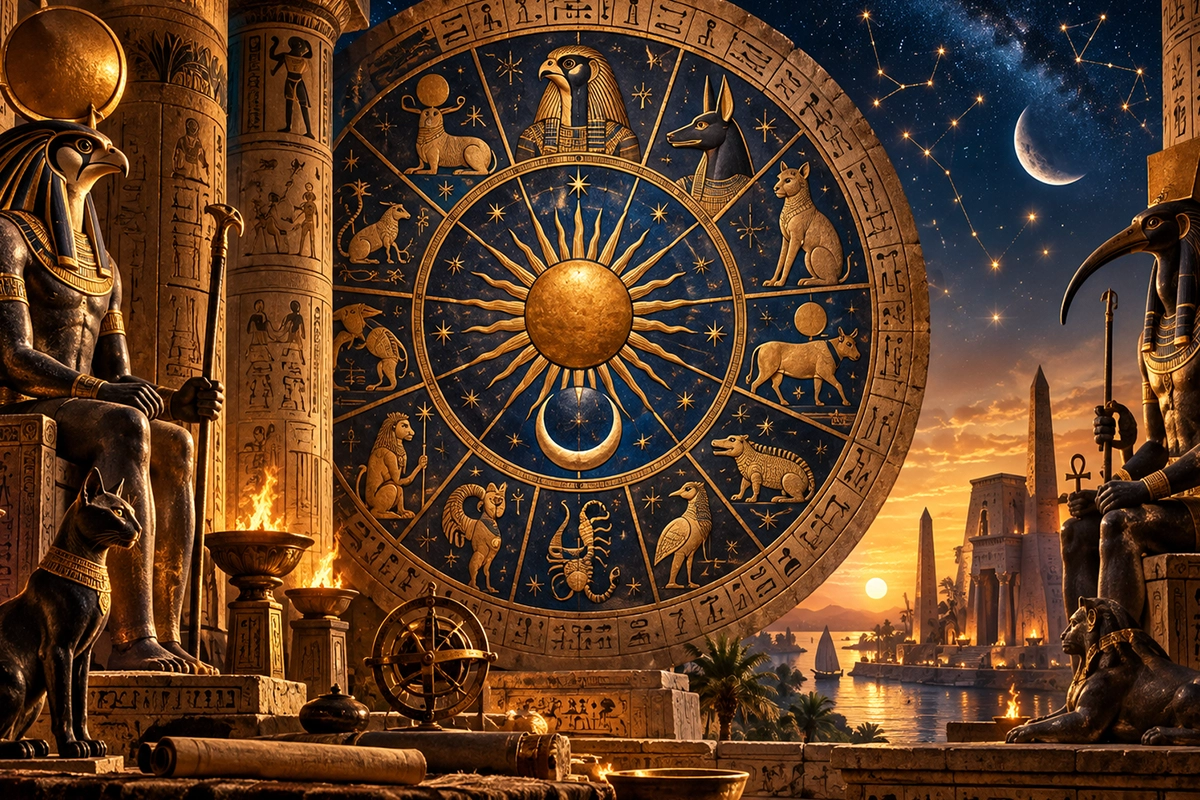
Egyptian astrology today usually means a 12-sign system in which each sign is ruled by an Egyptian deity rather than a Greek constellation. It is enjoyable, but it is worth knowing where it really comes from.
The ancient Egyptians were sky-watchers first. Their calendar had 365 days: 12 months of 30 days, plus five extra days celebrated as the birthdays of the gods. The year was split into three seasons, Akhet (flood), Peret (growing) and Shemu (harvest). The new year began with the first dawn appearance of Sirius, the star they called Sopdet and linked with Isis, which arrived just before the Nile flood.
The decans were their star clock. Egyptian astronomers divided the night sky into 36 decans, groups of stars that each rose for about ten days. Priests used them to tell the hours of the night, and they appear painted on coffin lids and tomb ceilings from around 2100 BC onwards.
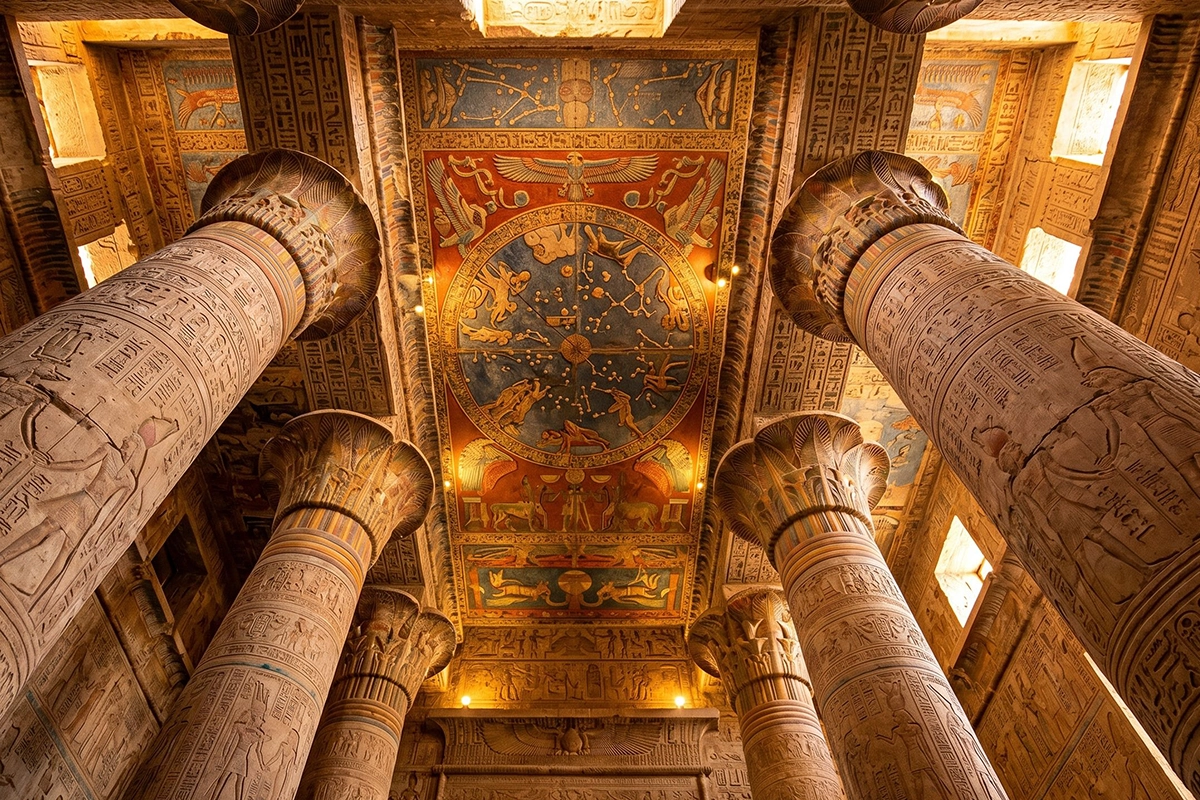
The 12-sign zodiac came later. The familiar ring of 12 signs reached Egypt from Babylon via the Greeks, and it took hold in the Ptolemaic period (305 to 30 BC). Egyptian priests blended it with their own decans and gods. The best-known result is the Dendera Zodiac, a circular relief carved around 50 BC on a chapel ceiling in the Temple of Hathor. It was removed in 1821 and has been in the Louvre in Paris since 1922; a cast now sits in its place.
What about the personality traits? The modern Egyptian zodiac signs, with their date ranges and character profiles, are a recent interpretation inspired by these traditions, not a system recorded by pharaonic priests. Read it as a playful way into Egyptian mythology rather than a prediction. The astronomy behind it, though, is very real: the Great Pyramid at Giza is aligned to true north within a fraction of a degree.
The Egyptian Astrology Chart: Dates for All 12 Signs
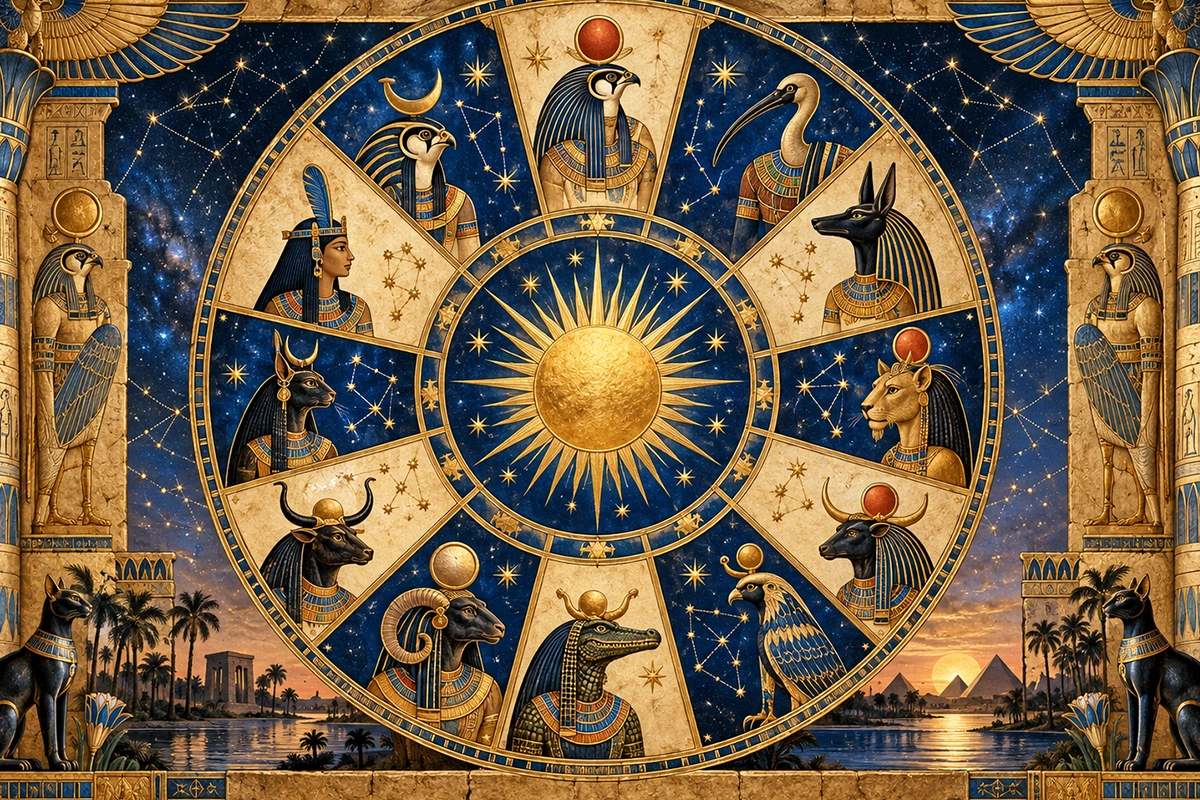
Unlike Western astrology, the Egyptian zodiac does not give each sign one block of the year. Most signs return two or three times, so check every range to find yours.
| Egyptian zodiac sign | Ruling deity | Birth dates |
|---|---|---|
| The Nile | The river Nile | Jan 1 to 7, Jun 19 to 28, Sep 1 to 7, Nov 18 to 26 |
| Amun-Ra | King of the gods | Jan 8 to 21, Feb 1 to 11 |
| Mut | Mother goddess | Jan 22 to 31, Sep 8 to 22 |
| Geb | God of the earth | Feb 12 to 29, Aug 20 to 31 |
| Osiris | God of the afterlife | Mar 1 to 10, Nov 27 to Dec 18 |
| Isis | Goddess of magic and motherhood | Mar 11 to 31, Oct 18 to 29, Dec 19 to 31 |
| Thoth | God of wisdom and writing | Apr 1 to 19, Nov 8 to 17 |
| Horus | God of the sky | Apr 20 to May 7, Aug 12 to 19 |
| Anubis | God of embalming and the dead | May 8 to 27, Jun 29 to Jul 13 |
| Seth | God of storms and chaos | May 28 to Jun 18, Sep 28 to Oct 2 |
| Bastet | Cat goddess of home and joy | Jul 14 to 28, Sep 23 to 27, Oct 3 to 17 |
| Sekhmet | Lioness goddess of war and healing | Jul 29 to Aug 11, Oct 30 to Nov 7 |
How to use the chart: find your birthday in the right-hand column. For example, someone born on 15 October is Bastet, and someone born on 4 April is Thoth. You may come across other versions online that use 12 neat month-long blocks and different gods such as Hathor or Wadjet; the table above is the version most widely published.
The 12 Egyptian Zodiac Signs and Their Gods
Each sign borrows its character from the myths of its guardian. Here is what each of the Egyptian zodiac signs is said to reveal.
The Nile
The only sign named after a place rather than a god. The Nile flood brought life to Egypt every year, and Nile people are described as calm, logical and peace-loving, people who prefer to avoid conflict and think things through.
Amun-Ra
Amun-Ra, king of the gods, was worshipped at Karnak, the largest temple complex in Egypt. His sign is linked with confidence, leadership and optimism. Amun-Ra people are said to inspire others and to take charge naturally.
Mut
Mut, Amun's wife and the mother goddess of Thebes, gives her name to a sign associated with patience, loyalty and a protective nature. Mut people are seen as practical carers who keep everyone together.
Geb
Geb, the god of the earth, lay beneath the sky goddess Nut in Egyptian art. His sign is linked with sensitivity, kindness and a grounded, dependable personality.
Osiris
Osiris, judge of the dead and god of rebirth, was murdered by his brother Seth and brought back to life by Isis. His sign suggests strength, independence and a mix of bold confidence and hidden vulnerability. Read the full myth in the story of Isis and Osiris.
Isis
Isis, the great goddess of magic and motherhood, was honoured at Philae Temple near Aswan. Isis people are described as honest, romantic, resourceful and fiercely protective of those they love.
Thoth
Thoth, the ibis-headed god of writing and wisdom, recorded the judgement of souls. He was also shown as a baboon, and statues of Thoth in both forms can be seen in museums such as the Grand Egyptian Museum. His sign belongs to problem-solvers: curious, inventive and drawn to the truth.
Horus
Horus, the falcon god and protector of the pharaoh, has his best-preserved temple at Edfu. Horus people are said to be brave, ambitious and natural leaders.
Anubis
Anubis, the jackal-headed god of embalming, guided souls into the afterlife. A famous gilded Anubis shrine was found in the tomb of Tutankhamun. His sign is linked with introverted, loyal and emotionally deep people who are comfortable with their own company.
Seth
Seth, god of storms, deserts and chaos, was both feared and respected. His sign suggests boldness, persistence and a restless need for change.
Bastet
Bastet, the cat goddess of home, music and joy, was worshipped at Bubastis in the Delta. Bronze cat statues of Bastet fill museum cases in the Egyptian Museum in Cairo. Bastet people are described as charming, affectionate and in search of balance and calm.
Sekhmet
Sekhmet, the lioness who could bring both plague and healing, rules a sign of discipline, fairness and strong principles, with a fierce side when crossed.
Which signs get along? Most Egyptian zodiac sites say Isis and Osiris make a natural match, mirroring the myth, while Thoth and Horus pair well thanks to shared curiosity. These pairings are modern ideas rather than ancient teachings.
Where to See Egyptian Astrology on a Nile Cruise
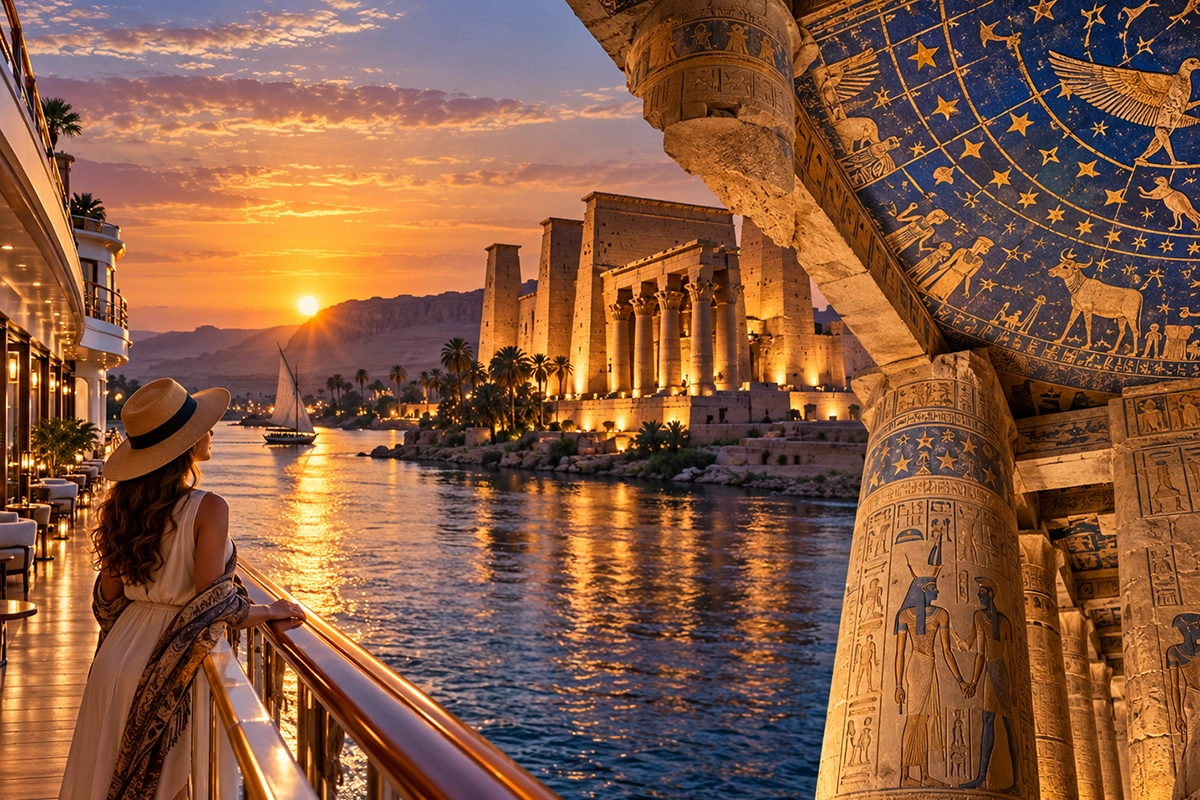
The best way to understand Egyptian astrology is to stand beneath it. Several of the finest astronomical ceilings in Egypt lie close to the Nile.
Dendera Temple. The Temple of Hathor at Dendera, about 60 to 70 km north of Luxor by road, holds the cast of the Dendera Zodiac and a vast hall ceiling painted with the sky goddess Nut, the decans and the zodiac signs. It is often combined with Abydos Temple, the cult centre of Osiris, on a day trip from Luxor or on a long Nile cruise from Luxor to Cairo.
Esna. The Temple of Khnum at Esna, recently cleaned to reveal its original colours, has zodiac signs on its ceiling alongside Egyptian gods. Many cruises and dahabiyas stop here, including the 5-day dahabiya cruise from Esna to Aswan.
Valley of the Kings. Royal tombs in the Valley of the Kings, especially the tomb of Ramesses VI, show Nut stretched across the ceiling, swallowing the sun at dusk and giving birth to it at dawn. Similar scenes appear in the Valley of the Queens.
Karnak and Luxor. At Karnak Temple you walk through Amun-Ra's great sanctuary, and Luxor Temple honours Amun, Mut and their son Khonsu, three of the gods in the chart. Across the river, Hatshepsut's Temple was designed by Senenmut, whose nearby tomb has the oldest known astronomical ceiling in Egypt.
Kom Ombo and Abu Simbel. Kom Ombo Temple is dedicated to Sobek and a form of Horus. At Abu Simbel, the sun lights the inner sanctuary twice a year, around 22 February and 22 October, a famous example of Egyptian astronomical design; read more about the builder in Ramses II and Nefertari.
A standard Luxor to Aswan Nile cruise covers Karnak, the Valley of the Kings, Edfu, Kom Ombo and Philae, so you will meet most of the zodiac gods in a few days. Our guide to the best temples to see on a Nile river cruise explains each stop.
Quick FAQS and Answers
What is my Egyptian zodiac sign?
Find your birthday in the chart above; most signs appear more than once in the year.
Did the ancient Egyptians believe in horoscopes?
They followed the stars closely and kept calendars of lucky and unlucky days, but the 12-sign zodiac only arrived in the Ptolemaic era.
Where is the original Dendera Zodiac?
In the Louvre, Paris. A cast remains at Dendera.
How many Egyptian zodiac signs are there?
Twelve. Eleven are named after gods and goddesses, and one, the Nile, is named after the river itself.
How is the Egyptian zodiac different from the Western zodiac?
Western signs follow the sun through 12 constellations, one block of dates each. Egyptian signs are ruled by deities and most return two to four times a year, so two people born months apart can share a sign.
Which Egyptian signs appear most often in the year?
The Nile has four separate date windows, and Isis and Bastet each have three. Amun-Ra, Mut, Geb, Osiris, Thoth, Horus, Anubis, Seth and Sekhmet each have two.
What is my sign if I was born on 29 February?
Geb, the earth god, whose first window runs from 12 to 29 February.
Can I visit Dendera and Esna on a Nile cruise?
Esna is a regular stop for many ships and dahabiyas sailing between Luxor and Aswan. Dendera lies north of Luxor, so most travelers see it on a day trip from Luxor or on a longer cruise toward Cairo.
Discover Your Ancient Egyptian Zodiac Sign With Our Epic Nile Cruises
The Egyptian zodiac is part myth, part modern invention, and wholly rooted in one of the world's oldest traditions of watching the sky. Whether you are a calm Nile, a curious Thoth or a fierce Sekhmet, your sign is an invitation to meet the gods who shaped Egyptian life. The best way to know them is to stand where the priests once stood, beneath the painted stars of a temple ceiling, while the river carries you south.
Find your guardian in the chart, then come and see their temples for yourself with our Nile cruises from Luxor and Egypt tour packages with a Nile cruise, or contact our team to add Dendera and Esna to a tailor-made trip.