High on a stone beam in the Temple of Seti I at Abydos, a cluster of carved shapes has become one of the most shared ancient images online. To many viewers, it looks like a helicopter.
The carving is real. The famous "helicopter" is not one original Egyptian hieroglyph, however. It is the visual result of signs from two different royal inscriptions overlapping. This guide explains how that happened, what the text says, and what else the temple preserves, including the Abydos King List.
What Are the Abydos Hieroglyphs?
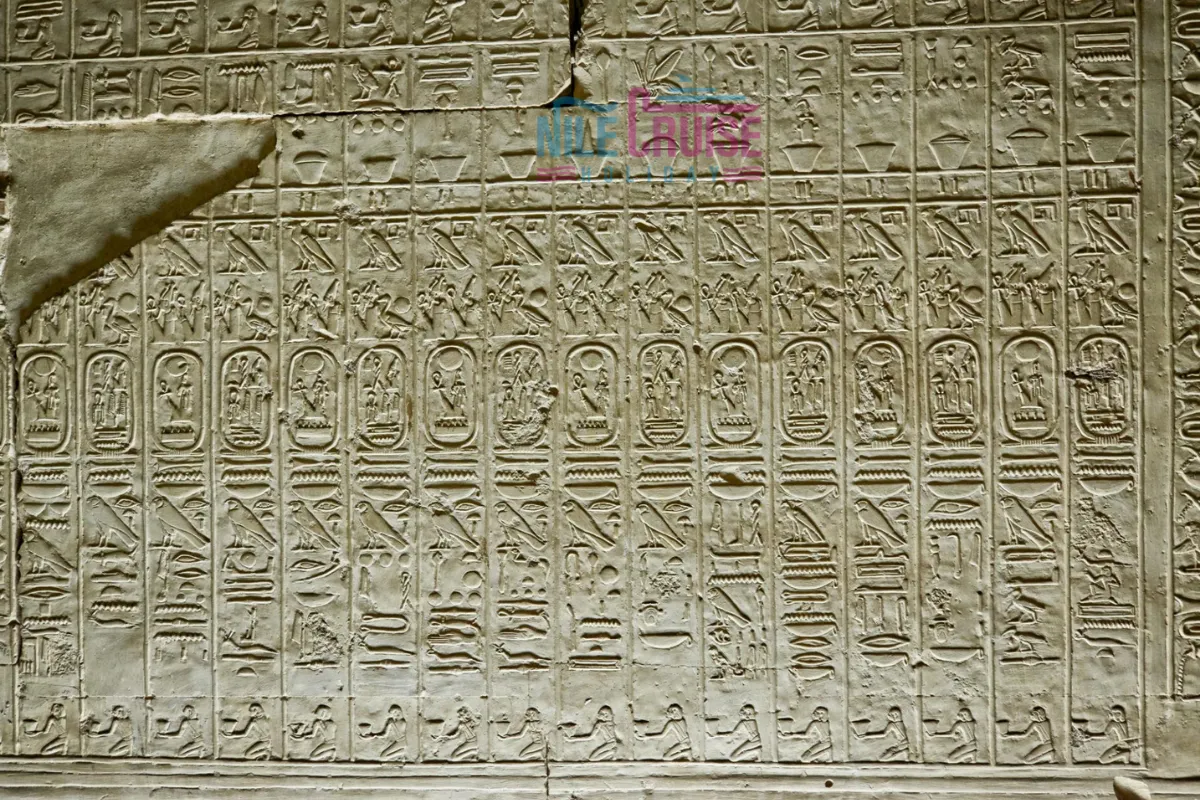
Abydos hieroglyphs are not one inscription. Abydos, in Upper Egypt north of Luxor, was used for thousands of years and preserves writing from many periods.
The phrase "Abydos hieroglyphs" usually refers online to the strange overlapping carvings in Seti I's temple, but the temple preserves a much larger inscriptional record that includes royal titulary, ritual texts, and the Abydos King List. Our Abydos Temple guide covers the building itself and how to visit.
Where Is the Helicopter Carving?
The carving is inside the Temple of Seti I at Abydos, in the first hypostyle hall. It sits high on an architrave, one of the stone beams resting on the columns, as part of a band of royal names and titles.
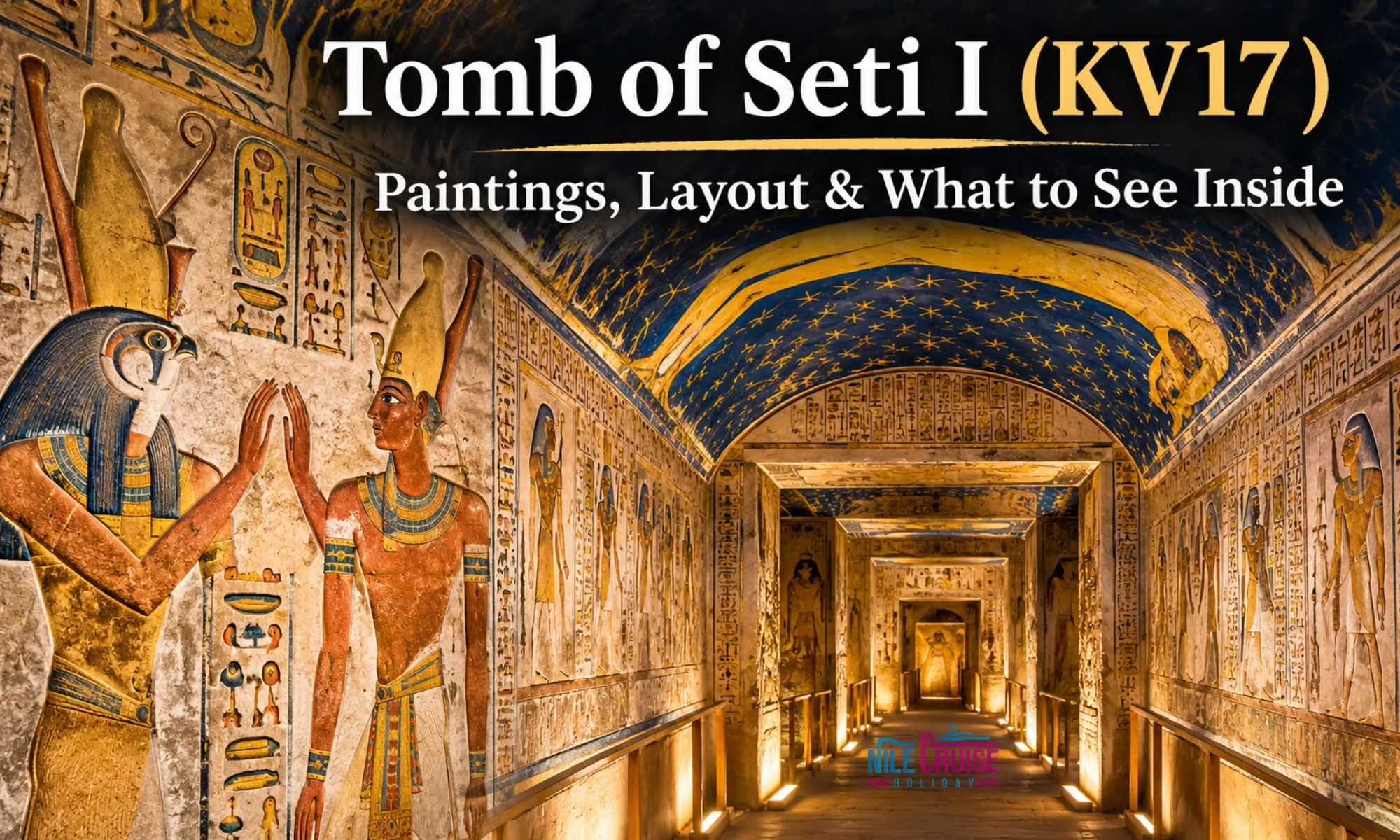
It is not underground or in the Osireion behind the temple. It is also unrelated to the Tomb of Seti I in Luxor's Valley of the Kings, a different monument for the same king.
Why It Looks Like a Helicopter
The famous machine-like forms are the result of a palimpsest. A palimpsest is a surface where an older inscription has been altered or written over but remains partly visible beneath the later version.
The sequence ran roughly like this:
- Craftsmen carved a royal inscription for Seti I, who began the temple in the early thirteenth century BC.
- Seti died before the temple was finished, and under his son Ramesses II, part of the inscription was changed to a new royal text.
- The old signs were filled with plaster and new signs cut over them, so the earlier carving was not completely erased.
- Over time the plaster fell away, and the surface was damaged, exposing parts of both layers.
- The overlapping signs now combine into shapes that resemble modern machines.
Weathering alone did not create the image. The key process is an original inscription, a later re-carving, partial survival of both layers, and later loss of the plaster that once hid the first version.
Why We See Modern Machines
Modern viewers naturally interpret unfamiliar overlapping shapes through familiar objects, which is why the damaged inscription can resemble a helicopter, aircraft, submarine or other machine depending on the viewer.
What the Inscription Really Says
The text belongs to royal titulary, the formal names and epithets used to identify and praise the king, not to a vocabulary of vehicles or machines.
According to Egyptologist Peter Brand's published reading, Seti I's original layer praised him as a powerful king who suppressed the "Nine Bows," a traditional term for Egypt's enemies, alongside his throne name Menmaatre. The Ramesses II layer replaced it with one of his own titles, describing him as protector of Egypt who repels foreign lands, alongside his throne name Usermaatre Setepenre.
The exact reconstruction of every damaged sign is a specialist matter, but both layers are clearly royal praise written in normal hieroglyphic script. Our guide to Egyptian symbols and meanings explains how such signs carried meaning.
Is the Helicopter Carving Fake?
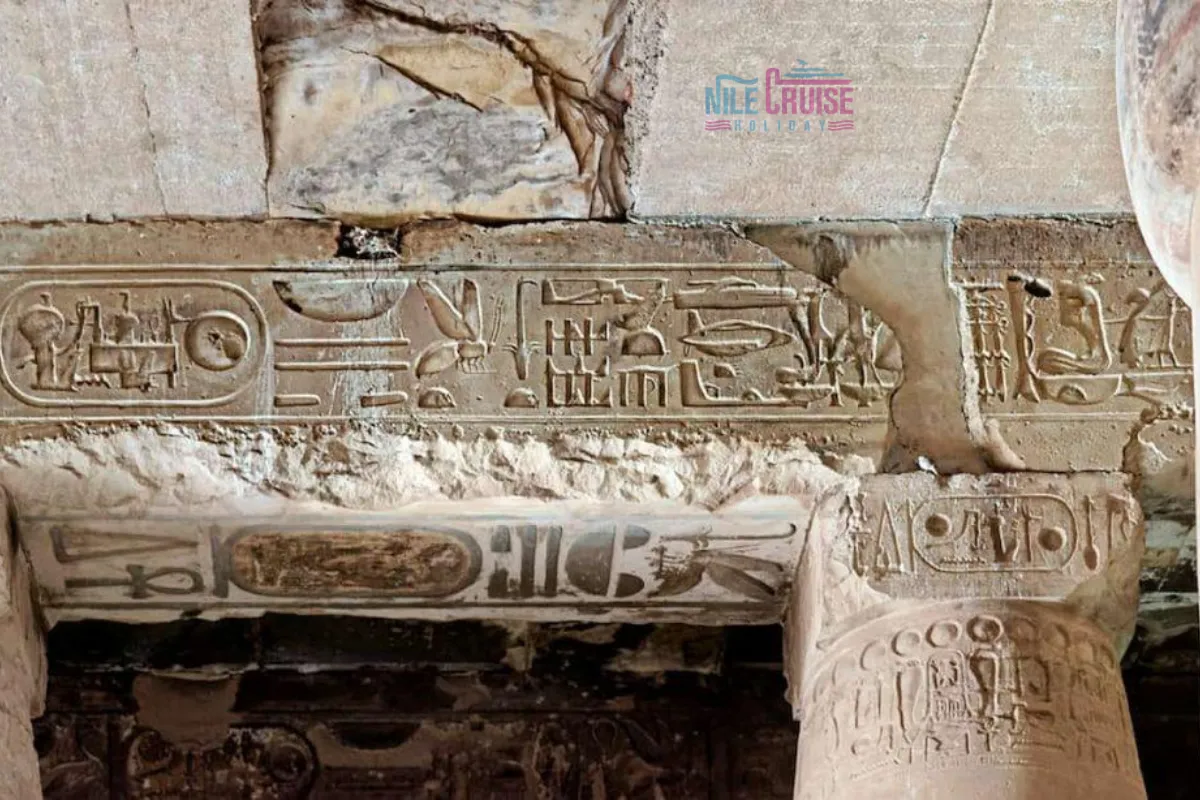
The carving itself is real. What is unsupported is the claim that it intentionally depicts a helicopter or other modern technology.
The photographs show a genuine ancient relief, and the overlap is an archaeological feature that can be examined on the stone. The issue is interpretation. Read sign by sign, the "rotor," "tail" and "body" separate back into ordinary hieroglyphs from two royal inscriptions.
The Abydos King List
A few rooms deeper into the temple, a corridor known as the Gallery of the Lists holds one of the most important royal records to survive from Egypt. Seti I and the young Ramesses II are shown making offerings before the cartouches of roughly 76 earlier kings, from Menes at the start of Egyptian kingship down to Seti himself.
The Abydos King List is one of the most important surviving records of Egyptian kingship, but it was a ritual and ideological list rather than a complete modern-style chronology. Its purpose was to honor royal ancestors and place Seti and Ramesses II at the end of a legitimate line. Historians still use it, alongside other lists and monuments, to reconstruct the sequence of kings.
Why Are Some Kings Missing?
The list is selective. It leaves out the foreign Hyksos rulers, the female king Hatshepsut, and the Amarna-period kings, including Akhenaten, Tutankhamun and Ay.
The omissions show that Egyptian king lists were curated statements about legitimate royal ancestry, not neutral databases. These rulers were not erased from all history. Their names survive in many other monuments, tombs and documents.
Other Inscriptions at Abydos
The temple's real inscriptional program is historically richer than the internet-famous palimpsest alone. Its walls carry royal names, offering scenes and ritual texts, with Seti I shown before major gods, including Osiris, the god most closely tied to Abydos. Many of the reliefs from Seti's reign are finely carved, while others were completed or modified under Ramesses II.
Earliest Writing at Abydos
Abydos is also important to the history of Egyptian writing because much earlier labels were found in Tomb U-j, more than two millennia before Seti I's temple. These small inscribed bone and ivory tags come from a Predynastic royal tomb in the Umm el-Qaab cemetery. They are a separate archaeological context and have no connection with the helicopter carving or the King List.
Seeing the Hieroglyphs Today
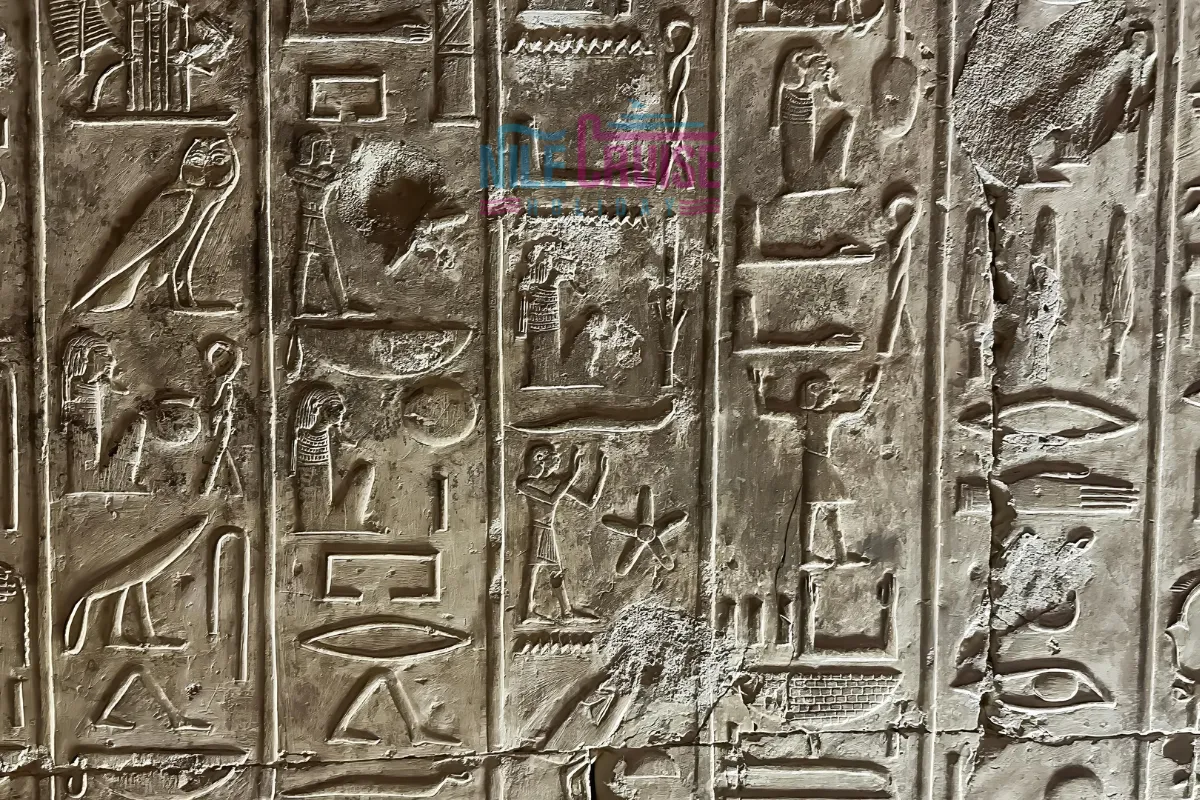
Visitors can see the famous palimpsest in the same architectural setting where Seti I and Ramesses II left their royal inscriptions, making the overlap much easier to understand than in a cropped internet image. It sits well above eye level, so it helps to know which beam to look for. The King List survives in its corridor in the same temple.
Rules on photography and access to individual rooms can change, so current arrangements should be checked before visiting. Abydos is one of the best-preserved ancient Egyptian ruins for reading royal inscriptions in their original setting.
Nile Cruise Holiday's Role
Nile Cruise Holiday can arrange an Egyptologist-guided visit to Abydos, so travelers see the so-called helicopter carving in its real architectural and historical context rather than as an isolated internet image.
Depending on the itinerary booked, NCH coordinates transfers from Luxor, temple timing, and the guide, and can pair Abydos with Dendera Temple on the same day where suitable. NCH's role is to connect the carvings with the wider history of Seti I, Ramesses II, Osiris worship, and Egyptian kingship rather than presenting the monument as a mystery attraction.
Abydos can also be added to one of the Egypt tour packages with a Nile cruise, linking Seti I's temple with his tomb in Luxor.
Travelers interested in seeing the Abydos inscriptions in context can ask Nile Cruise Holiday to arrange an Egyptologist-guided visit from Luxor as part of a tailor-made Egypt trip, combining the Temple of Seti I with the wider history of Abydos and, where suitable, nearby Dendera.