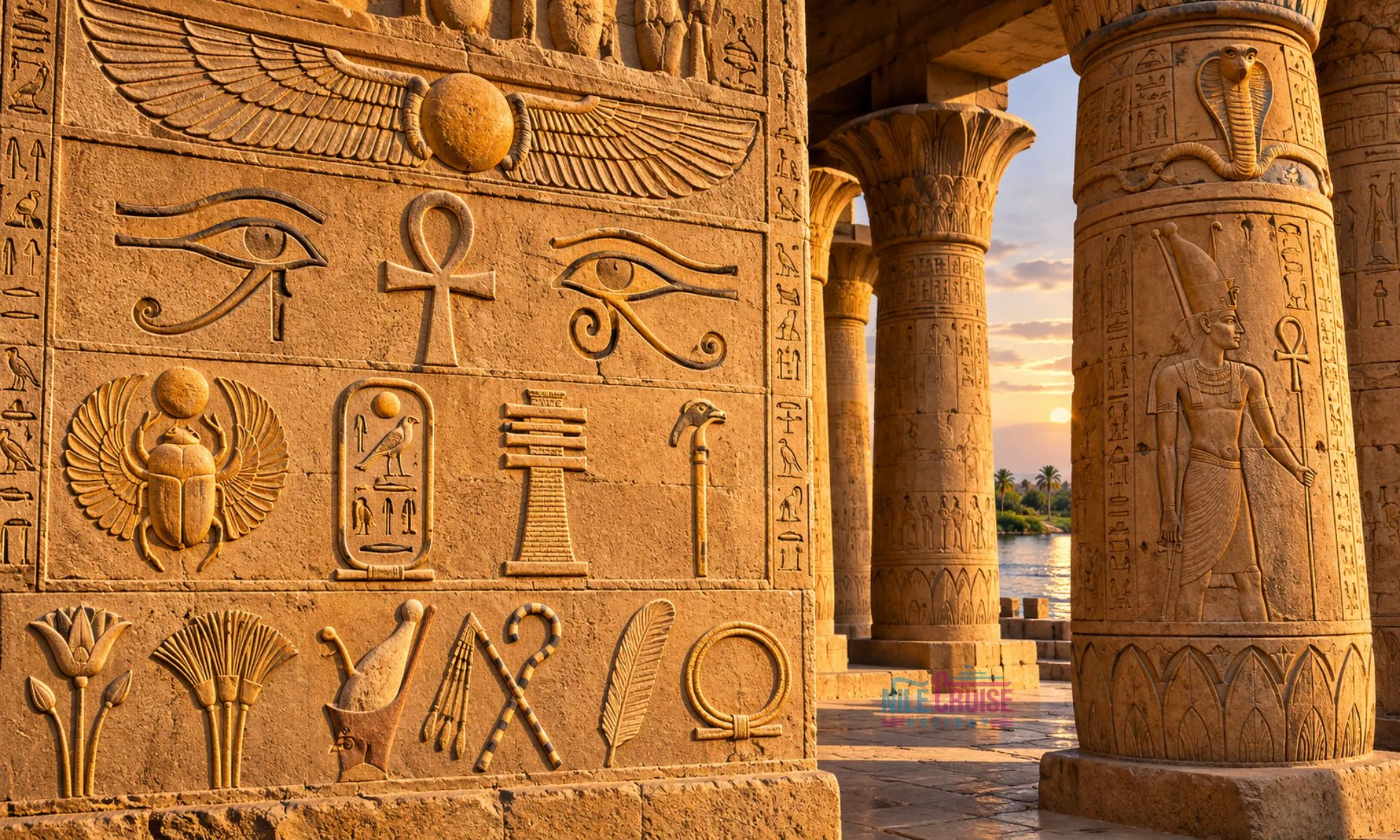
At first sight, a decorated temple wall is a dense crowd of figures, birds, plants, and crowns climbing toward the ceiling. Once you recognize a few repeated signs, an Egyptian temple wall stops looking like a mass of carvings and starts becoming easier to read.
Ancient Egyptian temple walls were not decorated randomly. Many repeated signs, plants, crowns, and emblems carried religious, royal, or written meanings that helped ancient viewers understand each scene. Few had only one fixed meaning. Context, period, and the deity involved could change how a symbol was understood.
This guide covers 15 Egyptian symbols and meanings that travelers can realistically recognize at the best temples to see on a Nile cruise, from Karnak to Philae. Star signs and constellations belong to a separate subject, covered in our guide to Egyptian zodiac signs.
Egyptian Symbols and Meanings at a Glance
"Egyptian symbols" is a modern umbrella term. The 15 items below include hieroglyphs, regalia, divine emblems, protective motifs, plants, crowns, and a name enclosure. The ankh and djed can work as hieroglyphs, while the crook and flail are regalia and the cartouche frames a name.
|
Symbol |
Main Meaning |
What to Look For |
|
Ankh |
Life |
Loop over a T-shaped stem |
|
Djed Pillar |
Stability |
Pillar with stacked horizontal top |
|
Was Sceptre |
Divine power |
Long staff with forked base |
|
Eye of Horus |
Wholeness and protection |
Stylized eye |
|
Eye of Ra |
Solar protective power |
Eye motif in solar or divine context |
|
Scarab |
Becoming and renewal |
Beetle |
|
Shen Ring |
Eternity and encirclement |
Circular rope-like loop |
|
Cartouche |
Royal name |
Oval enclosing hieroglyphs |
|
Uraeus |
Royal protection |
Upright cobra |
|
Crook and Flail |
Kingship |
Royal regalia, often crossed |
|
Double Crown |
Rule over Upper and Lower Egypt |
Combined Red and White Crowns |
|
Lotus |
Rebirth and Upper Egypt |
Lotus flower |
|
Papyrus |
Lower Egypt and creation |
Papyrus plant |
|
Feather of Maat |
Truth and cosmic order |
Tall ostrich feather |
|
Winged Sun Disk |
Divine and royal protection |
Sun disk with outspread wings |
These are simplified primary meanings. Most of these ancient Egyptian symbols gathered several layers of meaning over three thousand years, and the surrounding scene is the best guide to which one applies.
Life, Stability and Divine Power
1. Ankh, the Sign of Life
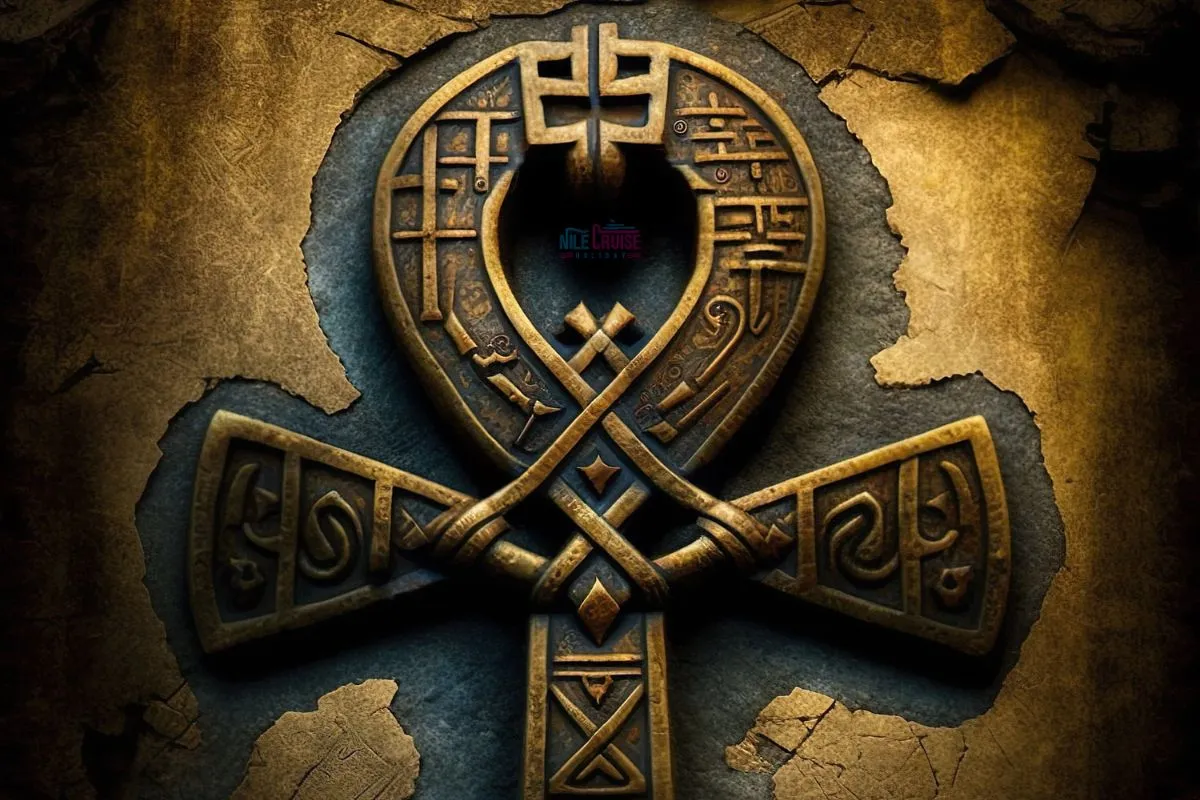
Meaning: The ankh is the hieroglyph for "life," and in temple scenes it often stands for divine life and the life-giving power of the gods.
How to recognize it: A loop sitting on top of a vertical stem, with two short horizontal arms where they meet.
Where to spot it: Gods often hold the ankh by its loop, or present it toward the king's nose and mouth in offering and ritual scenes, as if giving him the breath of life. It is easy to find at Karnak, Luxor, Edfu, and Philae.
2. Djed Pillar, the Sign of Stability
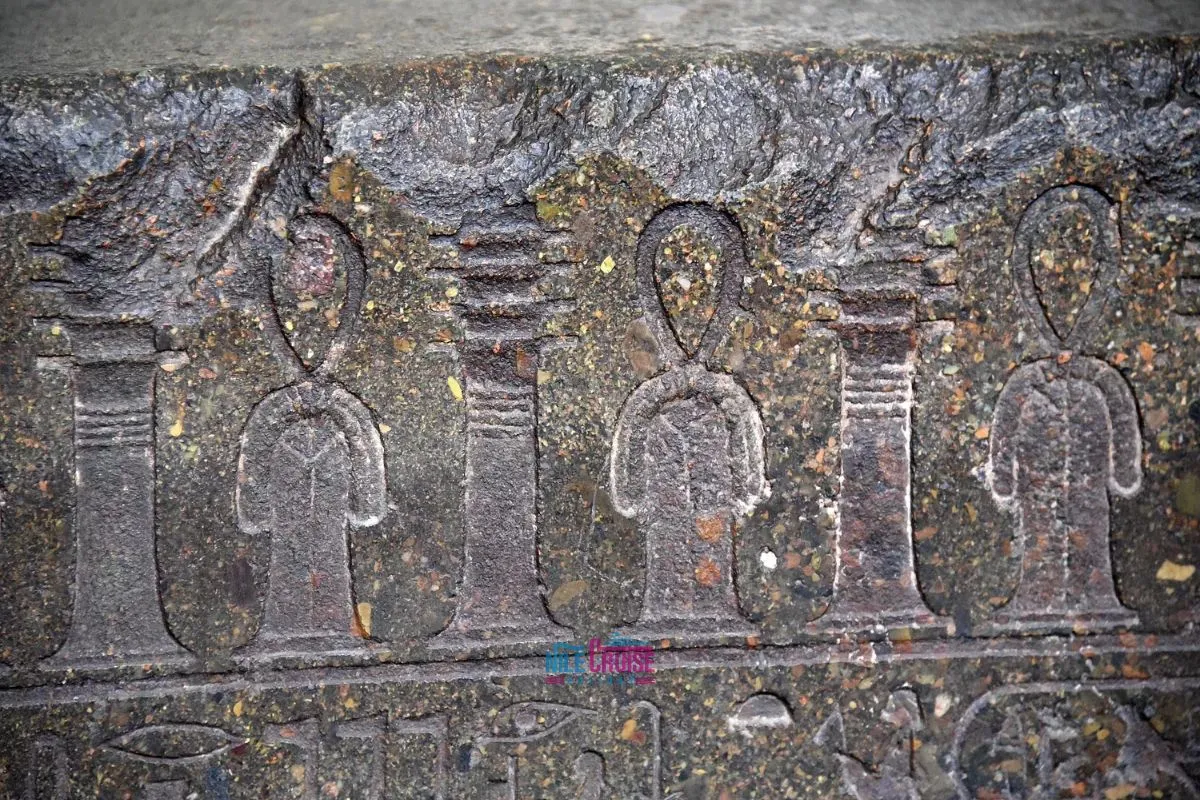
Meaning: The djed stands for stability and endurance. It became closely linked with Osiris, sometimes described as his backbone, a connection explored further in the story of Isis and Osiris. A ritual known as "raising the djed" was tied to royal renewal.
How to recognize it: A straight vertical pillar topped by four horizontal bars stacked one above the other.
Where to spot it: Temple reliefs and ritual scenes connected with Osiris or royal renewal.
3. Was Sceptre, Power and Dominion
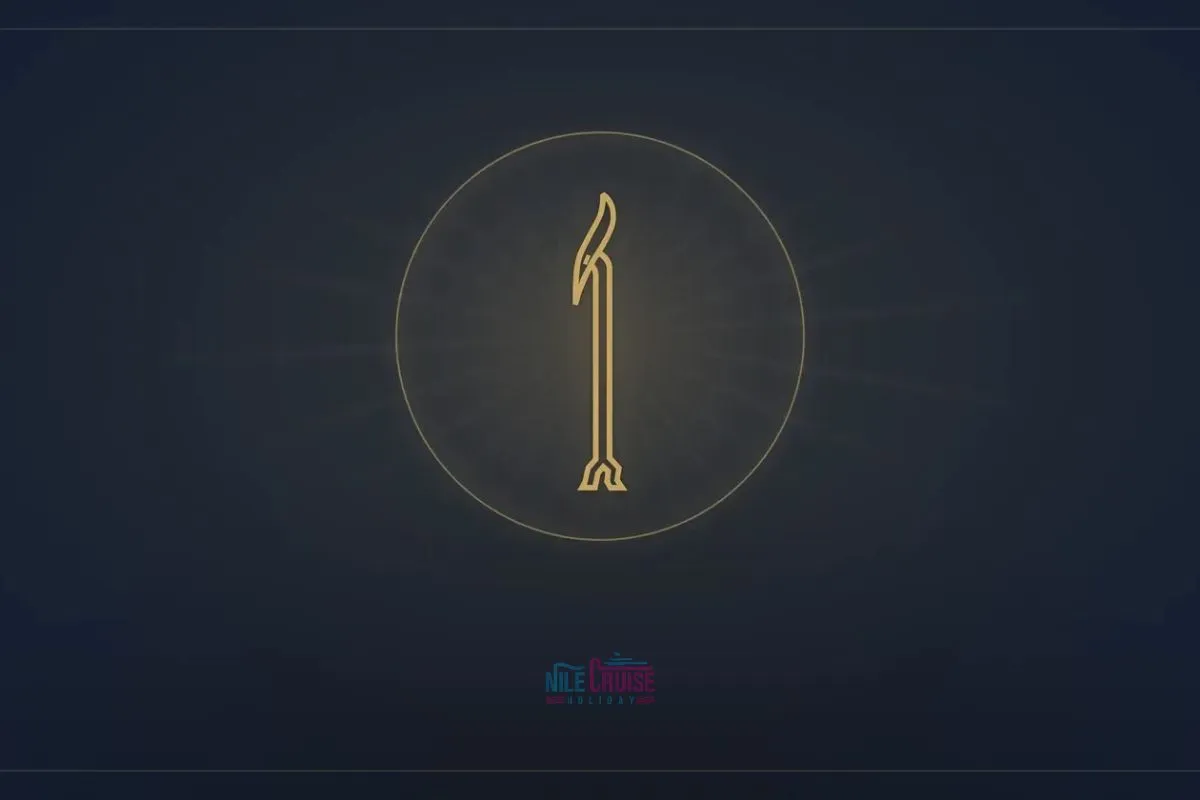
Meaning: The was sceptre expresses divine authority, power, and dominion.
How to recognize it: A long, thin staff with a small forked base at the bottom and a stylized animal head, angled forward, at the top.
Where to spot it: Deities frequently hold it upright in temple reliefs. When a god holds both an ankh and a was sceptre, the scene combines life and divine authority.
Protection, Renewal and Eternity
4. Eye of Horus, Wholeness and Protection

Meaning: The Wedjat eye became associated with restoration and wholeness through the myth of Horus, whose injured eye was healed. Protection and healing followed from that idea.
How to recognize it: A stylized human eye with falcon markings: a brow line above, a straight line extending from the outer corner, and a curling line or teardrop shape dropping below.
Where to spot it: Temple imagery, offering scenes, and protective contexts. It was also hugely popular on amulets.
5. Eye of Ra, Solar Protective Power

Meaning: The Eye of Ra is commonly associated with the sun's power and with divine protection that could turn fierce toward enemies. Depending on the text and period, it was linked with several goddesses, including Hathor and Sekhmet.
How to recognize it: Visually, it can look very close to the Eye of Horus, so its meaning has to be read from context: the deity beside it, the inscription, or the solar setting of the scene.
Where to spot it: Solar and royal religious imagery. Modern charts often claim the right eye is always Ra's and the left always Horus's, but Egyptian tradition is more complex. The two eyes are neither interchangeable nor neatly divided.
6. Scarab, Becoming and Rebirth
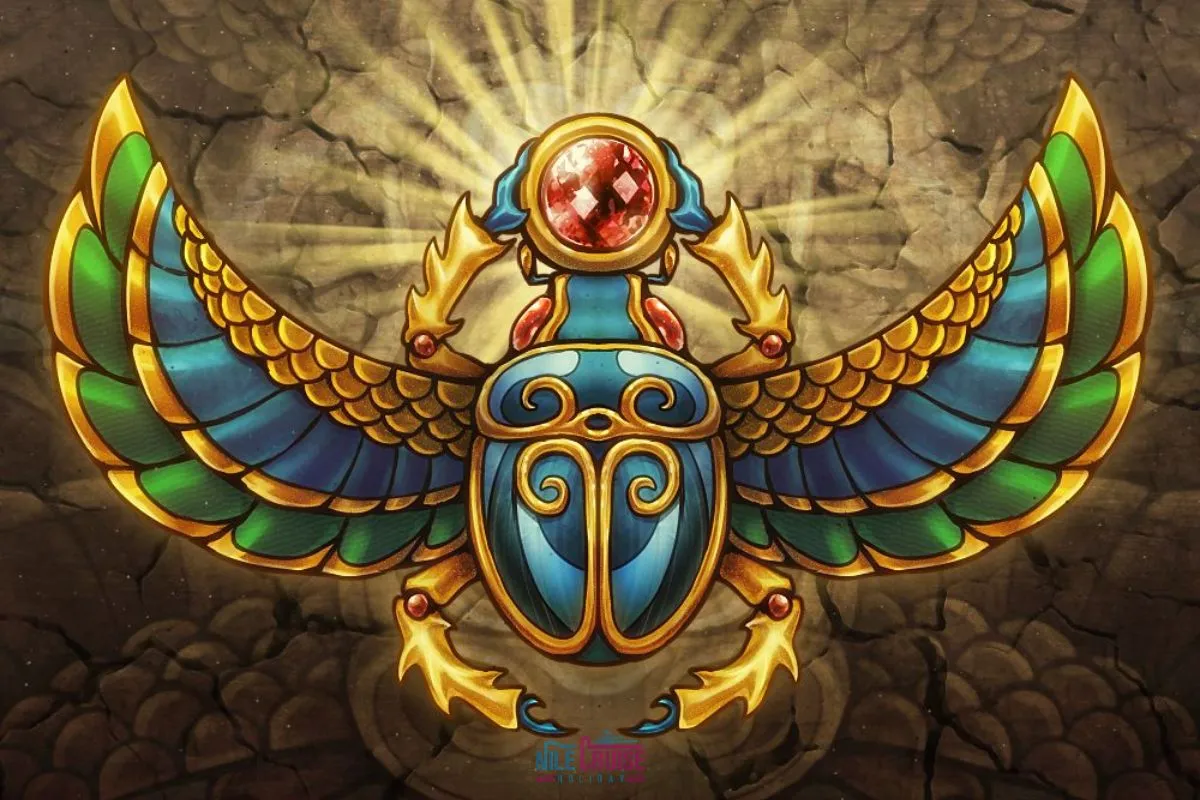
Meaning: The scarab beetle represented becoming and transformation. It is linked with Khepri, the god of the rising sun, and with solar renewal each morning. Its name is related to the Egyptian verb "to come into being."
How to recognize it: A dung beetle seen from above, sometimes pushing a sun disk.
Where to spot it: Scarabs appear more on amulets, jewelry, and seals than on monumental walls, but the idea runs through solar scenes.
7. Shen Ring, Eternity and Encirclement
Meaning: The shen ring expresses encirclement, protection, and completeness, and in some contexts, eternity.
How to recognize it: A circular loop of rope tied off at the bottom in a short straight line.
Where to spot it: Held in the claws of divine birds such as falcons or vultures, or by deities in protective royal imagery. The cartouche is related in shape and idea, but they are not the same sign.
Kingship and Royal Identity
8. Cartouche, the King's Name
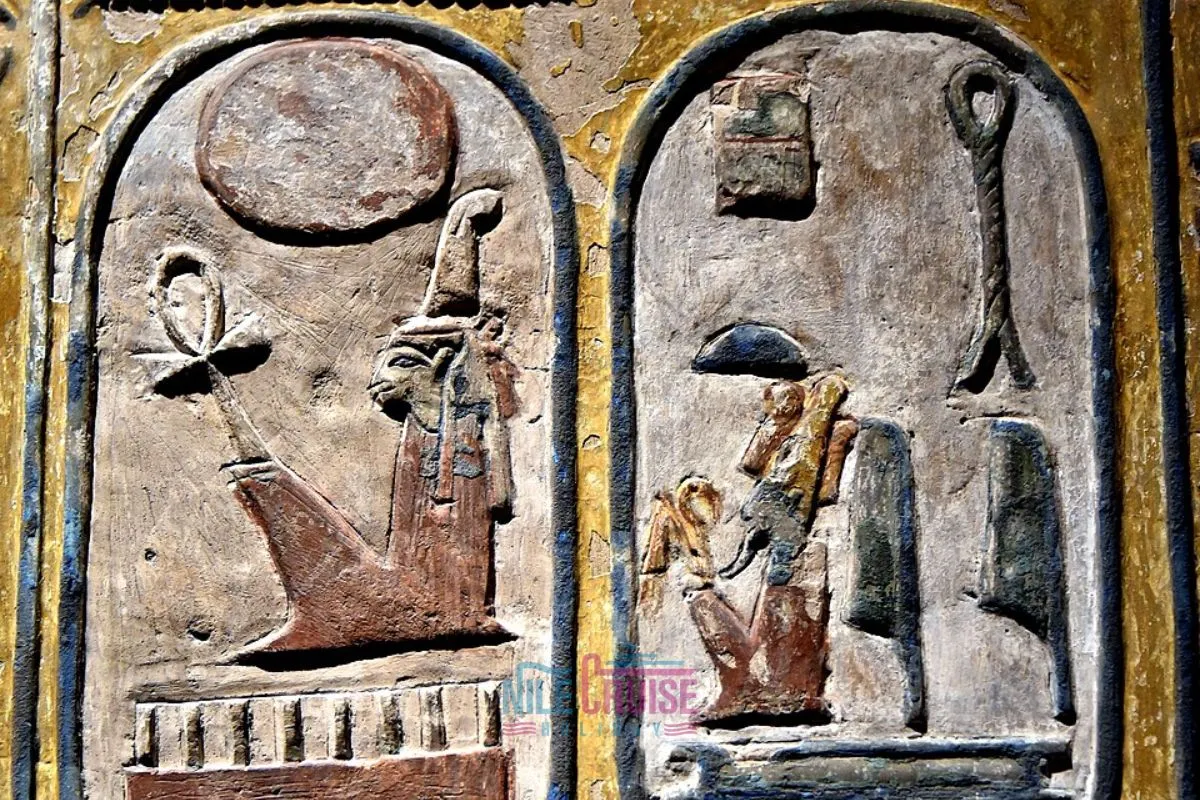
Meaning: The cartouche is an enclosure for royal names and part of the formal titulary of a king. It usually contains the throne name or the birth name.
How to recognize it: An elongated oval ring enclosing a group of hieroglyphs, with a short line across one end.
Where to spot it: Temple walls, columns, pylons, and royal reliefs at sites such as Luxor Temple. If the same oval group of hieroglyphs repeats across a wall, you are probably looking at a royal name rather than a decorative border. Not every royal name appears in a cartouche, though.
9. Uraeus Cobra, Royal Protection
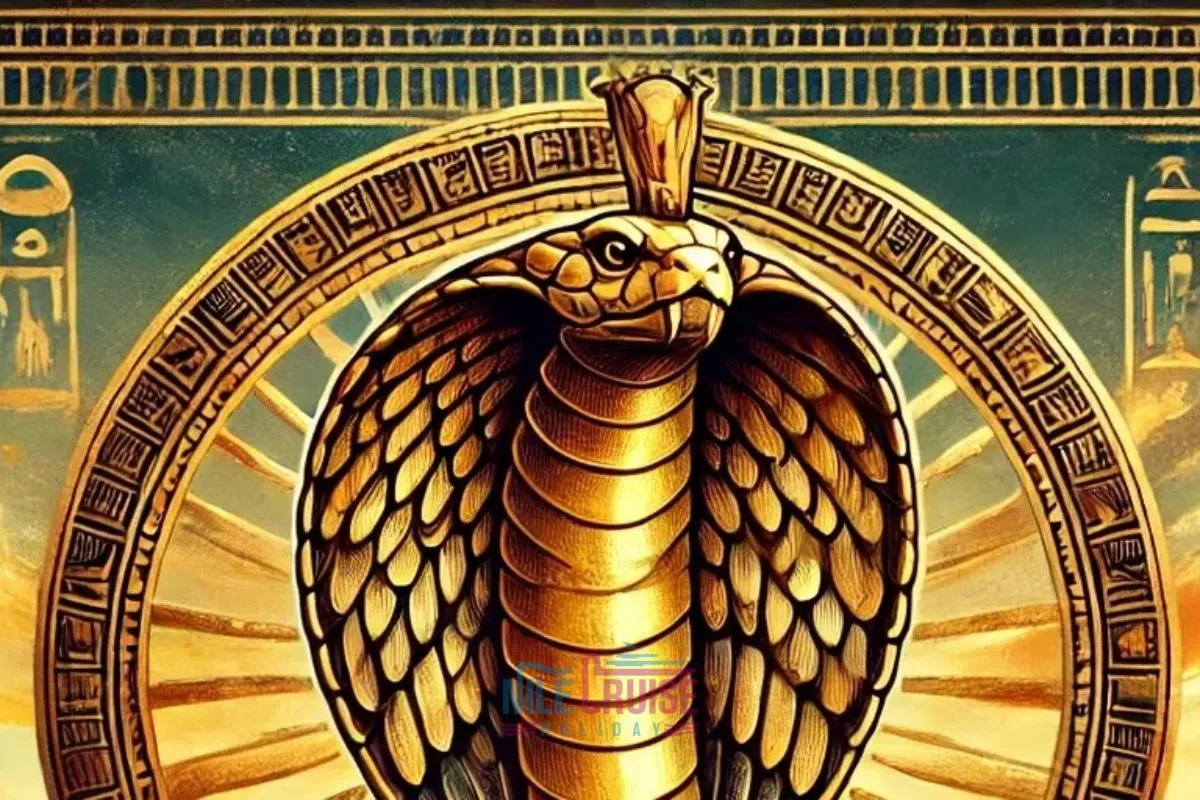
Meaning: The uraeus signals kingship, royal legitimacy, and protective divine power. It is associated with the cobra goddess Wadjet, protector of Lower Egypt.
How to recognize it: An upright, rearing cobra with its hood spread, usually at the front of a crown.
Where to spot it: Crowns, royal statues and temple reliefs, plus friezes of cobras along wall tops.
10. Crook and Flail, Royal Authority
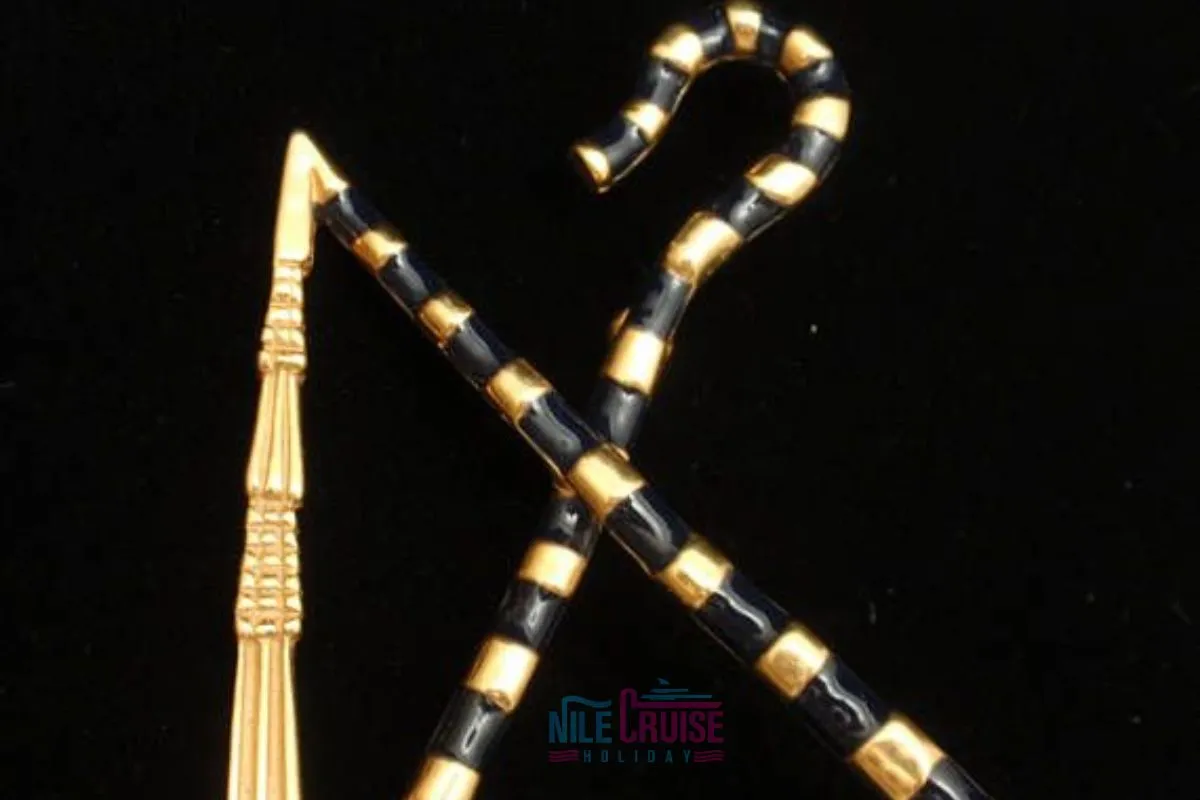
Meaning: Together, these objects stand for kingship and royal power. They are also strongly associated with Osiris.
How to recognize it: A short staff with a curled hook at the top, paired with a handle ending in several hanging strands, often crossed over the chest.
Where to spot it: Royal and Osirian imagery.
11. Double Crown, Upper and Lower Egypt United
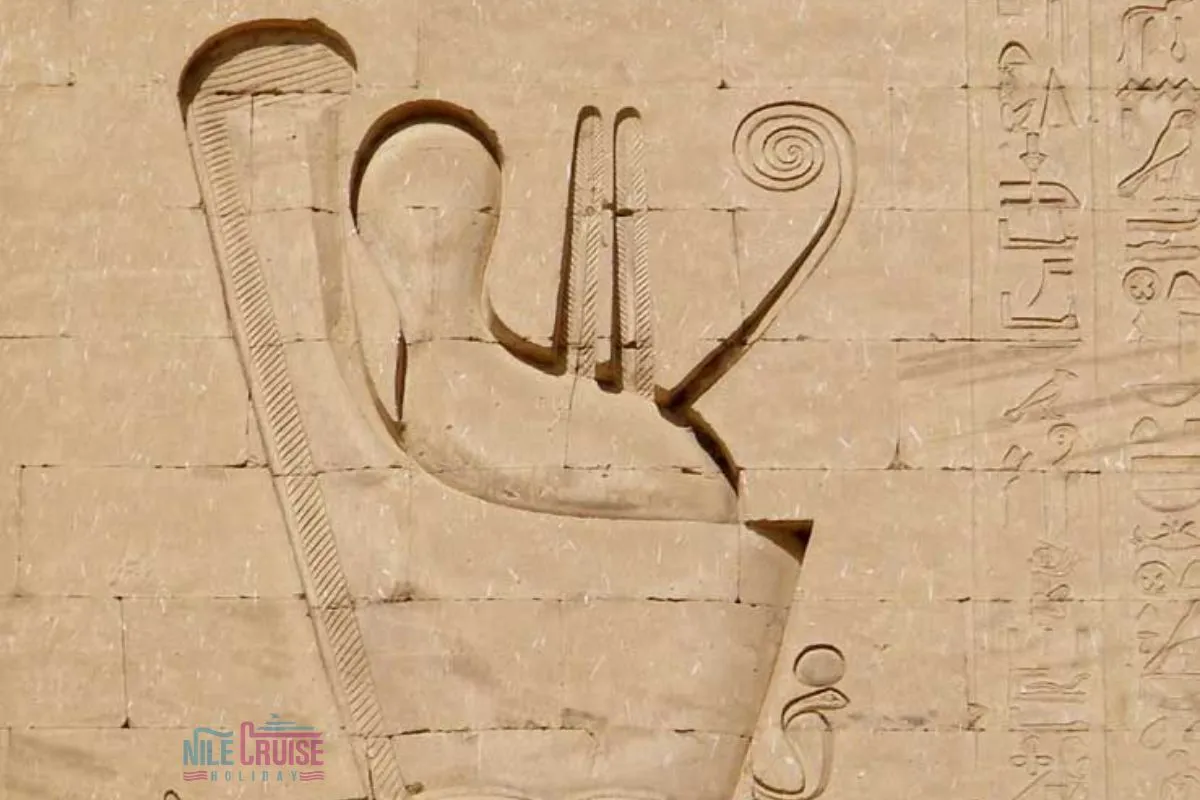
Meaning: The White Crown was associated with Upper Egypt and the Red Crown with Lower Egypt. Combined, they express rule over the Two Lands.
How to recognize it: A tall white bowling-pin-shaped crown set inside a red crown with a flat top, a tall back, and a small coil at the front.
Where to spot it: Worn by kings, and by certain gods such as Horus, in temple reliefs.
Nile, Creation and Cosmic Order
12. Lotus, Rebirth and Upper Egypt
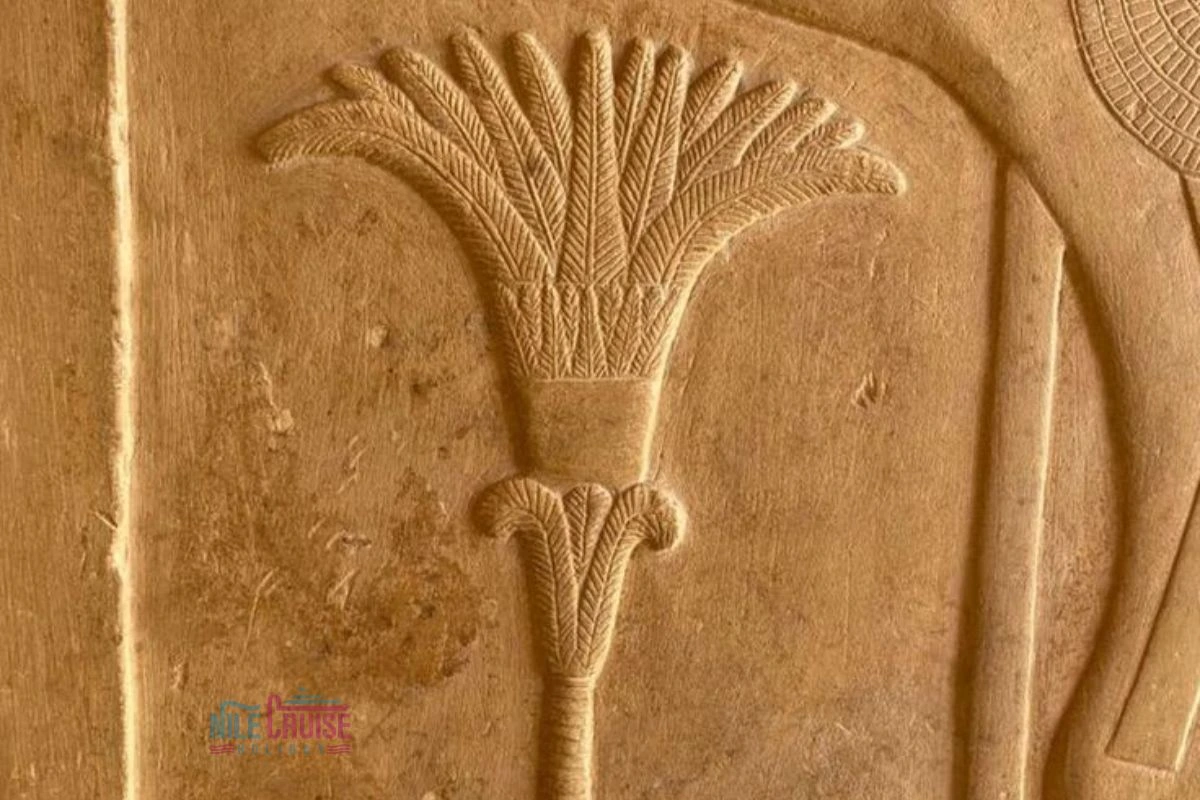
Meaning: Among its meanings, the lotus expressed renewal, regeneration and rebirth, partly because the flower opens each morning again. It is strongly associated with Upper Egypt and, in some contexts, with the sun.
How to recognize it: A long stem topped by a flower with pointed, open petals.
Where to spot it: Column capitals, offering scenes and architectural decoration. Lotus-form columns show that the architecture itself carries meaning.
13. Papyrus, Lower Egypt and Creation
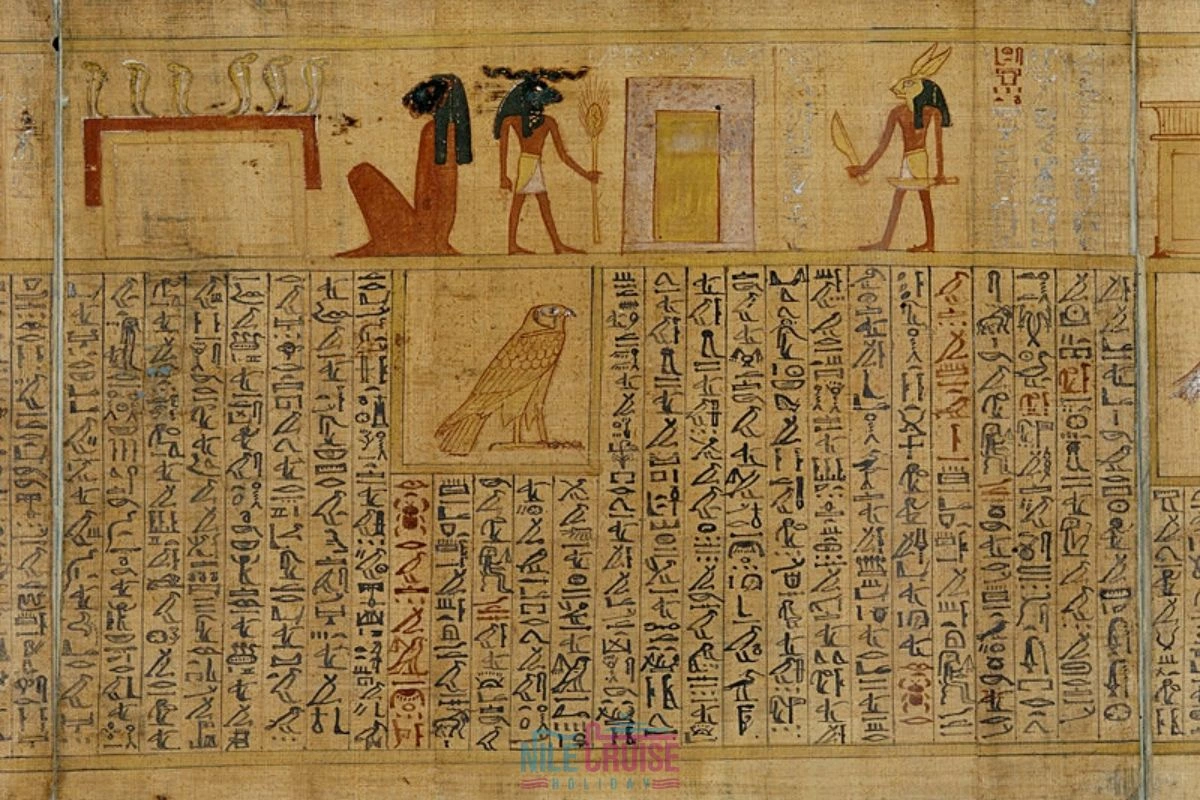
Meaning: Papyrus represented Lower Egypt and the marshlands of the Delta. It could also stand for regeneration and, in certain contexts, the marsh where creation began.
How to recognize it: A tall, straight stalk ending in a spreading, umbrella-like head of fine strands.
Where to spot it: Column capitals and reliefs. When lotus and papyrus are tied together around a central sign, the scene usually refers to the union of the Two Lands.
14. Feather of Maat, Truth and Cosmic Order
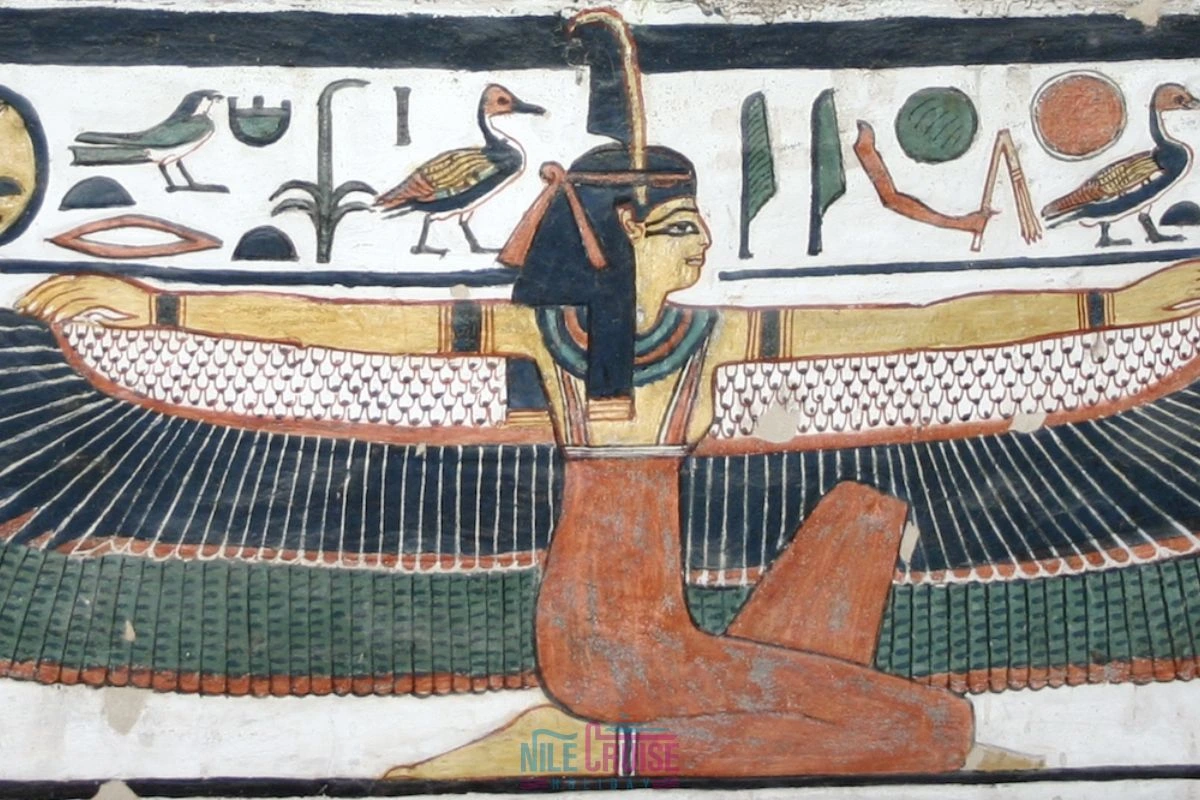
Meaning: The feather stands for maat: truth, justice, balance, and right order in the cosmos. Kings were expected to uphold maat, so the feather matters far beyond the judgment scene.
How to recognize it: A single tall ostrich feather, often worn on the head of the goddess Maat.
Where to spot it: Religious and royal imagery where order and legitimacy matter, such as a king offering a small figure of Maat to the gods.
The Symbol You Will See Above Temple Doors
15. Winged Sun Disk, Divine Protection
Meaning: The winged sun disk combines solar power with divine and royal protection. In temple tradition, it is closely associated with Horus of Behdet, and it guarded the space beneath it.
How to recognize it: A round sun disk in the center with large outspread wings, often flanked by two cobras.
Where to spot it: Frequently carved above temple doorways, gateways, lintels, and entrances, often repeated deeper inside. Edfu is especially relevant because Horus of Behdet is central there. Solar imagery also changed over time. Under Akhenaten, the sun disk with rays ending in hands dominated.
Where to start looking on a Nile cruise: Not every symbol appears at every site. A Luxor and Aswan Nile cruise passes most of the temples below.
-
Karnak: ankh, was sceptre, royal cartouches and crowns
-
Luxor Temple: royal titulary, ankh, uraeus and kingship imagery
-
Edfu: winged sun disks, Horus imagery and cartouches
-
Kom Ombo: divine attributes, ankh, was sceptres and crowns
-
Philae: ankhs, royal names, divine regalia and Isis-related imagery
Travelers who want more than a photo stop can ask NCH to pair Nile temple visits with a private Egyptologist who explains the symbols, royal names and ritual scenes in context, as part of a tailor-made trip.