
Aswan has not one dam but two. The Aswan Low Dam, a granite wall finished by the British in 1902, and the Aswan High Dam, the vast rock and earth barrier completed under President Gamal Abdel Nasser in 1970, stand a few kilometres apart on the same stretch of the Nile. Between them, they ended the ancient rhythm of the annual flood that had shaped Egyptian life since the age of the pharaohs.
Travelers often hear "the Aswan Dam" on their cruise itinerary and are not sure which one they will see. This guide explains the difference between the Aswan Low Dam and the High Dam: where each one is, how and why they were built, what you actually see at each, the tickets and photography rules, and how the dams fit into a Nile cruise alongside Philae Temple and the Unfinished Obelisk.
Aswan Low Dam vs High Dam Comparison On Display
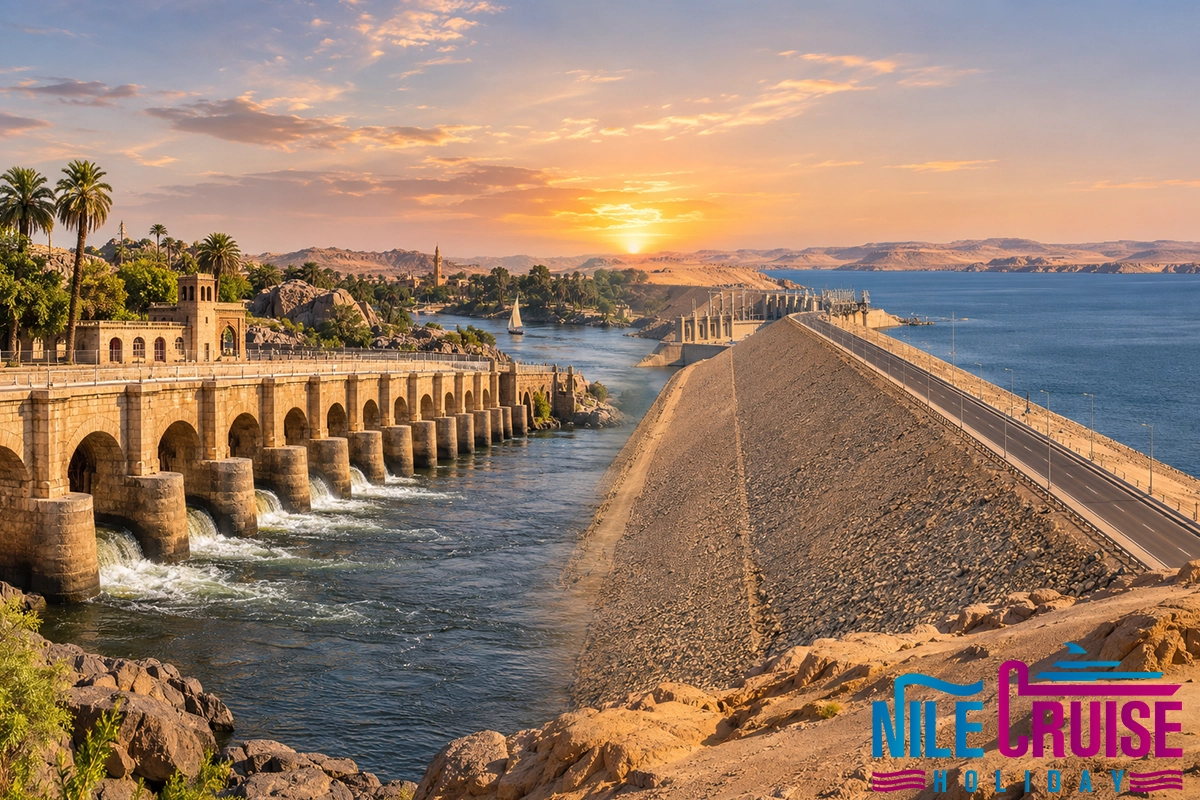
The Short Answer
The Low Dam is the older, smaller dam closer to the city, and most visitors simply drive across it. The High Dam is the larger, newer dam upstream, and it is the one tour programs stop at, with a viewing area over Lake Nasser and the Soviet-Egyptian Friendship Monument. When a Nile cruise itinerary lists "the Aswan High Dam", it means the newer dam.
Comparison Table
| Feature | Aswan Low Dam | Aswan High Dam |
|---|---|---|
| Also called | Old Aswan Dam | Sadd el-Aali |
| Built | 1898 to 1902 | 1960 to 1970, inaugurated January 1971 |
| Built by | British engineers | Egypt with Soviet support |
| Type | Granite-faced masonry | Rock and earth embankment |
| Length | About 1,950 m | About 3,830 m |
| Height | About 36 m after two raisings | About 111 m |
| Reservoir | Small reservoir, now regulated by the High Dam | Lake Nasser, about 550 km long |
| Power | About 550 MW from two stations | About 2,100 MW from 12 turbines |
| Visitor experience | Drive across on the road | Stop, walk the crest, see the monument |
Where Each Dam Is:
Both dams sit south of Aswan city, at the old First Cataract, the rocky rapids that once marked Egypt's southern frontier. The Low Dam is closer to the city, and the High Dam stands about 6 kilometres further upstream, roughly 13 kilometres from the city centre. The reservoir between them holds Agilkia Island, the new home of Philae Temple, so you pass at least one dam on the way to the boat landing for Philae.
The Aswan Low Dam: Egypt's First Great Dam
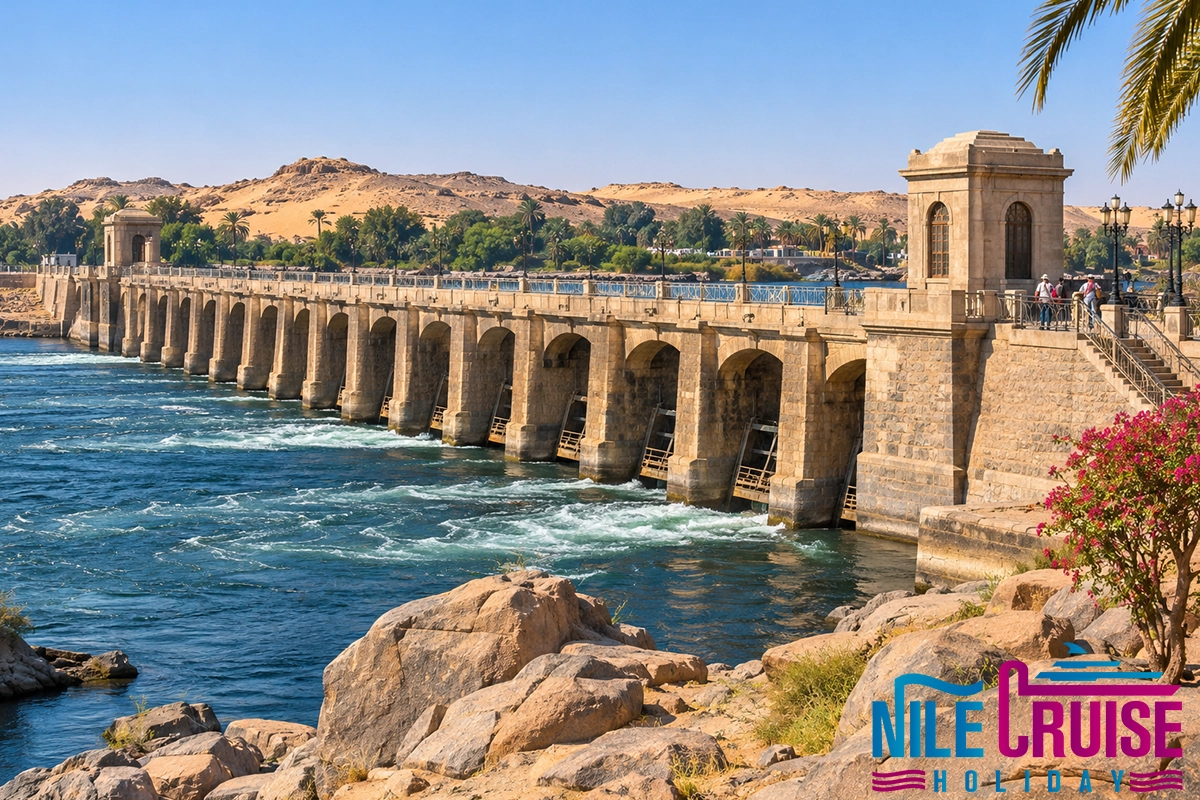
The Low Dam was the first serious attempt to hold back the Nile, and it was one of the engineering wonders of its day.
Built by the British, 1898 to 1902
Designed by Sir William Willcocks, with Sir Benjamin Baker as consulting engineer and John Aird and Co. as contractor, the Low Dam was built between 1898 and 1902 and opened on 10 December 1902. It is a masonry dam faced with red granite and, when completed, it was the largest masonry dam in the world. Its purpose was to store some floodwater for the dry season, while gates let the main flood and its rich silt pass through each year.
Raised Twice to Store More Water
The dam soon proved too small for Egypt's growing farmland, so it was raised twice, by about 5 metres between 1907 and 1912 and by about 9 metres between 1929 and 1933. Even then, the water nearly topped the dam during the 1946 flood, which helped convince Egypt that a far larger dam was needed.
Philae Under Water
The Low Dam's reservoir partly flooded the island of Philae for much of the year. For decades, visitors rowed among the half-submerged columns of the Temple of Isis, and the original height of the dam was kept lower partly out of concern for the temple. Philae was finally saved after the High Dam was built, when it was moved to Agilkia Island.
What the Low Dam Does Today
Since the High Dam took over flood control, the Low Dam no longer passes silt and its old navigation lock is out of use. It still produces hydroelectric power from two stations and carries the main road between Aswan and its airport.
The Aswan High Dam: Taming the Nile
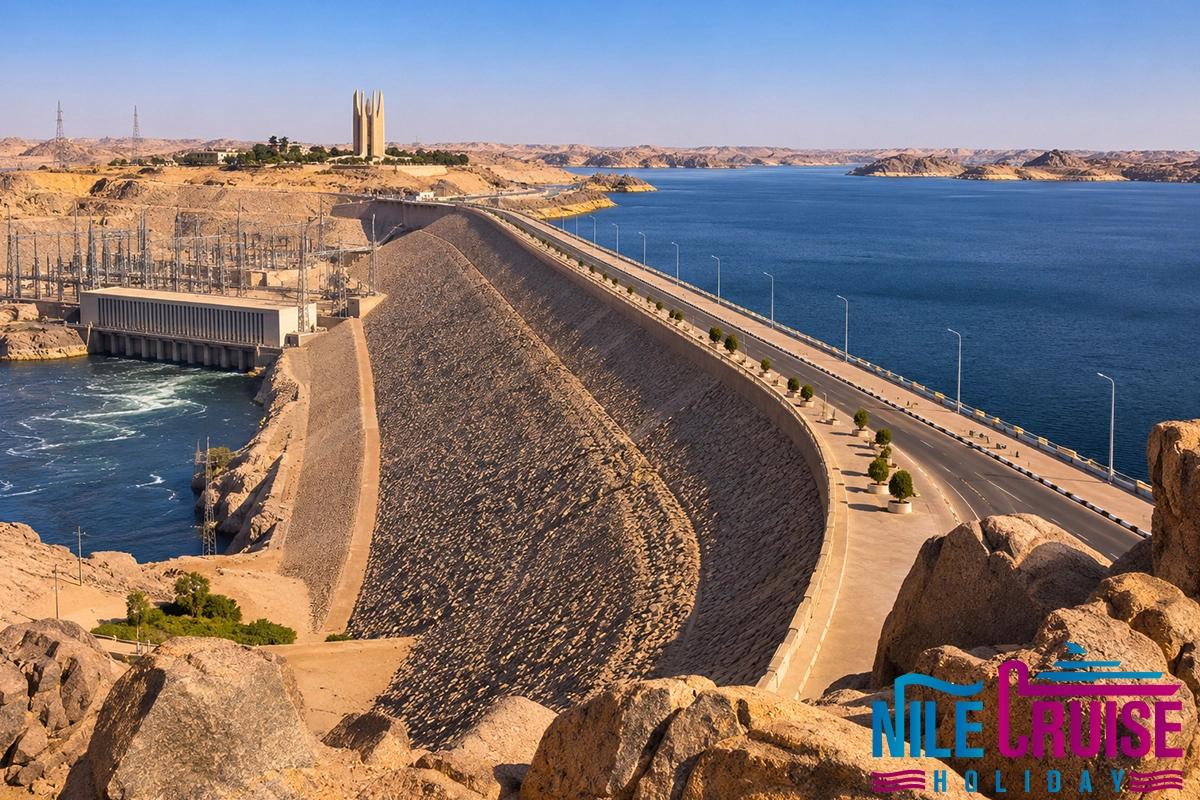
Why Egypt Needed a Bigger Dam
Egypt's population and farmland were growing fast, and the annual flood was unpredictable, bringing either destruction or drought. A dam large enough to hold several years of flow would allow year-round irrigation, protect against both extremes and generate electricity.
Nasser, the Soviet Union and Construction
After the 1952 revolution, the High Dam became the centrepiece of Nasser's development plans. When the United States and Britain withdrew their offer of finance in 1956, Egypt nationalised the Suez Canal, and the Soviet Union later provided loans and engineers. Construction ran from 1960 to 1970, and the dam was inaugurated in January 1971, after Nasser's death in 1970. It contains about 43 million cubic metres of material, around 17 times the volume of the Great Pyramid, and is about 980 metres wide at its base, narrowing to about 40 metres at the top.
Lake Nasser
The dam created Lake Nasser, one of the world's largest artificial lakes, about 550 kilometres long and around 5,250 square kilometres in area, with a capacity of about 132 cubic kilometres. Its southern part lies in Sudan, where it is called Lake Nubia. The lake is home to Nile perch, tilapia and, unlike the river north of the dam, wild crocodiles, as our article on crocodiles in the Nile in Egypt explains.
The Cost: Nubia and Its Monuments
The rising water flooded Lower Nubia. Between about 100,000 and 120,000 Nubians in Egypt and Sudan lost their villages, and many Egyptian Nubians were resettled near Kom Ombo. A UNESCO campaign launched in 1960 moved 22 monuments, including Abu Simbel, which was cut into 807 blocks and rebuilt 65 metres higher, and Kalabsha Temple, now on an island beside the High Dam. The Nubian Museum in Aswan tells this story in detail.
What Visitors Actually See at Each Dam
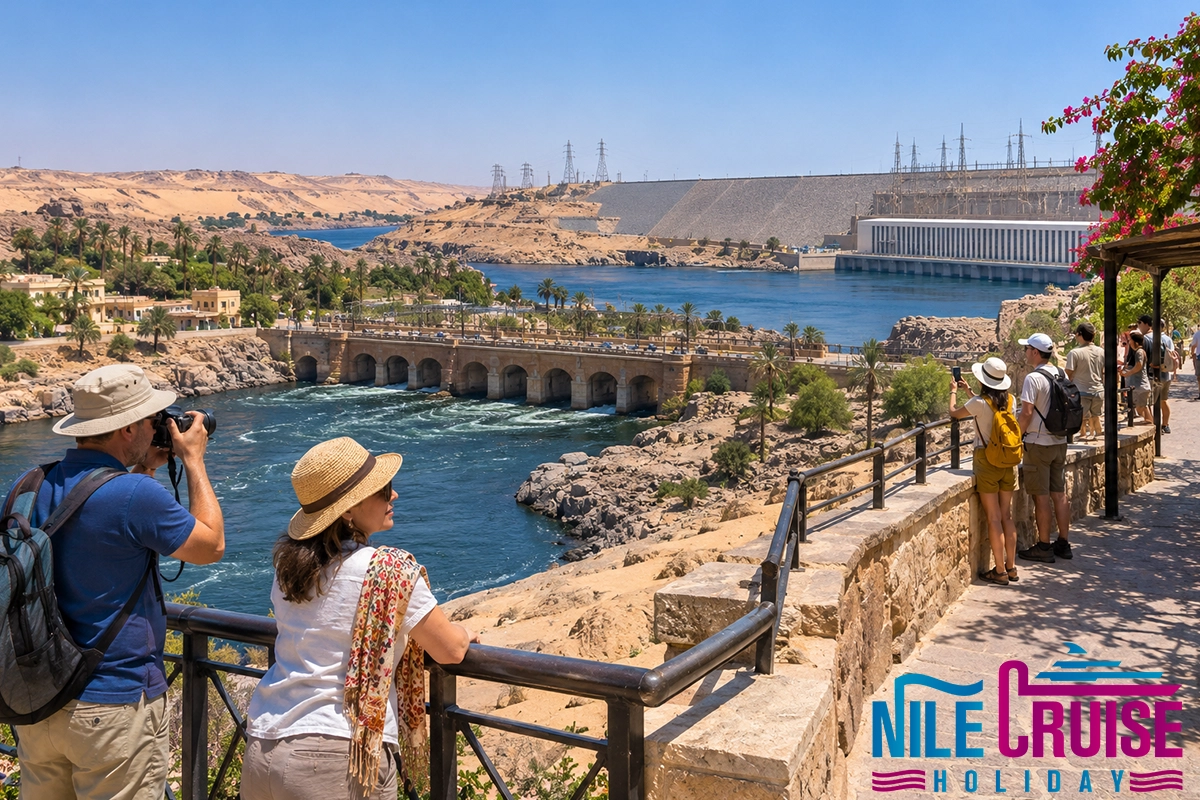
Crossing the Low Dam
For most travelers, the Low Dam is something you drive over rather than visit. The road runs along its crest, with the Nile and the granite rocks of the old cataract on one side and the reservoir on the other. Tour vehicles usually cross without stopping.
On Top of the High Dam
The Aswan High Dam is a planned stop. After a security checkpoint, you can walk along a section of the wide crest. To the south, Lake Nasser stretches toward the horizon; to the north, the Nile narrows back toward Aswan. Do not expect a dramatic concrete wall: from the top, the dam looks like a broad road with a lake on one side, and its scale is best understood through the numbers your guide shares.
The Soviet-Egyptian Friendship Monument
On the western side stands the Soviet-Egyptian Friendship Monument, completed in 1971, a tall concrete tower shaped like an opening lotus flower that symbolises cooperation between the two countries. A small visitor pavilion nearby has basic information panels, and the monument is one of the most photographed parts of the visit.
Photography and Security Rules
Photography is allowed on the dam crest, but you must not photograph the power station, military installations or security staff. Drones are not permitted, and large camera equipment may be questioned. Carry your passport, since it may be checked at the entrance.
Planning Your Visit to the Aswan Dams
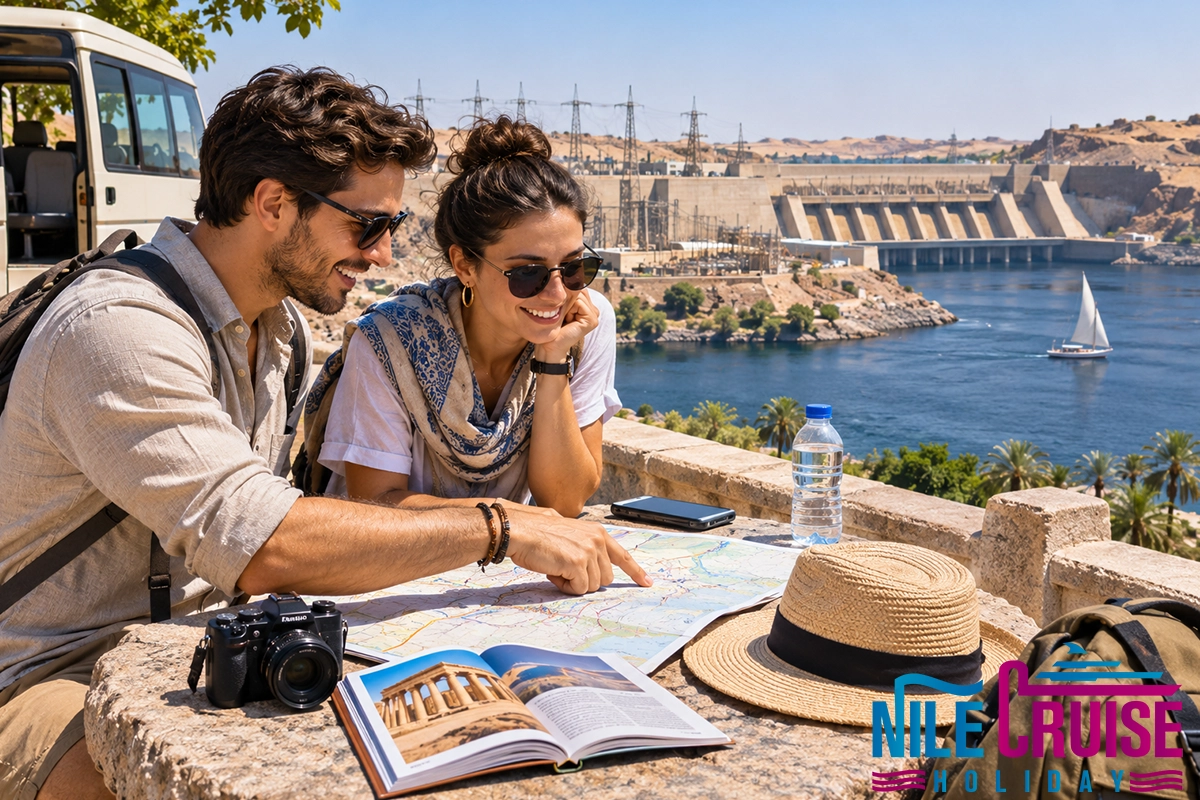
Tickets, Hours and Time Needed
There is no ticket for the Low Dam, since you simply cross it. The High Dam has a small entrance fee for foreign visitors, paid at the site and usually included in guided tours and cruise excursions. The High Dam is generally open from about 7am to 5pm. A typical stop lasts 30 to 60 minutes, or up to 90 minutes with a detailed guide.
Best Time to Visit
The most comfortable months are October to April, when daytime temperatures in Aswan are around 20°C to 30°C. In July and August, temperatures regularly exceed 40°C and the dam has almost no shade, so go early in the morning. Our guide to the best time to cruise the Nile explains the seasons.
How the Dams Fit Into a Nile Cruise
On most Luxor and Aswan Nile cruises, the High Dam is part of a half-day Aswan tour together with Philae Temple and the Unfinished Obelisk. Philae is only about 5 kilometres from the High Dam, so the three sights fit easily into one morning. Our 4-day Nile cruise itineraries and Nile cruises from Aswan show where this tour falls, and our comparison of Luxor to Aswan vs Aswan to Luxor explains how direction affects your Aswan days.
More to See in Aswan
Spend your free time on a sunset felucca ride in Aswan around Elephantine Island and the Aswan Botanical Garden, or visit the Nubian Village, the home of families whose story is tied to the dam. Our guides to things to do in Aswan and whether the Nubian Village is worth visiting have more ideas.
Is the Aswan High Dam Worth Visiting?
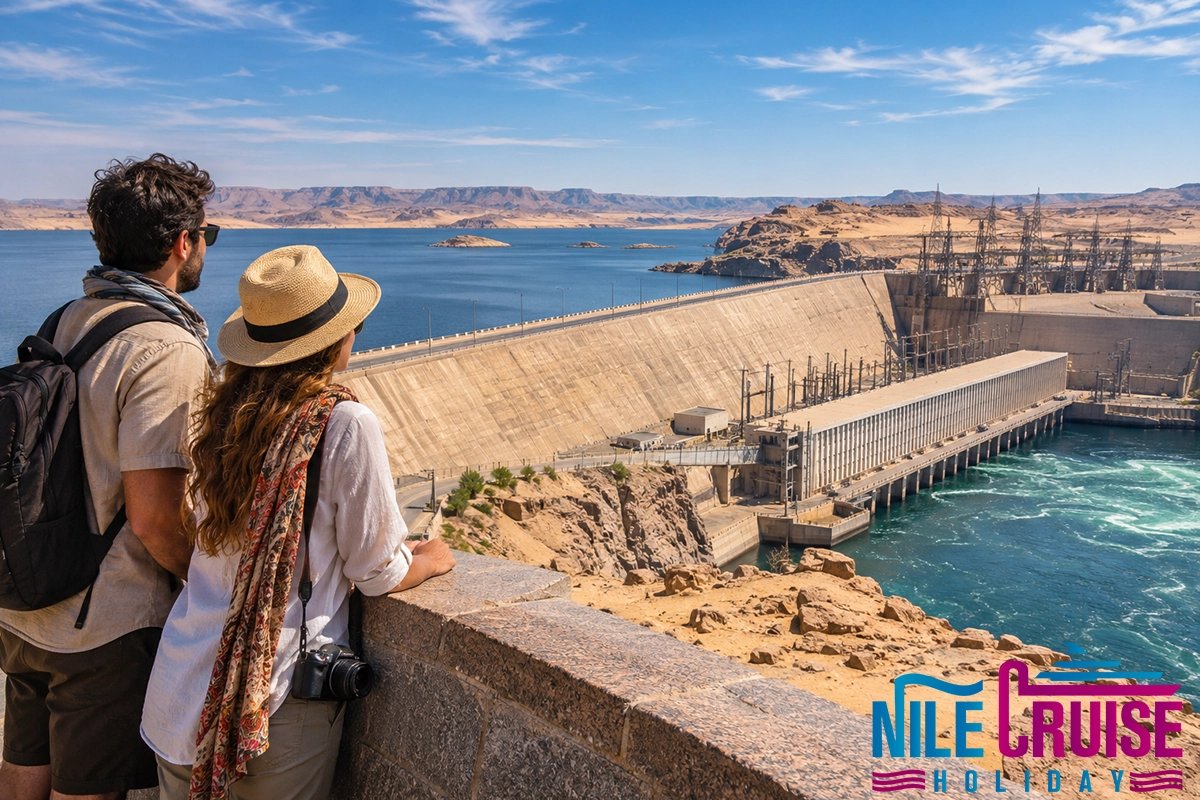
Yes, as a short stop. The High Dam is not beautiful in the way a temple is, but it changed modern Egypt more than any other structure, and standing between Lake Nasser and the Nile makes that change easy to grasp.
Who Will Enjoy It
- Travelers interested in modern history, engineering and the Cold War.
- Anyone who wants to understand why Abu Simbel and Philae were moved.
- Photographers looking for wide views over Lake Nasser.
Who Might Find It Less Exciting
- Visitors with little time in Aswan, who may prefer extra time at Philae or the Nubian Museum.
- Travelers expecting a dramatic view of a concrete dam wall.
Beyond the Dam: Lake Nasser and Abu Simbel
The High Dam is also the gateway to the lake. Lake Nasser Nile cruises sail between Aswan and Abu Simbel, stopping at rescued Nubian temples such as Wadi El Seboua and Amada. Abu Simbel itself is about 280 kilometres south of the dam, around three hours by road or a short flight.
Explore These Unique Pieces of History With Our Epic Holidays
The difference between the Aswan Low Dam and the High Dam is the difference between a first attempt and a final answer. The Low Dam, built of British granite in 1902, softened the flood; the High Dam, built of rock and earth with Soviet help, ended it and created Lake Nasser, at the cost of Nubia's villages and the move of its temples.
For visitors, one is a scenic road and the other a short but revealing stop. Stand on the High Dam with the lake glittering to the south, and you can see the moment the eternal Nile flood became history. To include the dams, Philae and Abu Simbel in your journey, browse our Egypt tour packages with a Nile cruise or ask our team for a tailor-made trip.