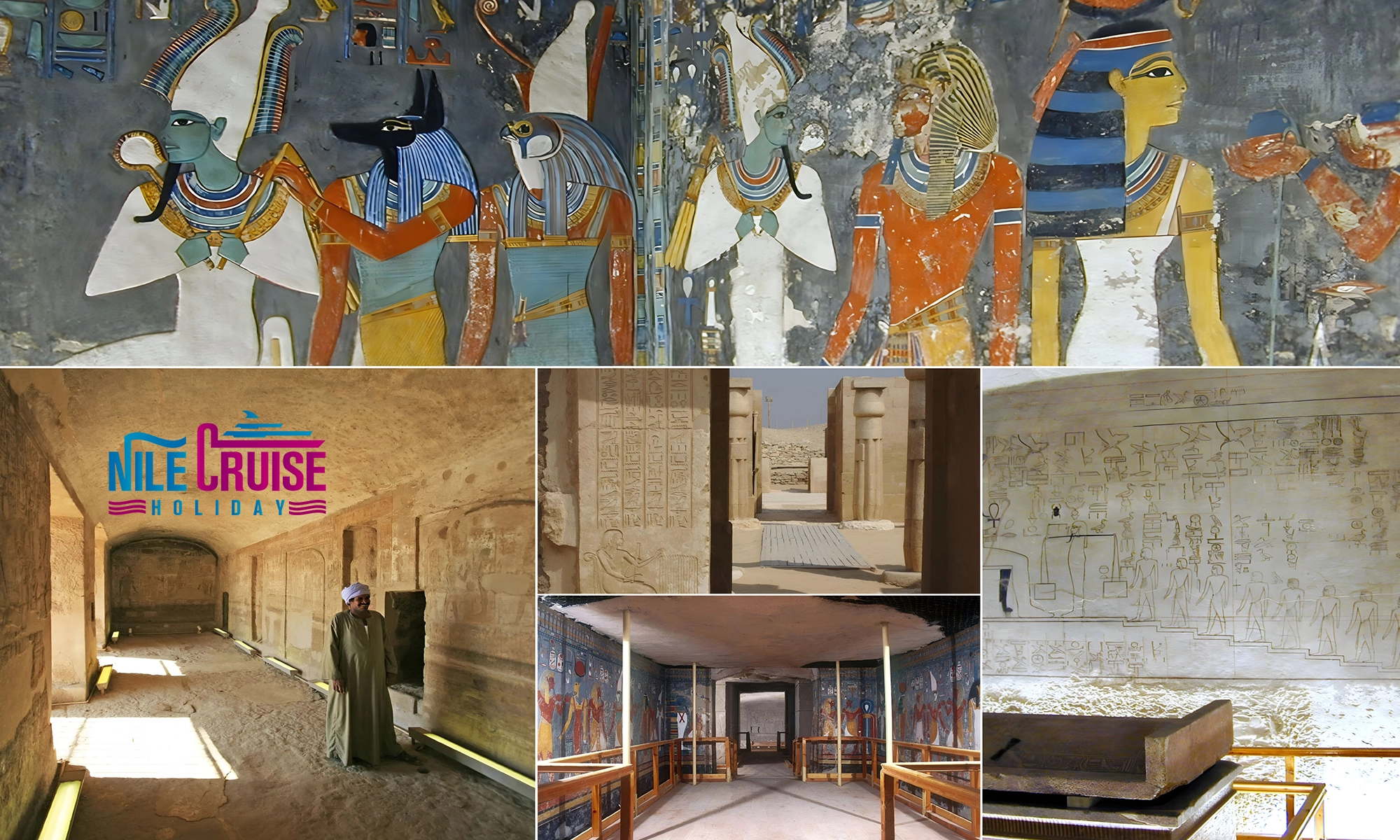

The Tomb of Horemheb in Saqqara is the grand private tomb that Horemheb built while he was commander of the army under Tutankhamun, years before he became king himself. Its courtyards, colonnades and chapels form a small temple in the desert south of the Unas causeway, with reliefs of bound captives, golden rewards and funeral rites. Here the sands of Saqqara keep the portrait of a soldier just before history crowned him.
This guide explains who Horemheb was, why he built and then abandoned this tomb, how it was lost and found again, what its architecture and reliefs show, where its scattered pieces are today, and how to visit it, along with the neighbouring tombs of the same era.
Who Was Horemheb?
Horemheb's career runs through the most turbulent decades of the 18th Dynasty, from the end of the Amarna age to the rise of the Ramessides.
From Commoner to Commander
Horemheb was not born royal. His family probably came from Herakleopolis, and his name means "Horus is in festival." He rose through the army and the administration, and under Tutankhamun, who reigned about 1336 to 1327 BC, he became supreme commander of the army and effectively the second man in the state. His Saqqara titles include "Generalissimo," "Hereditary Prince" and "Deputy of the King in the entire land."
King Horemheb and the End of the Amarna Age
After the short reign of Ay, who died without an heir, Horemheb took the throne himself, ruling to about 1292 BC. He restored the old gods abandoned by Akhenaten, dismantled Amarna monuments, and issued an edict reforming the courts and the army. Having no son, he passed the crown to his vizier Ramesses I, founder of the 19th Dynasty and grandfather of Ramses II.
Why Horemheb Has Two Tombs
As a general based in Memphis, Horemheb built his tomb in Saqqara, the city's great cemetery. Once he became king, a private tomb was no longer fitting, so he cut a royal tomb, KV57, in the Valley of the Kings near Luxor, one of the special ticket tombs listed in our guide to Valley of the Kings tombs and tickets. The Saqqara tomb was never used for his own burial, but it did not stand empty.
History, Abandonment and Rediscovery of the Tomb
The Memphite tomb has had a strange afterlife, plundered, forgotten and pieced back together over two centuries.
Built in Three Phases
Excavators found that the tomb grew in three stages as Horemheb's power increased. The first plan had an entrance pylon, a forecourt and a colonnaded court with a burial shaft and three chapels. Next, the forecourt was enclosed and given side chapels. Finally, a new forecourt was added in front, which meant demolishing a 5th or 6th Dynasty mastaba. Builders also reused older stone, including blocks from the enclosure wall of Djoser's Step Pyramid.
The Wives Buried Inside
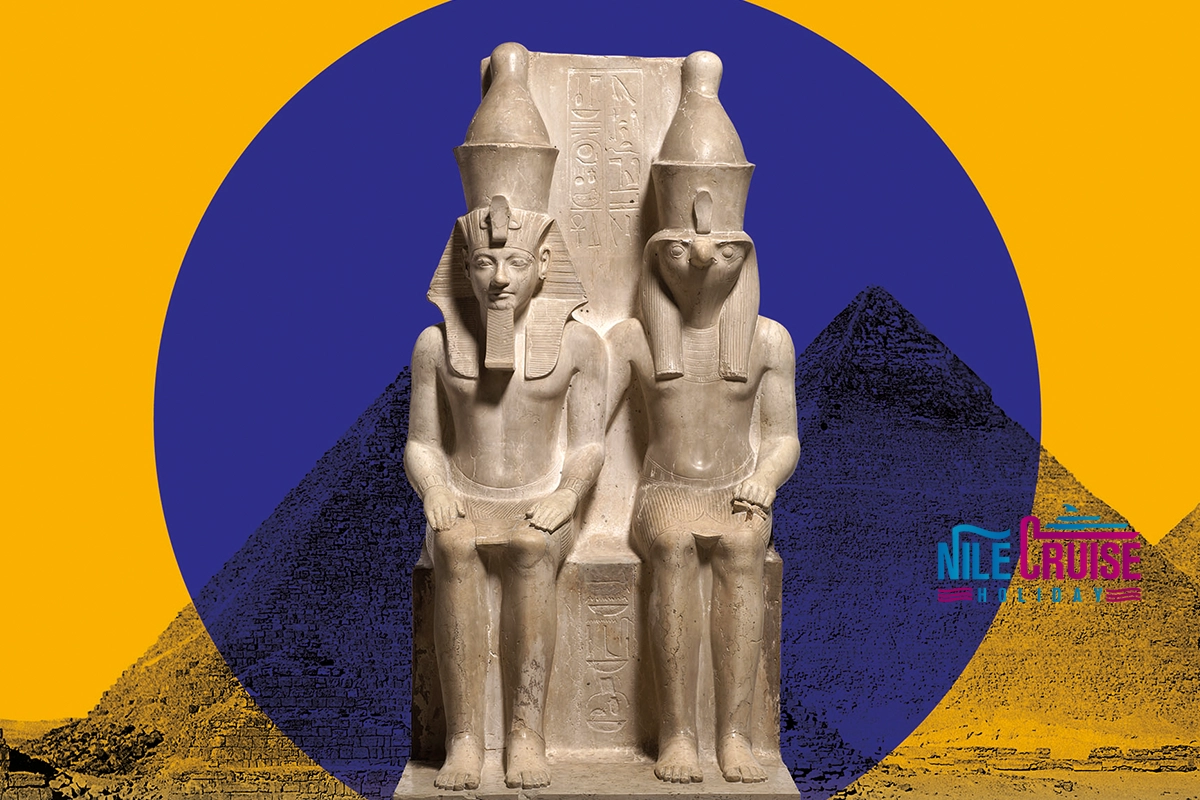
Two women were laid to rest in the shafts. Amenia, his first wife, died before he became king. Queen Mutnedjmet, his royal wife and possibly a sister of Nefertiti, was buried here too, rather than in Thebes. A double statue in the British Museum, acquired in 1837, was identified in 2009 as Horemheb and Amenia, after matching clasped hands were found at the tomb in 1976.
Lost and Found Again
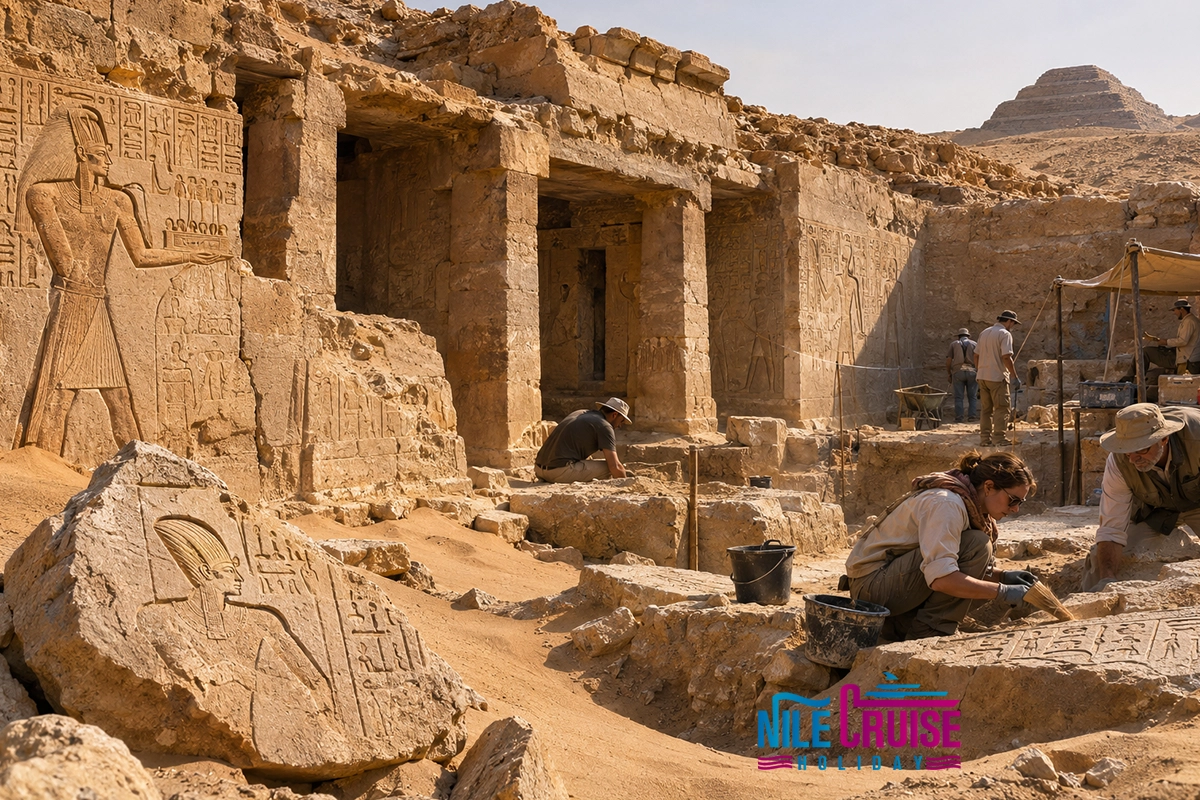
Antiquities dealers found the tomb in the early 19th century and cut away many decorated blocks, which were sold to European collections. The sand then covered the site and its location was forgotten. In 1975 a joint mission of the Egypt Exploration Society of London and the Rijksmuseum van Oudheden in Leiden, led by Geoffrey T. Martin, rediscovered it south of the causeway of the Pyramid of Unas. Finds included gold leaf, a stela of Horemheb, Mycenaean pottery and later Christian graffiti.
Architecture of the Memphite Tomb of Horemheb
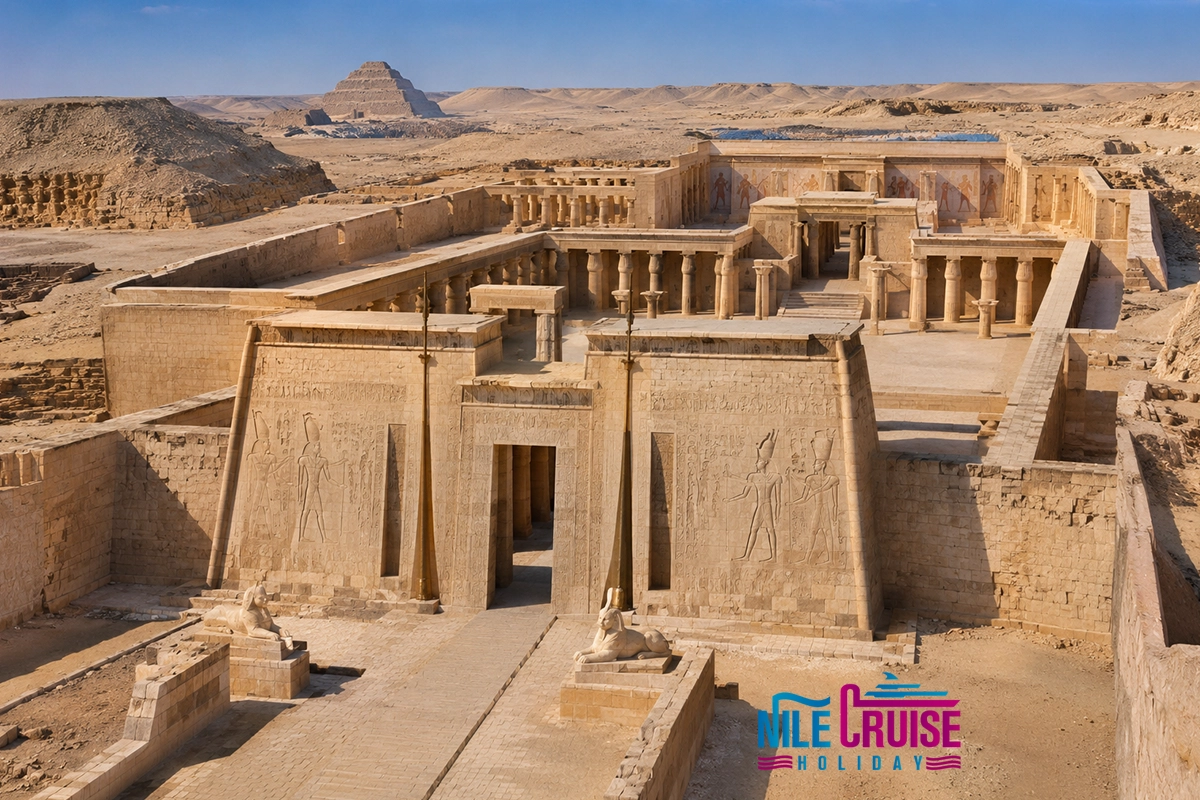
Rather than a hidden rock tomb, the Saqqara tomb is a temple tomb built above ground, in the style favoured by Memphite nobles after Amarna.
The Pylon and Forecourt
A paved forecourt leads to a mud brick pylon, faced with limestone and divided in two like a temple gateway. The rebuilt pylon stands about 7 metres high.
The First Courtyard
Behind the pylon lies a large colonnaded court, once lined with about 24 columns, of which 10 survived. Its reliefs show Horemheb's military life. Next to the door of the statue room is a stela with 25 lines of hymns to Ra-Horakhty, Thoth and Ma'at; the one you see is a replica, as the original is in the British Museum.
The Statue Room
This room held statues of Horemheb and the god Anubis. A relief shows a priest performing the Opening of the Mouth on a seated statue of Horemheb, a ritual explained in our guide to Egyptian mummification.
The Second Courtyard and Chapels
A smaller second court, with columns just over 2 metres high, leads to three chapels. The central chapel, the offering place, was once crowned by a small pyramid, now largely lost.
The Burial Shaft and Underground Rooms
A deep shaft in the inner court leads to corridors and rooms cut at different levels in the rock, ending in the burial chamber. Later 19th Dynasty burials were placed in the side chapels and upper levels.
Reliefs and Scenes of a General
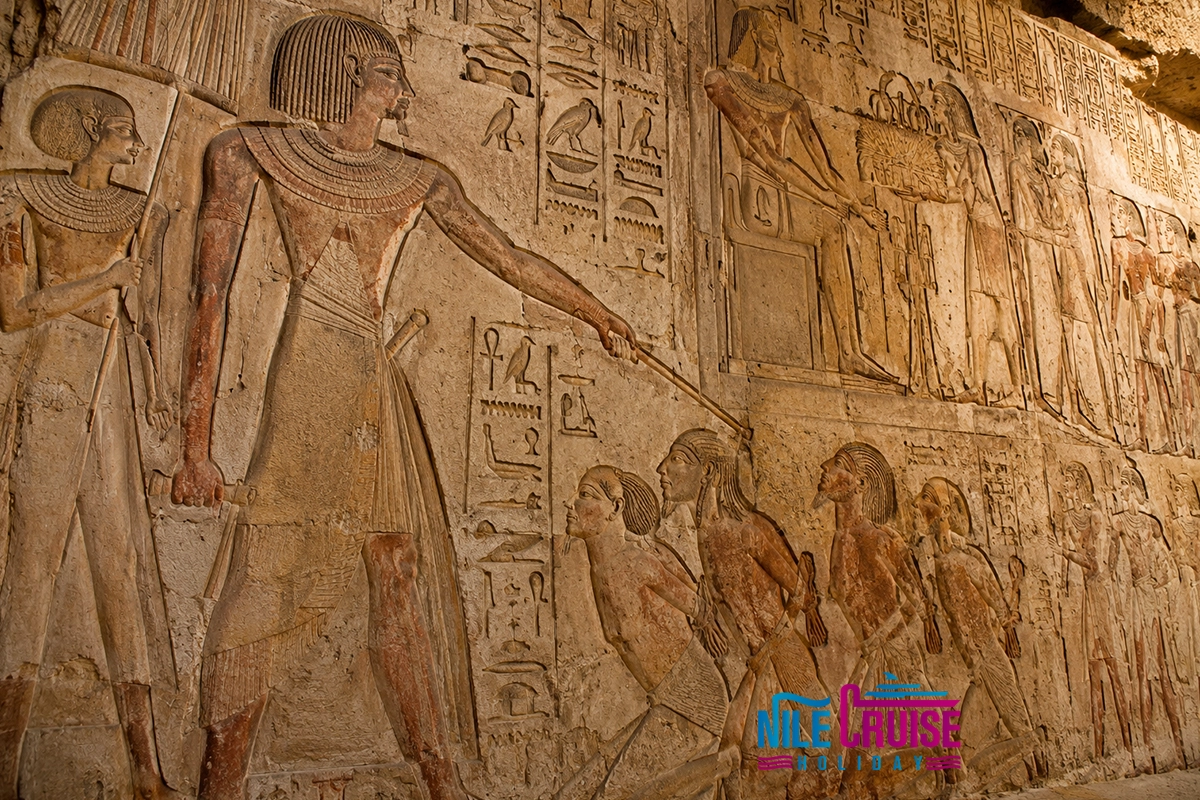
The reliefs are some of the finest of the late 18th Dynasty, carved in raised and sunken relief with a softness inherited from Amarna art.
Foreign Captives and Envoys
The best known scenes show prisoners brought before Horemheb: Asiatics bound by the neck, women and children among them, and a Nubian chief forced to "smell the ground" before the general. Libyan, Nubian and Syrian envoys plead for the "breath of life." These scenes give rare detail of foreign dress and faces, part of the long history of Egyptian contact with the south told at the Nubian Museum.
The Gold of Honour
In another famous relief, Tutankhamun and Queen Ankhesenamun stand at a palace window while Horemheb is draped in heavy gold collars, the highest reward a pharaoh could give. To see the king's own treasures, visit the Grand Egyptian Museum or read about the tomb of Tutankhamun and the legend of the curse of King Tut.
The Added Uraeus
After Horemheb became pharaoh, sculptors returned to his old tomb and added a royal cobra, the uraeus, to his brow in several reliefs. It is one of the rare cases where you can see a man's promotion to kingship carved directly onto stone.
Daily Life and the Afterlife
Other scenes show butchers, food stores, a military camp, a funeral procession and Horemheb ploughing and sowing in the Field of Reeds. Our article on Egyptian symbols and meanings helps decode the signs on the walls.
Where Are the Horemheb Reliefs Today?
Blocks removed in the 19th century are now divided among museums. The largest group is in Leiden, with others in Bologna, Vienna, Berlin and the British Museum. Material from the 1975 onward excavation went to the Egyptian Museum in Cairo. Casts and replicas now fill some gaps in the walls on site.
Nearby Tombs in the New Kingdom Necropolis
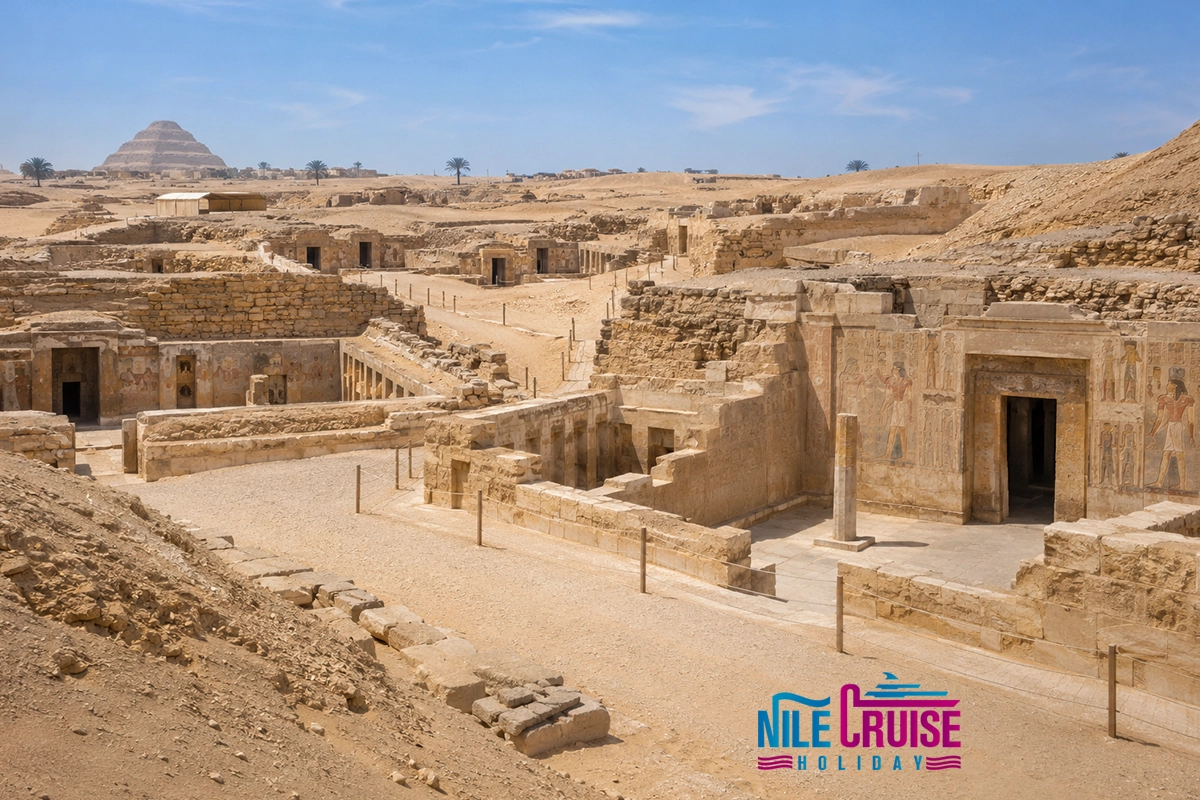
Horemheb's tomb is the centrepiece of a small New Kingdom cemetery of officials who served the same kings.
Tomb of Maya and Meryt
Maya was the treasurer of Tutankhamun and helped prepare the boy king's burial. His tomb, shared with his wife Meryt, was found by the same mission in 1986 and lies parallel to Horemheb's. Its fine reliefs and painted underground rooms make it a natural pair to visit.
Tomb of Tia and Tia
Next door lies the tomb of Tia, an official married to a sister of Ramses II, who was also named Tia. It shows how the cemetery stayed fashionable into the 19th Dynasty.
The Wider Saqqara Plateau
From here it is a short walk to the Unas pyramid and its Pyramid Texts, the mastabas of the Old Kingdom nobles, and the Imhotep Museum, named after the architect of the Step Pyramid, the subject of our guide who was Imhotep.
Visiting the Tomb of Horemheb in Saqqara
Location and Getting There
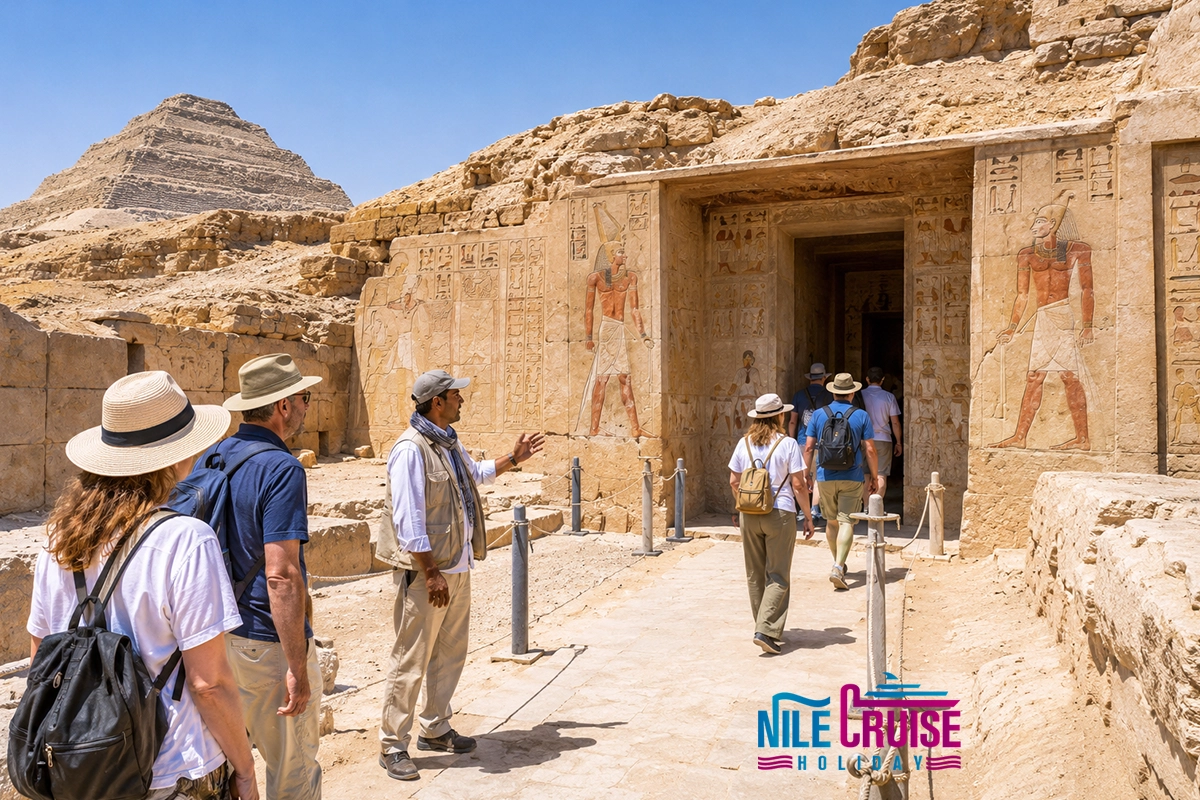
Saqqara lies about 30 km south of central Cairo, with Memphis about 3 km to the east and Dahshur about 12 km further south. Most visitors arrive by private car with a guide, often after the Giza Pyramids, and our list of things to do in Giza helps fill the rest of the day. The tomb sits south of the Unas causeway, a short walk across the sand from the Step Pyramid area.
Tickets and Opening Hours
The Horemheb tomb is usually covered by the general Saqqara site ticket, though some tombs on the plateau have their own tickets, so check at the ticket office. The site generally opens from about 8:00 AM to 5:00 PM. Ticket machines at Saqqara take cards only, so carry a bank card, as explained in our guide to money in Egypt.
Tips for Your Visit
- Go early in the morning, as the open courtyards have no shade.
- Wear closed shoes for the sandy walk from the parking area.
- Pair the visit with Maya and Meryt, Unas and the Step Pyramid for a full half day.
- Add the nearby Bent Pyramid at Dahshur if you have a full day.
Adding Saqqara to a Nile Cruise Holiday
Most Nile cruises sail between Luxor and Aswan, so Saqqara is best seen during a Cairo stay before or after your cruise, as explained in do Nile cruises visit the pyramids. Cairo and Nile cruise tours combine Giza, Saqqara and Memphis with a cruise, while Nile cruises from Cairo sail the whole river. In Luxor, you can then visit Horemheb's royal tomb and the Karnak Temple, where he added three great pylons, and at Luxor Temple, where he put his name on Tutankhamun's colonnade reliefs.
Enjoy the Greatness of Saqqara Tomb With Our Delightful Trips
The Tomb of Horemheb in Saqqara captures a single moment in history, when a general stood one step from the throne and carved his loyalty to Tutankhamun into stone. Its open courts and finely cut captives reward anyone who walks a little beyond the Step Pyramid. Explore our Egypt tour packages with Nile cruise or build a tailor-made trip that joins Saqqara with Luxor and the Nile.