
The Medjay were the closest thing ancient Egypt had to a police force. They began as nomadic desert people from Nubia, famous as archers and scouts, and over more than a thousand years became the guards of the pharaoh's borders, cities, temples and royal tombs. By the New Kingdom, the word "Medjay" no longer described a people at all, but simply meant police, a remarkable change that historians are still studying today.
This guide tells the true story of the Medjay, from their origins in the deserts east of the Nile to their role in the wars against the Hyksos and their work guarding the Valley of the Kings. It also explains how ancient Egyptian policing worked, from dogs and baboons to trials and punishments, how the Medjay are portrayed in films and games, and where you can still see their world on a Nile cruise.
The Origin and Identity Of the Medjay

A Name for a Land and a People
The name comes from Medja, a region thought to lie east of the Nile near the Second Cataract in Nubia. The Egyptians used "Medjay" for the people of this area, much as they used other names for neighbouring groups. Scholars now see it as an Egyptian label, and doubt that the Medjay ever formed a single kingdom.
Desert Nomads of the Eastern Desert
The Medjay were mostly pastoral nomads who herded animals in the Eastern Desert between the Nile and the Red Sea. Linguistic evidence suggests they spoke an early Cushitic language related to that of the modern Beja people, and some scholars link them to the later Blemmyes.
The Pan-Grave Culture
Archaeologists generally connect the Medjay with the Pan-Grave culture, named after its shallow, round graves found in Upper Egypt and Lower Nubia from about 1800 to 1550 BC. These graves often contain painted skulls of horned animals and Red Sea shells, pointing to a desert people who moved into the Nile Valley.
From People to Profession
The British Egyptologist Alan Gardiner described three stages in the meaning of "Medjay": first a place, then an ethnic group, and finally a job title. Professor Kate Liszka of California State University, San Bernardino, has traced how this Nubian group of itinerant workers became Egypt's elite security force by the start of the New Kingdom.
The Medjay in the Old and Middle Kingdoms

First Mention in the Tomb of Weni
The earliest written record of the Medjay appears in the autobiography of Weni, an official of Pepi I in the 6th Dynasty, around 2300 BC. Weni lists the Medjay among the Nubian peoples recruited into an Egyptian army, and a decree from the same reign mentions an Overseer of Medja, showing that Egypt already controlled part of the region.
Scouts and Mercenaries
By the end of the Old Kingdom and in the troubled First Intermediate Period, Medjay warriors served Egyptian rulers as mercenaries, scouts and watchmen. Their skill with the bow and their knowledge of desert tracks made them valuable guards for caravans and frontiers.
The Semna Despatches
In the 12th Dynasty, around 1850 BC, Senusret III fortified Egypt's southern border at Semna and banned Nubians from travelling north without permission. Reports known as the Semna Despatches describe Egyptian patrols tracking Medjay groups in the desert. Kate Liszka has argued that this strict control helped create a separate Medjay identity.
The Medjay as Warriors: Driving Out the Hyksos
Soldiers of the Theban Kings

During the Second Intermediate Period, the Hyksos ruled northern Egypt while a Theban dynasty held the south. The Theban kings relied on Medjay soldiers, and the stela of Kamose records Medjay troops scouting and fighting in his campaign against the Hyksos, around 1550 BC.
Helping Found the New Kingdom
Kamose's brother, Ahmose I, completed the expulsion of the Hyksos and founded the 18th Dynasty. Medjay fighters were part of the force that reunited Egypt, and their loyalty earned them a lasting place in the new state's security.
The Medjay as Ancient Egyptian Police in the New Kingdom
From Soldiers to Police
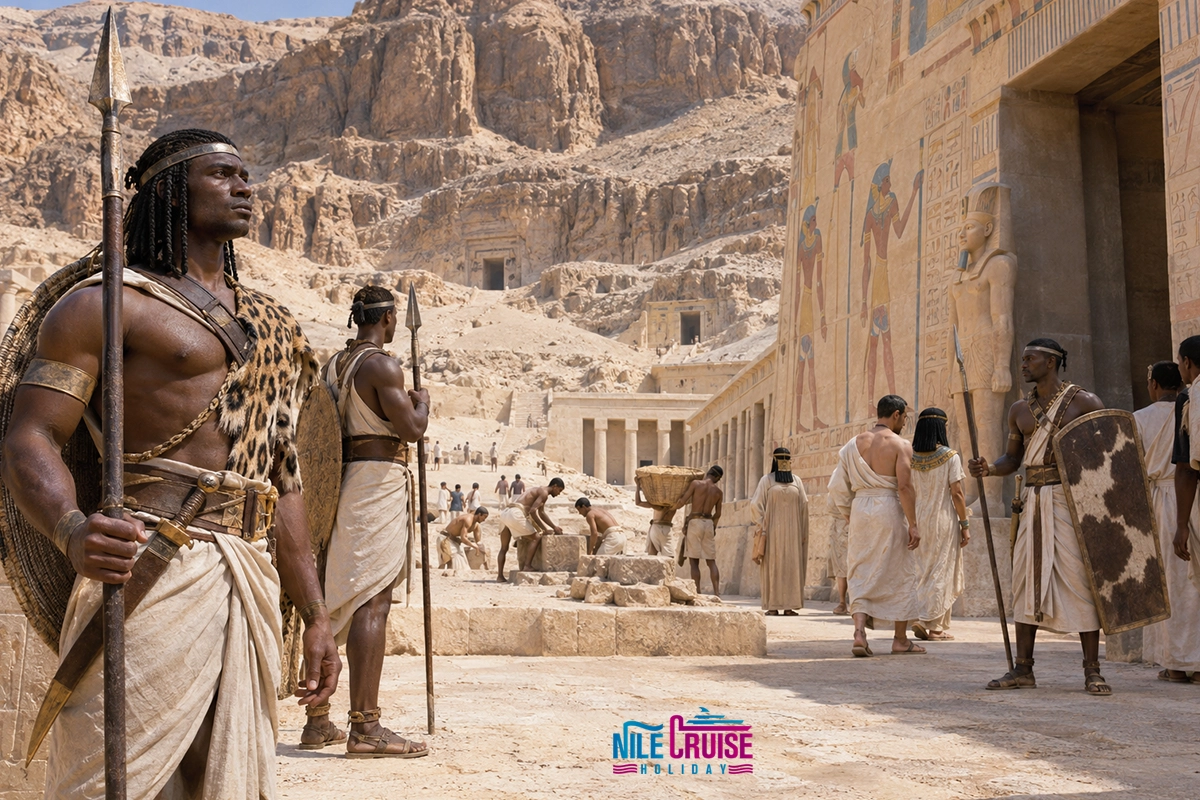
In the New Kingdom, from about 1550 BC, the Medjay became a professional paramilitary police force. Egyptians with Egyptian names joined their ranks, and the word Medjay came to mean policeman rather than Nubian. Units served in both Upper and Lower Egypt under their own captains and a Chief of the Medjay, answerable to the vizier.
Guarding the Valley of the Kings
Their most famous duty was protecting the royal tombs in the Valley of the Kings. Medjay patrolled the desert hills of the West Bank of Thebes, manned guard posts on the paths into the valley and watched over the royal necropolis. Our guide to the Valley of the Kings tombs and tickets explains what you can see there today.
Protecting the Tomb Builders of Deir el-Medina
The workmen who cut and painted the royal tombs lived in the village of Deir el-Medina. Records from the village mention Medjay who guarded the routes to the tombs, delivered messages, checked who came and went and sometimes acted as witnesses in local disputes.
Police Chiefs in Their Tombs
Some Medjay officers were wealthy enough to build decorated tombs. Nebamun, a captain of police on the West Bank of Thebes in the 18th Dynasty, was buried in a tomb among the Tombs of the Nobles, and Mahu, Chief of the Medjay under Akhenaten, decorated his tomb at Amarna with scenes of patrols and of suspects being brought before the vizier. Our guide to Akhenaten and Nefertiti and how to visit Tell el-Amarna cover this period.
How Policing Worked in Ancient Egypt
Duties of the Police
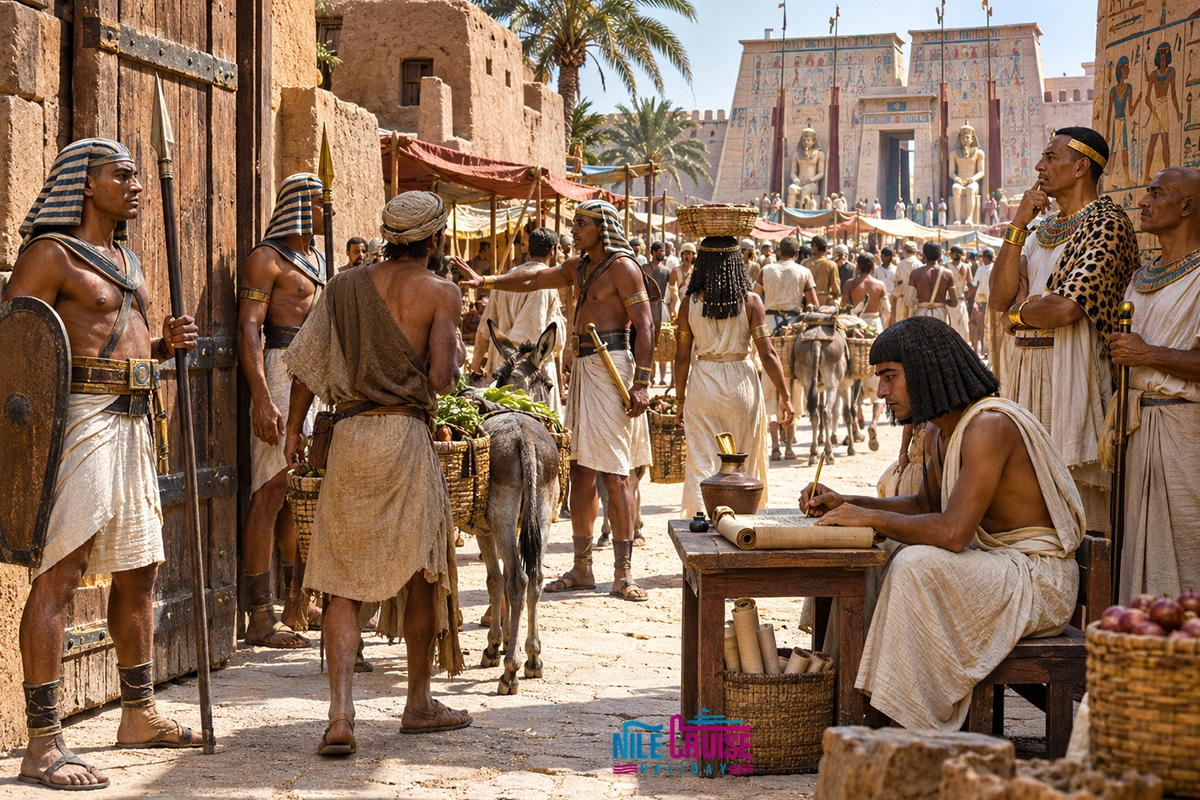
Beyond guarding tombs and borders, police officers protected temples and their treasures, kept order in markets and controlled crowds at festivals such as the Opet Festival at Karnak. They also arrested suspects, collected evidence and escorted prisoners to court, working with scribes who recorded each case.
Weapons, Dogs and Baboons
Police carried wooden staffs, clubs, bows and daggers, and used dogs to guard gates and track suspects. A famous Old Kingdom market scene in the tomb of Niankhkhnum and Khnumhotep at Saqqara shows a trained baboon grabbing a thief by the leg, often called the world's first police animal.
The Tomb Robbery Trials
As royal power weakened late in the 20th Dynasty, around 1110 BC, tomb robbing spread on the West Bank. Papyri such as the Abbott Papyrus and the Leopold-Amherst Papyrus record investigations under Ramesses IX, inspections of royal tombs, and confessions by robbers who had stripped the tomb of a 17th Dynasty king and his queen. These documents are among the oldest police and court records in the world.
Courts and Punishments
Investigations were overseen by the vizier and local courts. Suspects were often beaten on the soles of the feet to make them confess. Punishments ranged from fines and beatings for small crimes to mutilation, exile or death for tomb robbery, which was considered a crime against the gods and the king.
The Medjay Legacy and Where to See Their World

The End of the Medjay
After the 20th Dynasty, around 1070 BC, the word Medjay disappears from Egyptian records. It is not clear whether the force was disbanded or simply renamed.
The Medjay in Films and Games
The Medjay are familiar to many people from popular culture. The Mummy (1999) and The Mummy Returns (2001) show them as guardians of the pharaoh Seti I, while Assassin's Creed Origins (2017) makes its hero, Bayek of Siwa, "the last Medjay". These stories are fiction, but they have made the name famous.
Following the Medjay on a Nile Cruise
You can explore the Medjay's world on a Luxor and Aswan Nile cruise. In Luxor, visit the Valley of the Kings, Deir el-Medina and the Tombs of the Nobles, using our guide to Luxor East Bank vs West Bank. In Aswan, the Nubian Museum, Elephantine Island and a Nubian village tell the story of the Nubian lands where the Medjay began. Our guide to the curse of King Tut adds another angle on tomb protection.
Enjoy the History and Safety of Egypt With Our Great Trips
The true story of the Medjay is the story of a desert people who became Egypt's guardians, from Nubian scouts and archers to the soldiers who helped expel the Hyksos and the police who protected the Valley of the Kings. Their records, tombs and trials give a rare view of law and order in the ancient world.
As you walk the silent paths above Deir el-Medina, you follow the footsteps of the timeless watchmen who once guarded the pharaohs' eternal homes. To explore the Valley of the Kings and Nubia in one journey, browse our Egypt tour packages with a Nile cruise or ask for a tailor-made itinerary.