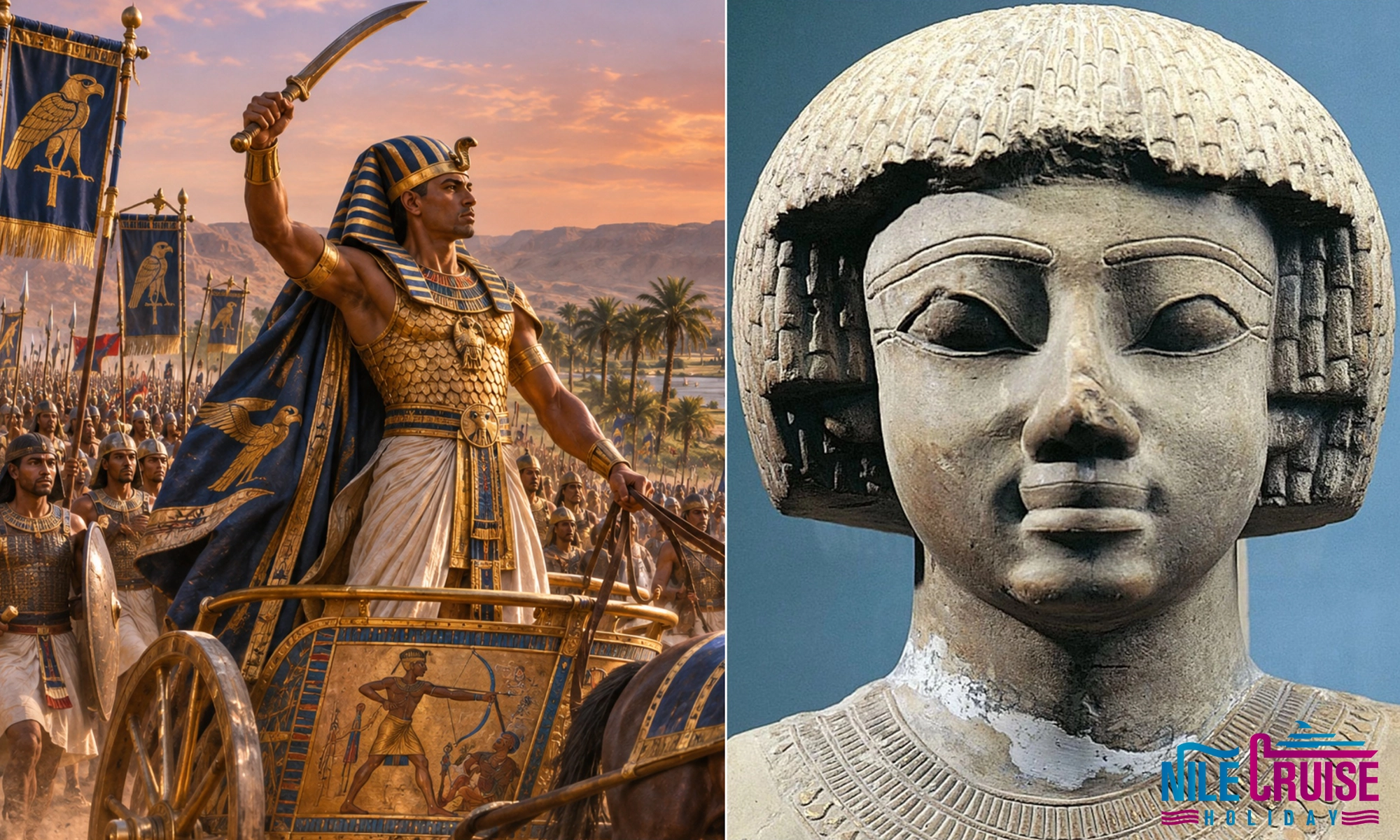

Ahmose I became king of Thebes as a boy of about ten, in the middle of a war his father and brother had died fighting. By the end of his reign of roughly 25 years, around 1550 to 1525 BC, he had driven the Hyksos out of Egypt, reunited the Two Lands, and founded the 18th Dynasty, the family that would produce Hatshepsut, Thutmose III, Akhenaten and Tutankhamun. Every golden treasure of the New Kingdom, from the halls of Karnak to the tombs of the Valley of the Kings, rests on the victory of this young pharaoh.
This guide tells the story of Ahmose I: who he was, the family war that shaped him, how he defeated the Hyksos, how he rebuilt Egypt as the New Kingdom, what his mummy reveals, and where travelers can still follow his legacy today, from the Luxor Museum and Karnak to Abydos and El Kab.
Who Was Ahmose I?

Quick Facts
| Detail | Information |
|---|---|
| Name meaning | "The Moon is born" |
| Reign | About 1550 to 1525 BC (dates vary by chronology) |
| Dynasty | Founder of the 18th Dynasty |
| Father and mother | Seqenenre Tao and Queen Ahhotep I |
| Predecessor | His brother Kamose |
| Chief wife | Ahmose-Nefertari |
| Successor | His son Amenhotep I |
| Capital | Thebes (modern Luxor) |
| Mummy | Found in 1881; now in the Luxor Museum |
Name and Titles
The name Ahmose means "the Moon (Iah) is born". His Horus name, often translated as "He who knots together the Two Lands", summed up his mission. Later Egyptians remembered him alongside Narmer as a unifier of Egypt.
Egypt Before Ahmose
For about a century before his reign, during the Second Intermediate Period (about 1650 to 1550 BC), Egypt was divided. The Hyksos, whose name comes from the Egyptian heqa khasut, "rulers of foreign lands", were people of Levantine origin who ruled the Nile Delta from their capital at Avaris. Native kings ruled only the south from Thebes and, according to later tradition, paid tribute to the north.
A Boy King Born Into War
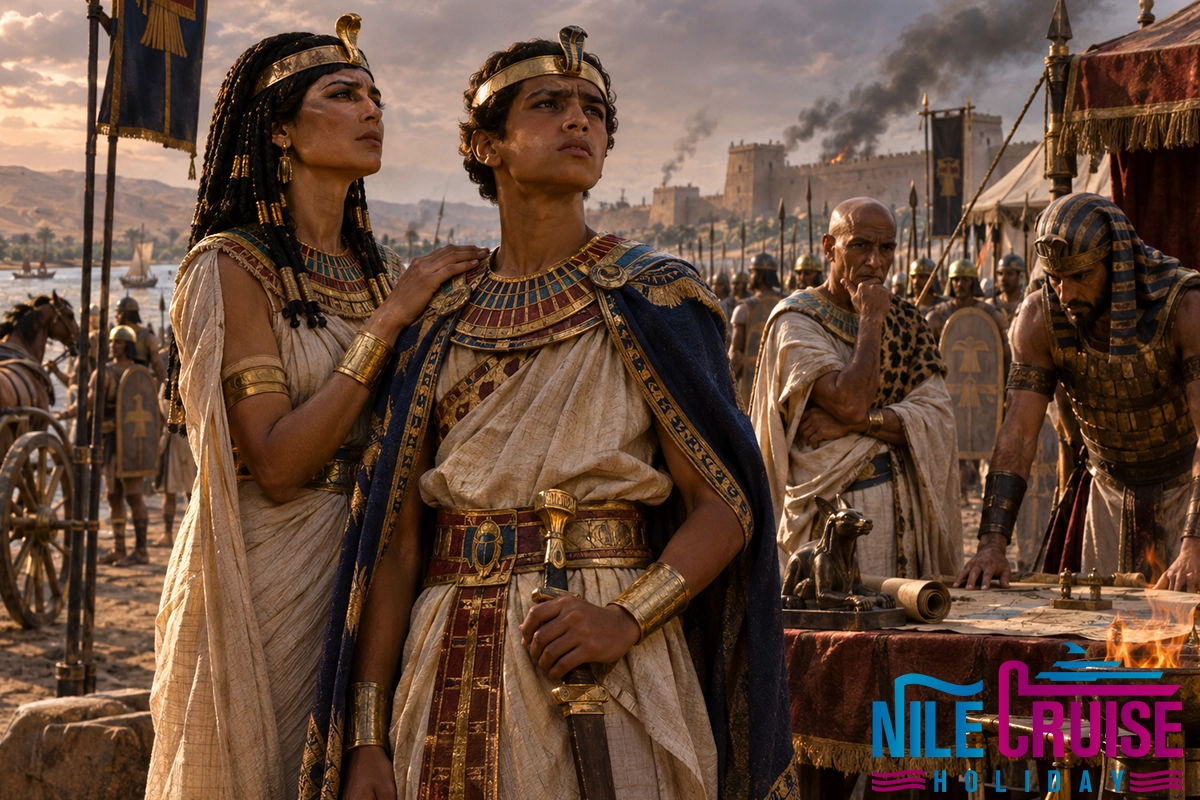
Ahmose inherited not a throne but a war, and the cost was paid by his own family.
The Death of Seqenenre Tao
His father, Seqenenre Tao, began the fight against the Hyksos and died violently around 1558 BC. CT scans of his mummy show several skull wounds made by axes and daggers, suggesting he was killed in battle or executed after capture.
Kamose's Campaign
Ahmose's elder brother, Kamose, carried the war north for about three years and reached the outskirts of Avaris, as his victory stelae at Karnak record. He died around 1550 BC, and Ahmose, still a child, became king.
Queen Ahhotep, the Regent
During his early years, his mother Ahhotep I ruled as regent. An inscription at Karnak praises her for looking after Egypt, rallying its soldiers and crushing rebels in Upper Egypt. Her burial at Thebes contained a ceremonial axe bearing Ahmose's name and a necklace of three golden flies, a military award for courage.
Driving Out the Hyksos

The war that defined Ahmose's reign was fought on land and water over many years.
Learning From the Enemy
The Hyksos had brought the horse-drawn chariot and the composite bow to Egypt. Ahmose turned these weapons against them, building an Egyptian chariot force and training archers in the new techniques, alongside a river fleet that could move troops quickly down the Nile.
The Fall of Avaris
Ahmose first took the border fortress of Tjaru on the road to Canaan, cutting Avaris off from support, a move recorded in a note on the Rhind Mathematical Papyrus. He then attacked Avaris, at modern Tell el-Dab'a. After several failed assaults and a pause to put down a rebellion in the south, the city fell, probably by about his 18th or 19th year as king.
The Siege of Sharuhen
The Hyksos retreated to Sharuhen, a fortified town near Gaza. Ahmose besieged it for three years until it fell, ending Hyksos power for good. Later campaigns reached the coast of the Levant, possibly as far as Byblos.
Securing Nubia
Ahmose also campaigned south into Nubia, defeating a rebel leader named Aata and an Egyptian rival called Tetian. He restored Egyptian control from a new centre at Buhen, reopening access to Nubian gold.
An Eyewitness: Ahmose, Son of Ebana
Most of what we know about this war comes from one soldier. Ahmose, son of Ebana, a naval officer from El Kab, carved his life story in his tomb, describing the battles at Avaris and Sharuhen and the gold he received for bravery. Our guide to the El Kab tombs explains how to visit his tomb near Edfu.
Founding the New Kingdom

With Egypt united again, Ahmose turned from war to rebuilding, laying the foundations of a state that would last about 500 years.
Thebes and the Rise of Amun
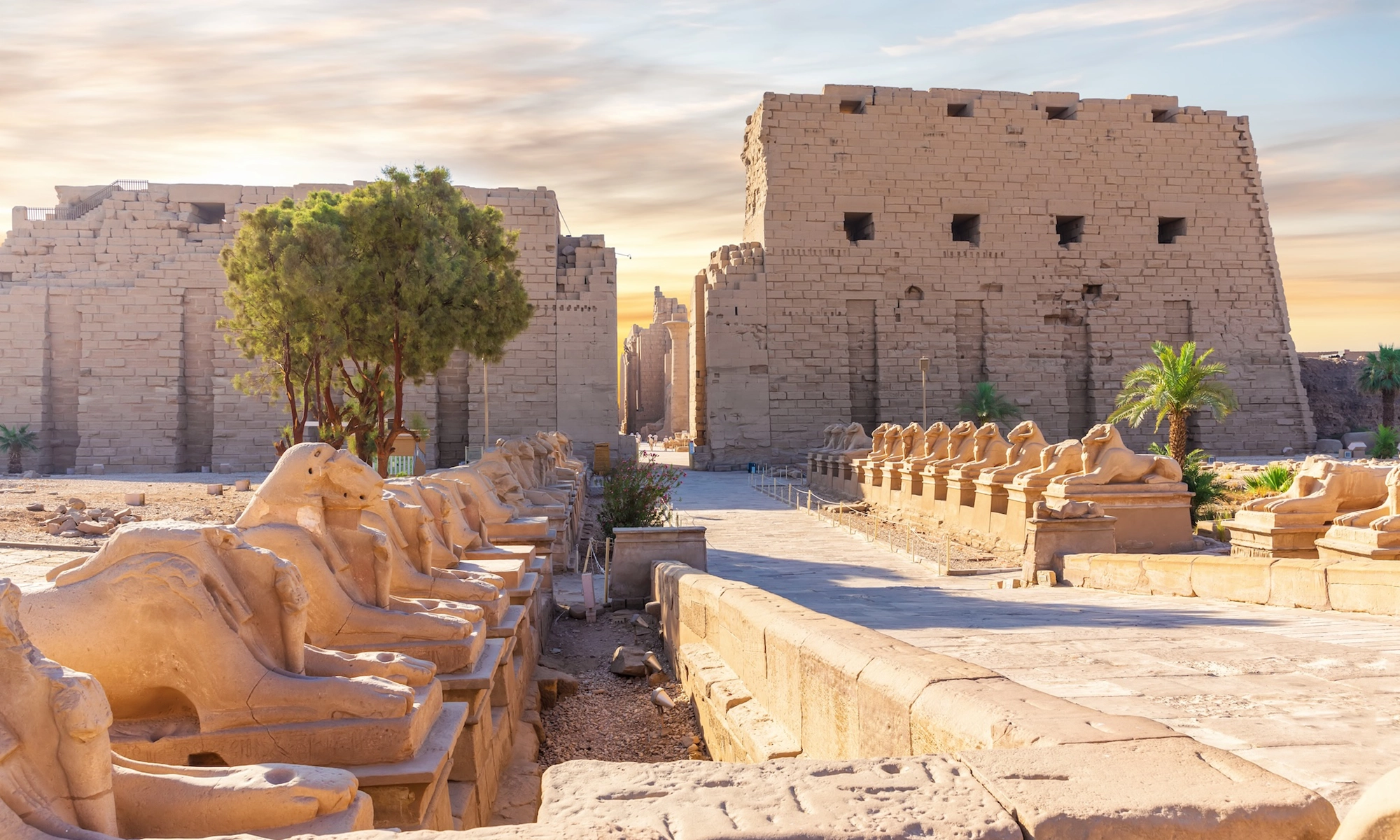
Ahmose made Thebes the capital of all Egypt. The city's god Amun, credited with the victory, became the chief god of the state, and his temple at Karnak began its long growth into the largest religious complex in the ancient world.
Rebuilding the State
Ahmose rewarded loyal commanders with posts as officials and governors, curbed the power of provincial rulers, restored tax collection and reopened mines and quarries. Limestone from Tura, cedar from Byblos, turquoise from Sinai and gold from Nubia flowed back into the treasury. Egyptian art revived the classic Middle Kingdom style, and glass-making may have begun in his reign.
The Tempest Stela and Karnak
At Karnak, Ahmose set up stelae recording his works. The most famous, the Tempest Stela, describes a terrible storm that destroyed tombs and temples and Ahmose's work to repair them. Some scholars link it to the eruption of the volcano on Thera (Santorini), although this is debated.
The Last Royal Pyramid at Abydos
At Abydos, the sacred city of Osiris, Ahmose built a temple complex and the last royal pyramid ever constructed in Egypt, now a low mound of rubble. He also built a pyramid shrine for his grandmother Tetisheri. Whether the pyramid was his tomb or a memorial is still debated, and his true tomb has never been found.
Ahmose-Nefertari and the Royal Women
His sister and wife, Ahmose-Nefertari, held the title God's Wife of Amun, a powerful religious office. After her death she was worshipped as a goddess, together with her son Amenhotep I, especially by the tomb builders of Deir el-Medina. The strong role of royal women in this family set the stage for Hatshepsut.
Death, Mummy and Legacy

The Death of Ahmose I
Ahmose died around 1525 BC, probably in his mid-thirties; the cause is unknown. His son Amenhotep I succeeded him, after an elder son, Ahmose-ankh, had died young.
The Mummy of Ahmose I
His mummy was found in 1881 in the Deir el-Bahari royal cache, a hidden tomb near Hatshepsut Temple where priests had reburied royal mummies to protect them from robbers. Gaston Maspero unwrapped it in 1887. Ahmose stood about 1.63 metres tall, and his teeth showed heavy wear from gritty bread. A 1980 study questioned whether the mummy is really his, but it is still displayed as Ahmose I.
The Dynasty He Founded
The 18th Dynasty ruled for around 250 years and is often seen as the height of Egyptian power. His successors included Thutmose I, who reached the Euphrates, Hatshepsut, Thutmose III, Amenhotep III, Akhenaten and Tutankhamun, whose tomb became the most famous find in archaeology. The empire they built later passed to the kings of the 19th Dynasty, including Ramesses II.
Where to See Ahmose I's Egypt Today
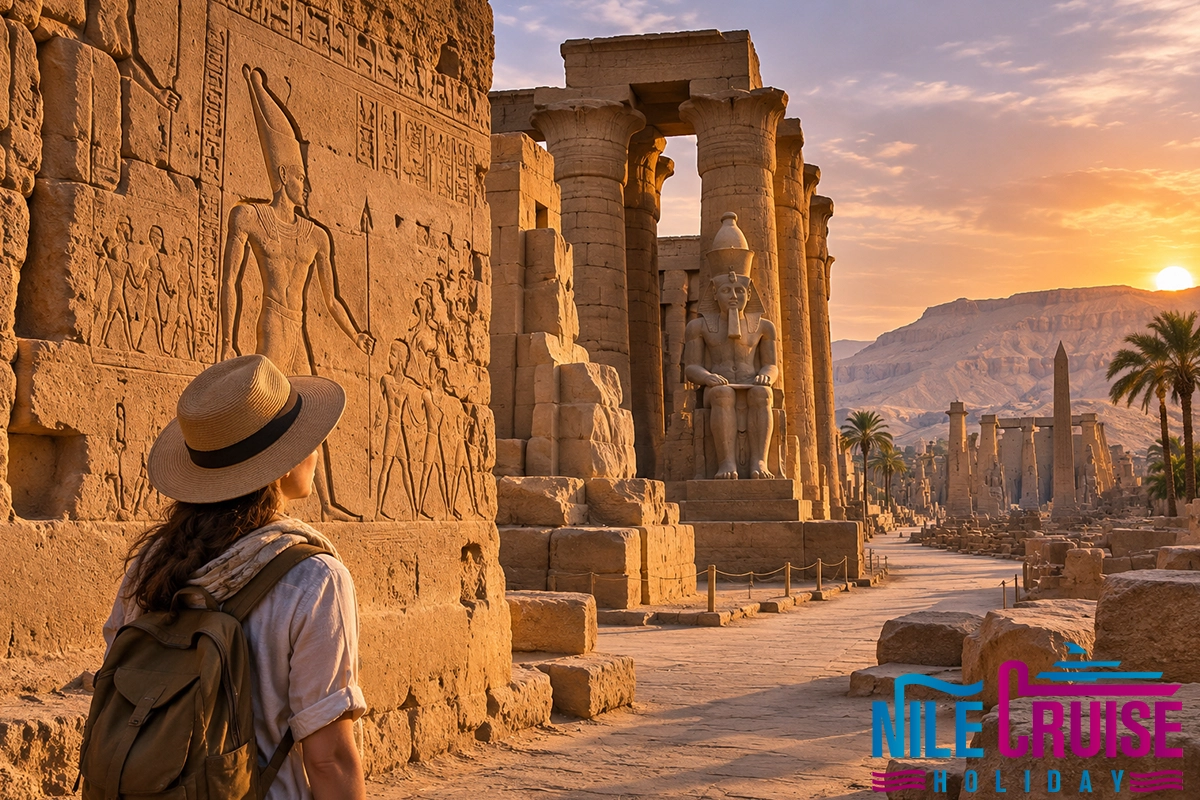
Ahmose left no single great monument, but his story is spread along the same stretch of the Nile that cruise ships follow.
The Luxor Museum
The Luxor Museum displays the mummy of Ahmose I in its new wing, alongside a mummy believed to be Ramesses I and objects from the wars of liberation. It is the closest you can come to the king himself, and it opens in the evening, which suits a cruise schedule.
Karnak and the West Bank of Thebes
At Karnak, you walk through the temple of Amun that Ahmose's victory made great, where his and Kamose's stelae were found. On the West Bank, the royal cemeteries of the early 18th Dynasty lie near Dra Abu el-Naga, between the Valley of the Kings and Deir el-Bahari. Our guides to Valley of the Kings tombs and tickets and the Luxor East Bank vs West Bank help you plan both sides, and our list of things to do in Luxor covers the rest of the city.
Abydos
Abydos Temple is best known for the temple of Seti I, but Ahmose's pyramid and temple remains lie in the desert nearby. Abydos is usually visited on a day trip from Luxor, often with Dendera Temple.
El Kab
The tomb of Ahmose, son of Ebana, at El Kab is the best place to read the story of the war in the words of a man who fought it. It is a quiet stop between Esna and Edfu, often included on dahabiya cruises.
Cairo's Museums
Objects from Queen Ahhotep's burial, statues of the early 18th Dynasty and the mummies of Seqenenre Tao and Ahmose-Nefertari are displayed in Cairo. Our guide to ancient Egyptian artifacts covers the Egyptian Museum and the Grand Egyptian Museum.
Following Ahmose on a Nile Cruise
A Nile cruise from Luxor covers Karnak, the West Bank and the Luxor Museum, and sails past El Kab on the way to Edfu. Our Cairo and Nile cruise tours add the Cairo museums, and our guide to the best temples to see on a Nile river cruise helps you choose the rest.
Uncover the Tale of One of Egypt's Greatest Saviors
Ahmose I is less famous than the pharaohs who followed him, but none of them would have ruled without him. A boy who lost his father and brother to war grew into the king who drove out the Hyksos, reunited Egypt and made Thebes the heart of a new empire. When you stand in Karnak's halls or face his mummy in the Luxor Museum, you meet the founder of the golden age that Egypt's greatest monuments celebrate. To follow his story along the Nile, browse our Luxor and Aswan Nile cruises or ask our team for a tailor-made journey with Abydos and El Kab.