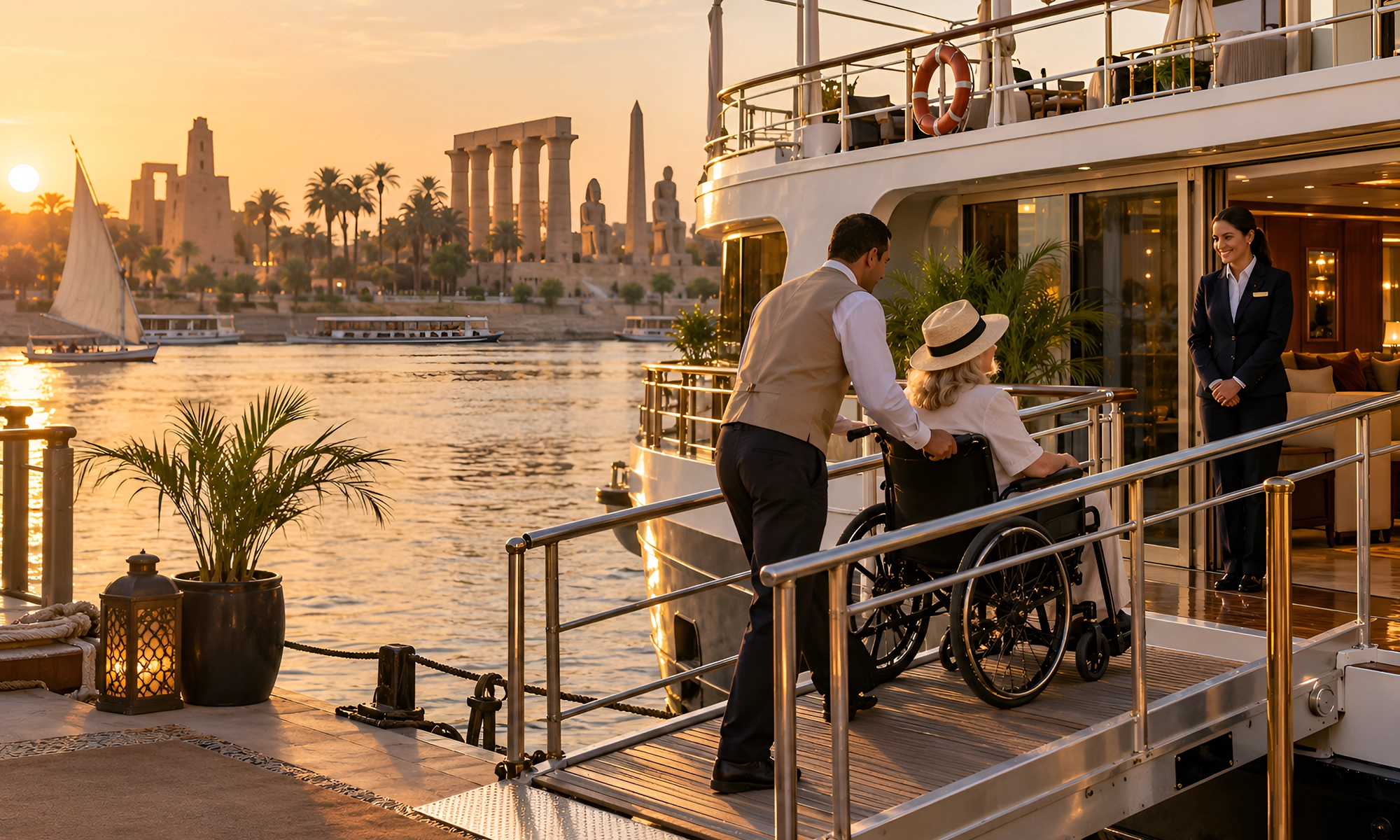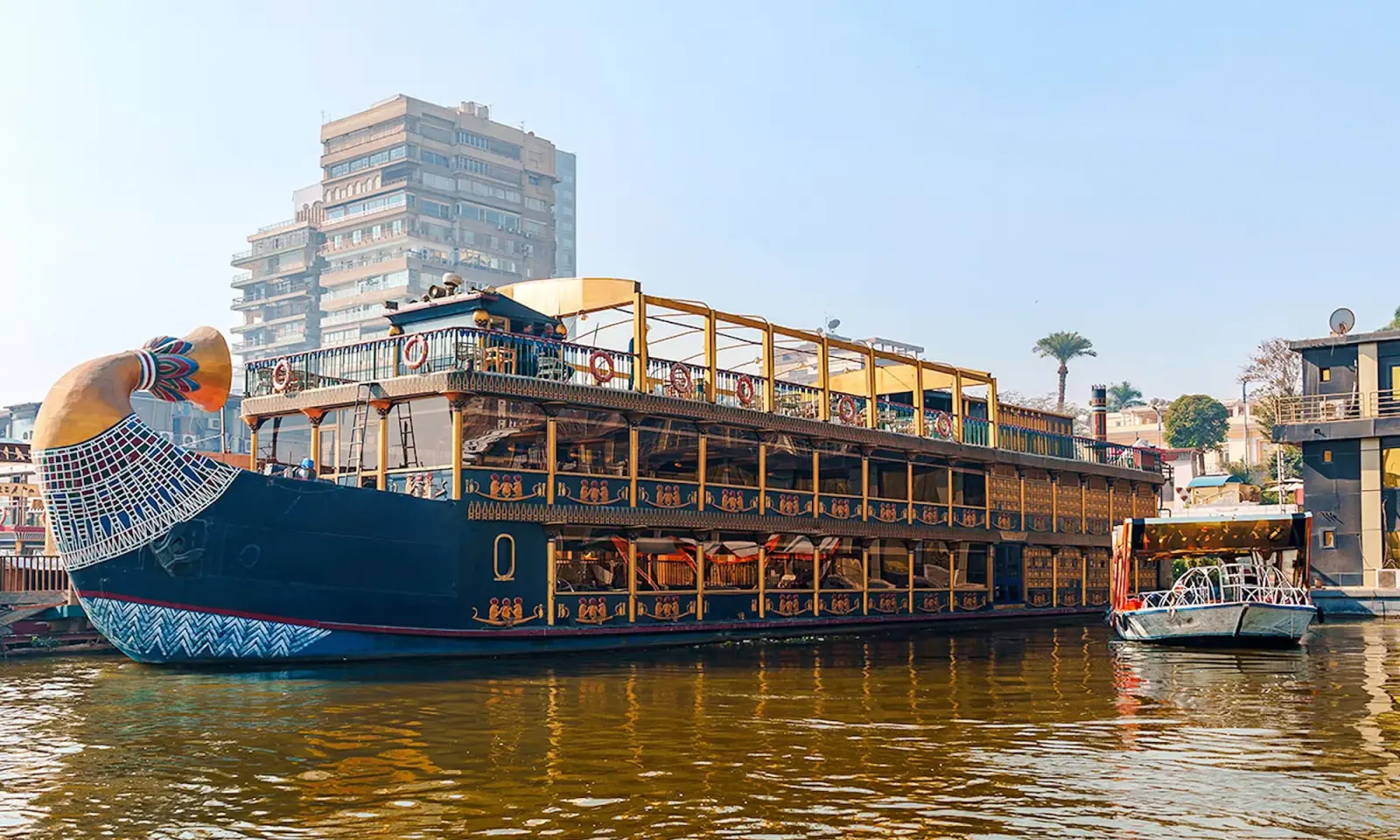
Kalabsha Temple is the largest free-standing temple of Egyptian Nubia that, with all its might & grace, was able to withstand the destructive power of modern times. It was built around 30 BC under the Roman emperor Augustus and dedicated to Mandulis, a Nubian sun god. For nearly 2,000 years it stood about 50 km south of Aswan. In the early 1960s it was taken apart into roughly 13,000 numbered blocks and rebuilt on a rocky headland beside the Aswan High Dam. Today it looks out over Lake Nasser, the very water that once threatened to drown it.
Few temples in Egypt have lived three lives as a Nubian sanctuary, a Christian church, and a monument rescued stone by stone from the rising water.
This guide covers the temple's history and the god it honored, the international rescue that saved it, and what to see inside. It also covers the smaller monuments on New Kalabsha island, the opening hours and ticket price, and how to reach the temple from Aswan or on a Lake Nasser cruise.
Everything About Kalabsha Temple at a Glance

Kalabsha is often skipped by travelers who only visit Philae Temple and Abu Simbel, which is exactly why it feels so peaceful.
Where Is Kalabsha Temple?
The temple now stands on New Kalabsha, a promontory on the west side of Lake Nasser, just south of the Aswan High Dam. It originally stood at Bab al-Kalabsha, meaning "Gate of Kalabsha," about 50 km to the south. The ancient Greeks called the town Talmis. Our Kalabsha Temple attraction page shows its place among the other Aswan attractions.
Kalabsha Temple Facts
| Fact | Detail |
|---|---|
| Built | About 30 BC, under Augustus |
| Main god | Mandulis, the Nubian sun god |
| Size | 76 m long and 22 m wide |
| Original site | Bab al-Kalabsha (ancient Talmis) |
| Moved | 1961 to 1963, in about 13,000 blocks |
| Moved by | West Germany, with UNESCO |
| UNESCO listing | 1979, as part of the Nubian Monuments |
The Golden History of Kalabsha Temple

The story of Kalabsha begins long before the Romans. Each ruler who came to this stretch of Nubia added something to the site.
Earlier Sanctuaries Beneath the Temple
The Roman temple was built over an older sanctuary from the reign of Amenhotep II, around 1400 BC. During the move in the 1960s, engineers also found blocks from an earlier Ptolemaic shrine reused as fill inside the walls. Those blocks were reassembled in the 1970s on the southern tip of Elephantine Island in Aswan.
Built Under Augustus
Construction began around 30 BC, soon after Egypt became a Roman province. The temple was never fully finished, and many reliefs were left as outlines. Later emperors, including Vespasian, added to the building. Reliefs show Augustus dressed as a pharaoh, making offerings to Egyptian and Nubian gods.
Mandulis, the Nubian Sun God
Mandulis, also called Merul, was a sun god of Lower Nubia. He was often shown as a man with a tall crown of ram horns, plumes, and sun disks. The temple also honored Isis and Osiris, linking Mandulis to the great cult of Isis at Philae, his close neighbor to the north.
From Roman Temple to Christian Church
Two famous inscriptions record the temple's later life. In about AD 250, the Roman governor Aurelius Besarion ordered that pigs be kept out of the temple. In the 5th century, King Silko, the Christian ruler of Nobatia, carved a Greek text celebrating his victory over the Blemmyes, showing himself as a Roman soldier on horseback. The temple was later used as a church, and travelers in 1819 still saw paintings of Christian saints on its walls.
The Great Relocation of Kalabsha Temple

The rescue of Kalabsha is one of the great engineering stories of the 20th century. It belongs to the same campaign that saved Abu Simbel and Philae.
The Threat of Lake Nasser
Work on the Aswan High Dam began in 1960. The new reservoir, Lake Nasser, would flood most of Lower Nubia and its temples. Egypt and Sudan asked UNESCO for help, and on 8 March 1960 UNESCO launched the International Campaign to Save the Monuments of Nubia. Our guide to Lake Nasser cruise vs Nile cruise explains how the lake reshaped travel in the south.
13,000 Blocks and Two Years of Work
West Germany chose to fund and run the Kalabsha rescue itself. The German firm Hochtief won the contract in August 1961 and started dismantling the temple that November. Floodwater then covered the site until May 1962. The temple was taken apart into about 13,000 numbered blocks, carried 50 km north by barge, and rebuilt between October 1962 and October 1963.
The Kalabsha Gate in Berlin
In 1971, Egypt gave West Germany one of the temple's gates as thanks for its help. The Kalabsha Gate has been shown at the Egyptian Museum in Berlin since 1977, with plans to place it at the entrance to the new fourth wing of the Pergamon Museum.
Architecture and What to See at Kalabsha Temple

Kalabsha follows the classic Egyptian temple plan. You move from the bright lakeside into ever smaller and darker rooms, ending at the god's sanctuary.
The Causeway and Pylon
A stone causeway leads up from the water to the pylon, the great gateway, which stands about 14 m high. The pylon is set slightly off the temple's axis, which gives the courtyard behind it a trapezoid shape. A massive sandstone enclosure wall surrounds the whole complex.
The Courtyard and Hypostyle Hall
Behind the pylon is an open court lined with columns on three sides. Next comes the hypostyle hall, a columned hall designed for twelve columns, of which eight survive. Look for the varied floral column capitals and a rare inscription in Meroitic, the language of the ancient kingdom of Kush.
The Sanctuary and the Roof
Beyond the hall are two offering chambers and the sanctuary, where the cult statue of Mandulis once stood. On the inner enclosure wall, a relief shows Horus emerging from the reeds. A narrow staircase climbs to the roof, which gives the best views of the temple, Lake Nasser, and the High Dam.
The Victory Stela of Psammetichus II
Beside the temple stands the Victory Stela of Psammetichus II, which records the pharaoh's campaign into Nubia in the 6th century BC. It is a reminder that Egypt and Nubia shared a long, often turbulent history. Our list of the best temples to see on a Nile river cruise places Kalabsha among Egypt's other great sanctuaries.
The Magnificent Monuments of New Kalabsha Island
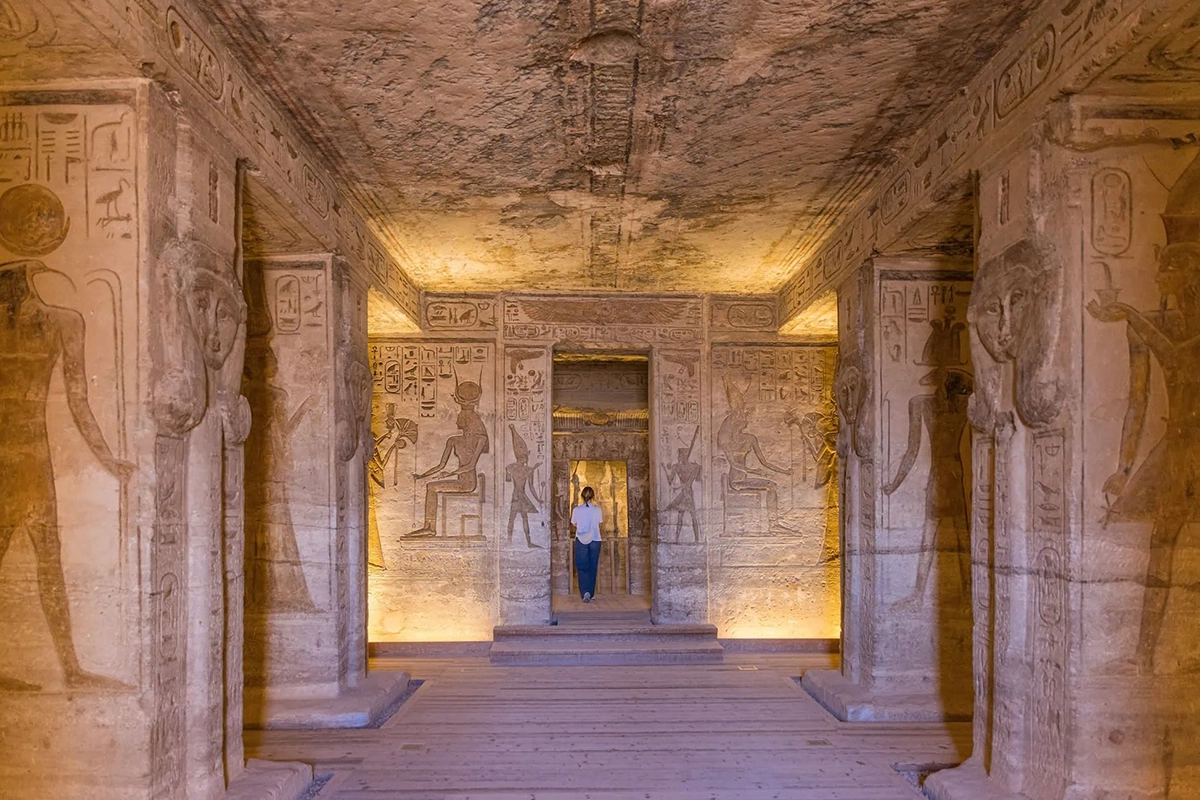
New Kalabsha is more than one temple. Several smaller Nubian monuments were rebuilt around it, so one boat ride gives you an open-air museum of rescued Nubia.
Beit el-Wali
Beit el-Wali is a small rock-cut temple built for Ramesses II and dedicated to Amun and other gods. It was moved by a Polish team, and its reliefs show the king's wars against Nubians, Libyans, and Syrians. Learn more about the king in our story of Ramses II and Nefertari.
The Kiosk of Qertassi
The Kiosk of Qertassi is a small, unfinished Roman kiosk with two Hathor columns at its entrance and four papyrus columns inside. It is probably from the same period as Trajan's Kiosk at Philae.
Gerf Hussein and the Dedwen Chapel
The free-standing parts of the Gerf Hussein temple of Ramesses II were rebuilt here, while its rock-cut hall remains under the lake. A small chapel to Dedwen, a Nubian god, was moved together with the main temple.
What to Know Before Visiting Kalabsha Temple

Kalabsha is easy to reach from Aswan, yet it rarely sees crowds. A little planning makes the boat ride and the visit smooth.
Opening Hours and Ticket Prices
According to Egypt's Ministry of Tourism and Antiquities, Kalabsha is open daily from 7am to 4pm. Tickets cost EGP 200 for foreign adults and EGP 100 for foreign students. Prices change often in Egypt, so confirm before you go. Plan on about one to one and a half hours on the island.
How to Get to Kalabsha Temple
From Aswan, drive about 20 to 40 minutes to the small harbor beside the western end of the High Dam. From there, local motorboats cross to New Kalabsha in a few minutes, and the fare for a round trip with waiting time is agreed with the boatman before you board. Most visitors combine Kalabsha with the High Dam, Philae, and the Unfinished Obelisk on a guided day. See our guide to things to do in Aswan for more ideas.
Kalabsha on a Lake Nasser Cruise
Kalabsha is a regular stop on Lake Nasser Nile cruises between Aswan and Abu Simbel. Ships such as the MS Nubian Sea, Steigenberger Omar El Khayam, and Movenpick MS Prince Abbas include it. On the 5 days Lake Nasser cruise from Aswan to Abu Simbel, it is usually the first temple you visit. Further south, the same cruises stop at Wadi es-Sebua, the Temple of Dakka, Amada, the Temple of Derr, and Qasr Ibrim. Most of these temples were moved to higher ground like Kalabsha, while the fortress of Qasr Ibrim still stands on its original hilltop, now an island.
Pair It With the Nubian Museum
The Nubian Museum in Aswan opened in 1997 and displays many objects rescued during the UNESCO campaign. Seeing it before Kalabsha helps the story of the rescue come alive. For living Nubian culture, add a visit to a Nubian village on the west bank, and end the day with a sunset felucca ride in Aswan.
Best Time to Visit and Practical Tips
October to March brings the mildest weather, with daytime highs in Aswan of about 23 to 33°C. Arrive early or in the late afternoon, since the island has very little shade. Wear sturdy shoes for the uneven stone and sand, bring a hat, sunscreen, and water, and carry your passport for the dam checkpoints. Our guides to the best time to cruise the Nile and what to pack for a Nile cruise cover the rest.
Explore the Marvels of Upper Egypt With Our Delightful Trips
Kalabsha Temple brings together Roman emperors, Nubian gods, Christian kings, and modern engineers. Built under Augustus, used as a church, and rebuilt block by block in the 1960s, it is the largest free-standing temple of Egyptian Nubia. It is also one of the quietest places to experience Aswan's ancient past.
Standing on its roof as the light fades over Lake Nasser, you understand why the world fought so hard to save it. To include Kalabsha in your trip, browse our Nile cruises from Aswan or contact us to plan a tailor-made visit.