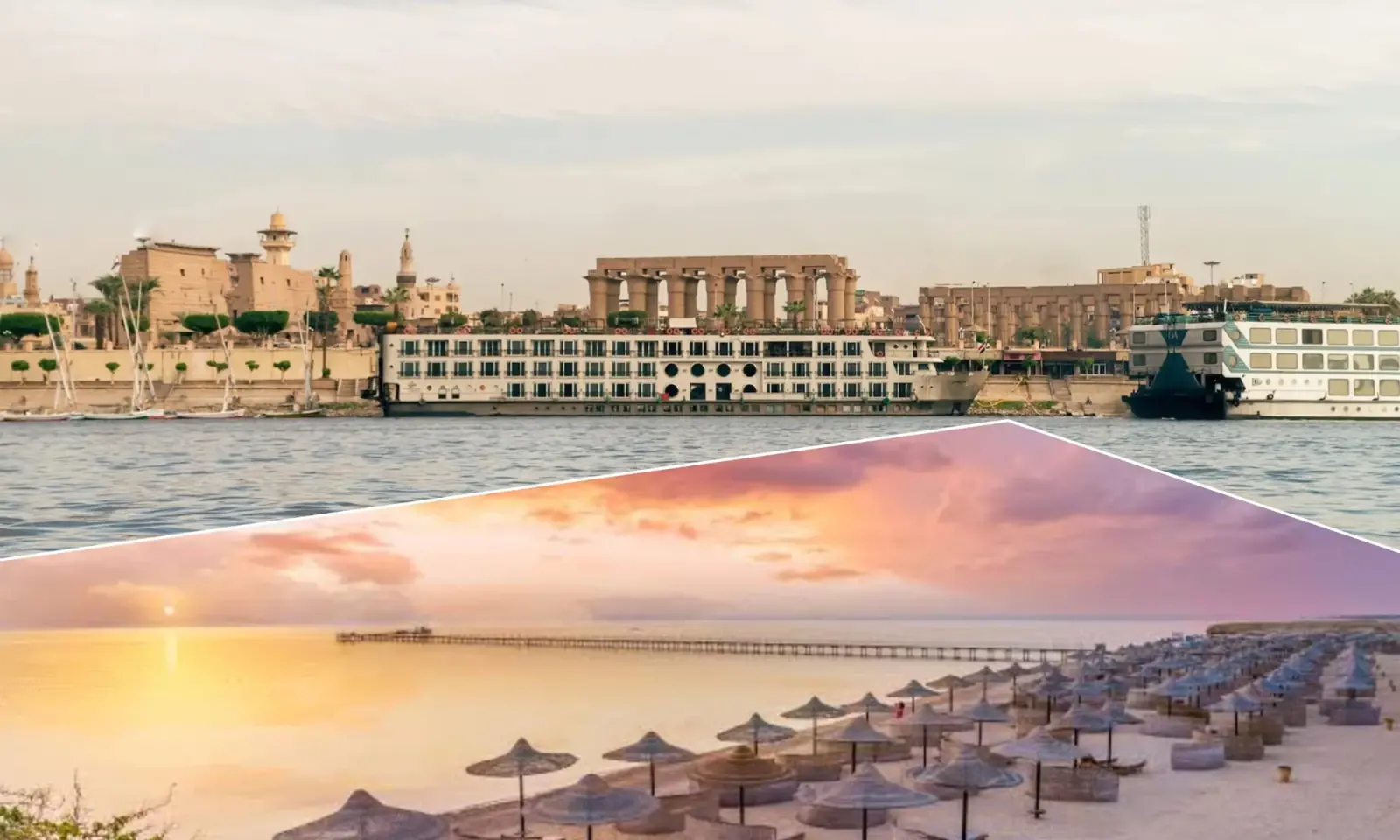
By mid morning on the upper deck of a Nile cruise ship, the river is the color of golden rays of divine white light, the palms on the bank stand perfectly still, and a felucca drifts past with its sail the shade of old linen. A few days later, the same traveler stands barefoot on warm sand, the Red Sea so clear that the coral shows from the shore. The two scenes sit about 300 kilometers apart, and the road between them crosses the Eastern Desert in roughly four hours.
That short distance is what makes a Nile cruise and Red Sea holiday one of the most satisfying ways to see Egypt. Temples, tombs, and a slow river fill the first half of the trip, and snorkeling, quiet resort days, and desert sunsets fill the second. Nile Cruise Holiday builds a whole family of Cairo, Nile cruise, and Hurghada packages around this idea, running from 8 to 14 days.
This guide explains why the combination works, how to choose the right itinerary, what each stage of the Nile cruise includes, where to stay on the Red Sea, and how to plan season, transfers, packing, and budget. Readers who want to see every option in one place can start with the Egypt tour packages with a Nile cruise page and return here for the details behind each choice.
Why Combine a Nile Cruise and Red Sea Holiday in Egypt?

Egypt rewards variety. A traveler who sees only temples can finish a trip tired, and one who sees only beaches misses the country's defining story. Joining the river and the sea in a single trip gives each half more meaning, because the sightseeing earns the rest and the rest makes the sightseeing feel worth it.
Ancient Egypt and Beach Relaxation in One Trip
The first half of the trip is active. Mornings begin early, guides lead the way through Karnak Temple, the Valley of the Kings, and the Temple of Horus at Edfu, and the afternoons slow down on the sun deck. The second half is the opposite. Days start late, a resort buffet replaces the cruise dining room, and the main decision of the morning is whether to take the boat to a reef or stay by the pool.
This rhythm suits travelers who want the cultural depth of Egypt without the fatigue of a trip made only of itineraries. The guide to what to do in Egypt shows how many other options sit beside these two, and the Cairo and Nile cruise tours page explains how the capital fits in before the river.
Why the Nile and Red Sea Complement Each Other
The two landscapes could hardly differ. The Nile is a green ribbon cut through desert, crowded with history and human life. The Red Sea is open, bright, and quiet, with warm water, coral reefs, and long stretches of empty coast. One gives context and the other gives space.
The geography also helps. Hurghada lies roughly 280 to 300 kilometers from Luxor, a drive of about four hours along the Safaga to Qena desert highway, so the transfer fits comfortably into a single morning. The guide to the best beaches in Egypt describes Hurghada as the practical choice for Nile cruise combinations for exactly this reason.
Who Is This Egypt Holiday Best For?
Several kinds of traveler tend to enjoy the pairing most. First time visitors get both the headline monuments and a proper rest. Couples find a natural arc, from the romance of a river cruise to the privacy of a beach resort, and the Nile cruises for couples page and the guide to a luxury honeymoon in Egypt show how this works for honeymoons and anniversaries.
Families benefit too. Children who tire of temples can spend the second half of the trip in the water, and the Nile cruises for families page and the ultimate guide to a Nile cruise with kids offer ideas for traveling with younger guests. Nile cruises for seniors, Nile cruises for groups, and Nile cruises for solo travelers cover other traveler types, and the guide to solo female travel in Egypt answers the questions that come up most.
What Is the Best Nile Cruise and Red Sea Itinerary?

No single itinerary suits everyone. The right one depends on the number of days, the order of the stages, and how much of Egypt beyond the river and the sea belongs on the list. The packages below, drawn from the Nile Cruise Holiday collection, show how these choices play out in practice.
Should You Visit the Nile or Red Sea First?
Both orders work, and each has its own logic. The shorter packages send guests to the river first. A typical flow flies from Cairo to Aswan, boards the ship, sails north to Luxor, and then drives to Hurghada for the final days on the coast. The 10 days Cairo, Nile cruise and Hurghada package follows this pattern, and it ends with a flight back to Cairo and a last day of sightseeing.
The longer packages reverse the sequence. The 12 days Cairo, Hurghada and Nile cruise tour flies to Hurghada after the pyramids, spends three nights on the Red Sea, drives to Luxor via the temples of Abydos and Dendera, sails from Luxor to Aswan, and ends with a flight to Cairo. The 13 days package uses a similar structure with four nights on the coast.
River first suits travelers who prefer to finish on a restful note, since the beach becomes a reward. Sea first suits travelers who arrive jet lagged and want a gentle start, with the energy of sightseeing building after a few days of rest. The best choice usually follows the flights and the season, and the tailor-made service can adjust either order to fit.
Luxor to Aswan vs Aswan to Luxor
Cruise direction matters more in a combined trip than in a cruise alone, because one end of the river sits closer to the sea. Luxor is the closer city, roughly four hours from Hurghada. A northbound cruise from Aswan to Luxor therefore ends where the road to the coast begins, which is why the 9, 10, and 11 day packages use that direction and move straight to the Red Sea after the final temples.
A southbound cruise from Luxor to Aswan ends farther from the coast, which makes a flight to Cairo the practical next step. The longer 12 and 13 day packages use this direction for that reason. For a full comparison of lengths and the order of temples, the guide to the 4 days Aswan to Luxor itinerary and the 5 days Luxor to Aswan itinerary lay out each direction in detail.
How Many Days Do You Need?
Eight days is a workable minimum. It fits two nights in Cairo, three on the Nile, and two on the Red Sea, and the 8 days Cairo, Nile cruise and Hurghada package is the shortest of the group. At nine or ten days, the trip gains a night in Cairo or on the coast and feels noticeably less hurried.
Twelve days gives the most relaxed balance between sightseeing and beach time, with room for a full diving or snorkeling day, a desert safari, and an unhurried look at Cairo's museums. Beyond that, the length is usually driven by extras such as Abu Simbel or a longer cruise. The guide on how many days you need on a Nile cruise helps match the river portion to a traveler's pace.
9-Day, 10-Day and 12-Day Itinerary Options
The 9 day version is the compact choice. It spends three nights in Cairo, three on a deluxe Nile cruise, and two in Hurghada. The days include the Giza Pyramids, the Grand Egyptian Museum, a flight to Aswan, temples along the river, a drive from Luxor to the coast, a full snorkeling day, and a flight back to Cairo. The 9 days Cairo, Nile cruise and Hurghada package gives the same structure a little more breathing room.
The 10 day version adds a third night on the Red Sea. It swaps the Grand Egyptian Museum for a Saqqara and Memphis day, and it fills the coast days with a scuba excursion and a desert safari by quad bike or camel. The 10 days package shows the structure in full, and the 11 days package adds a night in Luxor.
The 12 day version is the fullest of the mid length options. It opens with the Giza Sound and Light Show, spends three nights in Hurghada, visits Abydos and Dendera on the way to Luxor, sails four nights from Luxor to Aswan, and finishes with Old Cairo, Saqqara, Dahshur, and Memphis. For a grander trip, the 14 days package adds a seven night cruise that includes Abu Simbel.
How to Travel from Luxor to the Red Sea
The usual route is a private, air conditioned transfer from Luxor to Hurghada. The road is the Safaga to Qena desert highway, the distance is roughly 280 to 300 kilometers, and the drive takes about four hours. Guests are met at the hotel or ship, loaded into a private vehicle, and driven across the Eastern Desert in a single stage.
The reverse journey sometimes uses the train. On the cruise itineraries that begin and end in Hurghada, such as the 5 days Nile cruise from Hurghada to Luxor and Aswan, the return journey uses a first class train from Luxor to Qena and a vehicle from Qena to the coast. The Nile cruises from Hurghada page lists every option that starts and ends on the Red Sea, including the 4 days itinerary and the 8 days itinerary.
What to Expect from Your Nile Cruise Experience
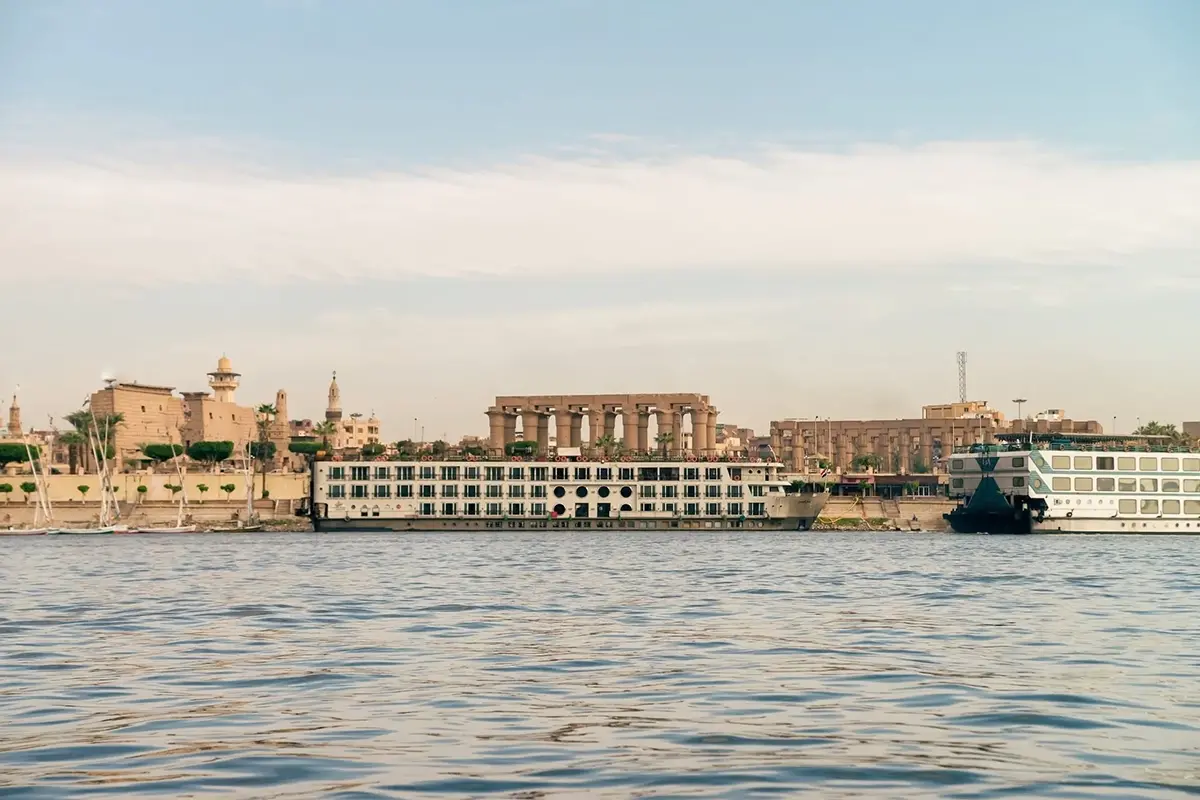
The Nile portion is the cultural core of the trip. Typical days follow a steady rhythm of a morning at a temple, a long lunch while sailing, and an evening back on the sun deck. Local Egyptologist guides lead every visit, private air-conditioned vehicles handle the short transfers, and the team coordinates flights, hotels, and entrance tickets so that the sightseeing flows without logistical friction. Shopping stops are never added to earn commissions, a policy that keeps the days focused on the sites themselves.
Luxor and the Valley of the Kings
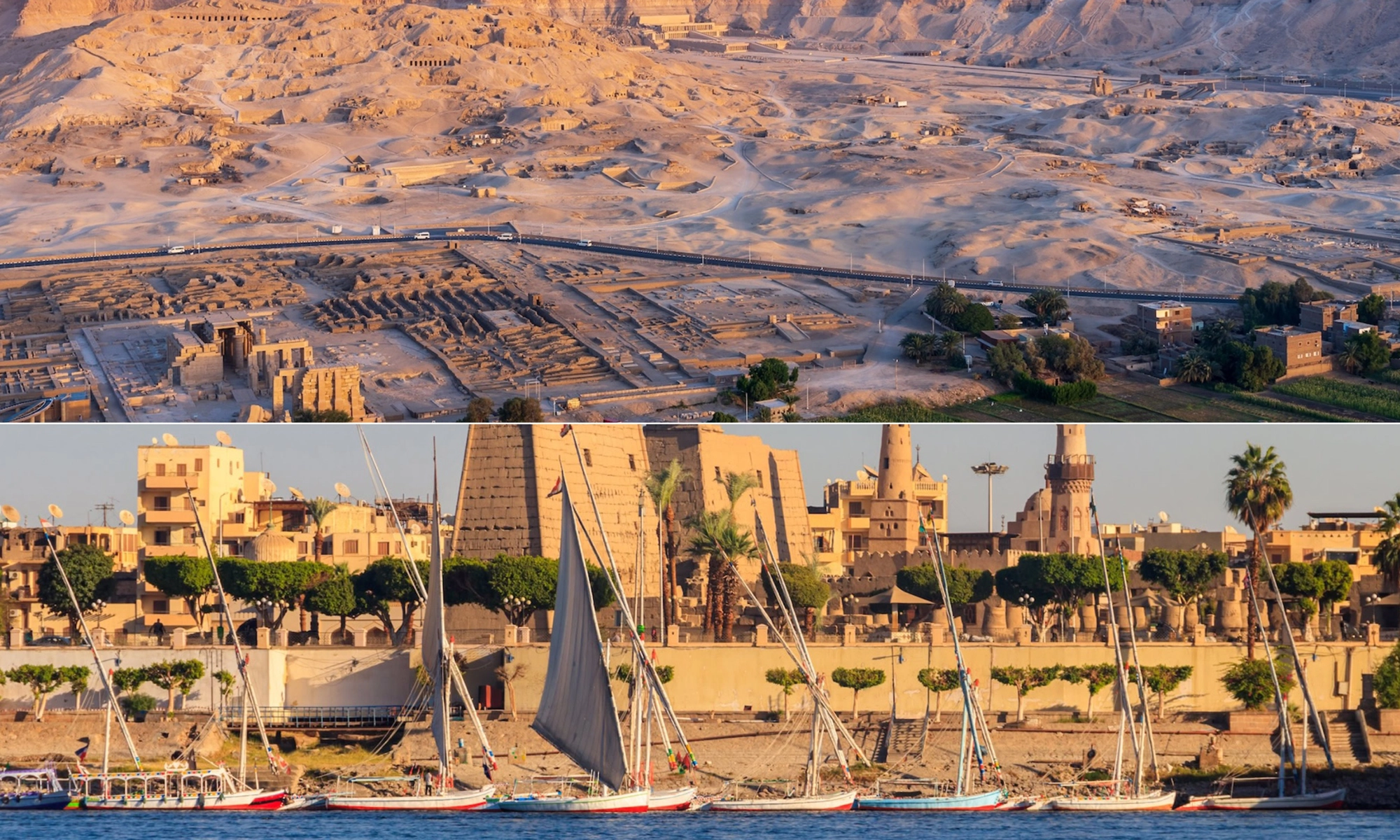
Luxor's West Bank is the quiet side of the city. It holds the Valley of the Kings, where 63 tombs have been found, including the tomb of Tutankhamun, discovered by Howard Carter in 1922. The tombs lie in a dry limestone valley, and the painted walls inside remain astonishingly vivid.
The same day usually continues to the Temple of Hatshepsut at Deir el-Bahari, with its terraces cut against a cliff, and the Colossi of Memnon, two seated statues that guard a long vanished temple. Travelers who want more can add the Valley of the Queens, Deir el-Medina, or Medinet Habu, which feature in some of the longer packages.
Karnak and Luxor Temples
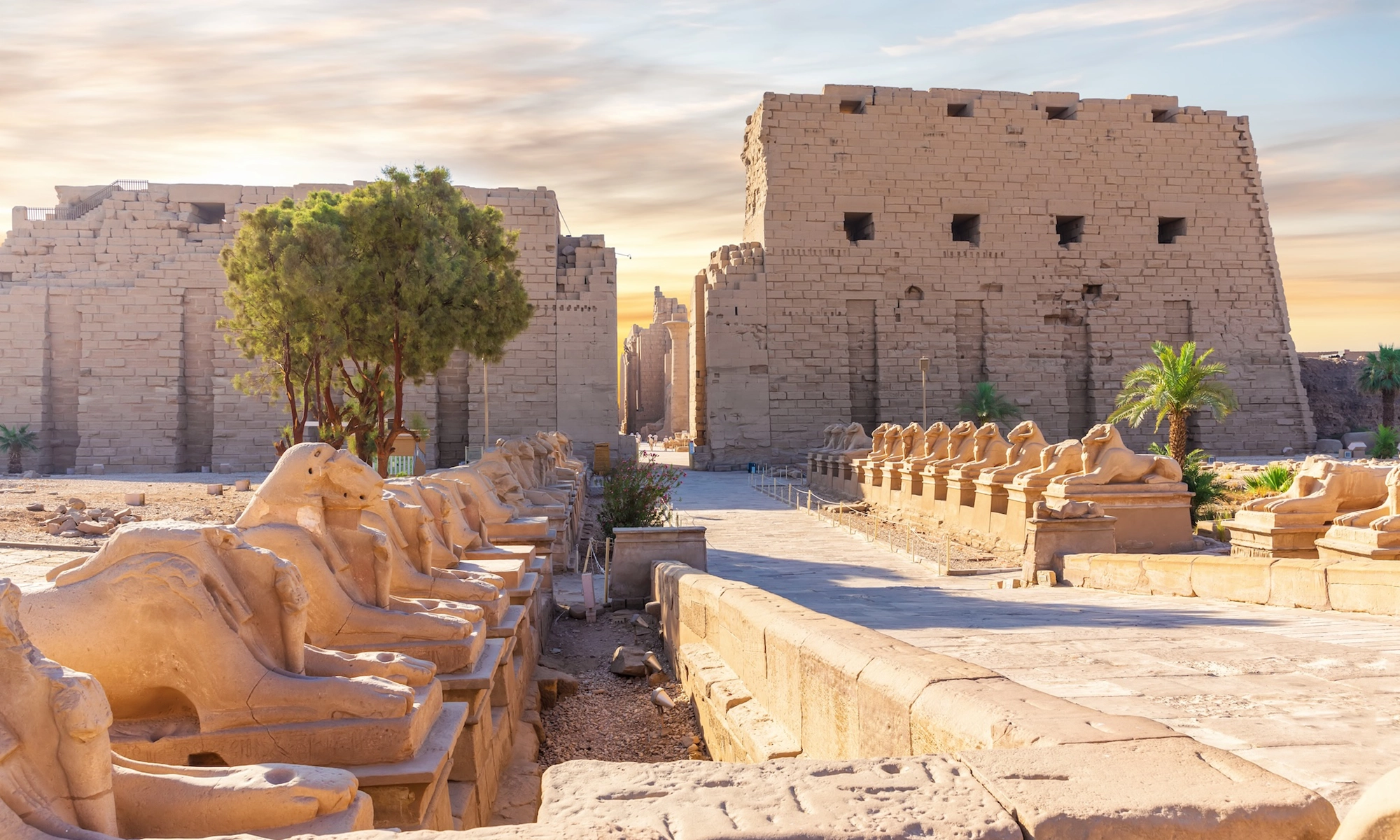
On the East Bank, Karnak is less a temple than a city of temples, built and expanded over roughly two thousand years. Its hypostyle hall, with a forest of enormous columns, is among the most photographed spaces in Egypt. A short distance away, Luxor Temple is visited in the evening, when floodlights turn the colonnades and statues golden.
The Luxor Museum is a quieter option for travelers who want a closer look at the objects found nearby. The guide to the best temples to see on a Nile river cruise offers a wider view of which temples deserve the most time.
Edfu and Kom Ombo Temples
Between Luxor and Aswan, the ship stops at two of the best preserved temples in Egypt. The Temple of Horus at Edfu, built between 237 and 57 BC, is reached by horse drawn carriage on many itineraries, and its walls, courtyards, and pylon remain remarkably intact.
The double temple at Kom Ombo sits on a bluff above the river and is dedicated to two gods, Sobek and Haroeris. Its symmetrical halls and sunset light make it a favorite stop. Esna and its Temple of Khnum sit between Luxor and Edfu, and the guide to the best stops on a Nile river helps weigh optional additions.
Aswan and Philae Temple
Aswan is a softer, slower city. The Aswan High Dam and the Unfinished Obelisk, still lying in its quarry, anchor the sightseeing. Philae Temple stands on Agilkia Island, where it was relocated after the dam raised the water, and the short boat crossing is a highlight in itself.
A visit to the Nubian Village, the Nubian Museum, or Elephantine Island adds cultural depth, and a sunset felucca ride in Aswan is a gentle way to end the day. The guide to things to do in Aswan lists more.
Adding Abu Simbel to Your Trip
Abu Simbel lies roughly 280 kilometers south of Aswan, close to the Sudanese border, and the visit begins with an early morning drive through the Nubian desert. The temples of Ramses II and Nefertari were cut and moved in the 1960s to save them from the rising waters of Lake Nasser, and the story is told in more detail in the guide to Ramses II and Nefertari.
Abu Simbel is built into several combined packages. The 14 day Cairo, Hurghada and Nile cruise tour includes it, as does the 13 day version, and the 8 days and 9 days Abu Simbel packages show how it fits into a trip without a beach stay. The 8 days Nile cruise from Hurghada to Luxor and Aswan also includes it.
Life Onboard a Nile Cruise
Daily life on the ship is easy. Cabins have river views, meals are served in a dining room or on deck, and the sun deck is often the best seat on the boat. Evenings bring optional onboard performances and quiet time with a drink, and the guide to facilities and entertainment included on the Nile cruise describes what to expect.
Food is full board on most packages, and the guide to food and beverage onboard Nile cruises explains the dining. The nightlife onboard a Nile cruise post covers evening entertainment, and the tips to enjoy a Nile cruise post offers practical advice. Ships come in four categories, deluxe, ultra deluxe, luxury, and ultra luxury, and the overview of Luxor and Aswan Nile cruises shows the range. The guide to types of Nile river cruises and the dahabiya Nile cruise ultimate guide cover other vessels.
Where Should You Stay on the Red Sea After Your Nile Cruise?
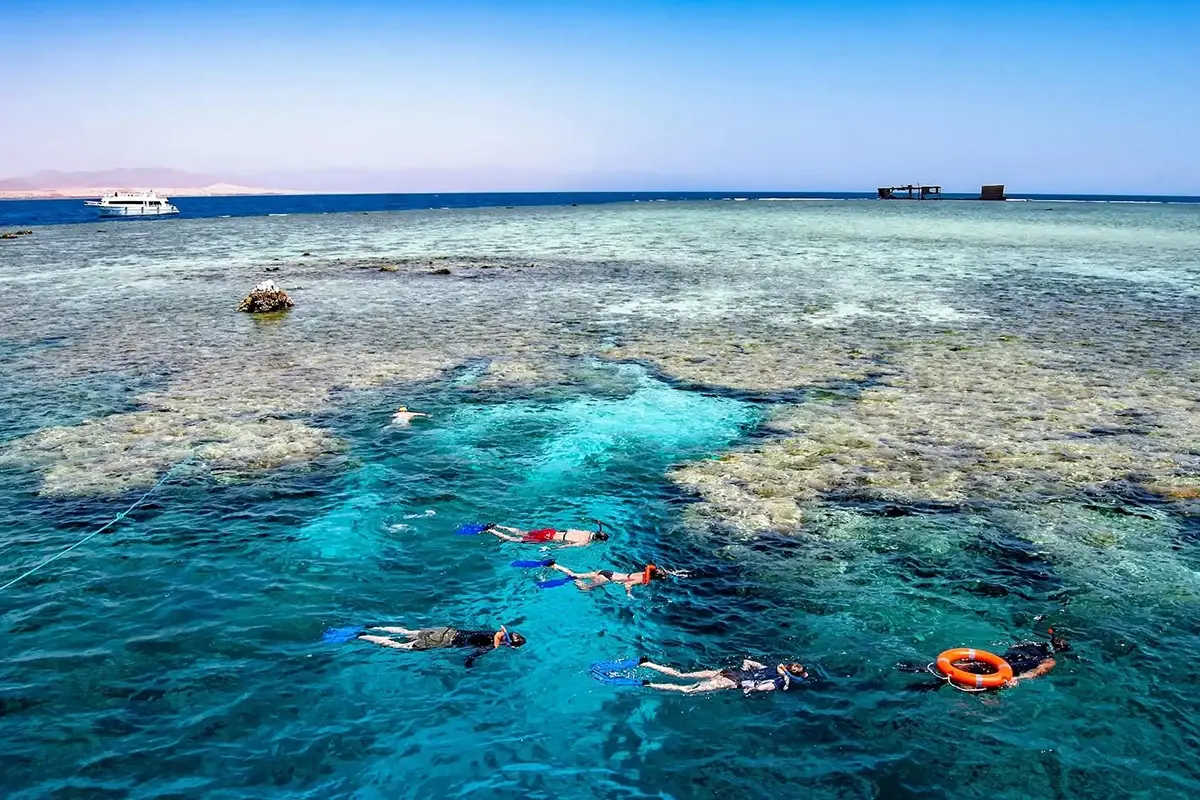
Two destinations dominate the choice. Hurghada and Marsa Alam are the most logical Red Sea extensions from Upper Egypt, and each offers a different kind of rest.
Hurghada
Hurghada is the practical option. It sits roughly four hours from Luxor, has an international airport and regular domestic flights to Cairo, and offers a wide range of resorts, restaurants, and excursions. Every Nile Cruise Holiday package that includes the Red Sea uses a five star, all inclusive hotel in Hurghada.
The town is also lively. Its evenings include bars, nightclubs, and a wide choice of restaurants, and the guide to things to do in Hurghada is a good place to start planning the days.
Marsa Alam
Marsa Alam lies much farther south, and its character is quieter. Resorts are spread along the coast, evenings are calm, and the reefs near the shore are often described as better preserved. The coast is known for dolphins, sea turtles, and dugongs, and offshore sites such as Elphinstone attract divers.
The trade off is distance. The drive from Luxor is commonly quoted at around 370 kilometers and five to six hours, by the route that passes through Safaga, and travelers may need a permit arranged in advance. Nile Cruise Holiday's published packages end in Hurghada, so travelers who prefer Marsa Alam can ask the team about a tailor-made itinerary.
Hurghada vs Marsa Alam: Which Is Better?
Hurghada is better for convenience, variety, and a short transfer. It has more restaurants, more nightlife, more excursion options, and diving that is often cheaper because of competition. More than thirty dive sites are reachable by large, comfortable boats on full day trips.
Marsa Alam is better for solitude and marine life close to the shore. Resorts feel less crowded, many reefs can be reached directly from the beach, and sightings of turtles and dugongs are a draw. It is also a longer transfer and slightly more expensive. For most first time visitors combining the Red Sea with a Nile cruise, Hurghada is the stronger fit, and travelers who have been before often look for the calm of the south.
Snorkeling and Diving
The Red Sea is one of the world's classic diving areas, and the water is clear enough that even a short snorkeling trip reveals bright reef fish and coral. Boat trips from Hurghada head to islands such as Giftun, Mahmya, and Orange Bay, and the Nile Cruise Holiday packages include a snorkeling or scuba excursion on the coast.
Water temperature changes with the season. Published diving guides give a range of roughly 21 to 23 degrees Celsius in January and February, rising to 26 to 30 degrees from June to August. Divers usually wear a thicker wetsuit between December and March, and a shortie in summer. Water clarity is often at its best in autumn, with October frequently cited as an excellent month.
Beaches and Resort Relaxation
The resorts used in the packages are five star and all inclusive, with private beaches, pools, and a mix of restaurants. Days can be as simple as a sunlounger, a book, and a swim, which is exactly the point after a week of early starts.
For beaches beyond the hotel, boat trips to Mahmya Island offer soft sand and turquoise shallows, and Giftun Island offers white sand and reef access. The best beaches in Egypt guide compares Hurghada with other Red Sea and Mediterranean coasts.
Desert Safaris and Red Sea Activities
The desert behind the coast is part of the appeal. Quad bike and 4x4 safaris cross the Eastern Desert, camel rides cover shorter stretches, Bedouin settlements offer a look at local life, and stargazing away from resort lights is spectacular on clear nights. Several packages include a safari day, and the 10, 11, 13, and 14 day versions add it to the coast schedule.
Active travelers can add scuba courses, boat charters, or a day trip back to Luxor. The felucca tours page and the felucca ride in Luxor offer a slower alternative for those returning to the river.
How to Plan the Perfect Nile Cruise and Red Sea Holiday

A little planning shapes the whole trip. Season, nights, transfers, packing, and budget are the five decisions that matter most.
Best Time of Year to Travel
October to April is the ideal window for the Nile. Luxor averages a daytime high of about 24 degrees Celsius in December, with nights near 10 degrees, and Aswan is a little warmer. July highs reach roughly 41 degrees in Luxor and 42 in Aswan, so summer cruises demand early starts and plenty of shade.
The Red Sea works almost all year. Hurghada's air temperature averages about 16 degrees in January and about 30 degrees in July, and the sea reaches roughly 29 degrees in August. Winter days are warm enough for the beach, though the water is cooler. The best overall months are October, November, March, and April, when the river and the coast are both comfortable. Month by month detail appears on the pages for October, November, December, January, February, March, and April, and for May, June, July, August, and September. The guide to the best time to cruise the Nile ties it together.
Holidays shift demand. The best Christmas Nile cruise deals and best Easter Nile cruise deals pages are worth checking early, and the guides to a Nile cruise at Christmas and Easter describe what each period feels like.
How to Divide Your Nights Between the Nile and Red Sea
The published packages offer a useful template. The 8 day package uses two nights in Cairo, three on the Nile, and two on the coast. The 10 day package uses three, three, and three. The 12 day package uses three nights in Cairo, four on the Nile, one in Luxor, and three in Hurghada, and the 14 day package gives the river seven nights and the coast three.
A simple rule of thumb is to give the Nile at least three nights, the Red Sea at least two, and Cairo at least two if the pyramids and museums matter. Three nights on the coast give a full snorkeling day, a safari day, and a free day, which is the ideal balance for most travelers.
Transfers, Domestic Flights and Road Travel
A combined trip uses three kinds of transport. Domestic flights connect Cairo to Aswan or Luxor and the coast back to Cairo, a private air conditioned vehicle handles the Luxor to Hurghada road, and short vehicle transfers handle the temples. Packages include meet and assist at Cairo airport, the domestic flights, and all transfers.
International flights, the Egyptian entry visa, and tips are not included. The how it works page explains the booking process, and the our services page describes the private transfers and guides. Guests who want to arrange the details themselves can read how to book a Nile cruise, and the guides on safety on the Nile and travel insurance for Egypt cover peace of mind.
What to Pack for Both Parts of the Trip
Two wardrobes share one suitcase. The Nile half calls for light, loose clothing with covered shoulders and knees for temples, comfortable walking shoes, a sun hat, and a light jacket for cool evenings in winter. The Red Sea half calls for swimwear, a cover up, sandals, and reef friendly sunscreen.
A few items work across both parts. A refillable water bottle, sunglasses, a small daypack, and a lightweight scarf are useful everywhere, and reef shoes make a rocky entry easier. The guide to what to pack for a Nile cruise offers a complete checklist, and the guide to what to buy in Egypt helps plan the souvenir space.
How Much Does a Nile Cruise and Red Sea Holiday Cost?
The final cost depends mainly on the length of the trip, the season, the cabin and hotel category, and the number of travelers. Longer packages cost more because they add nights on the ship and in the hotels, and peak months from October to April, along with Christmas and Easter, usually cost more than the summer months. The published packages cover accommodation, domestic flights, guides, entrance fees to listed sites, and transfers, and each package page shows the current rate for the chosen dates.
Several items are extra. International flights, the visa, tips, personal expenses, optional tours, and entry to special sites such as the Tutankhamun and Ramses II tombs or the Solar Boat are paid separately. The guide to tipping on Nile cruises explains how gratuities work. For travelers who prefer to build around a cruise only, the 4 days, 5 days, and 8 days collections show the alternatives, and the best Nile river cruise deals page lists current offers.
Is a Nile Cruise and Red Sea Holiday Worth It?
For most travelers, yes. The trip delivers the headline monuments of Egypt and a proper rest in a single journey, and the transfer between them is short. It avoids the common problem of a trip made entirely of sightseeing, and it gives the second half a purpose.
The case is strongest for first time visitors, couples, and families. Travelers who care only about archaeology may prefer a longer cruise or a stay in Cairo, and those who want only beaches have easier options elsewhere. The guide to top reasons a Nile cruise is worth it makes the wider argument, the reviews page shows traveler feedback, and the guide to the top reasons to choose a travel agent for your Nile cruise explains why a specialist helps.
Frequently Asked Questions
Can the Red Sea Come Before the Nile?
Yes. The 12 and 13 day packages begin with Cairo, fly to Hurghada, and only then drive to Luxor for the cruise. The order suits travelers who want a gentle start, and the trip ends with a flight from Aswan to Cairo.
Are Domestic Flights Included in the Packages?
Yes. The Cairo, Nile cruise and Hurghada packages include the domestic flights between Cairo, Aswan or Luxor, and Hurghada, along with airport meet and assist. International flights and the Egyptian visa are not included.
Can You Combine the Nile and Red Sea Without Visiting Cairo?
Yes. The cruise only itineraries, such as the 4, 5, and 8 day options from Hurghada, begin and end on the coast with a private transfer and a first class train leg. They suit travelers who have already seen Cairo or who prefer a shorter trip, and the Nile cruises from Hurghada page lists them.
Is Tipping Included?
No. Tips are listed as an exclusion in the published packages and are paid directly to guides, drivers, and staff as the traveler sees fit.
Enjoy the Taste of a Perfect Red Sea and Nile Cruise Egypt Trip
A Nile cruise and a Red Sea stay balance each other beautifully. One half fills the mind with temples, tombs, and slow river light, and the other fills the body with warm water and long, quiet afternoons. Together they make an Egypt holiday that feels complete rather than rushed.
To see which version fits your dates, explore the full range of Cairo, Nile cruise and Hurghada packages, or ask the team to shape a custom route through the tailor-made service. To start planning, contact us today.